
Livelihood of Prophet Jacob AS: Wahy (divine revelation), Patience and Lessons for the Modern Era

This study does not repeat a full family chronicle. It asks a narrower question that still matters for workers, parents, migrants, and believers under pressure: how did this patriarch earn, endure, and remain a servant of Allah, and what can people today take from the livelihood of Prophet Jacob AS?
Why the Livelihood of Prophet Jacob AS Is Never Without Effect?
Sometimes it was the quiet building of a household that would later become a nation. In the case of Hazrat Yaqub AS, known in English as Jacob, provision first looked ordinary: pasture, animals, family labour, and the search for grain when the land failed.
Later it looked like honourable settlement under a son whom Allah had raised in Egypt. Neither stage was empty. The first taught sabr in scarcity. The second taught gratitude in relief. Both prove that the livelihood of Prophet Jacob AS was part of religion, not a rival to it.
People of the modern era often split life into two rooms. One room is the office, the shop, the farm, or the screen. The other room is prayer. The livelihood of Prophet Jacob AS refuses that split. Revelation taught him good deeds, prayer, and zakah together. Work sat inside worship, not beside it.
Who He Was Before Any Discussion of Wealth
When Revelation (Wahy) Began in His Blessed Life

It placed work under command. That is why later scenes show a father who already knows what others do not know. He reads a dream with insight. He rejects a false report. He refuses despair. Those acts are the fruit of teaching already given, and they protect the livelihood of Prophet Jacob AS from becoming empty labour.
Later books describe a ladder vision during a youthful journey. That report is widely told outside the Quran. It is not a Quranic proof for the first hour of wahy. The safe statement remains simple: revelation is certain; its clock is with Allah; its visible fruit is tawhid, prayer, charity, and guided leadership over a working household.
What the Livelihood of Prophet Jacob AS Actually Looked Like?
Historical writing commonly adds that he worked for years as a shepherd in the household of his maternal uncle and returned with flocks. The Quran does not name that contract. A professional reading keeps the report in its place: useful as background, not as a substitute for Scripture.
What matters for people today is the pattern the sources agree on. He laboured. He did not live from plunder. He did not sell religion for comfort. The livelihood of Prophet Jacob AS was ordinary enough that a modern farmer, herder, driver, or small trader can recognise it, and dignified enough that no believer should be ashamed of similar work.
Four features of that blessed earning
|
|
|
|
How the Livelihood of Prophet Jacob AS Met Trials of Patience?

The first wound was deceit inside the family. A shirt marked with false blood was brought as proof. He refused the story and chose beautiful patience:
He named the method in words that still teach every anxious earner:
Means and Trust: The Separate Gates
Migration as a Livelihood Decision and a Divine Opening
When Allah opened a lawful refuge through a son whom He had established in the land, the family entered. The move preserved life, restored honour, and placed a people where later revelation would confront tyranny. Earning, in other words, can be a chapter in a larger decree.
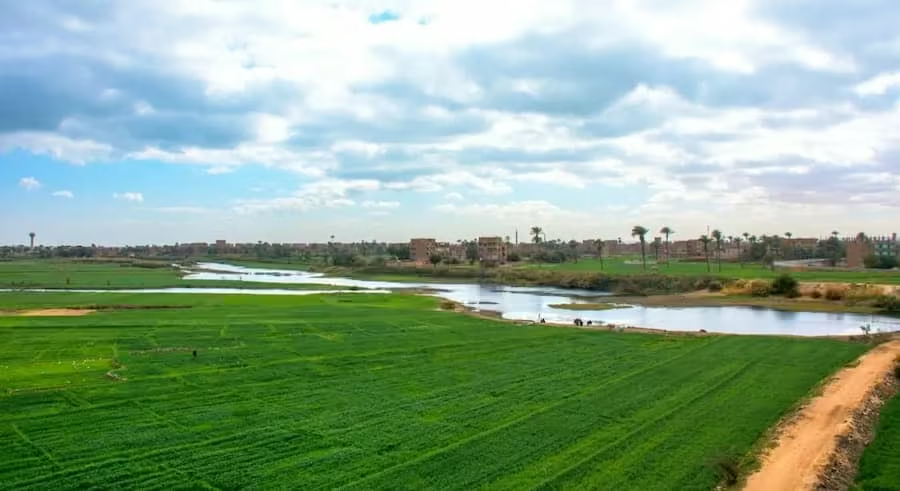
The Last Wealth He Guarded Was Creed, Not Cattle
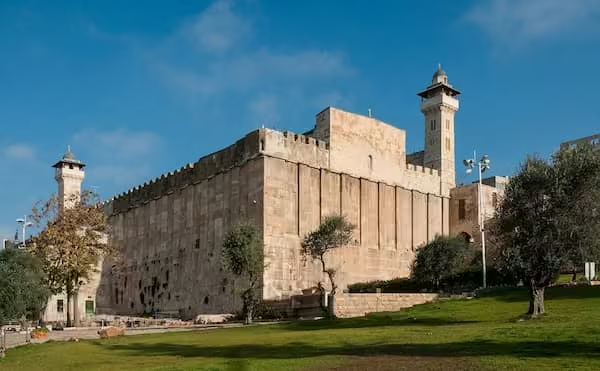
Insights from Sacred Knowledge for People of the Modern Era
The second insight is that provision is a trust with an effect. Allah did not give this prophet animals so he could forget the poor or the prayer. Inspired life included zakah and good deeds. Income that never produces worship, charity, or justice has lost the prophetic pattern found in the livelihood of Prophet Jacob AS.
The third insight is that grief and work can share one day. Modern life often tells a wounded person to stop functioning or to hide pain behind productivity. He did neither. He named sorrow. He suppressed ruinous anger. He still sent sons for food and still hoped in Allah. People who work while caring for a missing relative, a sick parent, or a broken home can take that balance without shame.
The fourth insight is the ban on despair. Markets fall. Visas fail. Jobs end. His teaching still stands: none despairs of relief from Allah except a people who have lost faith. Hope is not a mood. It is part of creed. It does not cancel effort. It keeps effort from turning into panic or forbidden shortcuts.
The fifth insight is the use of means without worship of means. Separate gates, pledges, travel for grain, and later settlement in Egypt were all means. None of them replaced Allah. A modern worker may study, save, migrate legally, learn a skill, or start a small shop. Those steps follow the same wisdom that guarded the livelihood of Prophet Jacob AS, provided the heart does not kneel to the step.
The sixth insight is family ethics inside money. Jealousy over love and favour tore the first household and then returned as an economic crisis. Parents who prefer one child in public, or children who compete through income, repeat an old wound. Fairness in affection and honesty in speech are part of earning, because a house that lies about a shirt will later lie about a contract.
The seventh insight is migration with taqwa. Moving for safety or bread is not itself a fall. The question is whether the new city protects prayer and lawful food. Egypt became a refuge because Allah made it so, not because every foreign market is automatically blessed.
How the Livelihood of Prophet Jacob AS Answers Practical Questions People Ask Today
1. Does sacred knowledge praise only spiritual work? | No. The livelihood of Prophet Jacob AS shows spiritual duty inside ordinary earning. Prayer and zakah need a lawful day behind them. |
2. Is long unemployment a sign that Allah has abandoned a person? | The famine years show scarcity visiting a prophetic house. Scarcity was a test, not a proof of divine rejection. Relief came in Allah’s time, after patience and continued effort. |
3. May a believer complain while still trusting? | Yes, if the complaint is to Allah. He spoke of sorrow without advertising bitterness and without accusing the decree. |
4. What if family members have harmed the household economically? | He sought help from Allah against a false report, kept patience, and later sent the same sons on necessary journeys. Justice and sabr can travel together. Revenge is not a strategy for the livelihood of Prophet Jacob AS, nor for anyone who follows that model. |
Conclusion: The Livelihood of Prophet Jacob AS Still Teaches Lawful Work
Allah never granted any prophet a livelihood without effect. The effect in the livelihood of Prophet Jacob AS was a household kept upon one God, a people prepared for later history, and a model of sabr that still steadies anyone who works, waits, and worships in the same day. That is why the livelihood of Prophet Jacob AS remains a school for the present age.