
Works of Jinn in Quran
construction, craftsmanship, underwater labor, and specialized services.
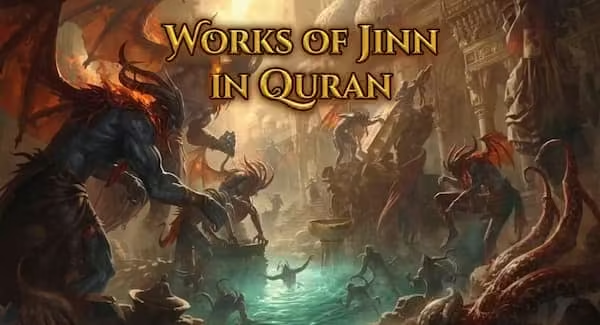
Epic depiction of the Works of Jinn in Quran.
Works of Jinn in Quran: Construction, Craftsmanship, Underwater Labor, and Specialized Services
The Quran offers profound insights into the extraordinary works, abilities, and roles of the jinn, especially those subdued by divine command to serve Prophet Sulaiman (Solomon, peace be upon him). These beings, created from smokeless fire, possessed immense strength, superhuman speed, shape-shifting abilities, rapid travel, and mastery over physical tasks far beyond human limits. Their service encompassed grand construction, advanced craftsmanship, underwater pearl diving, and specialized tasks that underscored Allah’s supreme power and favor upon His prophet.
In Surah An-Naml (27:17), the jinn formed an integral part of Prophet Sulaiman’s organized army, marching alongside humans and birds in disciplined ranks. A powerful Ifrit confidently claimed the ability to transport Queen Bilqis’s throne from Yemen to Jerusalem before Sulaiman could rise from his seat, demonstrating remarkable speed and strength (An-Naml 27:39). Another jinn with knowledge of the Scripture completed the feat even faster, in the blink of an eye. These accounts illustrate varying degrees of supernatural prowess and complete subjugation to divine will.
Works ( Abilities, and Roles) of Jinn: Works, Abilities, and Roles of the Jinn under Prophet Sulaiman (peace be upon him)
The Quran vividly portrays how Allah (SWT) subdued the jinn to serve Prophet Sulaiman (peace be upon him), granting him unparalleled dominion as a sign of divine favor. These supernatural beings possessed extraordinary abilities far beyond human capacity, including immense physical strength, incredible speed, potential for shape-shifting, rapid long-distance travel, and exceptional mastery over demanding physical tasks. Their roles extended across multiple domains, transforming them into an invaluable supernatural workforce.
Key contributions included monumental construction and craftsmanship. In Surah Saba (34:12-13), the jinn labored by Allah’s permission to erect lofty maharib (elevated chambers and palaces), intricate tamathil (statues and images from brass or crystal), vast basins (jifan like reservoirs), and enormous stationary cauldrons (qudur rasiyat). They worked with a miraculous spring of molten copper (qitr) that flowed at Allah’s command and quarried stones for grand structures like those at Bayt al-Maqdis.
Marine and diving tasks featured prominently in their specialized services. In Surah Al-Anbiya (21:82) and Surah Sad (38:37), rebellious jinn (shayatin) served as pearl divers (ghawwasin) to retrieve treasures from the seas, while others performed hard labor under strict supervision. Allah ensured obedience: any deviant jinn faced punishment by blazing fire (Saba 34:12; Sad 38:38). Some were bound in chains when rebellious. This control emphasized that their service stemmed solely from divine command, not sorcery. Prophet Sulaiman remained deeply grateful, using these abilities for justice, worship, and a righteous kingdom.
The subjugation of the jinn underscored Allah’s supreme power over all creation. This unique authority was granted exclusively to Prophet Sulaiman among the prophets, blending awe-inspiring might with profound accountability and humility.
Building Palaces and Great Structures: Jinn Construction and Labor in Quranic Accounts
One of the most prominent roles of the jinn under Prophet Sulaiman (peace be upon him) was large-scale construction. They built massive structures and architectural wonders that human labor alone could never achieve in scale, speed, or artistic perfection. The Quran describes these feats in vivid detail, showing how divine permission enabled supernatural assistance.
By the prayer and command of Hazrat Sulaiman (A.S.), the jinn accomplished extraordinary projects. The Quran states:
| The Qur’an describes this in vivid detail: By Hazrat Suliman(A.S.) Pray |
“They made for him what he willed of elevated chambers, statues, bowls like reservoirs, and stationary kettles. [We said], ‘Work, O family of David, in gratitude.’ And few of My servants are grateful.” 📖 — Qur’an 34: 12—13 (Surah Saba) |
“He said, ‘My Lord, forgive me and grant me a kingdom such as will not belong to anyone after me. Indeed, You are the Bestower.” 📖 — Qur’an 38:35 (Surah Sad) |
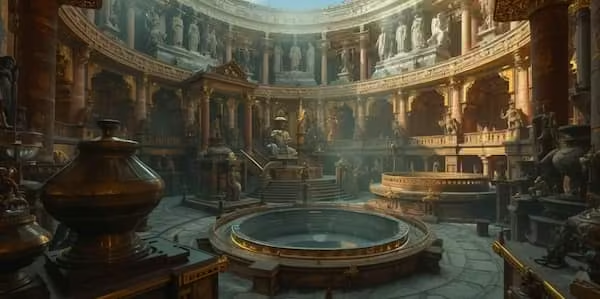
Grand palace built by jinn for Prophet Sulaiman according to Quranic accounts.
These constructions involved shifting enormous stone blocks, forging metals from the miraculous molten copper spring, and erecting grand edifices symbolizing divine favor. Islamic traditions link the jinn’s labor to Bayt al-Maqdis (Masjid al-Aqsa) in Jerusalem, where they quarried stones, mined gems, erected pillars and arches, and labored tirelessly. Disobedient jinn faced punishment by blazing fire.
This supernatural workforce enabled rapid, awe-inspiring architecture far surpassing ordinary human efforts. The projects stood as tangible signs of Allah’s power granted to His prophet, inspiring gratitude and reinforcing spiritual purpose.
Key Feature: Hazrat Sulaiman (A.S.)'s Prayers (Du'as) for Gratitude, Forgiveness, and Kingdom in the Quran

Hazrat Sulaiman’s du’as for kingdom, gratitude, and forgiveness in the Quran.
Prophet Sulaiman (peace be upon him), blessed with unmatched wisdom, vast wealth, and a kingdom encompassing humans, jinn, birds, winds, and animals, remained profoundly humble and deeply grateful to Allah. He constantly turned to his Lord in sincere supplication, recognizing that all blessings came solely from Allah. His prayers offer timeless lessons in gratitude, humility, repentance, and reliance on divine mercy.
One of his most beautiful prayers appears in Surah An-Naml (27:19). While marching with his army, Sulaiman overheard an ant warning its colony to flee. He smiled and immediately prayed: “My Lord, enable me to be grateful for the favor which You have bestowed upon me and upon my parents, and to do righteousness of which You approve. And admit me by Your mercy into the ranks of Your righteous servants.”
This du’a reflects profound gratitude for divine blessings—including understanding animal speech—respect for his parents, desire for righteous deeds, and longing to join the righteous through Allah’s mercy.
Another powerful supplication appears in Surah Sad (38:35) after a trial and repentance: “My Lord, forgive me and grant me a kingdom such as will not belong to anyone after me. Indeed, You are the Bestower.” Allah accepted it, granting unique dominion never matched, including subjugation of winds, jinn, and other forces.
The prayers of Prophet Sulaiman (A.S.) teach enduring lessons: true success lies in gratitude that preserves blessings, humility despite power, sincere repentance, and complete reliance on Allah’s mercy. Even as the most powerful prophet in worldly terms, he prioritized spiritual excellence.
These Constructions: Enduring Legacy and What Remains Today of Jinn-Built Structures from Prophet Sulaiman's Era
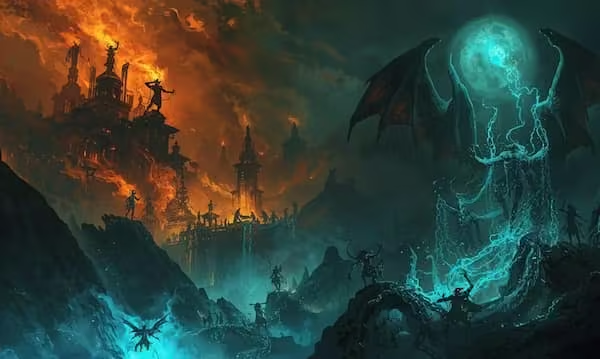
Ruins of jinn-built structures from Prophet Sulaiman’s era.
The grand constructions attributed to Prophet Sulaiman (peace be upon him) and executed by the jinn represent remarkable feats of divine empowerment, as detailed in the Quran (Saba 34:12-13; Sad 38:36-38). These included lofty palaces (maharib), intricate statues (tamathil), enormous basins (jifan), and massive stationary cauldrons (qudur rasiyat), many forged using the miraculous molten copper spring (qitr). Islamic tradition connects the jinn’s work to rebuilding and expanding Masjid al-Aqsa (Bayt al-Maqdis) in Jerusalem, where they erected pillars, arches, and monumental elements with precision impossible for humans alone.
No original physical structures from Sulaiman’s era directly built by the jinn survive intact in verifiable form today. The Quran does not specify enduring remnants, emphasizing the temporary nature of worldly achievements and the prophet’s gratitude. Historical records show the associated Temple was destroyed multiple times—by the Babylonians in 587 BCE and the Romans in 70 CE. Current structures on the Haram al-Sharif, such as the Dome of the Rock (691-692 CE) and expanded Al-Aqsa Mosque, postdate Sulaiman by centuries.
Some folk traditions attribute surviving features to jinn labor. In northern Saudi Arabia’s Laynah village, around 300 ancient rock-carved wells are believed dug by jinn for the prophet’s army. In Oman, Bahla is sometimes called a “jinn city” in folklore. Under Masjid al-Aqsa, traditional accounts claim certain foundations were placed by jinn, though these remain oral heritage without definitive archaeological proof.
Ultimately, the Quran focuses on spiritual lessons: these wonders glorified Allah, tested obedience and gratitude, and demonstrated His infinite power. The true legacy endures in faith, gratitude, and the sanctity of sites like Masjid al-Aqsa, preserved by divine will. All power belongs to Allah alone.
Advanced Craftsmanship Beyond Human Ability: Jinn Metallurgy, Engineering, and Specialized Services in the Quran
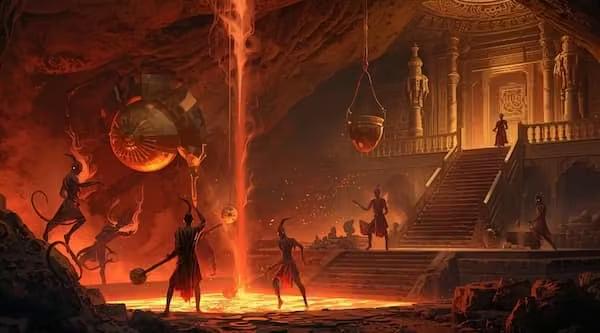
Jinn showcasing advanced metallurgy and engineering beyond human ability.
The jinn serving under Prophet Sulaiman (peace be upon him) demonstrated craftsmanship and technical skills that dramatically surpassed human capabilities of the era. Allah granted them extraordinary abilities through divine permission. Surah Saba (34:12-13) describes how Allah caused a miraculous spring of molten copper (‘ayn al-qitr) to flow—a supernatural phenomenon where hard metal liquefied like water, ready for shaping without conventional tools. This enabled effortless forging of vast quantities of metal, highlighting supernatural mastery over materials.
The jinn worked tirelessly to create whatever the prophet desired. They constructed lofty elevated chambers (maharib)—grand multi-level palaces or sanctuaries with staircases—representing architectural sophistication on a massive scale. They crafted intricate statues (tamathil)—lifelike figures from brass, copper, crystal, glass, or marble. These were true artistic and technical marvels requiring precise molding, casting, and detailing far beyond ancient human techniques.
They also produced enormous basins (jifan)—huge bowls or reservoirs so vast that thousands could gather around them—and stationary cauldrons (qudur rasiyat), immense fixed cooking pots immovable due to colossal size and weight. These tasks required quarrying colossal stones from distant mountains, transporting them across great distances, and seamless integration—work demanding immense strength, extraordinary speed, and engineering precision unavailable to humans without supernatural assistance.
Islamic interpretations emphasize that these feats originated solely from Allah’s command. Disobedience brought swift punishment by blazing fire (Saba 34:12). Their work extended to enhancing sacred sites like Bayt al-Maqdis. This advanced craftsmanship—rapid metalworking from flowing molten copper, large-scale forging, underwater pearl diving, and tireless labor—demonstrated Allah’s dominion over creation. It granted Prophet Sulaiman wonders to glorify the Creator while testing gratitude. The emphasis remains on spiritual lessons: gratitude preserves blessings, and these displays of otherworldly skill underscore humility before the Almighty.
The comprehensive Quranic accounts of jinn construction, craftsmanship, underwater labor, and specialized services under Prophet Sulaiman (peace be upon him) continue to inspire awe and strengthened faith. They remind believers that all power belongs to Allah, and that sincere gratitude, humility, and righteous action are the keys to receiving and preserving divine blessings.
Page 5