
Significance in Abrahamic Traditions: One Father, Eternal Legacy 🕋
The Significance in Abrahamic Traditions offers profound insights into faith, family, and divine purpose. Prophet Ibrahim (AS), known as Abraham in other traditions, stands as a unifying figure across major world religions. His life and the sacred Kaaba he helped raise continue to inspire billions of people around the globe. This legacy bridges ancient history with contemporary spiritual practice in meaningful ways.
Understanding the Significance in Abrahamic Traditions helps us appreciate how one man’s complete obedience shaped the course of world religions. It highlights powerful themes of sacrifice, divine provision, and human unity that remain deeply relevant today. In our often divided world, these timeless stories encourage genuine dialogue and mutual respect among people of different faiths.
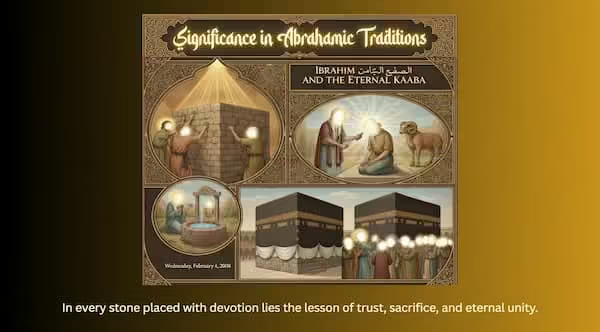
In every stone placed with devotion lies the lesson of trust, sacrifice, and eternal unity — the enduring Significance in Abrahamic Traditions through Prophet Ibrahim and the Eternal Kaaba.
The Significance in Abrahamic Traditions in Islam
In Islam, the Kaaba holds immense spiritual importance within the Significance in Abrahamic Traditions. Muslims view it as a reconstruction built upon ancient foundations. Some authentic traditions trace its earliest origins back to Prophet Adam (AS), who established the first house of worship dedicated to the one true God on earth.
Ibrahim (AS) later purified the site and rebuilt the Kaaba according to divine instruction. He dedicated the structure exclusively to the worship of Allah alone. This foundational act firmly established the principle of tawhid at the very center of Islamic belief and practice. The Significance in Abrahamic Traditions becomes clearly visible in how this simple stone structure evolved into the focal point for daily prayer and annual pilgrimage.
Ibrahim (AS) receives the special honorific title of Khalīlullāh, meaning the intimate Friend of Allah. He is also widely recognized as the Father of Nations. His blessed progeny includes major prophets such as Ismail (AS) and Ishaq (AS). These family connections beautifully underscore the interconnected nature of all prophetic missions throughout history.
The Noble Quran describes in detail how Ibrahim (AS) and his son Ismail (AS) raised the foundations of the Sacred House. While working, they offered sincere prayers asking Allah to accept their efforts. They specifically requested that the site become a place of safety, guidance, and peace for all future generations. This heartfelt supplication was answered in remarkable ways centuries later through the mission of Prophet Muhammad (PBUH).
Today the Kaaba serves as the official Qibla, the direction toward which nearly two billion Muslims turn five times daily in prayer. This constant global connection powerfully reinforces the Significance in Abrahamic Traditions in the everyday lives of ordinary believers. It transforms a physical structure of stone into a living spiritual anchor that unites hearts across continents and cultures.
The Kaaba also hosts the annual Hajj pilgrimage, one of the largest gatherings of humanity on earth. Millions of pilgrims converge there each year to perform sacred rituals that directly reenact key moments from the life of Ibrahim (AS) and his devoted family. This massive annual event demonstrates the living, breathing power of his enduring example in our modern age.
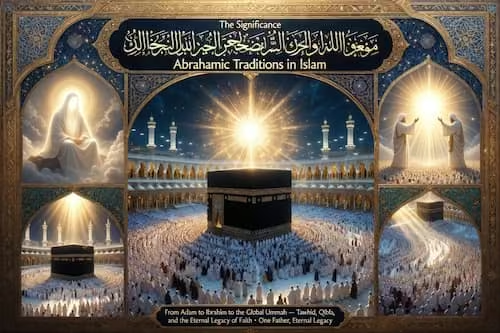
From Adam to Ibrahim to the Global Ummah — Tawhid, Qibla, and the Eternal Legacy of Faith. The living Significance in Abrahamic Traditions in Islam through the Holy Kaaba.
Judaism and Christianity Perspectives on the Significance in Abrahamic Traditions
Judaism and Christianity both hold Prophet Ibrahim, known as Abraham, in the highest esteem as the father of monotheistic faith. Their sacred scriptures provide detailed accounts of his remarkable journey from the city of Ur through Haran and finally into the land of Canaan. These texts strongly emphasize the divine covenants God established with him concerning land, numerous descendants, and becoming a source of blessing for all nations of the earth.
Key events in these traditions include his divine call to leave his homeland, the promise of a son in old age, and several profound tests of faith. The binding of Isaac, known as the Akedah in Jewish tradition, remains one of the most studied and revered narratives. Christian teachings frequently present Abraham as a primary model of justification through faith and trust in God’s promises.
However, these scriptural accounts focus primarily on events that took place in the ancient Levant region. Important sites such as Hebron, where Abraham and his family members are buried, continue to hold deep significance. The Tomb of the Patriarchs in Hebron remains an active place of prayer, reflection, and pilgrimage for both Jewish and Christian communities to this day.
Notably, the Bible contains no direct reference to the Kaaba or the city of Mecca in Arabia. The Significance in Abrahamic Traditions takes a distinctive and expansive turn within Islamic sources. The Quran and authentic Hadith literature extend Ibrahim’s story southward to the Arabian Peninsula, directly linking him to the establishment and purification of monotheism in the valley of Mecca.
This difference in emphasis enriches rather than diminishes the shared spiritual heritage among the three faiths. It demonstrates how the same revered patriarch can inspire diverse yet complementary expressions of faith across different cultures and historical contexts. The Significance in Abrahamic Traditions therefore encourages scholars and sincere believers to explore these narratives with genuine respect and open hearts.
These shared values of hospitality, justice, and trust provide a strong foundation for interfaith respect today.
Interfaith Dialogue Through the Significance in Abrahamic Traditions
The Significance in Abrahamic Traditions actively promotes meaningful interfaith dialogue in the contemporary world. Recognizing a common spiritual ancestor helps reduce misunderstandings and build bridges between different religious communities. It wisely shifts the focus from theological differences toward shared commitment to monotheism, ethical living, and service to humanity.
Pilgrims who gather at the Kaaba during the Hajj season come from every ethnicity, nationality, and social background imaginable. They stand completely equal before their Creator while dressed in simple white garments that erase all distinctions of wealth or status. This powerful collective experience fosters genuine global harmony and helps break down artificial barriers that often divide people.
The inspiring story of Ibrahim (AS) clearly teaches that authentic faith must transcend all geographic and cultural boundaries. His courageous willingness to leave the comfort of his homeland in response to divine command models extraordinary spiritual courage. The trials his family endured in the harsh desert environment demonstrate remarkable resilience that comes only through complete trust in Allah’s wisdom and care.
Many interfaith programs draw inspiration from his example. Participants discover that the Significance in Abrahamic Traditions offers practical tools for peaceful coexistence.
Personal spiritual transformation often occurs during the Hajj pilgrimage or when sincere individuals deeply study these sacred stories. Many pilgrims return to their home communities with renewed commitment to practicing compassion, giving charity generously, and working actively for greater unity. The Kaaba thus serves as a powerful catalyst for positive change that extends far beyond its physical location in Mecca.
✨ “In the construction of the Kaaba, we witness the spark of divine wisdom igniting human potential—definitely it motivate us to build lives of purpose, faith, and unity.” ✨
This beautiful and inspiring quote perfectly summarizes how the Significance in Abrahamic Traditions continues to motivate sincere individuals across generations. It warmly invites every person to consciously build their own lives upon strong foundations of faith, purpose, and loving service to others.

The beauty of many colors blooming together — a living symbol of Interfaith Dialogue Through the Significance in Abrahamic Traditions and the shared legacy of Prophet Ibrahim.
The Raising of the House: Ibrahim AS and the Significance in Abrahamic Traditions
The Raising of the House by Ibrahim (AS) represents one of the most pivotal and meaningful moments in the entire Significance in Abrahamic Traditions. Ibrahim (AS) received a clear and direct command from Allah to construct the Kaaba in the previously barren valley of Mecca. This sacred task came only after years of rigorous spiritual tests that had thoroughly prepared him for such an important responsibility.
Years earlier, Ibrahim (AS) had obediently left his wife Hajar and infant son Ismail (AS) in this same arid and seemingly inhospitable land. The miraculous appearance of the Zamzam spring had already sustained them through divine mercy and provision. When the later command arrived to physically raise the Kaaba, divine preparation had already made the location ready. This beautiful sequence clearly illustrates a fundamental spiritual principle: sincere obedience always brings abundant blessings and divine support.
Ibrahim (AS) and the young Ismail (AS) worked side by side with pure hearts and dedicated effort. They lifted heavy stones and carefully raised the walls while maintaining constant remembrance of Allah. Throughout the construction process, they offered numerous heartfelt prayers and supplications. They asked Allah to graciously accept their humble efforts and to make this new house a blessed place of safety, guidance, and peace for all future generations.
Tradition holds that the Black Stone was placed during this construction. The Maqam Ibrahim still bears the mark of his feet, creating a tangible link to that blessed era.
The project foreshadowed later events. The near-sacrifice of Ismail (AS) tested ultimate submission. Later, Prophet Muhammad (PBUH) restored the Kaaba to pure monotheism. The Significance in Abrahamic Traditions flows through this prophetic chain.
Every element shows how divine wisdom works through human effort. Simple stones became the most revered site because they were raised with pure faith. This lesson encourages believers to approach their duties with similar dedication.
Modern Relevance and Practical Lessons from the Significance in Abrahamic Traditions
The Significance in Abrahamic Traditions offers practical guidance for today’s challenges. Ibrahim’s (AS) example calls people back to higher priorities of faith, family, and service.
Several key lessons emerge with great clarity from careful study of these events:
| ➤ Complete and unwavering trust in divine wisdom is essential, even when the path forward appears difficult, unclear, or humanly impossible. |
| ➤The remarkable power of family cooperation in fulfilling sacred duties, clearly demonstrated through young Ismail’s active help during construction. |
| ➤ Divine provision reliably follows sincere obedience, as repeatedly proven by the Zamzam miracle and the acceptance of heartfelt prayers. |
| ➤ True unity can exist within diversity, as powerfully shown when millions of different people perform Hajj together in complete peace and equality. |
| ➤ Building a lasting legacy requires actions performed purely for Allah’s sake, because such deeds outlive individuals and continue benefiting countless future generations. |
These lessons apply to leadership, parenting, and personal growth. Many people credit Ibrahim’s (AS) story for the resilience they needed during hardship.
Hajj continues to grow as a living classroom for these principles. Participants experience how submission leads to inner peace and harmony.
Ordinary believers and scholars alike find renewed purpose when reflecting on these events. The Kaaba stands as an active invitation to live with greater purpose, deeper faith, and stronger unity.
Conclusion: Embracing the Significance in Abrahamic Traditions Today
Reflecting on this story evokes profound emotions: awe at Allah’s mercy, gratitude for prophetic guidance, and motivation to emulate Ibrahim’s (AS) unwavering faith. In a divided world, the Kaaba reminds us that true wisdom lies in submission, unity, and eternal devotion.
The Significance in Abrahamic Traditions calls us to action. It asks us to purify our intentions, build relationships on trust, and contribute to collective harmony. Small daily choices made with faith create ripples that last for generations.
May this illumination spark divine light in every reader’s heart and inspire actions that echo through eternity. The sacred invitation remains open for all who seek truth, purpose, and unity.
Let the story of one father and his eternal house guide you toward deeper purpose and unity. The path Ibrahim (AS) walked remains open for all who choose faith today.
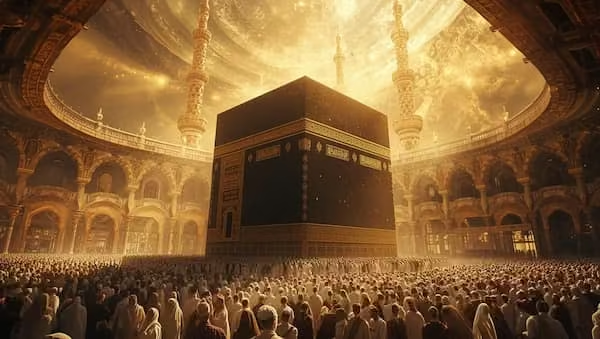
The Kaaba today — where the ancient legacy of Prophet Ibrahim continues to inspire and unite humanity. Embracing the Significance in Abrahamic Traditions in our modern world.