
The Construction of the Kaaba by Hazrat Ibrahim عليه السلام & Ismail عليه السلام: Illuminating the Spark of Divine Wisdom 🕋
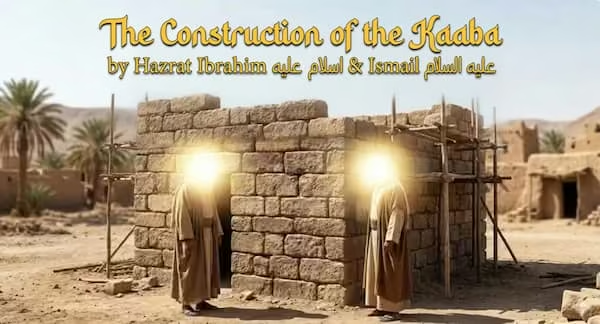
The sacred construction of the Kaaba by Hazrat Ibrahim عليه السلام and Ismail عليه السلام — the divine foundation of Islam’s holiest sanctuary.
Information about The Construction of the Kaaba by Hazrat Ibrahim عليه السلام & Ismail عليه السلام
The Construction of the Kaaba: In the vast tapestry of human history, few narratives resonate with the profound essence of faith, obedience, and divine purpose as vividly as the story of Hazrat Ibrahim عليه السلام and his son Ismail عليه السلام constructing the Kaaba. This sacred edifice, nestled in the heart of Mecca, stands not merely as a physical structure but as an eternal symbol of monotheism (tawhid), unity, and unwavering submission to Allah.
As the Qibla—the direction Muslims face during prayer—and the epicenter of the Hajj pilgrimage, the Kaaba embodies the first illumination of that divine spark, igniting wisdom in the souls of believers across generations. It motivates us to reflect on our own journeys of faith, reminding us that true devotion transforms barren deserts into wellsprings of spiritual abundance.
Father and son united in obedience, constructing the eternal House of Allah.
The Barren Valley and the Miracle of Zamzam: Seeds of Divine Providence
The Construction of the Kaaba: The story begins in a desolate valley where Hazrat Ibrahim عليه السلام, in complete obedience to Allah’s command, left his beloved wife Hazrat Hajra عليها السلام and infant son Hazrat Ismail عليه السلام. This place, later known as Mecca or Bakkah, was devoid of vegetation, water, or human habitation—a profound test of faith in the barren wilderness. With a heavy heart yet firm trust in the Divine plan, the Prophet departed, leaving only a small supply of dates and water.
The Construction of the Kaaba: As provisions dwindled and thirst gripped the mother and child, Hazrat Hajra عليها السلام ran desperately between the hills of Safa and Marwah, seeking sustenance for her son. Her perseverance and tawakkul became legendary, commemorated in the Sa’i ritual of Hajj and Umrah. Suddenly, by Allah’s mercy, the miracle of Zamzam unfolded when the infant kicked the earth, causing a spring of pure water to gush forth.
This life-giving well sustained the family and attracted tribes, transforming the arid desert into a thriving hub. The Zamzam well stands as a testament to divine favor. This event marked the site as one of special sanctity. It teaches that obedience sparks transformations benefiting humanity eternally. The barren valley evolved into a spiritual oasis, illuminating how faith turns trials into triumphs.
The Divine Command: Establishing the First House of Worship
The Construction of the Kaaba: Years later, Hazrat Ibrahim عليه السلام returned to Mecca, guided by Allah’s directive to establish a house of worship as a sanctuary for humanity. This command fulfilled a divine plan to create the first edifice dedicated exclusively to the One True God. As the Quran recounts in Surah Al-Baqarah (2:127): “And [mention] when Ibrahim عليه السلام was raising the foundations of the House and [with him] Ismail عليه السلام, [saying], ‘Our Lord, accept [this] from us. Indeed, You are the Hearing, the Knowing.’” This verse captures their harmonious father-son collaboration infused with prayer and humility.
The site was divinely chosen—an elevated hillock signifying sanctity. Hazrat Ibrahim عليه السلام shared the command with his son, who responded with willingness to help. Together they embarked on this sacred endeavor. Ismail عليه السلام gathered stones while Ibrahim عليه السلام placed them, building a simple rectangular structure without a roof. When walls grew high, Ismail brought the Maqam Ibrahim stone for his father. The Kaaba emerged as the foundational House destined to become the focal point for monotheistic worship.
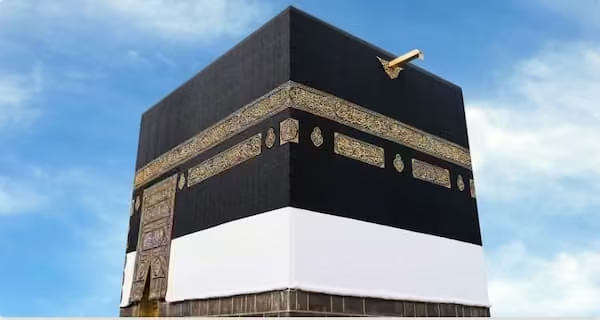
The Kaaba – the First House of Worship, established by divine command.💡
United in Obedience: The Father-Son Collaboration in Sacred Construction
The Construction of the Kaaba: The construction exemplifies the beautiful synergy of prophetic obedience and familial love. Hazrat Ibrahim عليه السلام and Hazrat Ismail عليه السلام worked side by side in the desert heat, their hands calloused yet spirits uplifted by fulfilling Allah’s will. Every stone laid was an act of worship, every moment a step toward establishing tawhid.
The father taught principles of purity while the son provided strength. This collaboration was a living lesson in how faith unites families. As they built, they constantly supplicated to Allah. The simple structure stood as a beacon—the first House built for mankind, as referenced in Surah Al-Imran (3:96). Through their efforts, the barren land pulsed with spiritual life. This partnership highlights prophetic legacy and the transformative power of collective faith.
Prayers from the Heart: Supplications Invoking Divine Acceptance
The Construction of the Kaaba: Amidst the toil, Hazrat Ibrahim عليه السلام and Hazrat Ismail عليه السلام poured out their hearts in beautiful supplications. Beyond Surah Al-Baqarah 2:127, they prayed in verse 2:128: “Our Lord, make us both submissive to You and make from our descendants a community submissive to You. Show us our rituals and turn to us in mercy. Indeed, You are the Most Relenting, the Most Merciful.” These prayers reveal deep submission and concern for future believers—the ummah.
They sought Allah’s acceptance, steadfastness for progeny, and guidance in rituals. The supplications underscore that construction was establishing a legacy of tawhid with remembrance of Allah. Allah accepted their prayers, making the Kaaba a place of peace and guidance. Further instructions came to purify the House for tawaf, i’tikaf, and prayer. These rituals form the core of Hajj and Umrah. The prayers teach humility and seeking divine acceptance, motivating inner sanctuaries of devotion.
Proclaiming the Pilgrimage: A Universal Call to Unity
The Construction of the Kaaba: Upon completion, Allah commanded Hazrat Ibrahim عليه السلام to proclaim Hajj to all humanity. Standing upon the Maqam Ibrahim or a high place, he raised his voice: “O people, Allah has enjoined Hajj upon you, so perform it.” Miraculously, his call reached people far and wide, echoing through time. Hearts stirred by the divine invitation responded from every corner.
This proclamation transformed the Kaaba into the epicenter of global Muslim unity—the ummah converging annually in the largest gathering of faith. Hajj rituals including tawaf around the Kaaba, Sa’i between Safa and Marwah (recalling Hajra’s search), standing at Arafat, and stoning pillars trace back to this event. The pilgrimage fosters equality as kings and paupers wear identical ihram, symbolizing unity before Allah. It reinforces tawhid, peace, and submission. The call of Ibrahim عليه السلام continues today, reminding Muslims of shared heritage and the spark of divine wisdom uniting billions.
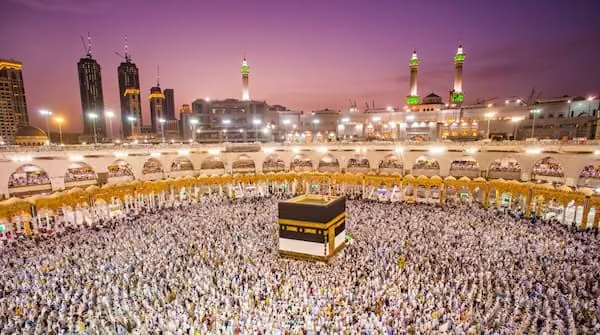
Millions answer the call: Proclaiming the Pilgrimage in unity around the Kaaba.💡
The Kaaba: Eternal Symbol of Tawhid, Qibla, and Sanctuary
The Construction of the Kaaba: The completed Kaaba stands as the ultimate embodiment of monotheism (tawhid) and the spiritual heart of Islam. Originally a simple roofless rectangular building of stone, it has been maintained through centuries yet its essence remains unchanged. It serves as the Qibla, the fixed direction toward which over a billion Muslims turn in prayer five times daily, creating global synchronization of hearts in worship.
The Construction of the Kaaba: The Kaaba is also the focal point of the Haram—the sacred sanctuary where fighting and harm are prohibited, fostering peace and reverence. As the first House established for mankind, it symbolizes the primordial call to worship the One God. The Black Stone in one corner, associated with Ibrahim عليه السلام, is pointed to during tawaf as a sign of love and covenant.
Its cubic shape and Kiswah covering add majestic simplicity. Spiritually, it represents the axis connecting earth to heaven where believers feel closest to Allah. Its construction by two prophets underscores that true sanctuaries arise through divine guidance and sincere effort. This edifice inspires awe and motivates building personal sanctuaries of worship.
Interfaith Resonances and the Shared Abrahamic Legacy
The Construction of the Kaaba: The Kaaba’s construction story resonates beyond Islamic tradition, touching the shared heritage of Abrahamic faiths. Hazrat Ibrahim عليه السلام, revered as Abraham in Judaism and Christianity, is the patriarch of monotheism. While details differ, the theme of building sanctuaries in obedience to God is common.
In the Islamic narrative, the Kaaba represents the pure original monotheistic house, later cleansed by Prophet Muhammad ﷺ of idols, restoring it to its foundational purpose. Interfaith dialogue highlights Ibrahim عليه السلام as a unifying figure—a model of faith, sacrifice, and submission transcending boundaries.
The story emphasizes universal values: obedience to the Divine, care for family and future generations, and creating spaces for communal worship and peace. This dimension shows the Kaaba as a beacon of tawhid for humanity, encouraging appreciation of common spiritual roots.
Enduring Lessons: Faith, Resilience, and Building Personal Sanctuaries
The Construction of the Kaaba: This profound narrative yields powerful lessons illuminating the spark of divine wisdom. Unwavering obedience to Allah, even in uncertainty or hardship, leads to miraculous outcomes—as in the Zamzam spring and thriving spiritual center from desolation.
The Construction of the Kaaba Faith is collaborative; the father-son bond teaches involving family in worship and supporting one another in building legacies of goodness. Every action should be accompanied by sincere prayer and humility, seeking Allah’s acceptance over worldly recognition. The story motivates embracing challenges with trust in Allah’s plan, knowing trials become triumphs. It encourages building our own “Kaabas”—personal sanctuaries of worship in hearts and homes—through consistent prayer, Quran, and good deeds.
The Construction of the Kaaba The barren valley blooming into faith’s heart reminds us no situation is too desolate for divine intervention. Key themes of resilience, tawakkul, prophetic legacy, and transformative faith come alive. This narrative calls to simplicity, dedication, and unity, renewing commitment to live as builders of faith. The Construction of the Kaaba The Construction of the Kaaba
Conclusion: Carrying the Divine Spark Forward Across Generations
The Construction of the Kaaba: The construction of the Kaaba by Hazrat Ibrahim عليه السلام and Hazrat Ismail عليه السلام remains one of the most inspiring chapters in spiritual history. What began as a divine command in a desolate valley culminated in an eternal symbol drawing hearts toward tawhid, peace, and unity. The structure raised with hands and prayers stands today as Qibla and soul of Hajj—a living testament to obedience, sacrifice, and faith’s power to transform the world.
The Construction of the Kaaba: Let it ignite the same spark of divine wisdom within us. May we emulate their submission, involve loved ones in faith-building, and supplicate sincerely. The Kaaba calls us to carry its essence daily—making homes, hearts, and actions places of pure worship and peace. We become part of the legacy, ensuring tawhid’s illumination shines for future generations. O Allah, accept from us our efforts as You accepted from Your prophets Ibrahim and Ismail عليهما السلام. Ameen.
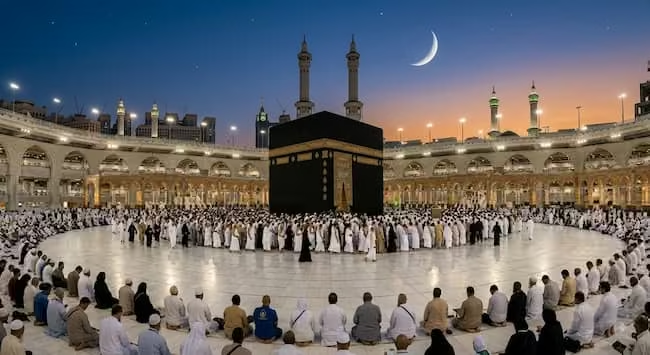
The Kaaba stands eternal — a living legacy of the Construction of the Kaaba, carrying the divine spark of faith forward across generations.
Key Lesson
In this, we find a motivational lesson: even in isolation and hardship, obedience to divine will sparks transformations that benefit humanity eternally. 📖
The barren valley: by the strength and steadfastness of faith, evolved into a thriving spiritual hub. 🕋
This narrative illuminates the spark of divine wisdom: faith turns trials into triumphs, motivating us to embrace challenges with trust in Allah’s plan. As we contemplate this, let it stir emotions of resilience and hope, encouraging us to build our own ‘Kaabas’—personal sanctuaries of worship in our hearts. 🌙