
7 Ways Soil as Skin & Microbiome Promotes Sustainability
Soil is not just dirt beneath our feet. It is a living, breathing system that functions as the planet’s protective layer. When we understand Soil as Skin & Microbiome, we begin to see the Earth as a living organism rather than a collection of resources. Just as human skin and its microbiome protect the body, the Earth’s soil and its vast community of microorganisms form a vital shield that supports all life.
This living layer, often called Earth’s skin and breath, regulates climate, stores carbon, filters water, and sustains biodiversity. Without healthy soil, the entire planetary system begins to break down. In this article, we explore seven powerful ways that Soil as Skin & Microbiome promotes sustainability and why protecting this system is one of the most important actions we can take for the future of life on Earth.
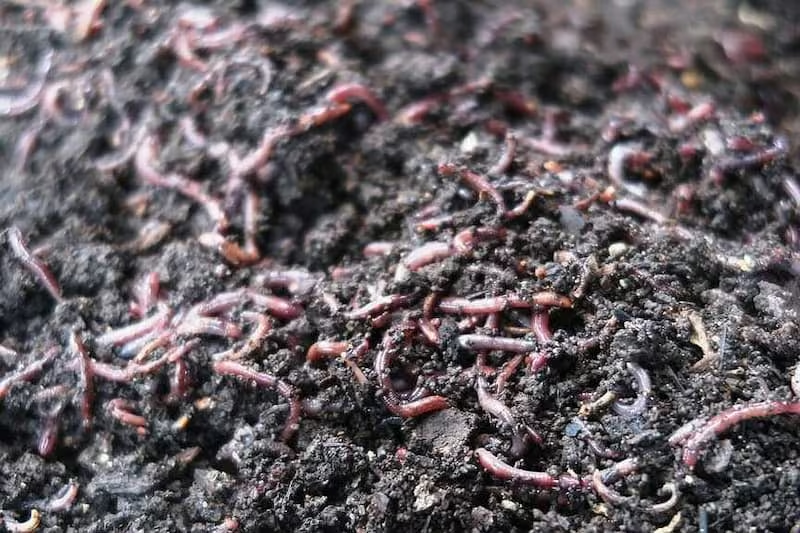
Earthworms create nutrient-rich castings that help build Soil as Skin & Microbiome
Understanding Soil as Skin & Microbiome
A single teaspoon of healthy soil contains more microorganisms than there are people on the planet. These bacteria, fungi, protozoa, and other microscopic life forms create a complex living network. Scientists often compare this network to the human gut and skin microbiome because it performs similar protective and regenerative functions.
When we treat soil as a living system rather than inert material, we begin to respect Soil as Skin & Microbiome as a foundation of planetary health. This perspective is supported by modern Earth system science and the Gaia hypothesis, which views the Earth as a self-regulating living system. In this view, soil and atmosphere work together as Earth’s skin and breath, constantly exchanging gases, water, and energy to maintain balance.
Healthy soil stores carbon, supports plant life, retains water, and protects against erosion. When this system is damaged by intensive farming, deforestation, or chemical overuse, the consequences reach far beyond the land itself. Climate instability, reduced food security, and loss of biodiversity are all connected to the decline of Soil as Skin & Microbiome.
1. Soil as Skin & Microbiome Stores Massive Amounts of Carbon
One of the most important contributions of Soil as Skin & Microbiome is its ability to store carbon. Healthy soils hold more carbon than the atmosphere and all vegetation combined. This carbon storage capacity makes soil one of the most powerful natural tools for slowing climate change.
When soil is managed regeneratively, plants draw carbon dioxide from the air and transfer it into the ground through their roots. Microorganisms then help lock that carbon into stable forms within the soil. This process reduces greenhouse gases in the atmosphere and strengthens Earth’s skin and breath.
Unfortunately, conventional agricultural practices often reverse this process. Tillage, chemical fertilizers, and bare soil expose organic matter to oxygen, releasing stored carbon back into the air. By protecting and regenerating Soil as Skin & Microbiome, we can reverse this damage and turn soil into a powerful climate solution.
2. Soil as Skin & Microbiome Supports a Living Immune System
Just as the human microbiome protects the body from disease, the soil microbiome acts as the Earth’s immune system. Beneficial microbes suppress harmful pathogens, break down toxins, and create conditions where plants can thrive without heavy chemical inputs.
When Soil as Skin & Microbiome is healthy, this natural defense system functions effectively. It reduces the need for synthetic pesticides and fertilizers, which often harm beneficial organisms and pollute water systems. Restoring microbial diversity strengthens the resilience of entire ecosystems and supports long-term sustainability.
This living immune function is one of the clearest reasons why Soil as Skin & Microbiome is essential for a healthy planet. Without it, soils become dependent on external inputs and lose their natural ability to regenerate.
3. Soil as Skin & Microbiome Builds and Protects Topsoil
Fertile topsoil is the most valuable layer of Earth’s skin and breath. It can take between 100 and 1,000 years to form just one centimeter of healthy topsoil through natural processes. Yet modern practices can destroy this layer in only a few decades.
Intensive tillage, overgrazing, and deforestation strip away the living surface of the land.
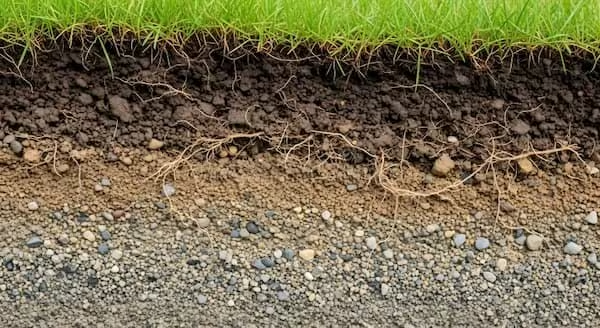
Soil as Skin & Microbiome builds and protects topsoil. This cross-section shows the living layers of healthy soil with roots, organic matter, and subsoil.
Once topsoil is lost, the land becomes vulnerable to erosion, desertification, and declining productivity. Protecting Soil as Skin & Microbiome means protecting this thin but essential layer that feeds humanity and supports nearly all terrestrial life.
Regenerative practices such as cover cropping, reduced tillage, and adding organic matter help rebuild topsoil and restore the living skin of the Earth.
4. Soil as Skin & Microbiome Improves Water Retention and Climate Resilience
Healthy soil acts like a sponge. The complex structure created by roots, fungi, and organic matter allows soil to absorb and hold large amounts of water. This capacity is critical for both drought resistance and flood prevention.
When Soil as Skin & Microbiome is degraded, water runs off the surface instead of soaking in. This leads to increased flooding, reduced groundwater recharge, and greater vulnerability during dry periods. Restoring soil health strengthens Earth’s skin and breath by improving the planet’s natural water cycle.
In a time of increasing extreme weather, the water-holding ability of living soil is one of the most practical forms of climate adaptation available to us.
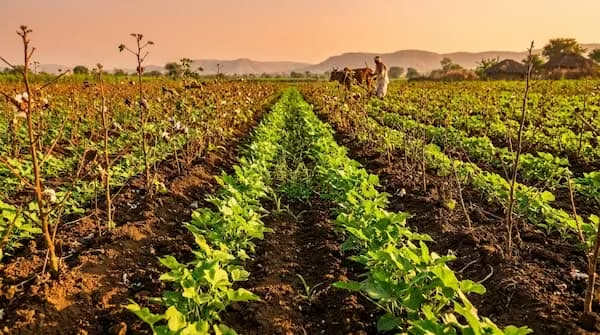
Regenerative farming restores Soil as Skin & Microbiome and protects Earth’s living skin
5. Soil as Skin & Microbiome Reduces Dependence on Chemical Inputs
A thriving soil microbiome naturally provides nutrients to plants through processes such as nitrogen fixation and nutrient cycling. Mycorrhizal fungi extend the reach of plant roots, helping them access water and minerals more efficiently.
When farmers and land managers support Soil as Skin & Microbiome, they reduce the need for synthetic fertilizers and pesticides. This shift lowers pollution, protects water quality, and reduces the environmental cost of food production. It also creates healthier food systems that support both human and planetary well-being.
By working with the living systems already present in the soil, we move toward a more sustainable and regenerative model of agriculture.
6. Soil as Skin & Microbiome Connects Land and Atmosphere
Soil and atmosphere are not separate systems. They form an interconnected whole that can be understood as Earth’s skin and breath. Plants growing in healthy soil absorb carbon dioxide and release oxygen. Soil microorganisms influence the gases that enter the atmosphere, including carbon dioxide, methane, and nitrous oxide.
When soil is damaged, it releases stored carbon and weakens this balance. When soil is restored, it strengthens the planet’s ability to regulate temperature and air quality. Protecting Soil as Skin & Microbiome therefore directly supports atmospheric health and climate stability.
This deep connection shows why regenerative land management is not only about farming — it is about healing the entire Earth system.

Earth’s thin blue atmosphere — part of Earth’s skin and breath connected to living soil
7. Soil as Skin & Microbiome Creates Long-Term Ecological Resilience
Landscapes with healthy, living soil are far more resilient to climate extremes. They recover faster from droughts, resist erosion during heavy rains, and support greater biodiversity above and below ground.
This resilience is one of the most important long-term benefits of Soil as Skin & Microbiome. As climate pressures increase, the ability of ecosystems to adapt and recover becomes essential for both nature and human communities. Regenerating soil is one of the most effective ways to build this resilience at scale.
Healing Earth’s Living Skin: Practical Pathways
The science is clear. We already know the practices that restore Soil as Skin & Microbiome:
● No-till or minimal tillage farming |
● Cover crops and diverse crop rotations |
● Composting and organic matter addition |
● Holistic planned grazing |
● Agroforestry and reforestation |
● Reducing synthetic chemical inputs |
These methods rebuild microbial life, increase carbon storage, improve water retention, and strengthen Earth’s skin and breath. When applied widely, they offer a powerful pathway toward true sustainability.
Conclusion: We Are Part of Earth’s Living System
Soil as Skin & Microbiome is not a metaphor alone — it is a scientific reality. The thin living layer of soil that covers our planet is as essential to life as the atmosphere that surrounds it. Together they form Earth’s skin and breath, the foundation of planetary health.
Humanity has the knowledge and the tools to heal this system. The success of the Montreal Protocol in protecting the ozone layer proved that coordinated action can reverse environmental damage. The same level of commitment is now needed for the soil.
By choosing regenerative practices, supporting policies that protect living soil, and shifting our mindset from exploitation to care, we can restore the living skin of the Earth. In doing so, we protect not only the environment but the future of all life, including our own.
We are not separate from this system. We are conscious participants within it. The health of Soil as Skin & Microbiome will determine the health of generations to come.
The time to regenerate Earth’s skin and breath is now.
From orbit at night, humanity appears as a glowing web of connection encircling Earth — visualizing our interconnected world through technology, communication, and collective intelligence.
A Call to Protect Earth’s Skin and Breath
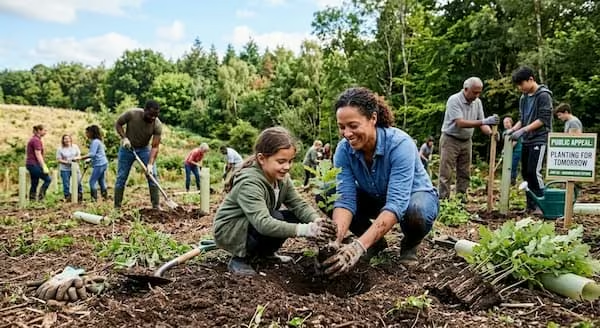
Planting for tomorrow — protecting Earth’s skin and breath together
Healthy soil and a stable atmosphere form the foundation of life on Earth. Protecting Soil as Skin & Microbiome is not only an environmental responsibility — it is essential for the future of all living beings.
Through regenerative practices, education, and collective action, we can restore Earth’s living systems.
The time to act is now.