
Consciousness of Heaven, Earth, and Mountains: Quran Reflection (Surah Al-Ahzab 33:72)
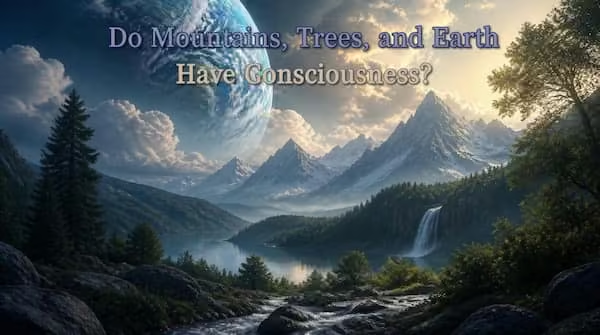
Consciousness of Heaven, Earth, and Mountains: Quran Reflection (Surah Al-Ahzab 33:72) – A breathtaking vision of nature’s living spirit.
Consciousness of Heaven, Earth, and Mountains: An Introduction
Consciousness of Heaven, Earth, and Mountains: In the vast tapestry of existence, where mountains stand as ancient sentinels and trees whisper through the winds, a profound divine conversation unfolded. Allah, the Almighty, offered the great Amanah (the Trust) to the heavens, the earth, and the mountains.
They sensed its immense weight and, in their wisdom and awe, humbly declined. Yet humanity boldly accepted this responsibility. This powerful verse from Surah Al-Ahzab (33:72) invites us to deep reflection: What does it reveal about consciousness in creation, the uniqueness of human responsibility, and our shared journey in fulfilling this divine trust?
Consciousness of Heaven, Earth, and Mountains – Reflections on Quran 33:72
The verse states
“Indeed, We offered the trust to the heavens and the earth and the mountains, but they declined to bear it and feared it. But man [undertook to] bear it. Indeed, he was unjust and ignorant.”
(Surah Al-Ahzab 33:72)
Consciousness of Heaven, Earth, and Mountains: These words are not mere poetry; they are a mirror reflecting the nature of all creation. The refusal of the mountains, earth, and skies is not portrayed as rebellion but as an aware recognition of the burden’s gravity. This opens a gateway to understanding that every element in the universe possesses a form of “sense” — an innate submission and awareness of divine order.
Consciousness of Heaven, Earth, and Mountains: As someone reflecting on these eternal words, I find myself moved by the humility embedded here. In a world that often celebrates human dominance, the Quran reminds us that the grandest parts of nature knew better than to rush into such responsibility. They “feared it,” suggesting a profound awareness.
This aligns with the broader Quranic theme that all creation glorifies Allah in its own language: “The seven heavens and the earth and whatever is in them exalt Him. And there is not a thing except that it exalts [Allah] by His praise, but you do not understand their [way of] exalting” (Surah Al-Isra 17:44). Trees, mountains, and the earth are not silent objects but active participants in a cosmic symphony of worship.
Consciousness of Heaven, Earth, and Mountains in the Nature of Amanah
Consciousness of Heaven, Earth, and Mountains: Scholars across centuries have illuminated the meaning of this trust. Many interpret the Amanah as the gift of free will — the capacity to choose between right and wrong, coupled with moral accountability. Others see it as the duties of faith (fara’id) or humanity’s role as khalifah (vicegerent or steward) on earth. Unlike the rest of creation, which submits instinctively and harmoniously, humans were granted choice. This choice brings immense potential for good but also the risk of injustice and ignorance, as the verse candidly acknowledges.
Consciousness of Heaven, Earth, and Mountains: The Prophet Muhammad (peace be upon him) emphasized the centrality of trust in faith. He said, “There is no faith for the one who has no trust (Amanah), and there is no religion for the one that does not fulfil his promises.” Another narration warns: “When Amanah is neglected, then await the Hour.” These Hadiths underscore that fulfilling the trust is not optional but the backbone of a believer’s life.
In my personal reflection, this acceptance by humanity feels both courageous and humbling. We did not possess the instinctive caution of the mountains, yet we bowed our heads and said, in essence, “We will try.” This act defines our uniqueness — and our ongoing struggle and how has Allah bestowed upon humans the honor of being superior to other creatures.
Consciousness of Heaven, Earth, and Mountains – Awareness Within All Creation

Consciousness of Heaven, Earth, and Mountains – Reflections on Quran 33:72 — A breathtaking scene of nature’s vibrant life and divine trust.
The question of whether mountains, trees, and the earth possess a form of consciousness is particularly striking in light of this verse. If they could decline the burden, it implies an awareness or “sense” granted by Allah. Islamic tradition richly supports this view. The Quran frequently portrays nature as alive with purpose and intelligence. Consider how Allah inspired the bee:
And your Lord inspired the bee, saying: ‘Take your habitations in the mountains and in the trees and in what they construct’.
(Surah An-Nahl 16:68)
Or the verses describing mountains as stakes stabilizing the earth, and trees as providers of beauty and sustenance.
(Surah Luqman 31:10; Surah Qaf 50:7-8)
Consciousness of Heaven, Earth, and Mountains: Mountains and trees do not possess free will like humans, but they fulfill their roles perfectly — growing, providing shade, preventing erosion, and continuously glorifying their Creator. This “sense” is one of instinctive obedience, free from the turmoil of choice. Humans, by accepting the Amanah, entered a realm of accountability. We can rise to angelic heights through good deeds or fall through negligence. This contrast fosters deep appreciation: every leaf, every peak, teaches us humility.
Consciousness of Heaven, Earth, and Mountains: For non-Muslim readers, this perspective offers a universal invitation. Many spiritual and philosophical traditions — from indigenous wisdom to modern ecological thought — recognize a living intelligence in nature. The Quran’s message beautifully bridges these understandings by affirming that the universe is not random but purposefully designed, with humanity holding a special, responsible place within it.
Consciousness of Heaven, Earth, and Mountains: The Quran is not limited to any single race, region, or community. It serves as a light of guidance for all people — regardless of faith, background, or even absence of religion — gently leading from darkness into light.
Consciousness of Heaven, Earth, and Mountains - Humanity’s Role as Stewards
Embedded in the acceptance of the trust is the concept of khilafah — stewardship. Allah says:
“It is He who has made you successors (khalifah) upon the earth.”
(Surah Fatir 35:39)
We are not owners but caretakers. The Prophet Muhammad (peace be upon him) reinforced this:
“The world is sweet and green, and verily Allah has installed you as vicegerents in it in order to see how you act.”
(Hadith reported in Sahih Muslim)
Note ➤ Hadith Number: Often referenced as Sahih Muslim 2742 or similar depending on numbering.
This has profound implications today. In an age of environmental crisis, the Amanah calls us to protect the very creations that wisely declined the heavier burden. Trees purify our air, mountains shape climates, and ecosystems sustain life — all while glorifying Allah. Fulfilling our trust means walking gently on the earth, as the Quran describes the true servants of the Most Compassionate:
“those who walk on the earth humbly.”
(Surah Al-Furqan 25:63)
Youth especially can draw inspiration here. In a fast-paced world of technology and individualism, remembering that even mountains feared this responsibility encourages mindful living. It challenges us to use our free will for justice — in personal ethics, community relations, and global stewardship. For interfaith dialogue, this verse highlights shared values: responsibility toward creation is a common thread across many beliefs.
Consciousness of Heaven, Earth, and Mountains - Lessons That Transform the Heart
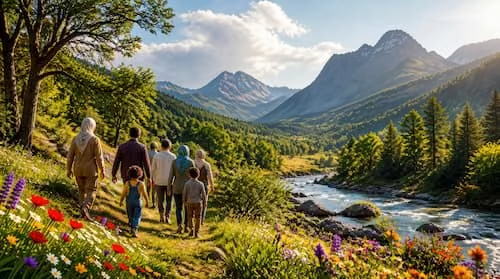
Consciousness of Heaven, Earth, and Mountains -Lessons That Transform the Heart — A family journeying through nature’s living landscape.
Consciousness of Heaven, Earth, and Mountains: Carrying the Amanah requires balance. We must avoid the “unjust and ignorant” pitfalls by cultivating knowledge, sincerity, and consistency. Personal reflection reveals this truth daily: every promise kept, every act of kindness, every moment spent caring for the environment is part of honoring the trust.
Consciousness of Heaven, Earth, and Mountains: Scholars like those in classical tafsirs remind us that the heavens and earth declined not out of weakness Rather, they fell out of fear of Allah because they were aware of the pain of Hell, that if they could not fulfill their responsibility, they would become the fuel of Hell. Therefore, they trembled upon seeing the scholarly burden of the Quran and bowed down to Allah for forgiveness.
Their refusal magnifies the honor (and trial) given to humanity. This should inspire gratitude rather than arrogance. As the Prophet (peace be upon him) taught, we are all shepherds responsible for our flocks — families, communities, and the natural world.
For Muslims and non-Muslims alike, the effect is meant to be deep: a call to pause amid daily life and ask, “How am I carrying my share of this trust?” It fosters empathy with nature, ethical living, and spiritual awakening. In diverse communities, it promotes unity — we are all part of the same creation, accountable in our own ways to a higher purpose.
Consciousness of Heaven, Earth, and Mountains - A Call to Renewed Commitment
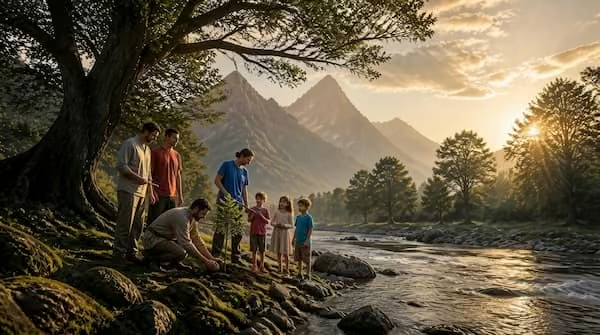
Consciousness of Heaven, Earth, and Mountains -A Call to Renewed Commitment — A family connecting with nature through planting a tree by the river.
Consciousness of Heaven, Earth, and Mountains: As we reflect on this verse, let the silent wisdom of trees and the steadfastness of mountains guide us. They declined the full weight of choice, yet they continue to fulfill their purpose with flawless obedience — standing firm through seasons of change, offering shelter and beauty, and glorifying their Creator in perfect harmony. Humanity, however, embraced the Amanah. This decision calls us to respond with greater justice, wisdom, and heartfelt care as we carry this divine responsibility.
May these insights take root deeply in every reader’s heart — Muslim or non-Muslim, believer or seeker alike. May they spark a fresh awareness of our role in the grand design. The trust we accepted goes far beyond individual spiritual growth; it encompasses our relationships with fellow humans and our duty toward the natural world that sustains us. Simple yet powerful actions — planting a tree, keeping our word, safeguarding the environment, speaking honestly, or showing kindness under pressure — all form part of honoring this sacred charge.
By living in this way, we fulfill our unique human potential and harmonize with the magnificent symphony of creation already praising the Divine. Every swaying leaf, every enduring mountain, and every flowing river stands as a living reminder that the rest of creation is in complete submission. We are the ones invited to willingly align our freedom of choice with divine will.
The trust was presented, the heavens and earth respectfully declined, and humanity courageously stepped forward. This choice carries both great honor and profound accountability. The vital question facing each of us now is this: How will we bear this Amanah in our daily lives? Will we uphold it with gratitude, excellence, and sincerity, or allow it to slip away? The choices we make today will echo into the lives of future generations. May Allah strengthen us all to become worthy bearers of this sacred trust.