
Prophet Nuh (AS) After the Flood: 7 Inspiring Lessons
Islamic, Biblical, and Archaeological Perspectives
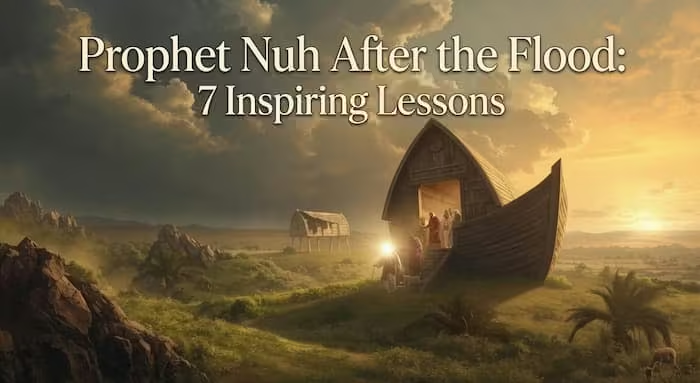
Prophet Nuh after the flood: A powerful moment of survival, renewal, and divine mercy.
Introduction: Prophet Nuh (AS) After the Flood
The story of Prophet Nuh (AS) after the flood stands as one of the most powerful narratives of survival, renewal, and divine mercy in Islamic tradition. In the Holy Quran, the account of Nuh (A.S.) and the great deluge is not merely a tale of destruction but a profound lesson in faith, patience, and fresh beginnings.
For Muslims and sincere seekers alike, understanding what happened to Prophet Nuh after the flood offers timeless guidance on how to rebuild life after trials, trust Allah’s plan, and embrace new opportunities with gratitude and purpose.
This expanded guide explores the complete Islamic perspective on Prophet Nuh (AS) after the flood, drawing directly from Surah Hud and other Quranic references. It presents seven inspiring lessons that remain deeply relevant today…
Prophet Nuh (AS) After the Flood : The Great Deluge and Miraculous Survival
The Quran describes the flood as a divine response to persistent disbelief after centuries of prophetic invitation. Prophet Nuh (A.S.) spent 950 years calling his people to tawhid, yet only a small number believed.
When the command came, he built the Ark under divine guidance, loaded the believers along with pairs of animals, and boarded with his family—except those whose fate had already been sealed.
Prophet Nuh (AS) After the Flood several months of terrifying waves, Allah commanded the earth to swallow its water and the sky to withhold its rain. The waters receded, and the Ark came to rest on Mount Judi in what is today southeastern Turkey.
This moment marks the true beginning of Prophet Nuh (AS) After the Flood. The vessel that had been a means of survival now became the platform for a new chapter of human history.
Prophet Nuh (AS) After the Flood, the Quran beautifully captures Allah’s words to Nuh (A.S.) upon disembarking:
“O Nuh, disembark in peace from Us and blessings upon you and upon nations [descending] from those with you. But other nations [of them] – We will grant them enjoyment; then there will touch them from Us a painful punishment.” (Surah Hud 11:48)
This verse highlights the central theme of Prophet Nuh after the flood: divine peace, blessings, and the promise of continuity through righteous progeny.
Prophet Nuh (AS) After the Flood: Landing on Mount Judi – The Symbol of New Beginnings
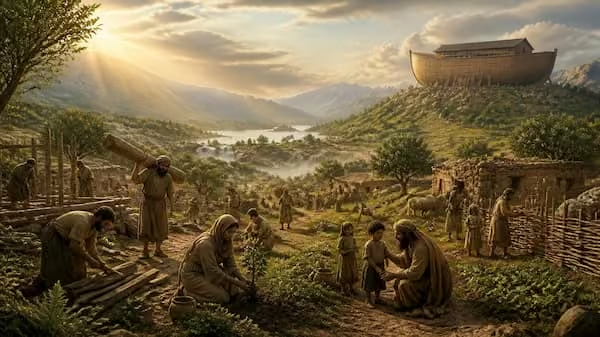
A peaceful biblical scene showing families planting trees and working the land near Noah’s Ark, symbolizing renewal, hope, and care for the Earth.
The resting of the Ark on Mount Judi carries deep symbolic meaning. Unlike mere survival, this event represents Allah’s fulfillment of His promise and the start of reconstruction. The land that had been submerged now offered fertile ground for planting, building, and raising families once again.
Prophet Nuh (AS) After the Flood and the surviving believers stepped onto dry land with renewed hope. They carried with them the seeds of future civilizations.
The Quran emphasizes that the descendants of those who were saved would form new nations. This repopulation was not random; it was part of a divine plan to spread monotheism and righteousness across the earth.
In Islamic tradition, Prophet Nuh (AS) after the flood focused on establishing communities grounded in worship of Allah alone.
Agriculture, animal husbandry, and social organization resumed under the umbrella of faith. The barakah (blessings) that accompanied their efforts ensured that meager resources multiplied and life flourished once more.
Rebuilding Life and Society After Prophet Nuh After the Flood
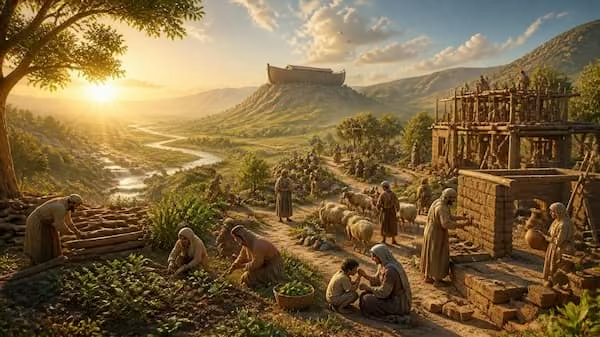
A serene and hopeful scene of people rebuilding life and society after Prophet Nuh’s (AS) flood — planting crops, raising animals, and constructing homes in a fertile valley as the Ark rests on a distant hill under golden sunset light.
Life Prophet Nuh (AS) after the flood in Islam was characterized by both physical reconstruction and spiritual renewal. The survivors had witnessed the consequences of disbelief yet also experienced Allah’s mercy in the most dramatic way. This dual awareness shaped their approach to rebuilding.
They understood that true prosperity comes from aligning human effort with divine guidance. Prophet Nuh (AS) after the flood continued his mission of calling to Allah, now among a smaller but more committed community. His long life after the flood allowed him to guide the new generations, ensuring that the lessons of the deluge were never forgotten.
The emphasis on family, community cooperation, and environmental care became central. The earth had been cleansed and restored; it was now humanity’s responsibility to maintain that balance through gratitude and righteous living.
7 Inspiring Lessons from Prophet Nuh (AS) After the Flood
Here are seven powerful lessons drawn directly from the Quranic account of Prophet Nuh (AS) after the flood. Each lesson is explained with equal depth and practical relevance for modern readers.
Lesson 1: Patience and Perseverance Ultimately Lead to Victory
Prophet Nuh (A.S.) preached for nearly a millennium with very few followers. Yet after the flood, he witnessed the fulfillment of Allah’s promise. This teaches us that consistent effort in the path of truth, even when results seem distant, will eventually bear fruit. In our own lives, whether in career, family, or personal growth, sustained patience combined with action brings eventual success and relief.
Lesson 2: Complete Submission to Allah’s Will Brings Inner Peace
When Nuh (A.S.) lost his own son to the flood, he accepted Allah’s judgment with humility, saying he sought refuge from asking about matters beyond his knowledge. Prophet Nuh after the flood models radical acceptance. True peace comes not from controlling every outcome but from trusting that Allah’s decree is always just and wise, even when it involves personal pain.
Lesson 3: Gratitude Unlocks Continuous Blessings
Upon stepping onto Mount Judi, Nuh (A.S.) received explicit peace and blessings from Allah. This divine greeting teaches that recognizing Allah’s favors after hardship invites even more barakah. Practicing daily gratitude—especially after emerging from difficult seasons—opens doors to renewed provision, relationships, and opportunities.
Lesson 4: Preparation and Trust in Divine Guidance Go Hand in Hand
The Ark was built long before the first drop of rain. Prophet Nuh after the flood benefited from earlier obedience. We learn that proactive preparation during calm periods, paired with complete reliance on Allah, positions us to survive and thrive when storms arrive. Whether saving resources, acquiring knowledge, or strengthening faith, preparation is an act of worship.
Lesson 5: Rebuilding Requires Both Faith and Practical Action
After the waters receded, the survivors did not wait passively. They engaged in agriculture, community building, and raising the next generation. The story of Prophet Nuh after the flood shows that faith without effort is incomplete. We must pray, plan, and work diligently while trusting Allah for results. Balanced action after any personal “flood” leads to sustainable recovery.
Lesson 6: Hope for Future Generations Sustains Present Efforts
Allah promised that nations would descend from those who survived with Nuh (A.S.). This forward-looking vision gave meaning to their suffering. When we focus on leaving a legacy of faith, knowledge, and good character, our current struggles gain purpose. Prophet Nuh after the flood reminds parents, teachers, and leaders to invest in the next generation with hope and intentionality.
Lesson 7: Environmental Stewardship Is Part of Faith
The Quran describes the earth actively swallowing the water and the sky withholding rain at Allah’s command. The land was restored to habitability. This detail teaches that humans are caretakers of the earth. After personal or collective crises, we have a responsibility to heal our surroundings—whether through sustainable living, community service, or simply maintaining cleanliness and balance in our environment.
Biblical and Archaeological Perspectives on the Flood Story
Many non-Muslim readers approach the story of Prophet Nuh (AS) after the flood through Biblical or historical lenses. The Biblical account in Genesis shares core elements: the Ark, the flood, the landing on a mountain (identified as Ararat), and a new covenant symbolized by the rainbow. Both traditions emphasize divine judgment followed by mercy and renewal.
Archaeological and geological studies have identified evidence of significant regional floods in ancient Mesopotamia, supporting the possibility of a catastrophic local event that inspired widespread cultural memories. Flood narratives appear in the Epic of Gilgamesh and other ancient texts, suggesting a shared historical kernel across civilizations.
While interpretations differ—Islamic sources emphasize Mount Judi and the theological message—the universal themes of warning, salvation, and fresh starts resonate across faith traditions. For sincere students of comparative religion, these parallels highlight humanity’s collective longing for meaning after catastrophe.
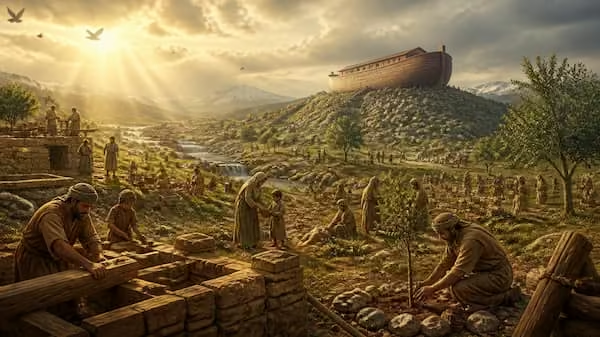
A powerful scene of hope and renewal: people working together to rebuild life and society after Prophet Nuh’s flood, planting trees and constructing homes near the Ark under divine sunlight.
Why the Story of Prophet Nuh (AS) After the Flood Matters Today
In our fast-changing world filled with personal crises, societal upheavals, and environmental concerns, the story of Prophet Nuh (AS) after the flood offers profound and practical hope that resonates deeply with people from all walks of life.
No matter how overwhelming the “deluge” of challenges may feel—whether financial hardship, family struggles, health issues, or global instability—Allah can always bring renewal and restoration, just as He did when the waters receded and the Ark settled peacefully on Mount Judi.
This timeless narrative encourages patience when progress feels painfully slow, gratitude when relief finally arrives, and purposeful action when the time comes to rebuild homes, relationships, communities, and even our inner selves.
By reflecting on how Prophet Nuh (A.S.) navigated life after the flood, modern readers discover that trials are never the end of the story; they are often the necessary preparation for a stronger, more faithful chapter ahead.
The seven lessons drawn from Prophet Nuh (AS) after the flood are far from abstract ideals; they serve as highly practical tools for anyone facing loss, starting over after disappointment, or seeking deeper faith in turbulent times.
Studying the Quranic account of Nuh (A.S.) and his survival provides both spiritual strength and actionable wisdom that can be applied directly to daily decisions, parenting, leadership, and personal growth.
These lessons remind us that true success lies in combining unwavering trust in Allah with consistent effort, gratitude, and a forward-looking vision for future generations. Ultimately, the story of Prophet Nuh (AS) after the flood continues to guide hearts toward resilience, reminding every believer that with sincere faith and patience, renewal is always possible and that Allah’s mercy can turn even the greatest floods into opportunities for blessed new beginnings.
Final Reflection and Takeaway
The Quran presents the story of Prophet Nuh (AS) after the flood not as a tragic ending but as the powerful beginning of a renewed chapter for humanity. When the Ark came to rest on Mount Judi, the survivors stepped onto dry land carrying both the weight of immense loss and the radiant promise of divine mercy.
The peace and blessings that Allah bestowed upon Nuh (A.S.) and those with him were not limited to that moment; they represent an eternal invitation for every generation to rise after trials with stronger faith, deeper gratitude, and clearer purpose.
This sacred narrative teaches that every personal or collective “flood” we face can become the very platform from which we rebuild a life aligned with divine guidance, provided we embrace the same patience, obedience, and trust that defined Prophet Nuh (AS) after the flood.
In our own lives today, the inspiring lessons from Prophet Nuh (AS) after the flood remain fully available and urgently needed. Whether we are recovering from loss, starting over after disappointment, or seeking to strengthen our families and communities, the example of Nuh (A.S.) shows us how to transform hardship into growth.
The same Allah who commanded the earth to swallow the waters and granted fresh blessings on Mount Judi continues to offer mercy, barakah, and new beginnings to all who turn to Him sincerely.
May we therefore emerge from every trial with firmer iman, renewed commitment to righteous action, and heartfelt hope for the generations that follow, always remembering that after every storm comes the opportunity to begin again under the shade of Allah’s peace and guidance.
Page 7