
Forests and Jungles: The Green Heart of Our Planet
Discover the vital role of forests and jungles in sustaining life on Earth – from biodiversity hotspots to climate guardians.
Ways a Person Can Participate in the Corruption of Forests
وَلَا تُفْسِدُوا۟ فِى ٱلْأَرْضِ بَعْدَ إِصْلَـٰحِهَا وَٱدْعُوهُ خَوْفًۭا وَطَمَعًا ۚ إِنَّ رَحْمَتَ ٱللَّهِ قَرِيبٌۭ مِّنَ ٱلْمُحْسِنِينَ ٥
“Do not spread corruption in the land after it has been set in order. And call upon Him with hope and fear. Indeed, Allah’s mercy is always close to the good-doers.”
Surah Al-A‘raf (7:56)
Introduction: Forests and Jungles - The Green Heart of Our Planet
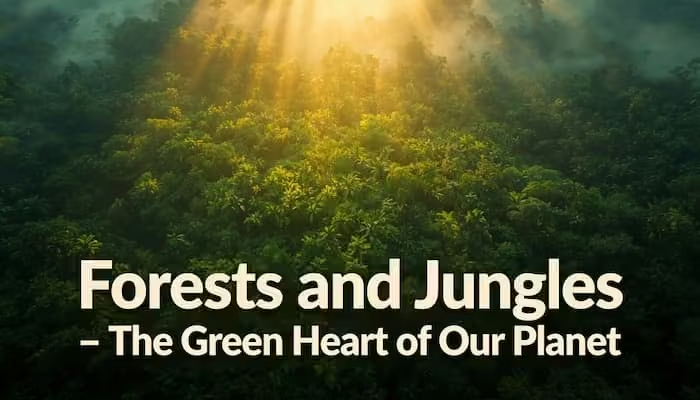
Forests and Jungles – The Green Heart of Our Planet
🌿 Forests and jungles are both areas dominated by trees, but they differ in climate, density of vegetation, ease of movement, and how people commonly use the terms.
Forests and Jungles: The Green Heart of Our Planet - What is a Forest?
Forests and Jungles: Forests stand as the mighty green guardians of Earth—vast, living cathedrals of towering trees, tangled undergrowth, and endless layers of life that blanket nearly one-third of our planet’s land. These ancient ecosystems, often called the “lungs of the Earth,” breathe life into the atmosphere by producing oxygen, absorbing massive amounts of carbon dioxide, and regulating global climate.
Forests and Jungles: Scientifically, it is an ecosystem where trees are the main life form, usually with a canopy cover of more than 10–60% (depending on the definition used by organizations like the UN FAO or national systems). This intricate living system forms the very foundation of the unbreakable bond between trees and our Earth, sustaining biodiversity, regulating climate, and supporting the intricate web of life that makes our planet habitable.
🌿 Forests exist in many parts of the world and come in different types:
1= Temperate forests (with seasons, colorful autumn leaves)
2= Boreal forests (cold northern coniferous/taiga forests)
3= Tropical rainforests (hot, wet, high biodiversity)
Forests and Jungles: From the misty temperate woodlands to the steamy tropical rainforests, forests teem with extraordinary biodiversity,sheltering millions of plant and animal species while providing humans with timber, medicines, food, clean water, and profound cultural and spiritual value.
Forests and Jungles: (especially in mature forests)Dense, humid tangles of vegetation where sunlight barely reaches the ground and the canopy blocks much sunlight from reaching the floor).In these forests are generally easier for humans to walk through because the ground level often has less tangled vegetation.
Forests and Jungles: The Green Heart of Our Planet - What is a Jungle?
Forests and Jungles: A jungle is typically a very dense, tangled, and overgrown tropical forest, especially with thick vegetation, vines, and plants at ground level that make movement difficult without cutting a path. Jungles represent the most chaotic and overgrown expressions of tropical forests, full of raw and untamed energy.
Forests and Jungles: The term “jungle” originally comes from a Hindi and Sanskrit word meaning “wild, uninhabited land.” It is most often used for humid tropical regions such as parts of the Amazon, Southeast Asia, and Central Africa. Although not a strict scientific term, in everyday language “jungle” suggests something more chaotic, impenetrable, and wild than a regular forest.
Forests and Jungles: Forests develop naturally over centuries or through dedicated conservation and reforestation efforts. They play a vital role in maintaining ecological balance by regulating climate, producing oxygen, storing carbon, conserving soil and water, preventing erosion, and providing habitats for countless species. Forests are also essential for human life and offer valuable resources and spiritual significance.
Forests and Jungles: Jungles stand out as the most biodiverse and vibrant parts of tropical forests. Their dense vegetation and rapid growth make them highly effective at producing oxygen and storing carbon. These ecosystems face growing threats from deforestation and climate change, endangering both unique species and the important environmental services they provide to the planet.
🌿In simple words:
A forest (or jungle, in its wildest tropical form) is nature’s grand masterpiece—a vibrant, green world of trees and life that supports wildlife and helps keep our planet healthy and breathing.
Forests and Jungles: Here are some classic jungle scenes with thick vines, dense undergrowth, and lush tropical vegetation: These breathtaking jungle landscapes showcase the raw, untamed beauty of tropical rainforests. Towering ancient trees form a nearly impenetrable canopy high above, allowing only thin shafts of golden sunlight to pierce through and dance across the forest floor. Thick, twisting vines drape from branch to branch like natural ropes, while massive strangler figs wrap around host trees in a slow, silent embrace. The ground is a vibrant carpet of ferns, broad-leafed plants, moss-covered logs, and tangled roots that create a maze-like understory. Exotic orchids cling to tree trunks, colorful bromeliads burst from crevices, and giant leaves unfurl like emerald umbrellas. Mist often hangs in the air, creating an ethereal, almost mystical atmosphere, while the constant soundtrack of dripping water, distant bird calls, insect hums, and occasional monkey howls fills the humid space.
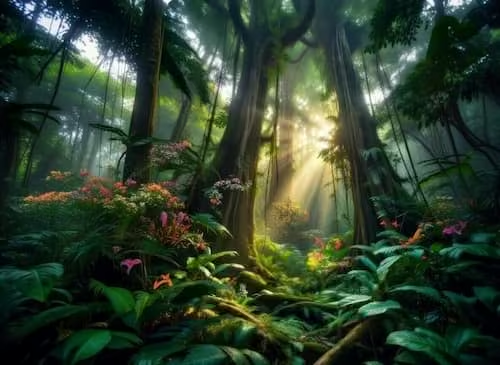
Golden sunlight filters through tall trees as colorful wildflowers bloom in a lush forest
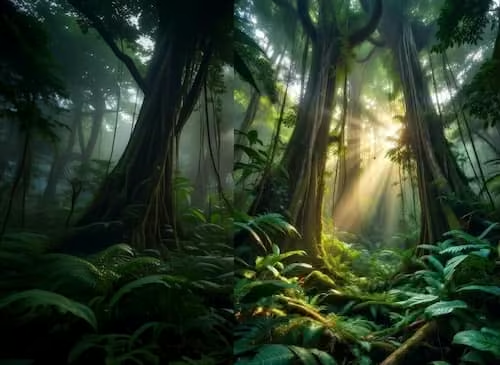
Golden sunlight filters through tall trees as colorful wildflowers bloom in a lush forest
🌾 Forests and jungles are both areas dominated by trees, but they differ in climate, density of vegetation, ease of movement, and how people commonly use the terms.🌾
🌺 “Protecting forests means safeguarding the very breath of our planet, let’s do our part.”🌺
How We Can Extend the Life of Forests for Centuries (With Real-World Examples)
Forests and Jungles: Forests are dynamic, living systems that grow slowly and require centuries to mature into resilient ecosystems. Their long-term survival depends not only on natural processes but on wise human protection, management, and respect. By adopting responsible practices today, we can ensure forests thrive for future generations, providing oxygen, biodiversity, climate regulation, and livelihoods.
"let's first shed light on the importance of forests from the Quran."
Importance of Forests in the Light of the Qur’an
Forests and Jungles: Forests are one of the greatest blessings of Allah. They provide oxygen, food, shelter, medicine, and help maintain balance in the environment. The Qur’an highlights the value of trees, plants, and greenery as signs of Allah’s wisdom and mercy.
1. Forests as a Sign of Allah’s Creation
Allah mentions trees and greenery as proofs of His power:
“It is He who sends down rain from the sky; from it you drink and from it grow trees on which you pasture your animals.” (Surah An-Nahl 16:10)
This verse shows that trees are essential for life and sustenance.
2. Forests Provide Food and Sustenance
Forests produce fruits and resources for both humans and animals:
“With it He causes crops to grow for you, olives, palm trees, grapevines, and all kinds of fruits. Indeed in that is a sign for a people who give thought.”(Surah An-Nahl 16:11)
This verse indicates the importance of vegetation for human survival.
3. Trees Maintain Balance in Nature
Allah created nature in perfect balance, and forests play a key role in maintaining this balance:
“And the earth He has laid out for all living creatures.” (Surah Ar-Rahman 55:10)
Forests help regulate climate, rainfall, and protect the soil, which supports life on Earth.
4. Trees Praise Allah
Even trees worship Allah in their own way:
“The stars and the trees prostrate.” (Surah Ar-Rahman 55:6)
This shows that trees are part of Allah’s creation that glorify Him; therefore, harming them unnecessarily is wrong.
5. Encouragement to Protect Nature
Islam teaches humans to be responsible caretakers of the Earth:
“Do not cause corruption on the earth after it has been set in order.” (Surah Al-A‘raf 7:56)
Deforestation and the destruction of forests are forms of corruption.
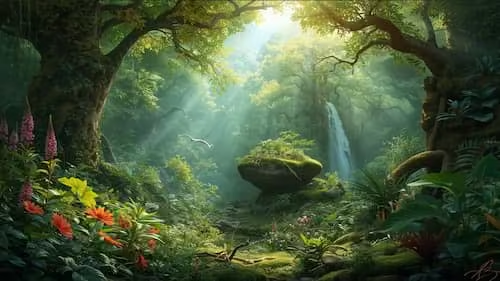
Golden sunlight streams through the trees beside a cascading waterfall in a vibrant, flower-filled forest
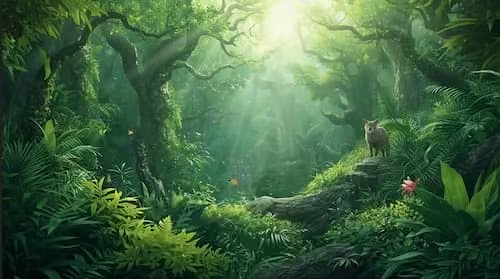
A deer standing peacefully in a lush green jungle with golden sunlight rays streaming through the trees
Lush green forests 🌳 a divine gift to protect 🌳 that support life.
Ways a Person Can Participate in the Corruption of Forests
Hitting or damaging trees unnecessarily while walking through forests can cause serious long-term harm. Even small wounds on the bark create entry points for insects, fungi, and diseases that weaken the tree over time. Repeated damage from careless visitors reduces the tree’s ability to transport water and nutrients effectively. Such actions contribute directly to the gradual decline of individual trees and the overall health of the forest ecosystem.
Breaking tree branches without any valid reason damages the structure and vitality of trees significantly. Removing branches reduces the tree’s capacity to perform photosynthesis and produce the energy it needs to survive. It also destroys habitats used by birds, insects, and small animals for shelter and nesting. Over time, this unnecessary destruction weakens trees and disrupts the natural balance within the forest environment.
Plucking or pulling leaves carelessly from trees interferes with their natural growth and survival process. Leaves play a vital role in photosynthesis, and excessive removal puts the tree under stress while limiting its ability to produce food and oxygen. In areas visited by many people, this repeated action can slow growth and make trees more vulnerable to disease and environmental changes, adding to the cumulative damage affecting forests.
Lighting excessive fires under or near trees poses a major threat to forest ecosystems and their long-term survival. Even small fires can damage tree bark, roots, and the surrounding soil when done carelessly or repeatedly. These actions kill beneficial soil organisms, release stored carbon, and greatly increase the risk of uncontrolled wildfires that can destroy large areas of forest.
Disturbing trees or the forest environment after sunset can severely affect nocturnal wildlife and natural processes. Many animals are active at night, and human presence during these hours causes stress and disrupts their feeding and breeding patterns. Artificial lights and noise at night interfere with the forest’s natural rhythms, forcing animals to abandon their habitats and contributing to the broader corruption of delicate forest ecosystems.