
How to Build Daily Habits of Knowledge & Reflection That Stick

Daily Habits of Knowledge and Reflection – Building Wisdom One Day at a Time
Building lasting daily habits of knowledge and reflection is one of the most powerful ways to rise in wisdom, clarity, and personal strength. This short and powerful verse of Qur’an captures the heart of a lifelong journey. It is a humble request for more knowledge, more understanding, and more light.
When we make this dua and then support it with consistent daily habits of knowledge and reflection, we turn a beautiful prayer into a living practice. The path of growth becomes both spiritual and practical.
In a noisy and distracted world, the people who rise in wisdom are those who protect time every day to learn and to reflect. These habits do not demand perfection. They ask for intention, structure, and gentle persistence. When practiced regularly, they transform ordinary days into a steady ascent toward greater clarity, dignity, and purpose.
This guide shows you how to build daily habits of knowledge and reflection that actually stick—so the spark of learning becomes a reliable light in your life.
Why Daily Habits of Knowledge and Reflection Matter
Knowledge without reflection remains information. Reflection without knowledge stays limited. Together they create wisdom.
Daily habits of knowledge and reflection help you:
- Absorb meaningful ideas instead of scrolling endlessly
- Connect new insights to your real life
- Strengthen focus, emotional balance, and inner dignity
- Build quiet confidence that comes from continuous growth
- Rise above reactive living into purposeful living
People who protect time for learning and honest reflection consistently report clearer thinking, stronger resilience, and a deeper sense of meaning. These habits are not reserved for scholars or monks. They belong to anyone willing to treat their mind and heart as worthy of daily care.
The Real Reason Most Knowledge Habits Fail

The Real Reason Most Knowledge Habits Fail: When the tools of learning are surrounded by constant digital noise and divided attention.
Many people start strong—buying books, downloading apps, setting ambitious goals—then abandon the practice within weeks. The usual reasons are predictable:
- Goals that are too vague (“I want to learn more”)
- Sessions that are too long or too rigid
- No clear link between reading and real-life application
- Expecting motivation to carry them instead of systems
- Skipping reflection, so knowledge never becomes personal
Lasting daily habits of knowledge and reflection succeed when they are small, specific, enjoyable, and tied to identity. You are not “trying to read more.” You are becoming a person who grows a little wiser every day.
Step 1: Define Your Personal Why
Before choosing books or tools, answer this clearly:
Why do I want stronger daily habits of knowledge and reflection?
Possible answers might include:
- To make better decisions for my family
- To develop deeper patience and strength
- To understand the world and myself more clearly
- To live with greater purpose and dignity
- To pass meaningful wisdom to the next generation
Write your reason in one or two sentences and keep it visible. A strong personal why turns a routine into a meaningful practice. When motivation fades, your why remains.
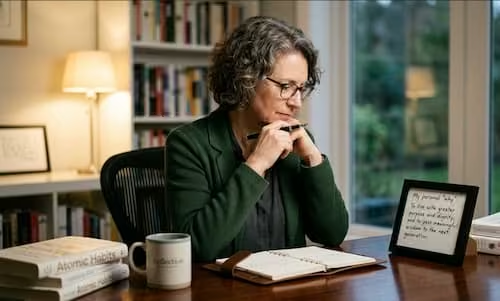
Define Your Personal Why: A quiet moment of deep reflection that turns intention into meaningful direction.
Step 2: Choose a Tiny, Sustainable Daily Window
The most effective daily habits of knowledge and reflection start small. Research on habit formation shows that consistency beats intensity.
Begin with:
- 10–15 minutes of focused reading or learning
- 5–10 minutes of quiet reflection
That is enough. Many people who try to force 45-minute sessions burn out. Those who protect a short, protected window almost every day build remarkable depth over months and years.
Ideal times:
- Early morning before the world demands attention
- Right after a daily prayer or quiet moment
- During a lunch break
- In the evening as a wind-down ritual
Link the habit to something you already do. After morning tea, open your book. After evening stillness, open your journal. Habit stacking makes the new practice feel natural.
Step 3: Select High-Quality Sources of Knowledge
Not all information is equal. For lasting growth, choose sources that nourish rather than merely entertain.
Strong options include:
- Timeless books on wisdom, character, history, and human nature
- Well-written biographies of people who lived with purpose
- Short, thoughtful essays or carefully chosen articles
- Recordings of meaningful lectures or talks (when reading is not possible)
- Sacred or classical texts that have guided generations
Rotate between different types of material so your mind stays fresh. One week may focus on a practical book about habits or focus. The next may explore stories of resilience and integrity. Variety prevents boredom while still building depth.
Avoid the trap of endless online browsing. Set a clear intention: “Today I will read ten pages of this book” or “I will listen to one focused talk.” Quality and focus matter more than volume.
Step 4: Create a Simple Reflection Practice
Daily Habits of Knowledge and Reflection: Knowledge becomes wisdom only when it is examined and applied. Reflection is the bridge.
After reading or learning, spend a few quiet minutes with these questions:
- What idea stood out most to me today?
- Why does this matter in my life right now?
- How can I practice even a small piece of this tomorrow?
- What resistance or emotion did this raise in me?
You can reflect in a notebook, a digital note, or simply by sitting still. Writing strengthens memory and clarity, but spoken or silent reflection also works. The key is honesty. Reflection is not performance—it is private conversation with yourself.
Some people keep a simple “Wisdom Log.” Each entry contains:
- Date
- One insight
- One practical next step
Over time this log becomes a personal treasury of growth.
Step 5: Design an Environment That Supports the Habit
Your surroundings either help or hinder daily habits of knowledge and reflection.
Practical supports:
- Keep your current book and notebook in the same visible place
- Put your phone in another room during the session
- Use a simple timer so you are not watching the clock
- Create a calm corner—even a chair by a window is enough
- Tell family members this short time is protected
Remove friction. If the book is hard to reach or the notebook is buried, the habit becomes harder. Make the right action the easy action.
Step 6: Track Progress Without Obsession
Gentle tracking builds momentum. You do not need complicated systems.
Simple methods that work:
- Mark an X on a calendar for each day you complete the practice
- Keep a short weekly note: “This week I read X pages and reflected on Y”
- Review once a month what insights have actually changed your thinking or behavior
Celebrate consistency, not perfection. Missing one day does not break the chain. Missing two or three days in a row is the real risk. When you miss, simply begin again the next day without drama or self-criticism. Self-compassion keeps the habit alive longer than harsh discipline.
Common Obstacles and How to Overcome Them

Common Obstacles and How to Overcome Them: Friends learning side by side, showing that consistency and support help us rise above every barrier.
“I don’t have time.” Protect the smallest possible window first. Ten focused minutes almost every day outperform occasional long sessions. |
“I start strong and then lose interest.” Rotate materials. Pair reading with a short walk or tea. Revisit your personal why regularly. |
“I read but forget everything.” Add reflection immediately after. Teach or discuss one idea with someone else. Application locks knowledge in place. |
“My mind wanders constantly.” This is normal. Gently return attention without judgment. Over time the mind learns to settle. Short sessions help more than forcing long ones. |
“I feel I’m not learning ‘enough’.” Depth matters more than speed. One well-understood idea applied in life is worth more than dozens of forgotten pages. |
A Sample Daily Routine You Can Start Tomorrow
daily habits of knowledge and reflection: Here is a realistic, powerful structure many people find sustainable:
- Sit in your chosen place with book and notebook.
- Read for 12–15 minutes with full attention.
- Close the book and write or sit with one insight for 5–7 minutes.
- Note one small way you can live that insight today or tomorrow.
- End with a moment of quiet gratitude for the chance to grow.
Total time: under 25 minutes. Over a year this becomes more than 150 hours of focused growth—enough to transform a life.
Adjust the length and timing to fit your reality. The structure matters more than the exact minutes.
How These Habits Shape Character and Dignity
Daily habits of knowledge and reflection do more than fill the mind. They shape the person. Over months you notice:
- Greater emotional steadiness
- Clearer values and stronger boundaries
- Increased ability to see situations from multiple angles
- Quieter confidence that does not need constant external validation
- A growing sense of purpose that guides daily choices
This is how ordinary people rise. Not through dramatic breakthroughs, but through quiet, repeated acts of learning and honest self-examination. Knowledge expands what you know. Reflection deepens who you become. The dua keeps the heart humble and open to further increase.
Making the Habit Part of Your Identity
The final and most powerful step is identity shift.
Instead of saying “I am trying to read more,” begin to say “I am someone who seeks knowledge and reflects every day.”
Identity-based habits last because they align with how you see yourself. Each completed session becomes evidence of the person you are becoming. Missed days become temporary exceptions rather than proof of failure.
Speak of the habit with quiet gratitude. Protect it the way you protect other important parts of life. Over time it stops feeling like an effort and starts feeling like a natural expression of who you are—someone who continues to ask “رَبِّ زِدْنِي عِلْمًا” and then acts on that request.
Begin Today With One Small Step
You do not need a perfect system or the ideal book to start. Choose one short text that interests you. Sit down, say the dua, and set a timer for ten minutes. Read with attention. Then sit for three quiet minutes and ask what the words mean for your life right now.
That single act is the beginning of a powerful daily habit of knowledge and reflection.
Protect it. Return to it. Let it grow slowly and steadily. In a noisy world, those who consistently feed their minds, examine their hearts, and seek increase in knowledge rise with quiet strength, deeper wisdom, and lasting dignity.
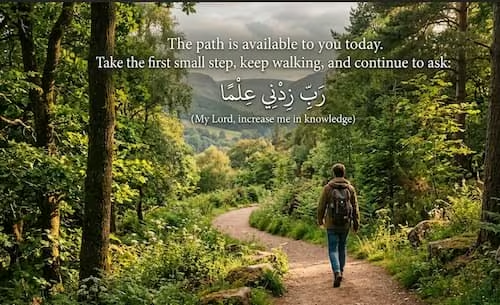
Begin Today With One Small Step: Take the first step on the path of learning, keep walking, and continue to seek increase in knowledge.