
Oceans and Seas: Earth’s Blood and Circulatory System
Covering 71% of Earth’s surface, the oceans and seas function as a vast circulatory system. Just as blood sustains every cell in the human body, ocean waters move energy, nutrients, and life throughout the planetary system. They connect continents, regulate climate, and support the conditions necessary for life.
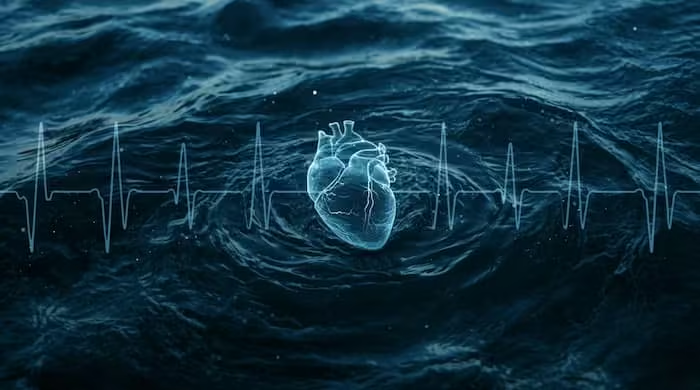
Oceans and Seas — The Blood and Circulatory System of our planet
Composition Parallels Between Blood and Seawater
The similarities between human blood and seawater are striking. Human blood is approximately 83% water and contains dissolved salts. Seawater is about 96% water and also contains dissolved salts and minerals. Both act as fluid transport systems that support life on a large scale.
Blood plasma carries oxygen, nutrients, hormones, and waste products throughout the body. In the same way, ocean water carries dissolved oxygen, nutrients such as nitrogen and phosphorus, carbon dioxide, and heat energy across the planet. In both systems, life depends on proper chemical balance. When salinity or electrolyte levels shift too far, the entire system becomes unstable and can no longer support healthy function.
This remarkable similarity shows how the oceans and seas operate as a living circulatory network, constantly moving essential materials that keep Earth’s ecosystems alive and balanced.
Oceans as Planetary Lungs: Oxygen Production
While forests are often called Earth’s lungs, marine life plays an even larger role in global oxygen production. Microscopic phytoplankton living in the sunlit upper layer of the ocean (the photic zone) produce a significant portion of the planet’s oxygen through photosynthesis.
One of the most important oxygen producers is Prochlorococcus, a tiny photosynthetic marine bacterium discovered in 1986. Though invisible to the naked eye, it is among the most abundant photosynthetic organisms on Earth.
Through photosynthesis, phytoplankton convert carbon dioxide, water, and sunlight into organic matter and release oxygen:
- Carbon dioxide + Water + Sunlight → Glucose + Oxygen
This process not only releases oxygen into the atmosphere but also removes carbon dioxide, helping regulate Earth’s climate. These organisms form the base of the entire marine food web. Every fish, whale, and seabird ultimately depends on the energy first captured by phytoplankton.
Just as red blood cells transport oxygen through the human body, ocean currents distribute oxygen-rich waters throughout marine ecosystems, supporting life even in deeper regions.
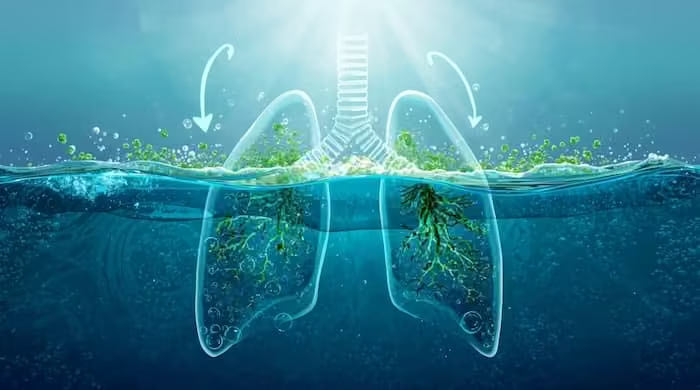
Oceans and Seas as Planetary Lungs – Oxygen Production of our planet
Marine Microbes as Earth’s Immune System
In the human body, white blood cells detect invaders, digest waste, and maintain internal balance. In the oceans and seas, an invisible army of microorganisms performs similar protective functions. Bacteria, archaea, viruses, and microscopic phytoplankton regulate chemistry, recycle waste, and respond to threats that could destabilize marine ecosystems.
These tiny organisms act as the ocean’s natural defense system, constantly working to preserve chemical balance and support life across the entire water column. Without their continuous activity, the oceans and seas would quickly lose stability and the ability to sustain complex life.
Regulating Ocean Chemistry
Marine microbes control the cycling of essential elements such as carbon, nitrogen, sulfur, phosphorus, and iron in the oceans and seas. Through photosynthesis, phytoplankton absorb carbon dioxide and convert it into organic carbon. When these organisms die or are consumed, some of that carbon sinks into the deep ocean, where it can remain stored for centuries.
This process, known as the biological carbon pump, helps regulate atmospheric carbon dioxide levels and plays a vital role in maintaining the chemical balance of the planet. Microbes are also central to the nitrogen cycle. Some bacteria convert atmospheric nitrogen into usable forms (nitrogen fixation), while others return nitrogen gas to the atmosphere through denitrification. Without these microbial processes, essential nutrients would become locked and unavailable to sustain life throughout the oceans and seas.
Natural Recycling and Waste Breakdown
When marine plants, animals, and plankton die, their remains become organic debris known as detritus. Marine bacteria and archaea break this material down into simpler compounds such as carbon dioxide, ammonium, and dissolved nutrients. These recycled nutrients return to the surface waters, where they support new phytoplankton growth.
This continuous recycling is part of the microbial loop — a system that prevents energy loss and keeps nutrients circulating within the food web. Without these microscopic decomposers, organic matter would accumulate, oxygen levels would drop, and marine ecosystems would collapse. In the oceans and seas, this natural recycling process is essential for maintaining chemical balance and ensuring that vital nutrients remain available to support life at every level of the food chain. By continuously breaking down and redistributing organic material, these microbes help sustain the overall health and productivity of marine environments across the planet.
Keeping Algal Blooms in Check
Harmful algal blooms occur when certain microscopic algae grow rapidly due to nutrient pollution, warming temperatures, or changing currents. These blooms can produce toxins, create dead zones with low oxygen, and disrupt fisheries and coastal ecosystems.
Marine microbes help regulate these blooms. Some bacteria release compounds that inhibit harmful algae. Others compete for the same nutrients, limiting bloom growth. Marine viruses can also infect specific algal species and reduce their populations. In this way, microbes act as natural immune regulators that help maintain ecological balance.
In the oceans and seas, these microbial interactions form a critical defense system. By controlling excessive algal growth, they protect water quality, support marine biodiversity, and prevent temporary imbalances from becoming long-term ecological crises. This natural regulation is essential for keeping the oceans and seas healthy and resilient.
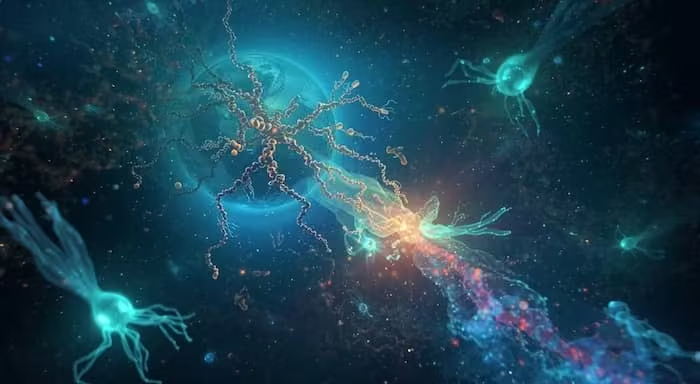
Marine Microbes as White Blood Cells – Nature’s Immune Defense system
Nutrient Distribution: Feeding the Planet
In the human body, blood delivers nutrients to every cell. In Earth’s system, the oceans and seas perform a similar role through large-scale water movements.
Essential nutrients such as nitrates, phosphates, and silicates accumulate in deep waters from sinking organic matter. Upwelling brings these nutrient-rich waters back to the sunlit surface, where phytoplankton thrive. This process supports some of the world’s most productive fisheries, including those off the coasts of Peru, Chile, California, and northwest Africa.
Ocean currents act like arteries and veins, redistributing nutrients across ocean basins and sustaining biodiversity on a planetary scale. When these circulation patterns weaken, marine productivity declines, affecting food supplies and ecosystems worldwide. The continuous movement of the oceans and seas ensures that nutrients are never permanently locked in the deep, allowing life to flourish from the polar regions to the tropical seas.
Temperature Regulation: Planetary Homeostasis
Just as the human body maintains a stable internal temperature, the oceans regulate Earth’s climate. Water’s high heat capacity allows the oceans to absorb, store, and redistribute vast amounts of solar energy. Ocean currents such as the Gulf Stream carry warm water from the tropics toward higher latitudes, while colder polar waters flow toward the equator. This global circulation moderates temperature extremes. Without it, days would be much hotter, nights much colder, and seasonal changes far more severe.
Coastal regions benefit especially from this buffering effect. Phenomena such as El Niño and La Niña further demonstrate how changes in ocean temperature influence global weather patterns, including rainfall, storms, and hurricane intensity. The oceans and seas continuously exchange heat with the atmosphere, acting as a massive thermal reservoir that prevents rapid climate shifts. By absorbing excess heat during warmer periods and releasing it slowly during cooler seasons, they help maintain a more stable and livable environment for all forms of life across the planet.
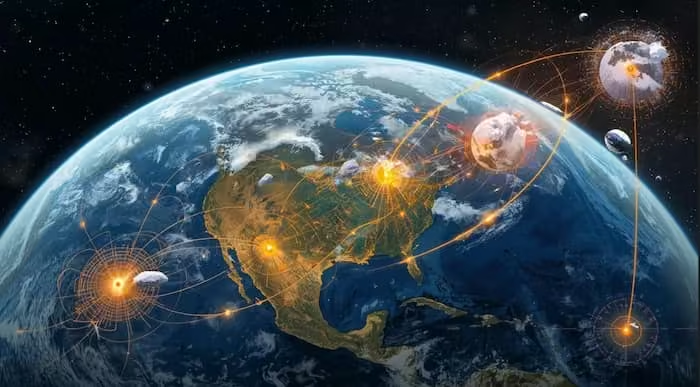
Regulation of Temperature – Maintaining Planetary Homeostasis
Waste Removal and Carbon Cycling
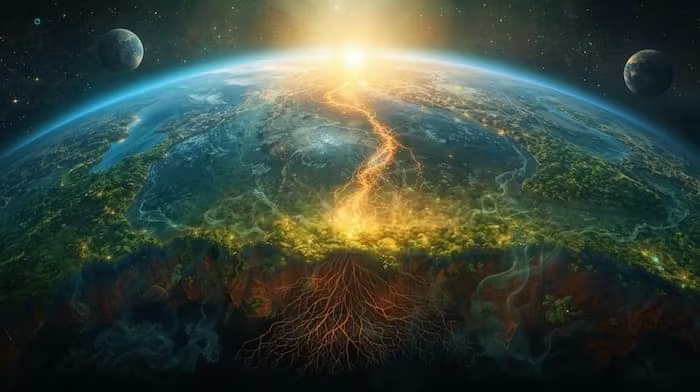
Oceans and Seas – Nutrient Distribution Feeding the Planet
In the human body, blood removes carbon dioxide and metabolic waste. The oceans perform a similar detoxification role for the planet. They absorb approximately 25–30% of human-produced carbon dioxide emissions, helping slow the rate of climate change.
Carbon enters the ocean through three main pathways:
|
|
|
While this system is highly efficient, it has limits. Excess carbon dioxide causes ocean acidification, which weakens coral reefs, harms shellfish, and disrupts marine food webs. Maintaining the health of this natural waste-removal system is essential for planetary stability.
The oceans and seas also play a vital role in recycling nutrients released during the breakdown of organic matter. Microbial communities continuously process dead plankton, marine plants, and animal remains, returning nitrogen, phosphorus, and other essential elements back into the water column. This recycling supports new phytoplankton growth and helps keep marine ecosystems productive. Without these continuous processes, nutrients would become locked in deep waters or sediments, reducing the ocean’s ability to sustain life. In this way, the oceans and seas act not only as a carbon sink but also as a living purification and renewal system for the entire planet.
Conclusion: The Ocean as Earth’s Life-Support System
The oceans and seas are far more than bodies of water. They function as the planet’s circulatory system, respiratory system, immune system, and waste-management system combined. They transport nutrients, produce oxygen, regulate temperature, recycle waste, and store carbon.
In the metaphor of Earth as a Living Body, the oceans are the bloodstream that sustains the entire planetary organism. Protecting them is not only an environmental responsibility — it is essential for the continued survival of life on Earth. Every current, every microscopic organism, and every exchange of gases plays a vital role in keeping the planet healthy and balanced. When we damage the oceans and seas, we disrupt the very systems that support human civilization, climate stability, and biodiversity. Understanding this deep connection helps us recognize that caring for the oceans and seas is ultimately an act of caring for ourselves and for future generations who will depend on a living, functioning planet.
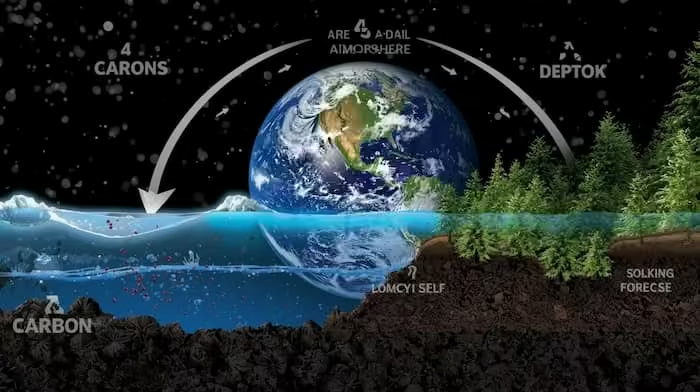
Waste Removal and Carbon Cycling – Oceans, forests and atmosphere in balance