
What Is the Sun? Power & How It Moves
The Sun Power is a simple guide to the star that gives Earth light, heat, and life. What is the sun? This article answers seven common questions about the Sun in short, clear paragraphs. It also explains how the Sun moves in space and how that motion looks from the ground.
NASA and other space agencies describe the Sun as a real star, not a fire on the sky. The facts below follow that science. A later section notes related Quran verses about the course of the Sun, without mixing worship with physics. What is the sun?
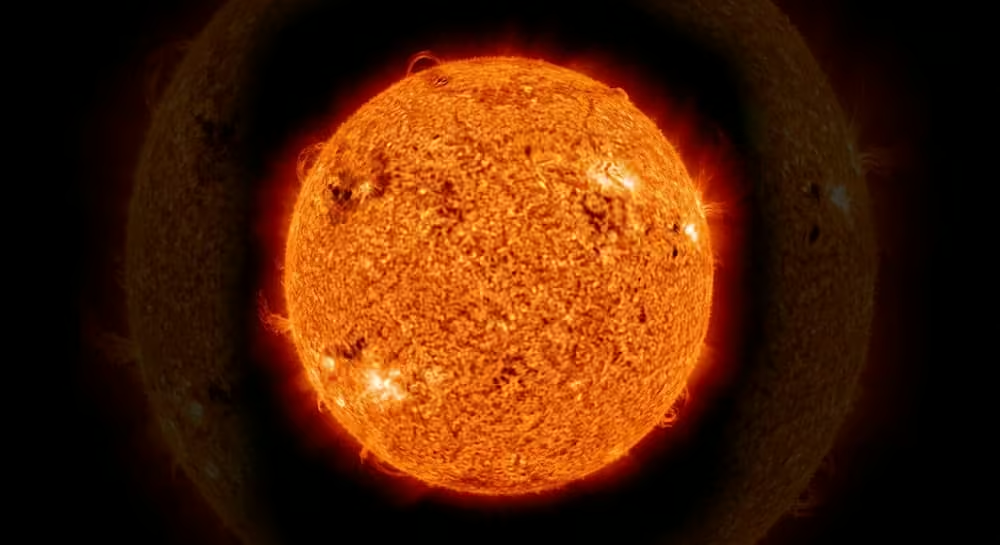
The Sun is a star at the center of the solar system.
What is the Sun?
What is the Sun? It is a star, the only star in our solar system.
NASA calls the Sun a 4.5-billion-year-old yellow dwarf. It is a huge, glowing ball of hot hydrogen and helium gas, called plasma, held together by gravity.
The Sun sits at the center of the solar system. Its gravity holds the planets, moons, asteroids, and comets in orbit. The Sun holds about 99.8% of all the mass in the solar system.
Without the light and heat of the Sun, life on Earth as we know it could not exist. That is the real meaning of The Sun Power for this planet.
The diameter of the Sun is about 1.4 million km (865,000 miles). That is about 109 times the width of Earth. About 1.3 million Earths could fit inside the Sun.
How the Sun appears to move around the world
The Sun appears to move across the sky because Earth spins. The 23.5° tilt also changes sunrise and sunset.
The Sun Power begins with this fact: the Sun does not travel around Earth each day.
What we see is apparent motion. Earth spins on its axis from west to east once every 24 hours.
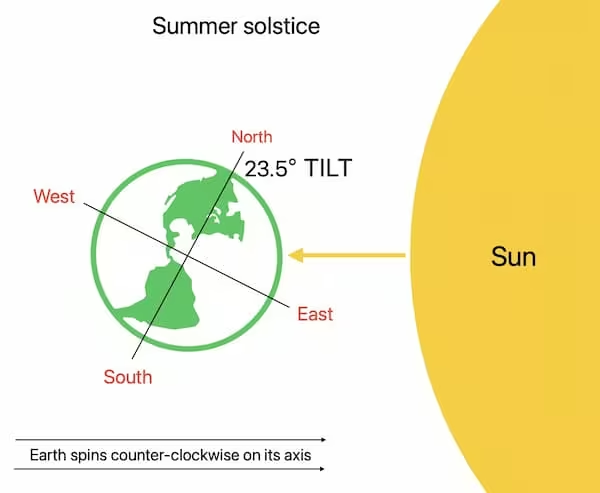
Because we stand on a turning planet, the Sun appears to rise in the east, cross the sky, and set in the west.
On a daily timescale, the Sun is almost still relative to Earth. The daily journey of the Sun across the sky is Earth’s rotation. It is not the Sun flying around the planet.
This is the first key in The Sun Power: the path you watch at dawn and dusk is mostly Earth’s spin.
How the Sun moves relative to Earth and other planets?
Two different motions matter when we ask how the Sun moves.
The Sun also spins on its own axis. It takes about 25 days at the equator and about 36 days near the poles. This is called differential rotation, because the Sun is not a solid ball.
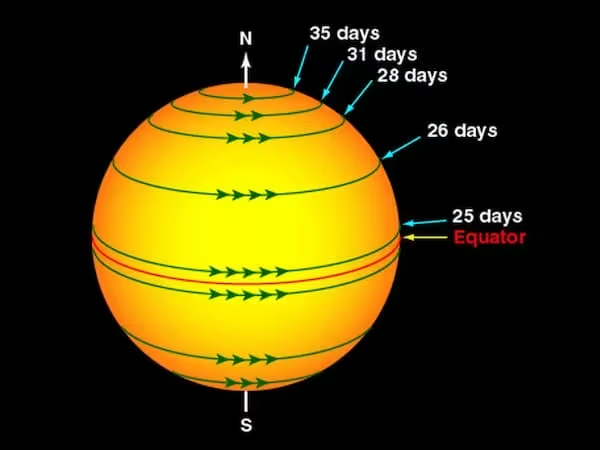
The Sun is not a solid ball. It spins in about 25 days at the equator and about 35 days near the poles.
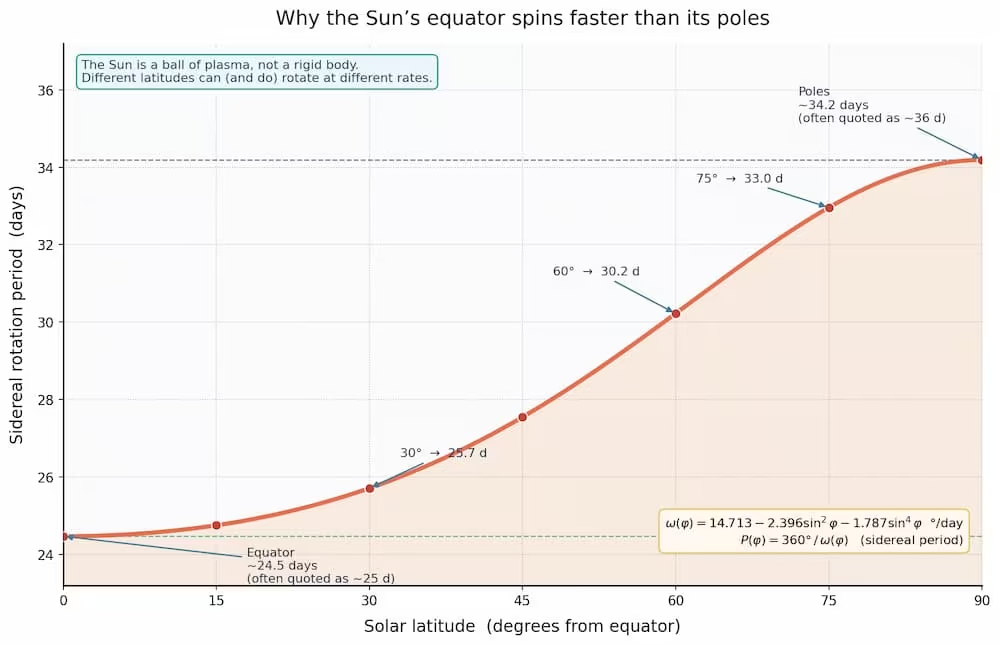
This graph shows how the Sun’s spin changes with latitude. The equator is faster. The poles are slower.
The Sun Power is easier to understand if you separate the scales: the daily path in the sky, Earth’s yearly orbit, the spin of the Sun, and the long trip around the galaxy. What is the sun?
How the Sun moves in the solar system?
What is the sun? It is the star at the center of the solar system. Earth and the other planets orbit the Sun. The Sun does not orbit Earth each year. This is the heliocentric model.
Earth takes about 365.25 days to complete one orbit. That orbit is one year. The average distance from Earth to the Sun is about 150 million km (93 million miles).
What is the sun? in terms of motion inside the solar system? The Sun is the power source of this system and the star at the center. The planets and the Sun also orbit a shared center of mass called the barycenter. Because the Sun is so massive, that point usually lies inside or very near the Sun. So we still say the planets orbit the Sun.
The Sun’s path around the barycenter is a small wobble rather than a large orbit. Giant planets (especially Jupiter) pull the barycenter around; at times it can sit just outside the Sun’s surface, but the Sun remains the dominant mass and the practical center of the system.
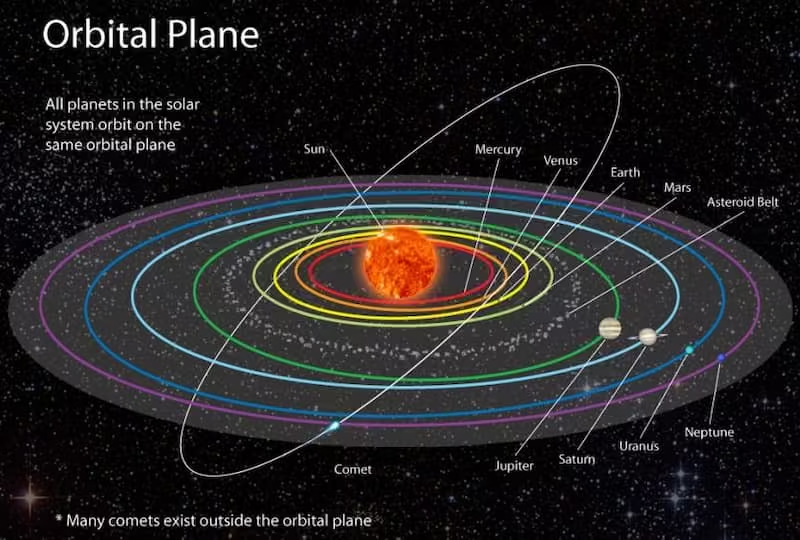
Earth and the other planets orbit the Sun.
How the Sun moves in the galaxy?
What is the sun? The whole solar system — the Sun plus the planets — orbits the center of the Milky Way. That trip takes about 230 million years. The speed is about 720,000 km/h.
The Sun also spins on its own axis. It takes about 25 days at the equator and about 36 days near the poles. This is called differential rotation, because the Sun is not a solid ball.
So how the Sun moves depends on the scale: daily sky path, yearly orbit of Earth, spin of the Sun, and the long trip around the galaxy. What is the sun? The Sun Power covers all four of those scales in one place.
Where sunrise and sunset start?
What is the sun? There is no single fixed starting place for the Sun on Earth. The Sun Power is a simple way to name the light we see at dawn and dusk.
Because Earth rotates west to east, the Sun appears to rise in the east and set in the west in most places. Near the poles, polar day and polar night can break that simple pattern. The Sun Power still reaches those places, but the daily rise-and-set pattern can stop for weeks or months.
The Sun rises exactly due east and sets exactly due west only on the two equinoxes. Those dates fall around 20–21 March and 22–23 September. What is the sun
In other seasons the rise and set points of the Sun shift. That shift is part of how The Sun Power appears across the year.
|
|
|
What is the sun? Places farther east see the Sun first. That is why Japan is called the Land of the Rising Sun. Places farther west see the Sun later.
Times also change with latitude and season. Earth’s axis is tilted about 23.5°. That tilt is why seasons change the path of the Sun.
Officially, sunrise is the moment the upper edge of the Sun appears on the horizon. Air bends the light, so the Sun can appear a little earlier than its true geometric position. That first edge of light is the start of The Sun Power for that day. What is the sun? at that instant? The first visible edge of its disk.
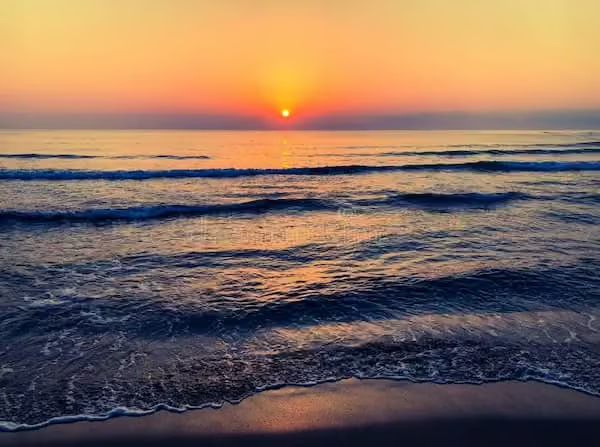
The Sun appears to rise in the east.
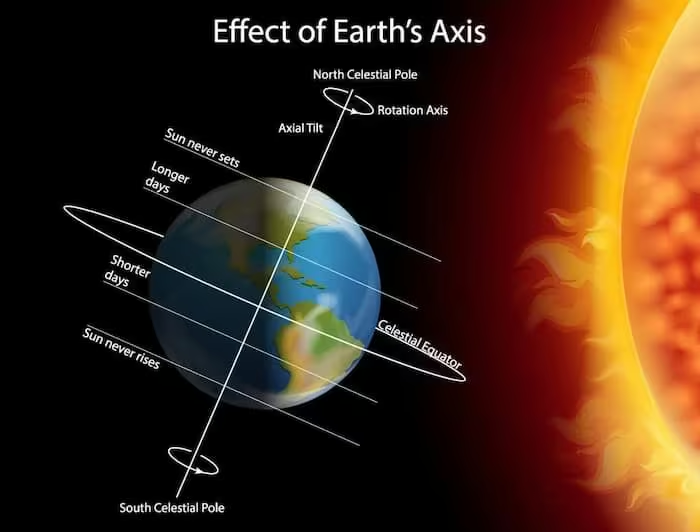
The exact rise and set point of the Sun shifts with season and latitude.
Does the Sun heat Earth? How Sun power reaches us?
What is the sun? Almost all of Earth’s heat and light come from the Sun. That is The Sun Power in daily life.
Heat from the Sun does not travel through empty space by touch. It does not need moving air. The Sun Power travels as electromagnetic radiation — mostly visible light and infrared — at the speed of light.
Light from the Sun takes about 8 minutes 20 seconds to reach Earth.
When that radiation hits land, oceans, and air, it is absorbed and turned into heat. The ground then warms the air. Earth’s atmosphere also traps some outgoing infrared heat. That greenhouse effect helps keep the planet livable.
Only a tiny fraction of the total energy of the Sun hits Earth. The rest spreads into space. Even that small share of The Sun Power is enough to drive weather, crops, and the warmth we feel. What is the sun? if not the source of that energy?
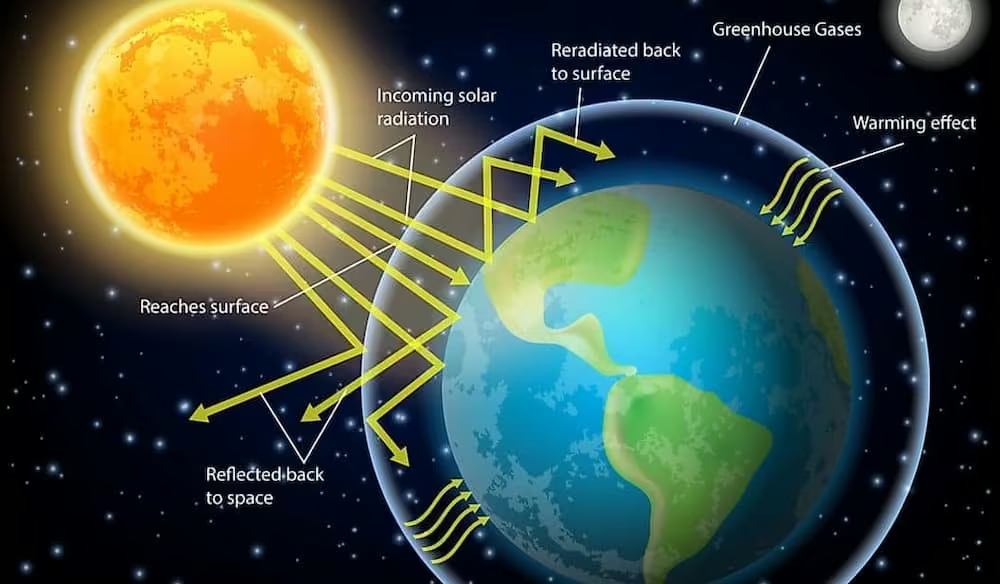
Heat from the Sun reaches Earth as radiation, not by air moving through space.
Why the Sun is circular?
What is the sun? Large objects in space become round because of gravity. The Sun Power starts with that fact: the Sun looks circular because gravity shaped it.
When the Sun formed from a collapsing cloud of gas and dust, gravity pulled material toward the center. The most stable shape under that pull is a sphere. That is why the Sun looks circular.
The Sun is one of the roundest natural objects ever measured. It is not a perfect sphere. It is very slightly flattened at the poles because it rotates. The flattening is tiny, about 0.00005. Gravity is so strong that the difference is almost invisible.
From Earth the Sun looks like a perfect disk because we see a distant sphere face-on. That is the second point The Sun Power makes about its shape. What is the sun?, seen from here, is that nearly perfect circular disk.
What is the temperature of the Sun?
The temperature of the Sun is not one number. Each layer is different. NASA values are below.
Layer of the Sun | Approximate temperature |
| about 15 million °C (27 million °F) |
| about 5,500 °C (10,000 °F) |
| thousands to tens of thousands of °C |
| about 1–2 million °C, sometimes higher |
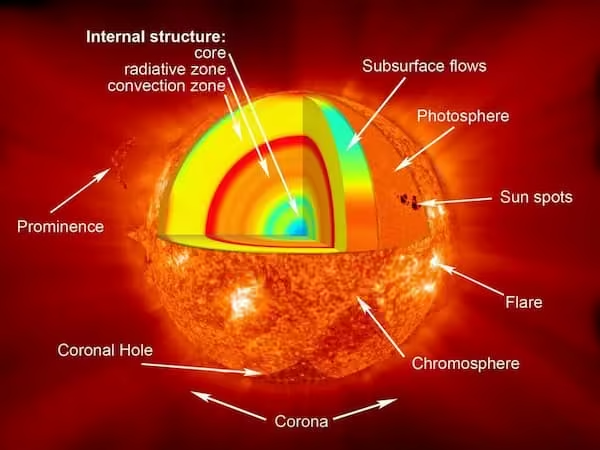
Each layer of the Sun has a different temperature. The core is hottest. The visible surface is cooler.
What is the sun? The core of the Sun is hot enough for nuclear fusion. Hydrogen nuclei fuse into helium and release the energy that becomes sunlight. That process is the engine of The Sun Power.
The outer corona of the Sun is hotter than the visible surface. Scientists still study why.
Nothing can live on the Sun. The energy that leaves the Sun, after traveling 150 million km, is what warms Earth. What is the sun? It is the star whose energy makes life on Earth possible.
How the Sun moves: science and related Quran verses
What is the sun? From the ground, the Sun appears to rise in the east, cross the sky, and set in the west. Astronomy explains that daily path as apparent motion. Earth turns west to east once in about 24 hours. The Sun is not flying around Earth each day.
That does not mean the Sun is still. The Sun Power also covers the real motion of the Sun. The Sun spins. Planets pull the Sun slightly around the barycenter. The solar system travels around the Milky Way.
Some readers also ask about verses that say the Sun runs on a course. Those lines speak of order and an appointed term. They do not have to mean that the Sun orbits Earth every 24 hours. The Sun Power keeps that science and those verses side by side, without mixing worship with physics. What is the sun?
“And a sign for them is the night: We strip from it the day, and they are left in darkness. And the sun runs [on course] toward its stopping point. That is the determination of the Exalted in Might, the Knowing. And the moon — We have determined for it phases, until it returns [appearing] like the old date stalk. It is not allowable for the sun to reach the moon, nor does the night overtake the day, but each, in an orbit, is swimming.”
Ya-Sin 36:37–40
Science describes how the daily sky path of the Sun is produced, and how the Sun also moves in space. What is the sun? These verses describe the Sun and Moon as ordered and limited to a set course, so day and night keep their turn.
The Sun Power treats them as different kinds of statement. One is a physical model. The other is a statement of order and decree. What is the sun?
Related verses about the Sun
| 36:37 . 36:38 . 36:39 . 36:40 |
| 13:2 . 31:29 . 35:13 . 39:5 . 14:33 |
| 21:33 |
| 6:96 . 10:5 . 25:61 . 71:16 . 78:13 |
| 7:54 . 16:12 . 22:61 . 57:6 |
| 55:5 . 41:37 |
| 75:8-9 . 81:1 . 91:1 |
Quick facts about the Sun
|
|
|
|
|
|
|
|
FAQ: the Sun and Sun power
| No. What is the Sun? A star, not a planet. |
| Yes. The Sun spins and travels with the solar system around the Milky Way. The daily path of the Sun in our sky is still caused by Earth’s rotation. |
| The Sun appears to rise in the east. Exact east happens on the equinoxes. Other days the rise point of the Sun shifts north or south. |
| The Sun sends light and infrared radiation. Earth absorbs that energy and turns it into heat. |
| Gravity pulled the young Sun into a sphere. That is why the Sun looks circular from Earth. |