
Let Us Understand Stars: What are Stars? 🌟
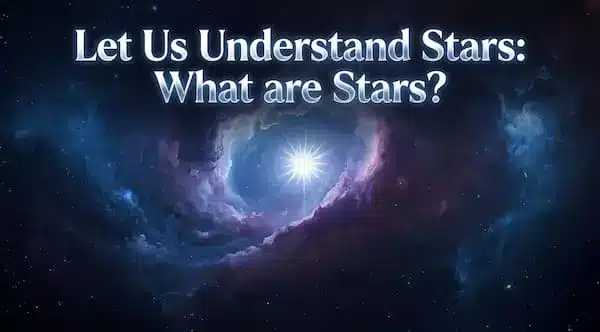
What are stars? A stunning view of a bright star surrounded by vibrant nebulae.
Let Us Understand Stars: What Are Stars?
Let Us Understand Stars: When we ask what are stars, we are really exploring one of the most fundamental questions in astronomy. Stars are not just distant points of light in the night sky; stars are powerful cosmic engines that shape galaxies, create elements, and influence the structure of the universe. To truly understand stars, we must begin with their nature, formation, and long-term behaviour.
Let Us Understand Stars from their core, stars are giant spheres of hot plasma, and this is what makes stars so extraordinary. The question what are stars can be answered by looking at the balance between gravity and energy. Gravity pulls matter inward, while nuclear fusion inside stars pushes energy outward. This balance keeps stars stable for millions or even billions of years.
Another way to understand what are stars is to study their life cycle. Stars are born in nebulae, grow through stages like protostars and main-sequence stars, and eventually evolve into white dwarfs, neutron stars, or black holes depending on their mass. Each stage of stars reveals important scientific information about how the universe changes over time.
Let Us Understand Stars, The study of stars also helps us answer the question what are stars made of and why do they shine? The light we see from stars comes from nuclear fusion, where hydrogen atoms merge to form helium, releasing enormous energy. This is why stars appear bright even from trillions of kilometres away.
Furthermore Let Us Understand Stars, stars play a key role in creating elements like carbon, oxygen, and iron. Without stars, there would be no planets, no atmospheres, and no life. That is why understanding stars is essential for understanding existence itself.
In conclusion, when we explore what are stars, we discover that stars are not only celestial objects but also the building blocks of the universe. The more we study stars, the more we learn about space, time, and our own origin in the cosmic story of stars.
Let Us Understand Stars byThe Life Cycle of a Star - The Stellar Journey
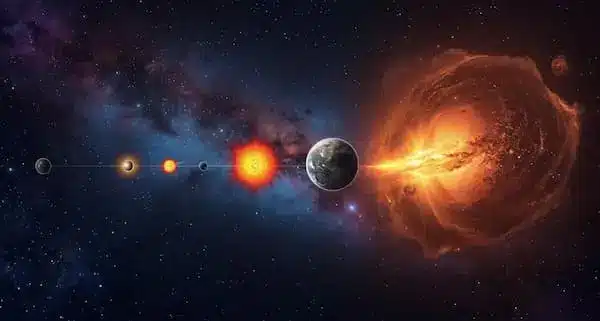
The life cycle of a star: From formation to explosive supernova.
Let Us Understand Stars What is The Life Cycle of a Star Journey?
The Life Cycle of a Star is a continuous and dynamic process that shapes the structure of the universe from beginning to end. In The Life Cycle of a Star, gravity and nuclear fusion work in opposition, creating a delicate balance that defines how long a star can remain stable. The Life Cycle of a Star begins deep within cold molecular clouds, where regions of higher density slowly collapse until a protostar is formed. As the temperature rises, nuclear fusion ignites, marking a crucial turning point in The Life Cycle of a Star and initiating the long main-sequence phase.
Throughout The Life Cycle of a Star(Let Us Understand Stars), energy production in the core determines its brightness, size, and eventual fate. The Life Cycle of a Star differs greatly depending on stellar mass, meaning some stars burn slowly and steadily for billions of years, while others consume their fuel rapidly and live short, intense lives. As The Life Cycle of a Star progresses, heavier elements are formed in the cores of massive stars, contributing to the chemical diversity of the universe.
Let Us Understand Stars and how in the later stages of The Life Cycle of a Star, instability increases as hydrogen fuel becomes depleted. The Life Cycle of a Star then enters dramatic transformation phases, such as red giant expansion or supernova collapse. These final moments of The Life Cycle of a Star are critical, as they distribute elements like carbon, oxygen, and iron into surrounding space, enabling the formation of new planetary systems.
Ultimately in this topic “Let Us Understand Stars”,, The Life Cycle of a Star is not just a sequence of physical changes but a cosmic engine of renewal. The Life Cycle of a Star ensures that matter is continuously recycled, linking past, present, and future generations of stars. By understanding The Life Cycle of a Star, astronomers can better explain the evolution of galaxies and the origin of the elements that make up planets and life itself.
Let Us Understand Stars By Fascinating Star Facts
Let Us Understand Stars By Fascinating Star Facts: Stars are massive, glowing balls of plasma powered by nuclear fusion, lighting up the universe with mind-blowing diversity and scale.
|
|
|
|
|
|
|
|
|
|
|
|
|
|
|
|
|
|
Let us understand the stars in the context of culture and history
Let Us Understand Stars, Stars in Culture and History reveal how deeply humanity has been connected to the night sky across different ages and societies. For thousands of years, people have looked upward for guidance, inspiration, and understanding. The story of Stars in Culture and History is not only about celestial objects but also about the beliefs, traditions, and achievements of human civilizations.
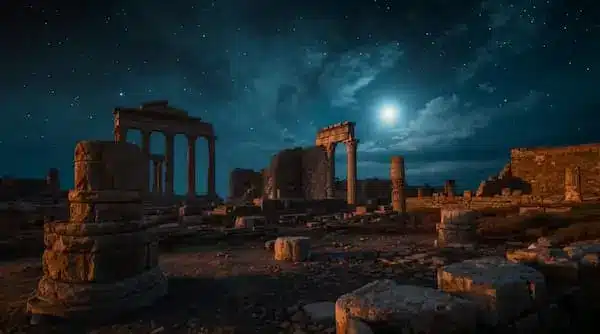
Stars in culture and history: Ancient ruins beneath a starry night sky.
Let Us Understand Stars: In many ancient cultures, stars were regarded as sacred symbols that linked the earthly world to the divine. Priests, rulers, and scholars carefully observed the heavens, believing that the movements of stars carried important messages from the gods. The significance of Stars in Culture and History can be seen in the monuments, temples, and artworks that were aligned with celestial events. These structures demonstrate how closely ancient societies connected their daily lives to the rhythms of the sky.
Let Us Understand Stars by exploring their practical role in culture and history. Before the invention of modern navigation systems, sailors relied on stars to travel across oceans and explore distant lands. The position of prominent stars helped travelers determine direction and location, making long-distance journeys possible. Farmers likewise observed seasonal star patterns to know when to plant and harvest crops, ensuring successful agricultural cycles. Through these examples, Let Us Understand Stars as essential guides that shaped human exploration, agriculture, and civilization.
Another important aspect of Stars in Culture and History is storytelling. Across continents, cultures created legends and myths based on constellations and bright stars. These stories preserved cultural values, explained natural phenomena, and passed knowledge from one generation to the next. Through oral traditions and written records, the stars became a living archive of human experience.
The influence of Stars in Culture and History continues in the modern world. Artists, poets, musicians, and writers often use stars as symbols of hope, destiny, wonder, and exploration. At the same time, astronomers study the stars to uncover the origins of galaxies, planets, and life itself. This combination of scientific inquiry and cultural meaning highlights the enduring importance of Stars in Culture and History.
Stars in Culture and History: A Timeless Source of Wonder and Connection
Today, Stars in Culture and History remain a powerful reminder of humanity’s shared curiosity and imagination. No matter where people live, the stars continue to inspire reflection, discovery, and a sense of connection to something far greater than ourselves. As we explore the universe, the legacy of Stars in Culture and History continues to shine brightly, linking the past, present, and future of human civilization.
Throughout every age, people have looked upward and found meaning written across the night sky. Ancient navigators used the stars to cross oceans, poets shaped their verses under constellations, and scientists still study their light to unlock the secrets of creation. This lasting relationship shows that the stars are not only distant lights, but enduring companions in the human story of wonder and growth.
In this way, Stars in Culture and History invite each generation to pause, reflect, and remember its place within a vast and ordered universe. Whether through quiet contemplation or bold scientific discovery, the stars continue to awaken the same deep longing for knowledge and connection that has guided humanity from the earliest nights until today.