
The Cosmic Pathways of Tariq in As-Samawat: Quranic Insights
The Cosmic Pathways of Tariq in As-Samawat: Quranic Insights
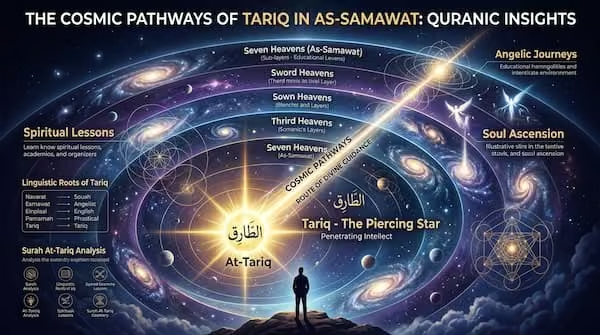
The Cosmic Pathways of Tariq in As-Samawat: Tariq in the Quran represents far more than a simple night visitor. It embodies the concept of paths, routes, and piercing guidance within the vast structure of creation. When connected to As-Samawat (the seven heavens), this term unveils a profound cosmic order described in the Quran. This article explores linguistic roots, layered heavens, angelic journeys, soul ascensions, spiritual symbolism, and practical lessons from Surah At-Tariq and related verses.
The Cosmic Pathways of Tariq in As-Samawat: Root Meaning of Tariq and Tareeq in the Quran
The Cosmic Pathways of Tariq in As-Samawat: Tariq and Tareeq derive from the Arabic root ط-ر-ق (tarq), which means to strike or pound with force. This root produces Tareeq (طريق), meaning a beaten path or reliable way created by repeated footsteps, and Tariq (الطارق), referring to the night visitor or knocker who arrives after dark. In pre-Islamic Arabia, travelers often moved at night and had to knock on closed doors upon arrival.
The Cosmic Pathways of Tariq in As-Samawat: In Quranic context, these terms go far beyond literal travel. They symbolize guidance that pierces darkness — whether through celestial bodies or divine revelation. The deep connection between the traveler (Tariq) and the path (Tareeq) perfectly illustrates divine order in creation. This linguistic foundation helps us appreciate how Tariq functions as both a physical and spiritual concept throughout the Quran, linking human experience with cosmic reality.
➤ Additional Insights on Linguistic Roots
The root ط-ر-ق carries multifaceted connotations in classical Arabic lexicons, including the act of striking to create a mark or path, evoking the image of persistent effort that forges reliable routes. Scholars like those in classical tafsirs note that “Tariq” not only denotes a nocturnal arrival but also implies something that “knocks” or “pierces” with intensity, much like a star’s light penetrating the night sky. This etymology enriches Quranic exegesis, as seen in interpretations where Tariq symbolizes divine messages that “strike” the heart of the believer, awakening faith amid spiritual darkness.
Furthermore, the term’s usage extends to navigational contexts in Bedouin culture, where stars served as guides, prefiguring the Quranic emphasis on celestial signs as beacons of guidance (hidayah). This layered linguistic depth underscores the Quran’s eloquence in blending everyday Arabic with profound metaphysical truths, inviting deeper reflection on how everyday paths mirror cosmic order.
As-Samawat: The Seven Heavens in Islamic Cosmology
The Cosmic Pathways of Tariq in As-Samawat: As-Samawat (السموات) means much more than the visible sky or atmosphere. It refers to the seven layered celestial realms created by Allah, arranged one above another in perfect harmony. The lowest heaven (as-samaa’ ad-dunya) is what we can observe and is adorned with stars as lamps for guidance and protection, while the higher heavens belong primarily to the unseen realm (ghayb).
The Cosmic Pathways of Tariq in As-Samawat: The Quran frequently highlights these layers with immense distances between them (Quran 65:12). Each heaven has its own characteristics and serves specific divine purposes. This structure shows Allah’s perfect design, where commands, angels, and decrees descend through the heavens in an orderly manner. As-Samawat represents a rich, multi-dimensional cosmic system rather than a simple roof over the earth. Understanding this reality deepens our appreciation of Allah’s magnificent and organized creation.
➤ Expanded Cosmological Context
Quranic references to As-Samawat appear in numerous surahs, such as Surah Al-Baqarah (2:29), Surah Fussilat (41:12), and Surah Al-Mulk (67:3), emphasizing their creation in two days and their ordered layering without flaws. Classical scholars like Ibn Kathir describe the lowest heaven as decorated with stars (lamps) that also serve as missiles against devils, protecting the divine decree. The vast distances between layers are highlighted in hadith literature, where traversing each heaven equates to journeys spanning 500 years, illustrating the incomprehensible scale of Allah’s creation.
In broader Islamic cosmology, these heavens encompass not just physical space but realms of increasing proximity to the divine, aligning with concepts of ghayb (unseen). This framework portrays a universe of purposeful design, where Tariq pathways facilitate the flow of divine will, from revelation to sustenance, reinforcing tawhid (oneness of God) through observable and hidden order.
Surah At-Tariq: The Oath by Heaven and Piercing Star
The Cosmic Pathways of Tariq in As-Samawat: Surah At-Tariq begins with a majestic divine oath: “By the sky and the Tariq. And what will make you know what the Tariq is? It is the piercing star (najm thaqib)” (Quran 86:1-3). Here, At-Tariq is identified as a bright, luminous star that powerfully cuts through the darkness of night.
The Cosmic Pathways of Tariq in As-Samawat: This verse beautifully pairs As-Samaa’ (heaven) with At-Tariq. The “piercing” quality (thaqib) emphasizes intensity, clarity, and the ability to penetrate obscurity. Within the broader context of As-Samawat, the star becomes a symbol of reliable beacons placed by Allah in the layered heavens. This powerful opening sets a tone of awe and invites reflection on the order and purpose present in the universe.
Celestial Paths and Routes in As-Samawat
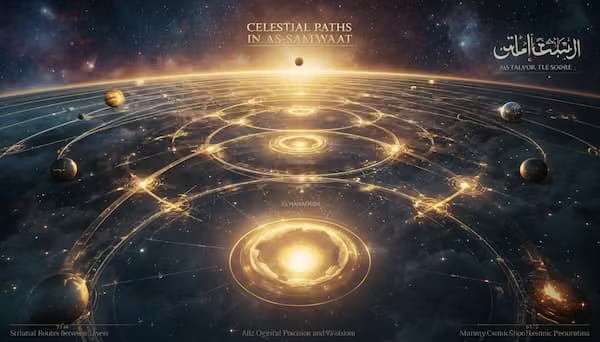
Stunning visualization of the interconnected cosmic pathways, orbital precision, and layered heavens as described in the Quran.
The Cosmic Pathways of Tariq in As-Samawat: Celestial paths in As-Samawat are strongly connected to the concept of Tariq. In the seven heavens, Tariq represents structured routes, passages, and portals that facilitate movement between different layers. These are not random trajectories but divinely ordained ways that serve specific purposes in the cosmic system.
Supporting evidence appears in Quran 51:7, which swears “by the heaven with its returning paths.” Stars and other luminous bodies act as navigational signs. These ordered pathways in As-Samawat highlight Allah’s precision and wisdom in sustaining the entire universe. The concept reveals a highly organized cosmic framework where everything moves according to divine plan.
Angelic Journeys Through the Seven Heavens
The Cosmic Pathways of Tariq in As-Samawat: Angels traversing As-Samawat use these Tariq pathways with perfect obedience and efficiency. They carry divine decrees, record human deeds, and fulfill various commands while moving between heavens at speeds far beyond human understanding, as indicated in Quran 32:5.
The Cosmic Pathways of Tariq in As-Samawat: Special nights like Laylatul Qadr witness massive angelic descent through these routes. The Prophet Muhammad’s ﷺ Mi’raj (Night Ascension) provides one of the clearest illustrations: he passed through guarded gates at each level of heaven with Angel Jibril. These accounts prove that Tariq ways are organized, hierarchical, and strictly governed by Allah’s permission.
➤ Detailed Accounts of Angelic and Prophetic Journeys
During Mi’raj, the Prophet ﷺ met prophets in each heaven: Adam in the first, Isa and Yahya in the second, Yusuf in the third, Idris in the fourth, Harun in the fifth, Musa in the sixth, and Ibrahim in the seventh, culminating at Sidrat al-Muntaha. This journey, referenced in Surah Al-Isra (17:1) and Surah An-Najm, highlights the hierarchical structure and the role of Jibril as guide. Angels’ movements exemplify perfect submission (islam), descending with commands and ascending with reports of deeds. Hadith collections like Sahih Bukhari detail these events, providing vivid imagery of guarded gates and divine encounters, serving as a model for human spiritual aspiration.
Soul Ascension After Death in As-Samawat
The Cosmic Pathways of Tariq in As-Samawat: Soul journeys after death follow similar structured Tariq routes through the seven heavens. When a righteous believer dies, angels of mercy gently extract the soul and ascend layer by layer, seeking permission at every heavenly gate.
Authentic hadith literature vividly describes how the gates open joyfully for good souls, eventually leading them toward Illiyyin in the highest realms. For others, the gates remain closed. This journey mirrors the original “knocking” essence of Tariq. The soul’s ascent through As-Samawat beautifully reflects divine justice combined with mercy, determined by one’s earthly actions and faith.
➤ Elaborations from Hadith on Soul Journeys
Narrations in Sahih Muslim and others describe the soul’s extraction, its greeting by angels, and progressive ascent, with fragrances and welcomes for the pious contrasting rejection for the wicked. Illiyyin, mentioned in Surah Al-Mutaffifin (83:18-21), represents exalted registers for the righteous. This process reinforces the interconnectedness of deeds, accountability, and cosmic structure, urging preparation through salah, charity, and remembrance of Allah.
Spiritual Symbolism of Tariq as Guidance
The Cosmic Pathways of Tariq in As-Samawat: Tariq as spiritual guidance carries rich metaphorical depth. Just as bright stars guide desert travelers through the darkness of night, the Quran serves as a piercing light that illuminates the path through spiritual ignorance and moral confusion.
Quran 3:27, which describes Allah merging night into day and day into night, beautifully reinforces divine control over cycles of darkness and light. In the context of As-Samawat, Tariq reminds believers that true guidance is always available from the same power that structured the seven heavens. This symbolism connects the physical universe with the inner journey of faith.
➤ Broader Metaphorical Applications
This symbolism extends to the concept of the “straight path” (Sirat al-Mustaqim) in Surah Al-Fatiha, where Tariq-like guidance pierces trials. Sufi interpretations often view it as inner illumination (nur), paralleling the Prophet’s light (nur Muhammadi). It calls for taqwa and reflection (tadabbur) on Quranic signs, transforming personal struggles into opportunities for ascent.
Human Accountability and Surah At-Tariq
The Cosmic Pathways of Tariq in As-Samawat: Surah At-Tariq masterfully connects the grandeur of the cosmos to personal human responsibility. After the oath by the heavens and the piercing star, the surah declares that every soul has a guardian angel appointed over it. It then reflects on the humble origin of human creation from a gushing fluid and emphasizes the certainty of resurrection and judgment.
This seamless flow ties the majesty of As-Samawat and Tariq pathways directly to individual life and deeds. The surah ultimately encourages patience and trust in Allah’s plan, reminding readers that the same Creator who maintains cosmic order also watches over every soul with perfect justice.
Key Themes of the Seven Heavens in the Quran
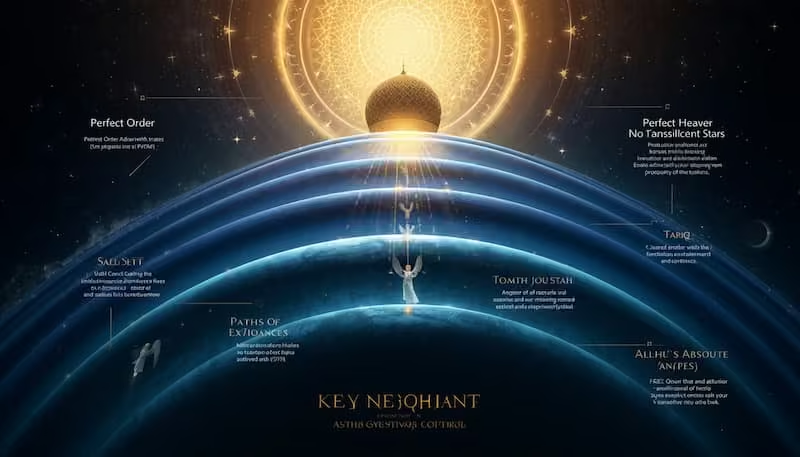
Illustrated cosmic diagram depicting the layered heavens (As-Samawat), angelic journey, and key Quranic concepts including Tariq, Salsabil, and divine order.
The Cosmic Pathways of Tariq in As-Samawat: Seven heavens in the Quran repeatedly demonstrate Allah’s infinite power and wisdom. Multiple verses portray them as perfectly ordered layers with no inconsistencies in creation (Quran 67:3). The lowest heaven is adorned with stars for both beauty and protection against evil forces.
These recurring themes consistently link with Tariq as paths of guidance. Whether discussing angelic missions, the Prophet’s miraculous ascension, or the journey of souls, As-Samawat is consistently presented as an active, purposeful, and well-organized system under Allah’s absolute control.
➤ Additional Thematic Connections
Verses like Quran 78:6-16 and 71:15 further illustrate creation’s balance. The absence of “inconsistencies” (tafawut) in 67:3 invites scientific contemplation, as modern cosmology notes the fine-tuning of universal constants. Protection via stars (projectiles against shayatin) in 67:5 symbolizes spiritual safeguarding, tying into themes of fitnah and perseverance.
Modern Lessons and Reflections
The Cosmic Pathways of Tariq in As-Samawat: Modern reflections on Tariq and As-Samawat hold great relevance in our time. Even with advanced telescopes and scientific discoveries, the Quranic description of layered heavens and guiding celestial paths continues to inspire awe, humility, and wonder at the scale of creation.
Believers today are encouraged to follow their own spiritual Tareeq — the straight path of righteousness and submission to Allah. Regular contemplation of these realities strengthens faith, builds patience during difficulties, and deepens trust in Allah’s perfect wisdom that governs both the visible and unseen realms.
➤ Contemporary Reflections and Parallels
In an era of space exploration and multiverse theories, the Quranic model fosters humility before divine knowledge, as human understanding remains limited compared to ghayb. Lessons include ethical use of technology, environmental stewardship reflecting cosmic balance, and psychological resilience through tawakkul. Scholars draw parallels to layered atmospheric or quantum models, though the Quran’s primary aim is spiritual guidance rather than scientific textbook. This encourages interdisciplinary reflection, bridging faith and inquiry while prioritizing akhirah.
Conclusion: The Majesty of Divine Pathways
The Cosmic Pathways of Tariq in As-Samawat: Tariq in As-Samawat ultimately reveals a universe filled with beauty, order, and purposeful guidance. From its linguistic roots to celestial routes, angelic travel, soul ascension, and profound spiritual metaphors, the Quran presents a unified and harmonious vision of Allah’s magnificent care for all creation.
By understanding Surah At-Tariq and the reality of the seven heavens, believers can develop a deeper appreciation for the piercing ways Allah has established in the cosmos. May continuous reflection on these divine signs bring us closer to the Creator who designed every path, every star, and every layer with infinite wisdom and mercy.
➤ Extended Conclusion and Practical Application
This exploration invites ongoing study through tafsir works like those of Tabari, Qurtubi, and contemporary scholars. Practical steps include nightly recitation of Surah At-Tariq for protection and guidance, as per hadith recommendations, alongside stargazing as a form of ibadah. In community settings, educational programs on Quranic cosmology can counter materialism, fostering a holistic worldview. Ultimately, Tariq and As-Samawat call humanity to transcend worldly distractions, aligning personal journeys with divine pathways toward eternal success. The article’s themes affirm that in a chaotic world, the Quran offers timeless anchors of meaning, urging us to knock persistently at the doors of faith for divine response.