
Humanity & Wisdom
Exploring the Pinnacle of Human Potential
Guided by compassion, wisdom, and the eternal call to knowledge.
Discover the profound journey of humanity as the noblest creation, guided by wisdom, compassion, and the eternal call to knowledge.
The Creation and Honor of Humanity
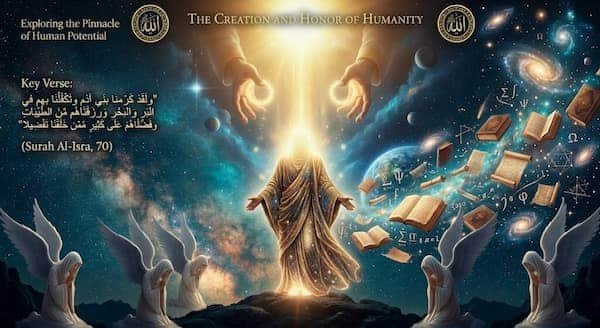
Exploring the Pinnacle of Human Potential – A vision of divine creation, knowledge, and spiritual elevation.
- Topic:
- Key Verse:
- Meaning:
- Tafsir:
Allah’s Divine Honor to Humankind and bestowal of honor.
“And We have certainly honored the children of Adam and carried them on the land and sea and provided for them of the good things and preferred them over much of what We have created, with [definite] preference.”
— Surah Al-Isra (17:70)
Meaning : Humanity is divinely honored above all other forms of creation, entrusted with intellect, responsibility, and moral choice.
Tafsir: In Tafsir Ibn Kathir and classical commentaries, this verse highlights Allah’s special honor (karāmah) bestowed upon the children of Adam. Humanity was created in the most perfect form — upright posture, intellect, speech, and faculties of understanding, reflecting Allah’s Wisdom and distinguishing us from other creatures.
Humanity & Wisdom: Allah facilitated travel on land (via animals) and sea (via ships), provided pure and wholesome sustenance (foods, fruits, clothes), and granted mastery over much of creation.
This preference is not absolute over everything (e.g., angels in general rank higher), but a marked distinction for humans as vicegerents on earth, equipped with moral choice and responsibility.
This honor calls us to gratitude, accountability, and righteous living — fulfilling the trust of Humanity & Wisdom with awareness and understanding instead of following base desires.
The Creation of Adam (A.S.) and the Divine Trust (Amanah)
Topic: The beginning of humankind — knowledge, soul, and responsibility.
Key Verses:
Meaning:
Tafsir:
“And [mention] when your Lord said to the angels, ‘Indeed, I will make upon the earth a successive authority (khalifah).”
— Surah Al-Baqarah (2:30)
“Then He proportioned him and breathed into him of His Spirit and made for you hearing and vision and hearts; little are you grateful.”
— Surah As-Sajdah (32:9)
Meaning: Humanity was given not only life but consciousness — the ability to think, perceive, and act with moral understanding.
Tafsir: In Surah Al-Baqarah (2:30), Allah announces to the angels His intention to place a khalifah (vicegerent or successive authority) on earth. Tafsirs (e.g., Ibn Kathir, Qurtubi) explain khalifah as Humanity succeeding generation after generation, entrusted with delegated authority to represent Allah’s will.
Humans act as stewards, establishing justice, ruling by divine guidance, and cultivating the earth—not as independent owners, but as responsible deputies accountable to Allah. The angels’ concern about corruption and bloodshed highlights the moral weight of this role, yet Allah affirms His superior Wisdom and knowledge.
In Surah As-Sajdah (32:9), after fashioning the human form, Allah “breathed into him of His Spirit” (nafakha fihi min ruhihi). This divine breath imparts the unique human essence: intellect, consciousness, free will, discernment, and moral capacity—distinguishing humans from other creatures and qualifying them for vicegerency.
It reflects the Wisdom of Allah in granting Humanity these special faculties and responsibilities. It endows hearing, sight, and hearts (faculties of perception and understanding), enabling gratitude and ethical action. Yet humans often show little thanks for this profound gift.
Humanity & Wisdom: Together, these verses show that human life begins with consciousness and the heavy responsibility of moral stewardship on earth, reflecting the purpose and Wisdom behind Allah’s creation of Humanity.
The Knowledge of Adam and the Superiority of Intellect
Topic: Knowledge as the mark of human distinction.
Key Verses:
Meaning:
Tafsir:
“And He taught Adam the names—all of them. Then He showed them to the angels and said, ‘Inform Me of the names of these, if you are truthful.’”
— Surah Al-Baqarah (2:31–33)
Meaning: Knowledge and understanding distinguish humans from other creations. This divine gift of intellect (aql) defines our nobility.
Tafsir :
Humanity & Wisdom: In Surah Al-Baqarah (2:31–33), Allah demonstrates knowledge as the hallmark of human distinction. He taught Prophet Adam (peace be upon him) the names of all things—their essences, qualities, and realities.
These were then presented to the angels, who were challenged: “Inform Me of the names of these, if you are truthful.” The angels humbly confessed their limitation: “Glory be to You! We have no knowledge except what You have taught us.” Adam then named them all correctly as Allah had taught him.
Humanity & Wisdom: This divine gift of intellect (‘aql) and comprehensive knowledge sets humanity apart from angels and other creations, qualifying humans as Allah’s vicegerents (khalifah) on earth. It underscores our nobility: true understanding, bestowed by Allah, enables responsible stewardship of creation.
The Purpose of Human Existence
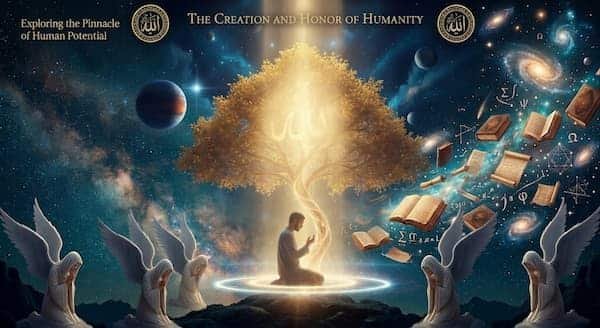
A symbolic depiction of human potential and divine honor, set against a vast celestial backdrop of knowledge and creation.
Topic: Humanity’s creation for worship, reflection, and moral excellence.
Key Verse:
Meaning:
Tafsir:
“And I did not create jinn and humans except to worship Me.”
— Surah Adh-Dhariyāt (51:56)
Meaning: The true “rise” of humanity is spiritual — to live with awareness of Allah and to serve creation through goodness and justice.
Tafseer of Surah Adh-Dhariyat (51:56):
“And I did not create the jinn and humankind except to worship Me.”
Humanity & Wisdom: This verse declares the sole purpose of creation: exclusive worship and servitude to Allah alone. Ibn Kathir explains that Allah does not need our worship—He is Self-Sufficient and the Provider (51:57-58)—but we need it to attain our highest spiritual potential.
Humanity & Wisdom: Ibadah (worship) here is comprehensive: it includes ritual acts, constant reflection on Allah’s signs, moral excellence, justice, and serving creation through goodness and kindness.
Humanity & Wisdom: True human rise is spiritual — living with God-consciousness (taqwā), aligning actions with Allah’s will, and reflecting justice. This purpose lifts us beyond worldly pursuits into meaningful existence.
The Divine Trust (Amanah) and Human Responsibility
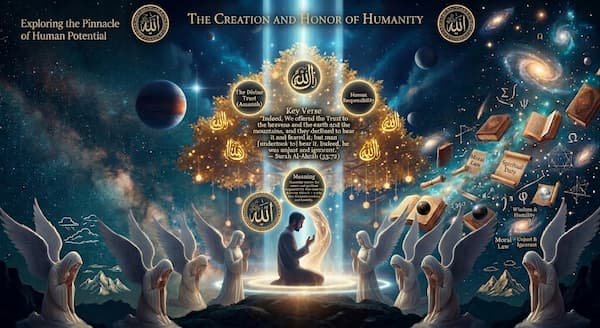
Honoring humanity through divine knowledge and spiritual reflection.
Topic: The sacred responsibility humanity accepted.
Key Verse:
Meaning:
Tafsir:
“Indeed, We offered the Trust to the heavens and the earth and the mountains, and they declined to bear it and feared it; but man [undertook to] bear it. Indeed, he was unjust and ignorant.”
— Surah Al-Ahzāb (33:72)
Meaning: Humanity carries the moral and spiritual responsibility that even the heavens refused — a role that demands wisdom and humility.
Tafseer of Surah Al-Ahzab (33:72)
Allah offered the Amanah (the Trust) — encompassing moral and religious responsibilities, obedience to divine commands, free will, and accountability for good or evil deeds — to the heavens, the earth, and the mountains. They declined, fearing they could not fulfill it perfectly and would face punishment for any failure.
Humanity & Wisdom: Humanity (represented by Adam and his descendants) accepted this heavy burden. The verse describes man as “unjust and ignorant” because he often fails to honor this trust through injustice to himself and ignorance of its grave consequences, leading to potential reward or severe punishment.
Humanity & Wisdom: This highlights humanity’s unique role as Allah’s vicegerent, which demands wisdom, humility, and steadfastness in our duties. The following verse (33:73) shows the purpose: to distinguish believers from hypocrites through this test.
Human Potential and Reflection in the Signs of Creation
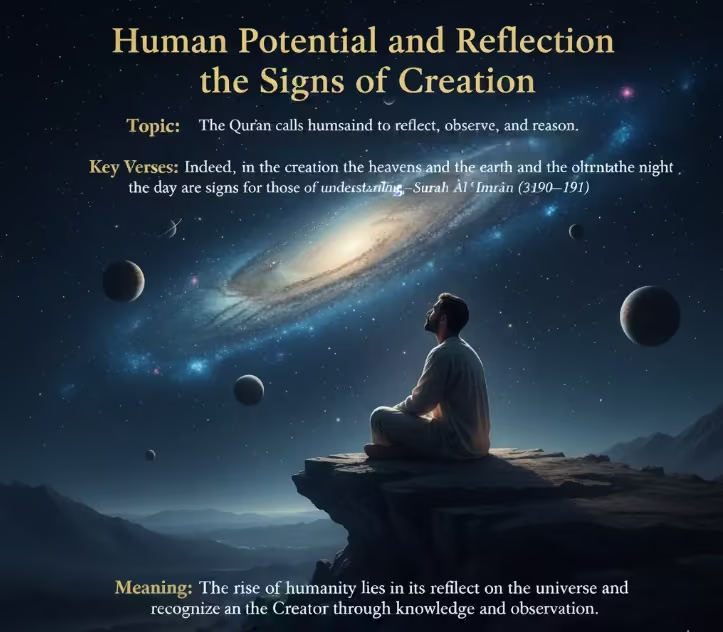
Contemplating the universe: A reflection on Quranic signs in the heavens and earth.
Topic: The Qur’an calls humankind to reflect, observe, and reason.
Key Verses:
Meaning:
Tafsir:
“Indeed, in the creation of the heavens and the earth and the alternation of the night and the day are signs for those of understanding.”
— Surah Al-‘Imran (3:190–191)
Meaning: Human elevation lies in the ability to reflect on the universe and recognize the Creator through knowledge and observation.
Tafseer (exegesis) of Surah Al-‘Imran (3:190-191):
Humanity & Wisdom: These verses highlight that the vast creation of the heavens and the earth, along with the regular alternation of night and day, contain clear signs (ayat, “verse”) for people of understanding (ulul albab). Such people are not heedless; they constantly remember Allah in every posture—standing, sitting, or lying on their sides—and deeply reflect (yatafakkarun) on the universe’s design.
Humanity & Wisdom: Their reflection leads them to declare: “Our Lord, You have not created this in vain (batilan). Glory be to You! Protect us from the punishment of the Fire.”
This shows true intellect combines dhikr (remembrance) with tafakkur (contemplation), recognizing the purposeful order in creation as proof of the Creator’s wisdom, and turning it into humble worship and seeking salvation.
The Balance of Knowledge and Humility

Knowledge and divine wisdom in perfect balance.
Topic: True greatness comes with humility and awareness of limits.
Key Verse:
Meaning:
Tafsir:
“And they will ask you, [O Muhammad], about the soul. Say, ‘The soul is of the affair of my Lord. And mankind has not been given of knowledge except a little.’”
— Surah Al-Isra (17:85)
Meaning: Even with vast knowledge, humans remain dependent on divine guidance. Humility completes human nobility.
Tafsir : This verse was revealed when some Jews (or polytheists, according to other views) asked the Prophet ﷺ about the ruh (soul/spirit) — its nature, essence, or origin — to test or challenge him.
Humanity & Wisdom: Allah instructs the Prophet to reply: the soul is from the affair/command of my Lord (a divine mystery beyond full human comprehension), and mankind has been granted only a little knowledge.
Classical tafsirs (Ibn Kathir, Maududi, etc.) emphasize that this highlights the limits of human intellect in metaphysical matters. While people may gain some understanding of the soul’s effects or functions, its true reality belongs solely to Allah.
Humanity & Wisdom: It teaches profound humility: even with vast worldly or revealed knowledge, humans remain dependent on divine guidance and should not claim mastery over what Allah has kept veiled. This awareness perfects nobility and prevents arrogance.
The Role of Humanity as Khalifah (Steward of the Earth)
Topic: Leadership, responsibility, and care for creation.
Key Verse:
Meaning:
Tafsir:
“It is He who has made you successors upon the earth and raised some of you above others in degrees [of rank] that He may try you through what He has given you.”
— Surah Al-An‘am (6:165)
Meaning: Humanity’s rise includes stewardship of the environment, justice, and social balance — using power with accountability.
Tafsir : This verse establishes humanity as khala’if (successors or vicegerents) on earth, entrusted with stewardship after previous nations. Allah has deliberately raised some people above others in ranks, abilities, resources, and status—not arbitrarily, but to test them through these blessings and responsibilities.
Humanity & Wisdom: The purpose is divine trial (ibtila’): how individuals and societies exercise leadership, exercise justice, maintain social balance, and care for creation. Greater power or wealth demands greater accountability; one must use it righteously, without injustice or waste.
Humanity & Wisdom: Ultimately, Allah is swift in reckoning yet forgiving and merciful to those who fulfill this trust.
This underscores that true leadership is amanah (trust)—a test of moral responsibility toward people, society, and the environment.
The Elevation Through Faith and Knowledge
Topic: Knowledge and faith as the means of elevation.
Key Verse:
Meaning:
Tafsir:
“Allah will raise those who have believed among you and those who were given knowledge, by degrees.”
— Surah Al-Mujadilah (58:11)
Meaning: The true measure of greatness is spiritual and intellectual elevation through faith and learning.
Tafsir : This verse from Surah Al-Mujadilah (58:11) begins with etiquette in gatherings: believers are instructed to make room for others when told and to rise when commanded, with the promise that Allah will grant them ample space in return.
Humanity & Wisdom: The core message follows – Allah elevates in ranks (darajat) those who possess “Iman” (faith) and those granted ‘ilm (knowledge).
Humanity & Wisdom: According to classical tafsirs (e.g., Maududi and others), true elevation and honor in Allah’s sight do not come from physical proximity in assemblies or worldly status, but from sincere faith combined with beneficial knowledge.
Humanity & Wisdom: Faith purifies the heart and actions, while knowledge enlightens and refines understanding of divine truth. Together, they form the path to spiritual and intellectual growth, higher stations in this life and the Hereafter, and closeness to Allah.
Humanity & Wisdom: This underscores that genuine greatness lies in spiritual and intellectual elevation through faith and learning, not superficial positions. Allah is fully aware of our deeds.
The Balance Between Material Progress and Spiritual Growth
Topic: Knowledge and technology must serve moral and spiritual ends.
Key Verse:
Meaning:
Tafsir:
“He is the One who made you successors upon the earth and raised you in status so that He may test you in what He has given you.”
— Surah Al-An‘am (6:165)
Meaning: Material advancement must align with ethics and gratitude — that is the true rise of the noblest creation.
Tafseer of Surah Al-An‘am (6:165)
Allah declares: “He is the One who made you successors (khulafā’) upon the earth and raised some of you above others in ranks, so that He may test you in what He has given you.”
Humanity & Wisdom: This verse highlights humanity’s role as Allah’s vicegerents on earth — succeeding previous nations and generations. Allah has endowed humans with authority, resources, and varying degrees of status, wealth, intellect, and opportunity, not arbitrarily, but purposefully.
The differences in ranks serve as a divine test: how we use the blessings granted to us — whether with gratitude, justice, and moral responsibility, or with arrogance and misuse. True elevation lies not in material superiority alone, but in righteous conduct and accountability to the Creator.
The verse concludes by reminding that Allah is swift in punishment for the disobedient, yet Most Forgiving and Merciful to those who turn to Him.
Humanity & Wisdom: Thus, material and technological progress must serve ethical and spiritual ends, or it becomes a trial leading to loss rather than noble success.
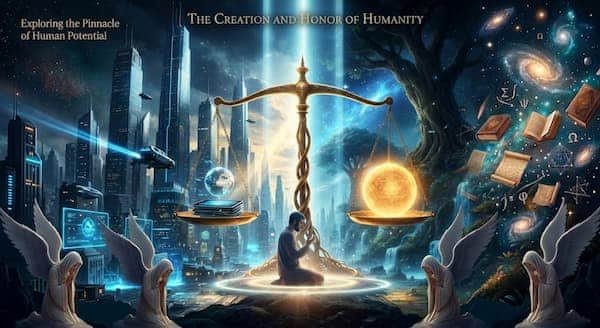
Humanity’s pinnacle: balancing knowledge and divine light.