
Hazrat Musa (AS) in Pharaoh’s Palace: Hazrat Musa (AS) grew up in Pharaoh’s palace
Secondary Keywords: Prophet Musa AS childhood in Firawn palace, Queen Asiya adoption of Musa, Musa fire on tongue incident, Pharaoh prophecy Musa, Bani Israel oppression Egypt

Hazrat Musa (AS) grew up in Pharaoh’s Palace – A powerful depiction of the baby Moses being raised in the heart of ancient Egypt.
Musa fire on tongue incident, Pharaoh prophecy Musa, Bani Israel oppression Egypt
In the annals of Islamic history, few stories illustrate Allah’s perfect plan as vividly as the early life of Hazrat Musa (AS). Born into a time of brutal oppression under the tyrannical Pharaoh (Firawn), this future prophet and messenger was not only saved from certain death but raised in the very heart of enemy power—the opulent palace of Pharaoh himself. This article explores in depth how Hazrat Musa (AS) grew up in Pharaoh’s palace, drawing directly from the Holy Quran (especially Surah Al-Qasas and Surah Ta-Ha) and authentic Islamic traditions. It reveals the divine irony, the protective love of Queen Asiya, the dramatic test involving fire on his tongue, and profound lessons for believers today.
Whether you seek inspiration on trust in Allah during trials or a complete retelling of Prophet Musa AS childhood story, this narrative highlights how adversity became the foundation for prophethood. Allah’s command turned the palace of tyranny into a cradle of wisdom, proving that no plan of the oppressors can thwart divine decree.
1. Hazrat Musa (A.S.) in Pharaoh’s Palace Under the Tyrannical Rule of Pharaoh and the Prophecy
Hazrat Musa (A.S.) in Pharaoh’s palace reflects a time when Pharaoh ruled Egypt with absolute cruelty, dividing society into rigid classes and enslaving the Bani Israel (Children of Israel). Quranic accounts describe him as a self-proclaimed god who oppressed the Israelites through forced labor and infanticide. Fearing a prophecy—often linked in traditions to a dream—that a boy from the Bani Israel would overthrow his kingdom, Pharaoh ordered the systematic killing of all newborn Israelite boys.
This decree created an atmosphere of terror. Midwives were forced to report births, and soldiers raided homes. Yet, as history (and the Quran) shows, tyrants’ fears often become the very instruments of their downfall. Pharaoh’s paranoia set the stage for the miracle of Hazrat Musa (AS), demonstrating that human plots are powerless before Allah’s will.
Smart Insight: This mirrors modern authoritarian regimes where fear drives oppression, yet faith communities thrive underground. Allah uses the oppressor’s own system against him—a recurring theme in prophetic stories.
2. Birth of Hazrat Musa (A.S.) and Divine Protection in Hazrat Musa (A.S.) in Pharaoh’s Palace
Hazrat Musa (A.S.) in Pharaoh’s palace began with a remarkable chain of divine events. Hazrat Musa (A.S.) was born during this genocide, when Pharaoh oppressed and killed the sons of Bani Israel. His mother, inspired directly by Allah, nursed him in secret. The Quran states in Surah Al-Qasas (28:7) that she was commanded to place him in the river, a command that required immense tawakkul (trust in Allah). She crafted a watertight basket, placed her infant inside, and entrusted him to the Nile’s currents. Her heart was fortified by faith, preventing despair. This very act led to Hazrat Musa (A.S.) in Pharaoh’s palace, where he would be raised under the protection of the very ruler who sought to destroy him.
“And We inspired to the mother of Musa, ‘Suckle him; but when you fear for him, cast him into the river and do not fear and do not grieve. Indeed, We will return him to you and will make him [one] of the Messengers.’”
Example: Just as a seed must be buried to grow, Musa’s “burial” in the river was the beginning of his elevation. This teaches that apparent loss can be the gateway to divine elevation.
3. The Journey on the Nile: Hazrat Musa (A.S.) in Pharaoh’s Palace — From Danger to Destiny
Hazrat Musa (A.S.) in Pharaoh’s palace began when the basket floated downstream, evading crocodiles and currents by Allah’s command. It did not drift randomly—it headed straight to Pharaoh’s palace on the riverbank. Servants spotted the unusual chest and brought it inside, unaware of its sacred cargo.
This journey symbolizes Allah’s precise orchestration. The Nile, a symbol of Egyptian power and life, became the vehicle of salvation for the one destined to dismantle that power, marking the beginning of Hazrat Musa (A.S.) in Pharaoh’s palace.
4. Discovery at Pharaoh’s Palace
Inside the palace, Queen Asiya (wife of Pharaoh and a future believer) instantly felt profound love for the baby. The Quran records her plea (28:9):
“[He will be] a comfort of the eye for me and for you. Do not kill him; perhaps he may benefit us, or we may adopt him as a son.” And they perceived not [what was to come].
Pharaoh’s initial reaction was suspicion and rage—he saw the Israelite infant as a potential threat. Yet Asiya’s compassion prevailed temporarily. The household marveled at the child’s beauty and calm demeanor.
5. The Opulent Palace of Pharaoh: A Glimpse into Ancient Egyptian Royalty
Pharaoh’s palace was the pinnacle of ancient Egyptian grandeur. Built along the Nile, it featured:
- Architectural Splendor: Massive columns, gold-leafed halls, frescoes depicting gods and conquests, and gardens with exotic plants.
- Luxurious Lifestyle: Servants, eunuchs, musicians, and chefs catering to every whim. Treasures from conquests filled chambers—jewels, fine linens, and perfumes.
- Political Hub: A center of intrigue where magicians, advisors, and military leaders plotted. Slavery and idolatry underpinned its wealth.
- Daily Realities: Lavish banquets contrasted with the cries of oppressed laborers outside.
Hazrat Musa (AS) entered this world of excess not as a slave but as a perceived prince. The palace’s opulence highlighted the contrast between material power and spiritual truth— a lesson Musa would later embody when confronting Pharaoh.
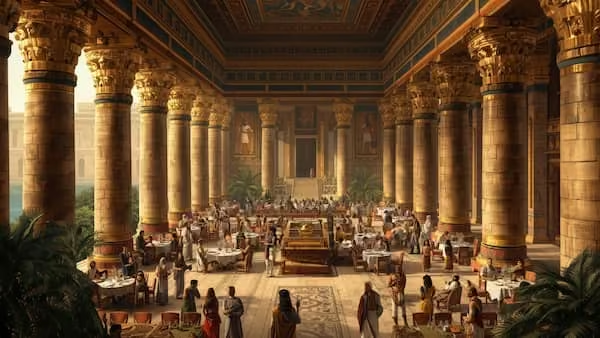
Majestic hall inside Pharaoh’s grand palace, showcasing the wealth and power of ancient Egyptian royalty.
Bullet-Point Characteristics of Palace Life (from Islamic narrations):
- Daily rituals of idolatry and self-worship by Pharaoh.
- Strict hierarchy enforcing Bani Israel’s subjugation.
- Access to the best education, medicine, and protection—ironically granted to the future liberator.
6. Queen Asiya’s Adoption and Maternal Love
Asiya, childless and kind-hearted, adopted Musa (AS) as her son. She shielded him from Pharaoh’s wrath and arranged for wet nurses. When the baby refused all others, his sister Maryam cleverly suggested a woman who could nurse him—his own mother. Thus, Allah reunited the family while allowing Musa to grow under royal protection. His biological mother nursed him in the palace and visited regularly, instilling early faith.
This dual motherhood (biological and adoptive) shows Allah’s mercy: protection through the enemy’s household while preserving identity. Asiya later became a martyr for faith, refusing idolatry.
7. The Dramatic Test: Fire on the Tongue and Pharaoh’s Doubt

Baby Hazrat Musa (AS) chooses the burning coal in the legendary test before Pharaoh, burning his tongue and proving his innocence through divine guidance.
Pharaoh’s doubt intensified: “This child may be the one who will kill me and seize my kingdom.” Magicians and advisors warned of omens, such as the baby playfully removing Pharaoh’s crown. To test the infant’s intelligence and threat level, they devised a trial: a platter with gleaming gold/jewels versus a burning coal/ember.
According to Islamic traditions (widely narrated in tafsirs and stories of prophets), an angel guided Musa’s hand to the coal. The infant instinctively placed it in his mouth, severely burning his tongue. This caused a lifelong speech impediment (stammer), but proved his “innocence” as a mere child lacking cunning. Pharaoh relented, sparing him.
Quranic Link: Though not detailed in the Quran, this aligns with Surah Ta-Ha (20:25-28) where Musa later prays for relief from his speech difficulty.
Smart Idea with Example: This incident exemplifies divine intervention in small moments. By choosing the coal over gold, Musa unknowingly chose truth over worldly allure—a metaphor for prophethood. It also humanized him; his stammer made him reliant on Allah (and later Harun AS as spokesperson). In today’s terms, it’s like a “disability” becoming a strength through faith.
8. How Hazrat Musa (AS) Was Looked After in the Palace
Musa received princely care:
- Nutrition and Health: Nursed by his mother under royal approval, then fed the finest foods.
- Education: Trained in Egyptian sciences, governance, and warfare—preparing him unknowingly for leadership. Allah bestowed “strength and sound judgment” (Quran 28:14).
- Emotional Nurturing: Asiya’s tender love and secret visits from his family provided spiritual grounding.
- Protection: Guards and servants shielded him from harm, ironically under the tyrant’s roof.
He lived as a prince—wearing fine garments, riding chariots—yet retained humility.
Bullet Points on Daily Care:
- Private quarters with attendants.
- Access to royal physicians and tutors.
- Secret Islamic upbringing from mother amid idolatry.
- Play and bonding with Asiya, fostering loyalty to her faith.
9. Growing Up as a Prince: Wisdom, Strength, and Hidden Identity
By adulthood, Musa (AS) had matured into a strong, knowledgeable man (Quran 28:14). He witnessed oppression firsthand, once intervening in a fight and accidentally killing an Egyptian—leading to his flight from Egypt. His palace upbringing gave him insider knowledge of Pharaoh’s court, crucial for the later confrontation.
Yet his heart remained with the oppressed. This duality forged a leader who understood both privilege and suffering.
10. Key Lessons and Modern Relevance from Musa’s Upbringing
- Trust in Allah’s Plan: The basket journey and palace adoption prove “With hardship comes ease” (Quran 94:5-6).
- Irony of Divine Strategy: Raised by the enemy to destroy the system—perfect for undermining tyranny from within.
- Power of Compassion: Asiya’s faith shows one righteous person can alter history.
- Modern Application: In workplaces or societies of injustice, believers can rise through excellence while holding firm to values, just as Musa did.
- Speech and Wisdom: The tongue incident reminds us that apparent weaknesses (like stammering) become tools for reliance on Allah.
Smart Examples: Compare to whistleblowers in corrupt regimes or immigrants succeeding in adoptive lands while reforming injustices.
11. Conclusion: Allah’s Wisdom in the Palace of the Enemy
The story of how Hazrat Musa (AS) grew up in Pharaoh’s palace is not merely historical—it is a timeless testament to tawhid, resilience, and divine wisdom. From the Nile’s currents to the palace’s golden halls, and the burning coal on his tongue, every detail underscores that Allah raises His servants through unexpected means.
Pharaoh’s greatest fear became his greatest threat because he raised his own destroyer. For believers, this narrative encourages patience in trials, gratitude for hidden blessings, and unwavering faith. As Quran 28:14 notes, Allah grants strength and knowledge to those He chooses.
May the story of Hazrat Musa (AS) inspire us to trust Allah’s unseen plans. Ameen.
References (for further reading)
Direct Quranic verses from Surah Al-Qasas 28:7-14 and authentic prophetic narratives.