
Hazrat Sulaiman (AS) Communicates with Ants | Quranic Story of Divine Wisdom
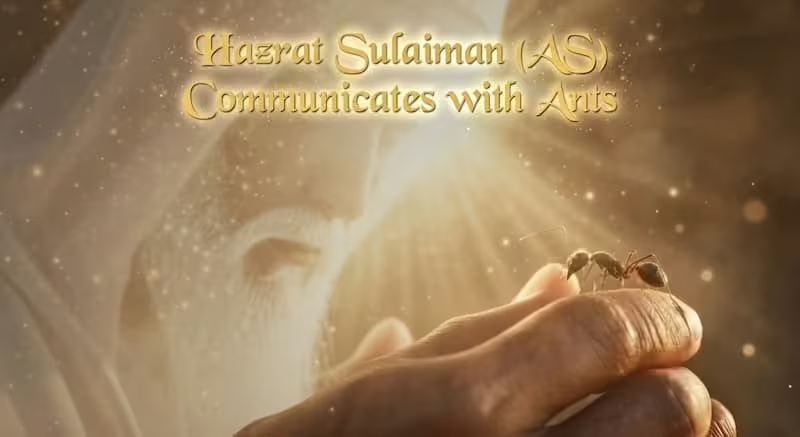
Hazrat Sulaiman (AS) Communicates with Ants – A beautiful reminder of humility and the miraculous gift of understanding all of Allah’s creations.
Introduction : Hazrat Sulaiman (AS) Communicates with Ants
Hazrat Sulaiman (AS) Communicates with Ants – is one of the most beautiful and meaningful stories in the Holy Quran. This touching incident from Surah An-Naml shows the special gift Allah gave to Prophet Sulaiman عليه السلام and teaches valuable lessons about humility, gratitude, and respect for all creatures.
Second Part
The Story of Hazrat Sulaiman and the Ant in Surah An-Naml
A moment of divine wisdom: Hazrat Sulaiman hears the humble plea of an ant.
➤ Hazrat Sulaiman (AS) Communicates with Ants:
Hazrat Sulaiman and the Ant share a miraculous moment that highlights divine wisdom and the power of communication. Hazrat Sulaiman (AS) Communicates with Ants through the special ability granted by Allah. In Surah An-Naml, Allah mentions how Prophet Sulaiman عليه السلام was able to understand the language of animals. This special ability allowed him to hear an ant warning its colony about his approaching army.
The Quran states:
“Until, when they came upon the valley of the ants, an ant said, ‘O ants, enter your dwellings that you not be crushed by Solomon and his soldiers while they perceive not.’”
Surah An-Naml 27:18
This incident of Hazrat Sulaiman (A.S.) and the Ant is not just a simple story. It shows the harmony that exists between humans and other creatures when guided by divine wisdom. Through this event, the Quran reminds us that Allah’s knowledge covers all creation and that even the smallest beings have their own form of understanding.
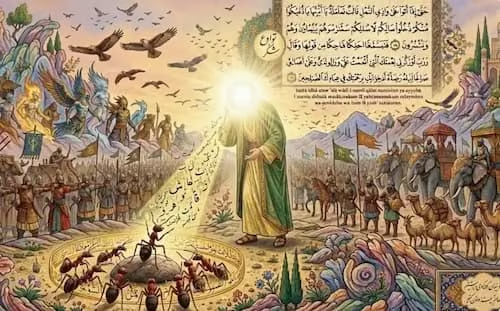
The miracle of communication: Hazrat Sulaiman and the ant in Surah An-Naml.
The Miracle of Understanding Animal Speech - Hazrat Sulaiman (AS) Communicates with Ants
One of the greatest blessings given to Prophet Sulaiman was the ability to understand the speech of animals and birds. Allah taught him this knowledge as a sign of his prophethood. This miraculous gift enabled Sulaiman to hear and respond to the concerns of different creatures, showing the miracle of Hazrat Sulaiman (AS) Communicates with Ants.
The story of Hazrat Sulaiman (AS) Communicates with Ants is the clearest example of this ability. When the ant warned its colony, Sulaiman understood its words clearly. He did not ignore the warning but smiled and thanked Allah for this blessing. This shows that prophets were given special knowledge to guide people and demonstrate Allah’s power over all creation.
This miracle also teaches us that all knowledge belongs to Allah. Human beings can only understand what Allah permits them to know. By giving Sulaiman this ability, Allah showed that the limits of knowledge can be expanded according to His will.
Wisdom and Awareness Shown by the Ant in the Story of Hazrat Sulaiman and the Ant
Hazrat Sulaiman (AS) Communicates with Ants
The ant in the story of Hazrat Sulaiman (AS) Communicates with Ants represents an important lesson about the intelligence and organization found in Allah’s creation. Despite being a tiny creature, the ant displayed remarkable awareness and leadership.
When it noticed the approaching army, the ant quickly recognized the potential danger and warned the other ants to enter their homes. This action reflects a strong sense of responsibility and concern for the safety of the entire colony.
The ant’s words also show fairness and understanding. It did not accuse Sulaiman or his army of intentionally harming them but acknowledged that the danger could occur unknowingly. This demonstrates a balanced perspective and awareness of circumstances.
Through the example of the ant, the Quran encourages humans to observe nature and reflect on the lessons it offers. The story of Hazrat Sulaiman (AS) Communicates with Ants shows the special understanding and wisdom granted by Allah to His prophets. Ants are known for their teamwork, discipline, and cooperation within their communities. Their behavior reflects the order and wisdom that Allah has placed in creation.
Just as the ant showed awareness and responsibility for its community, humans should also care for one another and act with wisdom and consideration in their societies.

The wisdom and awareness shown by the ant – a close-up of nature’s perfect organization and unity.
Key Lessons from the Story of Hazrat Sulaiman and the Ant
The story of Hazrat Sulaiman (AS) Communicates with Ant in Surah An-Naml contains several deep and practical lessons. Although the incident is short, it teaches values that are important for both leaders and ordinary people. These lessons include humility, gratitude, compassion, and social responsibility.
➤ Humility in Leadership
Prophet Sulayman (A.S.) was a powerful king who ruled over humans, jinn, and birds. Despite his great authority, he remained humble. When he heard the ant’s warning, he did not ignore it or feel insulted. Instead, he smiled with appreciation and reflected on Allah’s blessings.
This reaction teaches that true leaders stay humble no matter how much power they have. A good leader listens to every voice, even the smallest one, and remembers that all authority comes from Allah.
➤ Gratitude for Allah’s Blessings
When Prophet Sulayman (A.S.) heard the ant, his first response was to thank Allah. He prayed that Allah would allow him and his family to continue doing good deeds. This shows that gratitude is not only about words but also about using Allah’s gifts responsibly.
Gratitude strengthens faith and brings a person closer to Allah. The story reminds us to recognize that all our abilities and opportunities come from Allah and should be used for good.
➤ Mercy Toward All Living Creatures
The story also emphasizes mercy and compassion toward every living being. The ants were small and weak compared to Sulayman’s powerful army. However, their safety still mattered to the prophet.
Prophet Sulayman’s (A.S.) understanding and kind response show that mercy should extend to all creatures. Islamic teachings encourage us to treat animals with kindness and avoid causing them harm unnecessarily.
➤ Awareness and Responsibility in Community Life
The ant’s quick action to warn its colony teaches the value of awareness and responsibility. It did not stay silent when it saw danger. Instead, it took immediate action to protect the entire community.
This lesson applies to human societies as well. People should remain aware of problems around them and work together to protect and support one another. Responsibility toward the community is an important part of Islamic values.
Divine Wisdom in Allah’s Creation – Lessons from Hazrat Sulaiman and the Ant
The story of Hazrat Sulaiman and the Ant invites us to reflect on the wisdom present in Allah’s creation. Even the smallest creatures, like ants, live in highly organized societies with clear roles and responsibilities. Their ability to work together and protect their community reflects the perfect design of Allah.
Small creatures play vital roles in the natural world. Ants help in soil aeration, seed dispersal, and maintaining ecological balance. The Quran uses this example to show that no creature is insignificant in the sight of Allah. Every being has a purpose and contributes to the overall harmony of creation.
By observing nature, humans can develop humility and respect for life. The organization and intelligence seen in ants remind us of Allah’s infinite knowledge and care for all His creations.
Relevance of the Story of Hazrat Sulaiman and the Ant in Modern Society
Although this story happened thousands of years ago, the lessons from Hazrat Sulaiman (AS) Communicates with Ants remain highly relevant today. In a world facing issues of leadership, environmental damage, and social disconnection, this Quranic narrative offers timeless guidance.
Modern leaders can learn from Sulaiman’s humility. True leadership is not about power alone but about listening, showing empathy, and making fair decisions. The story of Hazrat Sulaiman (AS) Communicates with Ants encourages leaders to value every member of society, no matter how small their voice may seem.
The story also promotes environmental awareness. Human activities often harm small creatures and natural habitats. By following the example of Prophet Sulaiman, who communicated with ants, we are reminded to act responsibly toward the environment and protect all living beings.
Finally, the ant’s sense of responsibility teaches the importance of community care. In today’s fast-paced world, people sometimes ignore the needs of others. This story encourages us to stay aware, communicate openly, and work together for the safety and well-being of everyone.
Scholarly Views on the Location of the Valley of the Ants
The Quran mentions that Prophet Sulayman passed through the “Valley of the Ants” in Surah An-Naml (27:18–19). However, the Quran does not give the exact name of the city or geographical location.
Islamic scholars and historians have suggested different possible locations based on historical reports:
- Some believe the valley was near Ta’if in the Arabian Peninsula.
- Others suggested it could have been near Ascalon (Ashkelon) in the region where Sulayman ruled.
- Many scholars think it was somewhere in Greater Syria (Bilad al-Sham), as this was the center of his kingdom.
Because the Quran does not specify the exact place, the location remains uncertain. The main purpose of the story is to teach spiritual and moral lessons rather than provide geographical details.
Conclusion: The Timeless Message of Hazrat Sulaiman and the Ant
The story of Hazrat Sulaiman (AS) Communicates with Ants in Surah An-Naml offers powerful and lasting lessons. It teaches that true greatness lies in humility, gratitude, and compassion rather than in power or status. Even the smallest creatures deserve respect and care.
Prophet Sulayman’s humble response and the ant’s responsible warning together show the beauty of divine wisdom. The story reminds believers to appreciate Allah’s blessings, treat all creatures with kindness, and fulfill their responsibilities toward their communities.
In today’s world, these lessons are more important than ever. By reflecting on this Quranic story, we can become better leaders, more grateful individuals, and more responsible members of society. The interaction between Hazrat Sulaiman and the Ant continues to inspire people to live with humility, mercy, and awareness in every aspect of life.

The timeless message of Hazrat Sulaiman and the ant — wisdom, humility, and awareness for the modern world.
Summary of Key Lessons from Hazrat Sulaiman (AS) Communicates with Ants
Several important lessons emerge from this Quranic narrative:
- Humility in Leadership: Sulaiman’s attentive response to the ant reflects the importance of humility, even for those in positions of power. True leaders listen to and consider the needs of others.
- Gratitude for Allah’s Blessings: Sulaiman immediately turned to Allah in prayer, expressing gratitude for the gifts he had received.
- Compassion Toward All Creatures: The story emphasizes mercy toward living beings, reminding humans to act responsibly and avoid causing unnecessary harm.
- Awareness and Responsibility in Community Life: The ant’s warning demonstrates vigilance and concern for the welfare of the group.
- Reflection on Divine Wisdom: Observing the organization and intelligence of small creatures encourages believers to contemplate Allah’s knowledge and foster respect for the natural world.
The narrative of Hazrat Sulaiman and the Ant remains relevant across time and cultures. It encourages ethical leadership, environmental care, and social responsibility, showing that even small actions can have significant consequences. The story teaches that gratitude, humility, and compassion are essential qualities for both leaders and individuals.
By reflecting on this story, believers are reminded to appreciate Allah’s blessings, act with kindness and mercy toward all creatures, exercise responsibility and awareness in their communities, and seek to align their actions with the divine guidance of the Quran.
Ultimately, the story of Prophet Sulaiman and the ants is not merely a historical account — it is a timeless lesson in ethics, leadership, and faith that continues to inspire believers to live thoughtfully, act compassionately, and maintain humility.
Page 10