
Prophet Sulayman and the Ants: Lessons in Humility, Gratitude, and Awareness
First Part

Prophet Sulayman and the Ants – Timeless Quranic lessons in humility, gratitude, and awareness from Surah An-Naml.
Introduction | Prophet Sulayman and the Ants
The story of Prophet Sulayman and the ants is one of the most meaningful and reflective narratives in the Quran. This event is mentioned in Surah An-Naml, where Allah describes how a tiny ant warned its colony about the approaching army of Sulayman. When the prophet heard the ant speaking, he smiled and immediately turned to Allah with gratitude.
Although the story is brief in the Quran, it contains deep moral and spiritual lessons. It highlights the humility of a powerful prophet, the awareness and organization of small creatures, and the importance of gratitude toward Allah. The narrative also shows how prophets serve as role models in leadership, compassion, and responsibility.
This story of Prophet Sulayman and the Ants reminds believers that every creature in the universe has a purpose and that even the smallest beings deserve care and respect. It also encourages humans to reflect on their own behavior toward others and toward the environment.
➤ Background of the Story
The story of Prophet Sulayman and the Ants appears in Surah An-Naml (Chapter 27 of the Quran), which is named after the ants mentioned in the narrative. The surah discusses several events from the life of Prophet Sulayman and highlights the blessings that Allah granted him.
Prophet Sulayman was the son of Prophet Dawud (David), another respected prophet and king. Sulayman inherited both prophethood and leadership from his father. Allah granted him extraordinary abilities that no other ruler possessed. These blessings included control over the wind, authority over the jinn, and the ability to understand the language of birds and animals.
According to the Quran, Sulayman commanded a powerful and organized army composed of humans, jinn, and birds. His kingdom was vast and well-ordered, and he ruled with wisdom and justice.
Prophet Sulayman and the Ants: During one of his journeys, Sulayman and his army passed through a valley filled with ants. As the army approached, one ant noticed the potential danger and warned the others to return to their homes to avoid being crushed.
Because Allah had granted Sulayman the ability to understand animal speech, he heard the ant’s warning. Instead of ignoring the small creature, he smiled with appreciation and turned to Allah in gratitude.
➤ Purpose and Significance of the Narrative
The story of Prophet Sulayman and the Ants is included in the Quran not simply as a historical account but as a source of moral guidance. Like many Quranic stories, it teaches lessons about faith, character, and responsibility.
One important purpose of the narrative is to demonstrate humility in leadership. Even though Sulayman possessed great power and authority, he remained humble and acknowledged that all his blessings came from Allah.
The story of Prophet Sulayman and the Ants emphasizes gratitude. When Sulayman heard the ant’s speech, he did not boast about his unique ability to understand animals. Instead, he immediately thanked Allah and prayed for guidance to remain grateful.
Another significant aspect of the narrative is compassion toward all living creatures. The ant’s concern for its colony shows awareness and responsibility within a community. Sulayman’s reaction demonstrates that humans should treat all creatures with kindness and care.
Furthermore, the story of Prophet Sulayman and the Ants encourages reflection on the wisdom of Allah’s creation. Even a small creature like an ant plays an important role in the natural world and demonstrates intelligence and organization.
Through this narrative, the Quran teaches that true greatness lies not in power or wealth but in humility, gratitude, and compassion.
The Quranic Account of the Story

The Quranic Account of the Story – Epic illustration of Prophet Sulayman’s vast army in a desert battlefield with ants gathered in glowing divine light, featuring Quranic verses from Surah An-Naml
The story of Prophet Sulayman and the ants is mentioned in the Qur’an in Surah An-Naml, the twenty-seventh chapter. The chapter is named “An-Naml,” which means “The Ant,” partly because of this remarkable event. This narrative highlights the wisdom found in Allah’s creation and demonstrates the humility of Sulayman despite the immense power and authority granted to him.
The Qur’an presents this incident as a meaningful example of gratitude, leadership, and awareness. Although the passage describing the event is brief, it carries deep lessons about how a prophet who possessed extraordinary blessings responded with humility and thankfulness when confronted with the words of a tiny creature.
➤ Prophet Sulayman and the Ants : Verses from Surah An-Naml (27:18–19)
The Qur’an describes this event (Prophet Sulayman and the Ants) in verses 18 and 19 of Surah An-Naml. These verses narrate how Prophet Sulayman encountered a colony of ants while traveling with his army.
Qur’an 27:18
“Until, when they came upon the valley of the ants, an ant said, ‘O ants! Enter your homes lest Solomon and his soldiers crush you while they are unaware.’”
Qur’an 27:19
“So he smiled, amused at her speech, and said, ‘My Lord, enable me to be grateful for Your favor which You have bestowed upon me and upon my parents and to do righteousness that You approve of. And admit me by Your mercy among Your righteous servants.’”
These verses illustrate a powerful moment in which a small creature speaks with concern for the safety of its community. At the same time, they reveal the humility and spiritual awareness of Prophet Sulayman, who immediately recognized the situation as a reminder of Allah’s blessings.
➤ Prophet Sulayman and the Ants: The March of the Army of Prophet Sulayman
According to the Qur’an, Allah granted Prophet Sulayman extraordinary abilities and authority. He possessed a powerful and highly organized army composed of humans, jinn, and birds. This unique army demonstrated the remarkable power that Allah had entrusted to him.
The army marched in disciplined formations, reflecting the strength, order, and authority of Sulayman’s kingdom. During one of their journeys, they traveled through a valley where a large colony of ants lived. The movement of such a massive force had the potential to cause harm to the small creatures inhabiting the area.
This moment in the story presents a striking contrast between the immense power of Sulayman’s army and the vulnerability of the tiny ants. However, the narrative also reminds readers that even the smallest creatures hold significance in the sight of Allah. The Qur’an repeatedly emphasizes that every living being is part of Allah’s creation and deserves respect and care.
➤ Prophet Sulayman and the Ants: The Ant’s Warning to Its Colony

The ant’s warning to its colony
As the army approached the valley, one ant became aware of the potential danger and immediately warned the rest of the colony. The ant called out to the others and advised them to quickly enter their homes so they would not be crushed by the approaching army.
This warning demonstrates the ant’s sense of responsibility and concern for the safety of its community. Interestingly, the ant also acknowledged that Prophet Sulayman and his soldiers might harm them unintentionally. The ant did not accuse them of deliberate wrongdoing; rather, it recognized that such harm could occur accidentally because of the size and movement of the army.
Because Allah had granted Prophet Sulayman the special ability to understand the speech of animals, he heard the ant’s warning clearly. Instead of ignoring it or reacting with arrogance, he smiled in appreciation. His reaction showed admiration for the wisdom of Allah’s creation.
Immediately after hearing the ant’s words, Sulayman turned to Allah in prayer. He asked Allah to help him remain grateful for the blessings that had been bestowed upon him and upon his parents. He also prayed for the ability to perform righteous deeds and to be counted among the righteous servants of Allah.
This response highlights the deep humility and faith of Prophet Sulayman. Despite possessing great power, authority, and extraordinary abilities, he recognized that all of these gifts came from Allah. Instead of becoming proud, he expressed gratitude and asked for guidance to continue doing good.
➤ Moral Lessons from the Story of Prophet Sulayman and the Ants
The story of Prophet Sulayman and the ants teaches several important moral and spiritual lessons. First, it reminds us that greatness in the sight of Allah does not come from power, wealth, or authority, but from righteousness, humility, and gratitude. Even though Sulayman was one of the most powerful kings and prophets, he remained humble and thankful to Allah.
Second, the story of Prophet Sulayman and the Ants emphasizes the value of compassion and awareness toward all living creatures. The Qur’an shows that even the smallest beings, such as ants, are part of Allah’s creation and deserve protection and consideration.
Finally, the story of Prophet Sulayman and the Ants, this narrative demonstrates the noble character of the prophets, who serve as examples for humanity. Their humility, gratitude, and obedience to Allah illustrate the qualities that make a person truly honorable in the universe. Those who practice righteousness, remain humble, and show gratitude for Allah’s blessings are the ones whom Allah loves the most.
Historical Background of Prophet Sulayman
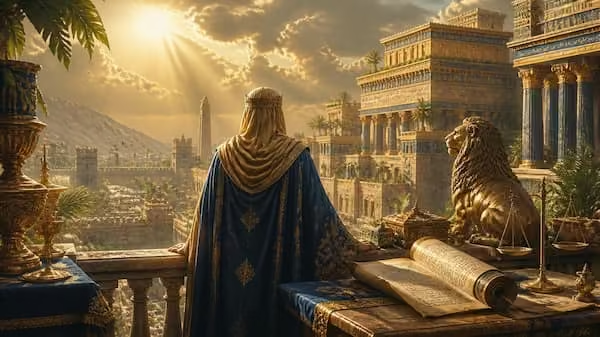
Prophet Sulayman (A.S.) surveying his magnificent kingdom
Prophet Sulayman (peace be upon him) is one of the great prophets mentioned in the Quran who was granted both prophethood and kingship. His life represents a unique example of how spiritual leadership and political authority can exist together under the guidance of Allah. Sulayman ruled with justice, wisdom, and deep devotion to Allah, making him one of the most remarkable leaders described in Islamic tradition.
The Quran highlights several extraordinary blessings that Allah granted to Sulayman. These blessings were not given merely to display power but to demonstrate Allah’s wisdom and to help Sulayman establish justice and righteousness in his kingdom. Despite possessing immense authority and miraculous abilities, Sulayman remained humble and constantly acknowledged that all of his blessings came from Allah.
The story of Prophet Sulayman and the Ants is also one of those blessings.
➤ Lineage and Relationship with Prophet Dawud
Prophet Sulayman was the son of Prophet Dawud (David, peace be upon him), another respected prophet and king in Islamic tradition. Dawud was known for his strong faith, wisdom, and leadership. Allah granted him prophethood and a powerful kingdom, and he ruled his people with justice and righteousness.
Sulayman inherited both the spiritual and political legacy of his father. The Quran mentions that Allah blessed Sulayman with knowledge and wisdom at an early age. As the successor of Dawud, he continued the mission of guiding people toward worshiping Allah and living according to divine guidance.
The relationship between Dawud and Sulayman demonstrates the continuity of prophethood and leadership within a family chosen by Allah. It also highlights the importance of passing knowledge, faith, and responsibility from one generation to the next.
➤ Prophet Sulayman and the Ants: Gifts and Blessings Granted by Allah
Allah granted Prophet Sulayman several unique abilities that distinguished him from other rulers. These blessings are mentioned in different chapters of the Quran and illustrate the special status that Sulayman held as both a prophet and a king.
One of the most remarkable gifts was control over the wind. By Allah’s command, the wind would carry Sulayman and his armies over long distances in a short time. This ability allowed him to travel and govern his kingdom efficiently.
Another extraordinary blessing was authority over the jinn. The jinn worked under Sulayman’s command and performed various tasks such as building structures, creating large works of architecture, and diving into the sea to retrieve valuable resources. These abilities demonstrated the power that Allah granted to Sulayman as a sign of His divine authority.
Sulayman was also given the ability to understand the language of birds and animals. This unique gift allowed him to communicate with creatures in ways that reflected the harmony between the prophet and the natural world. The famous story of the ants in Surah An-Naml is one example of this remarkable ability.
Despite receiving such extraordinary blessings, Sulayman always recognized that these powers were gifts from Allah. He frequently expressed gratitude and sought Allah’s guidance to ensure that he used his authority responsibly.
➤ Authority Over Humans, Jinn, and Animals
One of the most distinctive aspects of Sulayman’s kingdom was his authority over multiple forms of creation. His army consisted not only of humans but also of jinn and birds, all organized into disciplined groups.
This diverse army reflected the unique leadership that Allah granted Sulayman. The jinn assisted with construction and other complex tasks, while birds played roles in communication and observation. Through Allah’s permission, Sulayman was able to coordinate these different groups effectively.
His authority over animals and birds also demonstrated a special harmony between the prophet and the natural world. Instead of dominating creation with cruelty, Sulayman exercised his authority with wisdom and compassion. This is clearly illustrated in the story of Prophet Sulayman and the Ants, where he listened to the warning of a small creature and responded with gratitude and humility.
➤ Prophet Sulayman and the Ants
Overall, the historical background of Prophet Sulayman highlights the extraordinary position he held among the prophets. His kingdom was not only a symbol of power but also a demonstration of how leadership should be guided by faith, humility, and responsibility toward all of Allah’s creation.
Page 9