
The Great Ocean Conveyor Belt: Earth's Planetary Heartbeat 💓
Table of Contents
▫️ Introduction to the Thermohaline Circulation |
▫️ The Mechanism Behind the Great Ocean Conveyor Belt |
▫️ The Global Path of the Circulation |
▫️ Importance to Earth’s Climate and Ecosystems |
▫️ Historical Discovery and Scientific Understanding |
▫️ Potential Threats and Disruptions |
▫️ Future Implications and Research Directions |
Introduction to the Thermohaline Circulation
When We See the Oceans, We Begin to Question What They Are?
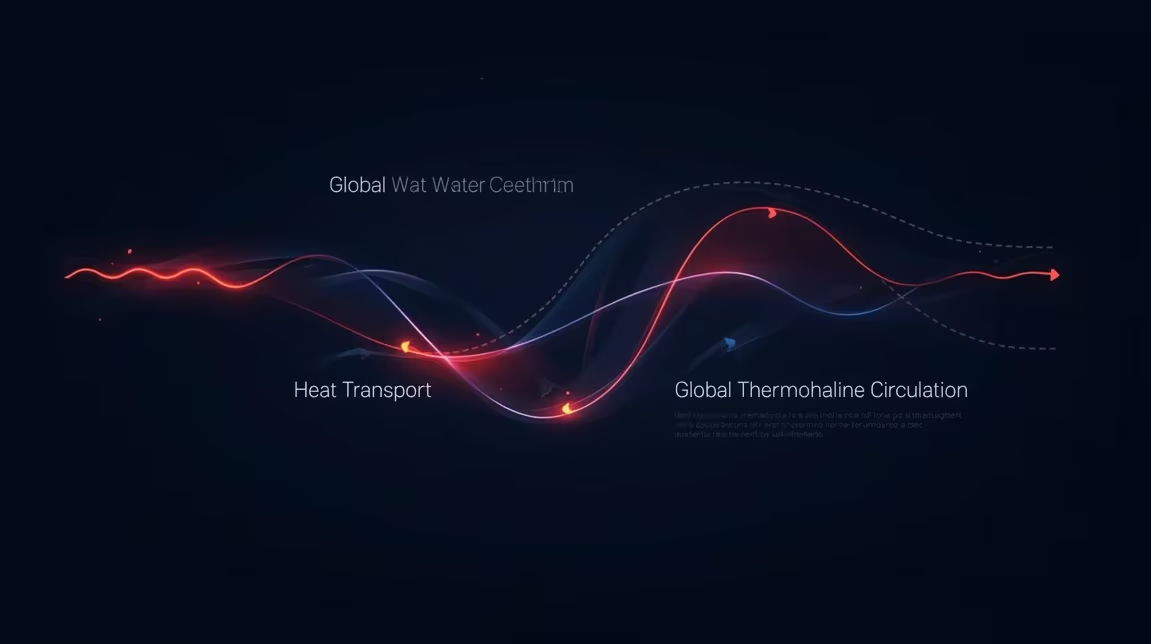
The thermohaline circulation — often called the Great Ocean Conveyor Belt — is one of the most vital systems regulating Earth’s environmental balance. Acting much like a planetary circulatory system, it continuously transports heat, nutrients, oxygen, and carbon across the globe’s oceans. This immense network of currents connects all major ocean basins into a single, dynamic system that operates from the sunlit surface waters down to the dark depths of the seafloor.
Driven by differences in water temperature (“thermo”) and salinity (“haline”), the circulation moves enormous volumes of water at slow but persistent speeds — typically just a few centimeters per second. Yet over centuries, this steady motion completes a full global cycle in roughly 500 to 1,000 years. Despite its slow pace, its impact is profound: it redistributes heat from equatorial regions toward the poles, moderates climate extremes, influences weather systems, and sustains marine ecosystems worldwide.
Core Drivers and Process: |
◎ Starts in the tropics/subtropics: Surface waters absorb solar heat, becoming buoyant and relatively salty. |
◎ Poleward journey: Warm waters drift north (boosted by winds like the Gulf Stream), cooling en route. |
◎ Sinking in high latitudes: In the North Atlantic (near Greenland) and Southern Ocean (around Antarctica), intense cooling plus salinity increases from sea-ice formation make water dense → it plunges thousands of meters in massive convective events, pulling replacement surface water from afar. |
◎ Deep flow and upwelling: Dense water spreads through ocean interiors, eventually rising via winds, tides, and mixing—often nutrient-rich, fueling phytoplankton and the marine food web. |
The process begins in warm tropical waters that absorb solar energy and become less dense. As these waters travel poleward through wind-driven currents such as the Gulf Stream, they gradually cool. In high-latitude regions — particularly in the North Atlantic and around Antarctica — heat loss to the atmosphere and increased salinity from sea ice formation make the water denser. This heavier water sinks into the deep ocean, initiating a powerful downward movement that drives the global conveyor forward.
As deep waters flow across ocean basins, they eventually rise again through mixing and upwelling in other regions, completing a continuous planetary loop. Without this system, the poles would become far colder, the tropics much hotter, and the delicate thermal balance that supports life on Earth would be severely disrupted. For this reason, scientists often describe thermohaline circulation as the planet’s “heartbeat” — a rhythmic, life-sustaining force essential to long-term climate stability.
➤ Current Status and Climate Concerns:
Without this relentless overturning, equatorial regions would scorch, polar areas would freeze far more severely, and global weather systems — from monsoons to storm tracks — would unravel. For millennia it has helped maintain the delicate thermal equilibrium that allowed human civilization to flourish.
Yet today, as the climate warms, freshwater from accelerating Greenland melt and shifting precipitation patterns is diluting key sinking zones, weakening the density contrast that powers the system
As of 2026, the system—particularly its Atlantic arm, the AMOC (Atlantic Meridional Overturning Circulation)—shows signs of weakening due to freshwater influx from Greenland melt and changing precipitation, which dilute sinking zones and reduce density contrasts. Observations and models indicate it has slowed modestly since the mid-20th century (by ~8–15% in some estimates), though debate continues on the exact rate and drivers.
Recent research (2025–2026) leans toward: |
◎ Limited weakening this century (e.g., 18–43% by 2100 under medium-high emissions, not near-collapse). |
◎ Resilience in many models: full shutdown unlikely before 2100, even under high emissions, with some projections pushing it post-2100 or deeming abrupt collapse very low probability. |
◎ Ongoing risks: Continued slowdown could amplify Arctic warming, alter European winters, reduce Amazon rainfall, and impair ocean carbon uptake. |
While alarmist early warnings (e.g., possible collapse by mid-century) have been tempered by newer data and model ensembles, the conveyor is undeniably sensitive—making rapid emissions cuts essential to preserve its steady beat.
In essence, the thermohaline circulation is Earth’s quiet, planetary-scale thermostat—a rhythmic, life-sustaining force whose steady beat we ignore at our peril.
The Mechanism Behind the Great Ocean Conveyor Belt
The driving force of thermohaline circulation lies in seawater’s response to temperature and salinity changes, which alter its density and initiate both vertical and horizontal movement.
◎ Density Fundamentals: Cold water contracts and becomes denser, while increased salinity adds mass without a proportional increase in volume, further enhancing its tendency to sink. |
◎ Primary Sinking Zones: The most significant deep-water formation occurs in the North Atlantic (North Atlantic Deep Water formation) and the Southern Ocean (Antarctic Bottom Water formation), where extreme cooling and high salinity maximize density. |
◎ Upwelling Dynamics: The slow return of deep water to the surface occurs through turbulent mixing, wind-driven Ekman transport, and interactions with seafloor topography that force deep waters upward. |
◎ Surface–Deep Integration: While winds primarily control near-surface circulation, thermohaline processes dominate the deep ocean interior, creating a layered yet interconnected global system. |
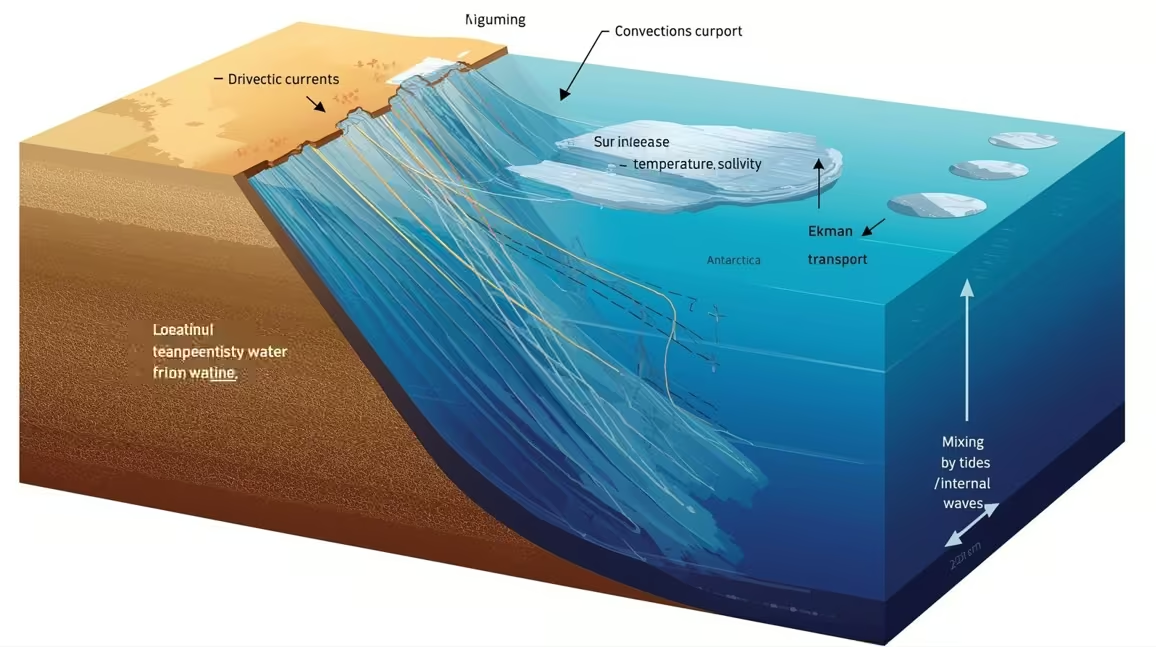
Surface waters in equatorial regions absorb intense solar radiation, becoming warm and less dense. As they flow toward higher latitudes, they encounter colder air masses that rapidly extract heat, particularly during winter. In subtropical gyres, strong evaporation increases salinity, further raising density. Around Antarctica, sea ice formation expels brine, producing extremely saline, dense plumes that cascade down continental shelves into the deep ocean.
In the North Atlantic, intense winter cooling over the Norwegian and Greenland Seas, combined with saline inflow from lower latitudes, triggers deep convection reaching depths of 2–4 km. Once formed, these deep-water masses spread laterally along density surfaces, guided by seafloor topography and influenced by Earth’s rotation (the Coriolis effect).
The return pathway involves gradual upwelling, concentrated in wind-driven divergence regions such as the equatorial Pacific and the Southern Ocean’s circumpolar current. This vertical exchange replenishes surface nutrients, supporting high biological productivity.
Estimates place the strength of the Atlantic overturning circulation at roughly 15–25 Sverdrups, highlighting the immense scale of the system despite its slow velocity. Tides, internal waves, and mesoscale eddies enhance vertical mixing, preventing permanent stratification and sustaining the global circulation loop.
Global Path of the Thermohaline Circulation
The thermohaline circulation follows a complex, globe-spanning route that connects all major ocean basins in a slow but persistent journey.
◎ Northward Warm Flow: Warm, saline surface waters move northward from the tropics through the Gulf Stream and continue as the North Atlantic Current, transporting significant heat to higher latitudes. |
◎ Deep Sinking and Southward Spread: Cooling and increased salinity in the subpolar North Atlantic transform these waters into North Atlantic Deep Water (NADW), which sinks and flows southward at depths of 2–4 km. This deep current follows the western Atlantic boundary before spreading eastward into the broader South Atlantic basin. |
◎ Southern Ocean Hub: In the far south, NADW encounters even denser Antarctic Bottom Water (AABW), formed near Antarctica in coastal polynyas and along continental shelves. AABW occupies the deepest ocean layers and spreads northward through deep ocean basins, filling the abyssal Indian and Pacific Oceans. |
◎ Surface Return Pathways: Deep waters gradually upwell, particularly in the Pacific and Southern Oceans. In the Pacific, these waters may remain isolated for 1,000–2,000 years, accumulating nutrients before resurfacing in regions such as the northeast Pacific and equatorial zones. |
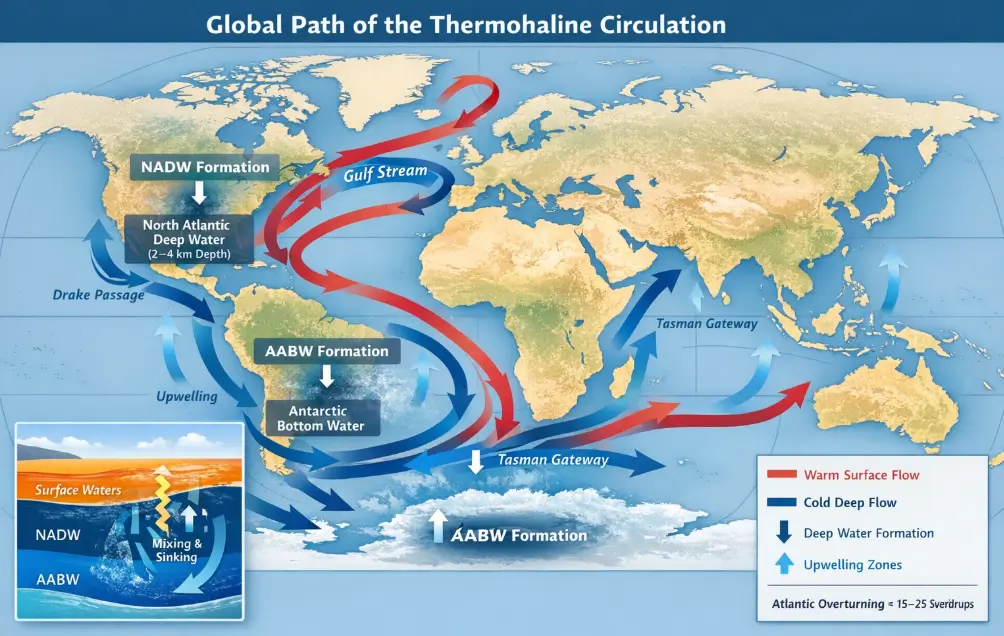
Surface currents then transport these modified waters westward through the Indonesian Throughflow into the Indian Ocean. From there, the Agulhas Current carries them southward around the Cape of Good Hope, where they re-enter the Atlantic basin, completing the global loop.
Deep passages such as the Drake Passage and the Tasman Gateway facilitate inter-basin exchange. Although eddies, boundary currents, and seasonal variability add regional complexity, the overall system functions as a unified, millennia-scale circulation.
Importance to Earth’s Climate and Ecosystems
Thermohaline circulation represents one of the most fundamental regulatory mechanisms within Earth’s climate system. By redistributing heat, salt, nutrients, oxygen, and dissolved carbon across ocean basins, it links the atmosphere, cryosphere, and biosphere into a tightly coupled global system. Often described as the planet’s “climate conveyor,” this circulation operates on timescales ranging from decades to millennia and exerts profound influence on both regional weather patterns and long-term climate stability.
➤ Major Climate and Ecological Functions:
| ◎ Global Heat Redistribution: Transports excess tropical heat toward higher latitudes, moderating global temperature gradients and reducing extremes between equatorial and polar regions. |
| ◎ Climate Stabilization: Supports relatively stable interglacial conditions by limiting runaway ice expansion at high latitudes and excessive tropical warming. |
| ◎ Nutrient Cycling and Biological Productivity: Drives upwelling systems that replenish surface waters with macronutrients (nitrate, phosphate, silicate) and micronutrients (iron), sustaining marine primary production. |
| ◎ Carbon Sequestration and Storage: Facilitates long-term removal of atmospheric carbon dioxide (CO₂) through physical solubility processes and the biological carbon pump. |
| ◎ Atmospheric and Hydrological Influence: Modulates storm tracks, monsoon systems, precipitation distribution, and regional sea-level variability through large-scale heat and mass redistribution. |
➤ Heat Transport and Climate Regulation:
One of the most visible climate impacts of thermohaline circulation is its role in transporting warm surface waters northward via systems such as the Gulf Stream and its extension, the North Atlantic Current. This heat transfer significantly moderates the climate of northwestern Europe, which experiences milder winters than other regions at similar latitudes. The magnitude of this heat flux is immense—comparable to multiple times the total annual human energy consumption of Europe.
By reducing equator-to-pole temperature contrasts, thermohaline circulation helps stabilize atmospheric jet streams and large-scale circulation cells. This moderation limits extreme polar ice growth while preventing excessive accumulation of tropical heat, contributing to the relative stability observed during interglacial periods such as the present Holocene epoch.
➤ Biological Productivity and Marine Ecosystems:
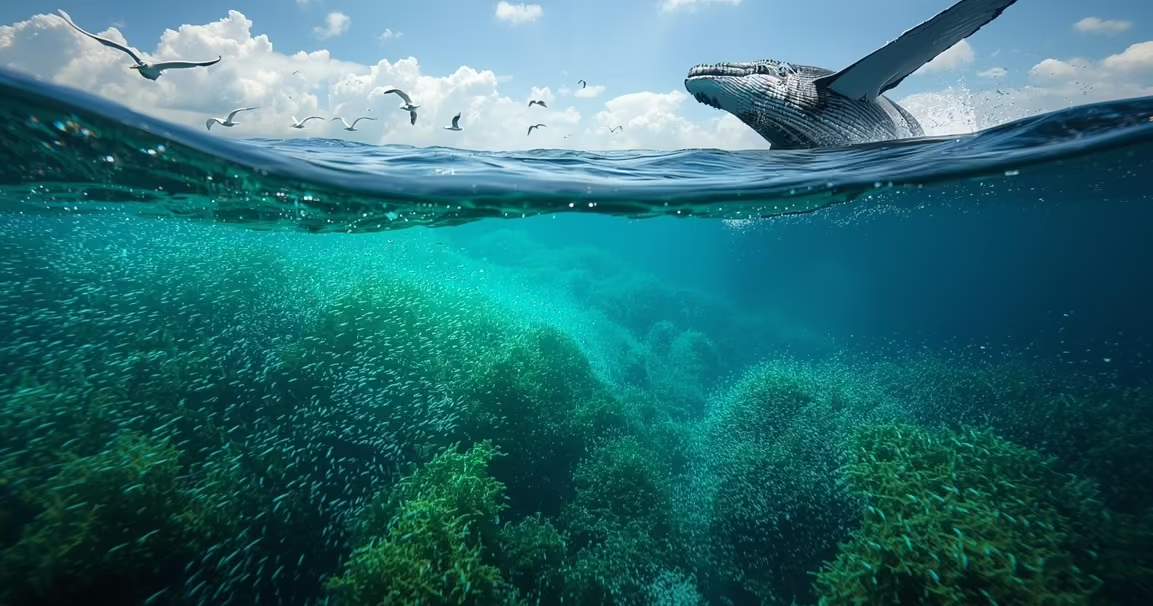
Thermohaline circulation is equally critical to ocean life. Deep waters are enriched in nutrients derived from decomposed organic matter. When these waters upwell—particularly in eastern boundary systems and regions of divergence such as the Southern Ocean—they fertilize surface waters.
Upwelling zones off Peru, California, and parts of the equatorial Pacific rank among the most productive marine ecosystems globally. Phytoplankton blooms supported by nutrient inputs form the base of marine food webs, sustaining zooplankton, forage fish, large predatory fish, seabirds, and marine mammals. In polar regions, nutrient supply fuels krill populations that underpin Antarctic food chains.
Additionally, vertical circulation redistributes dissolved oxygen. Without this renewal, deep ocean waters would gradually lose oxygen through biological respiration, threatening deep-sea biodiversity.
➤ Carbon Sequestration and Long-Term Storage:
Thermohaline circulation plays a central role in the global carbon cycle. Surface waters absorb atmospheric CO₂ through physical dissolution. Cold, dense waters formed in the North Atlantic and near Antarctica transport this carbon into the deep ocean, where it can remain isolated from the atmosphere for centuries to millennia.
Simultaneously, the biological carbon pump transfers carbon downward as organic particles sink after photosynthesis. This dual mechanism—physical solubility and biological export—makes the deep ocean the largest active carbon reservoir in the Earth system.
➤ Weather Patterns, Sea Level, and Potential Disruption:
Changes in thermohaline circulation strength can influence storm intensity, rainfall distribution, and monsoon behavior. Variations in ocean mass distribution also affect regional sea level through dynamic adjustment processes. A slowdown in circulation could lead to cooling in parts of Europe, shifts in tropical rainfall belts, increased drought frequency in some regions, and reduced ocean oxygenation.
Because it integrates thermal, chemical, and biological processes across global scales, thermohaline circulation functions as a cornerstone of Earth’s climate resilience. Its stability is therefore essential not only for temperature regulation but also for marine biodiversity, fisheries productivity, and long-term carbon balance.
Historical Discovery and Scientific Understanding
The concept of thermohaline circulation has evolved through centuries of exploration and research, from early observations of ocean currents to modern modeling that reveals its complexities.
◎ Early Insights: Ancient mariners noted surface currents, but deep flows were hypothesized in the 19th century based on temperature profiles. |
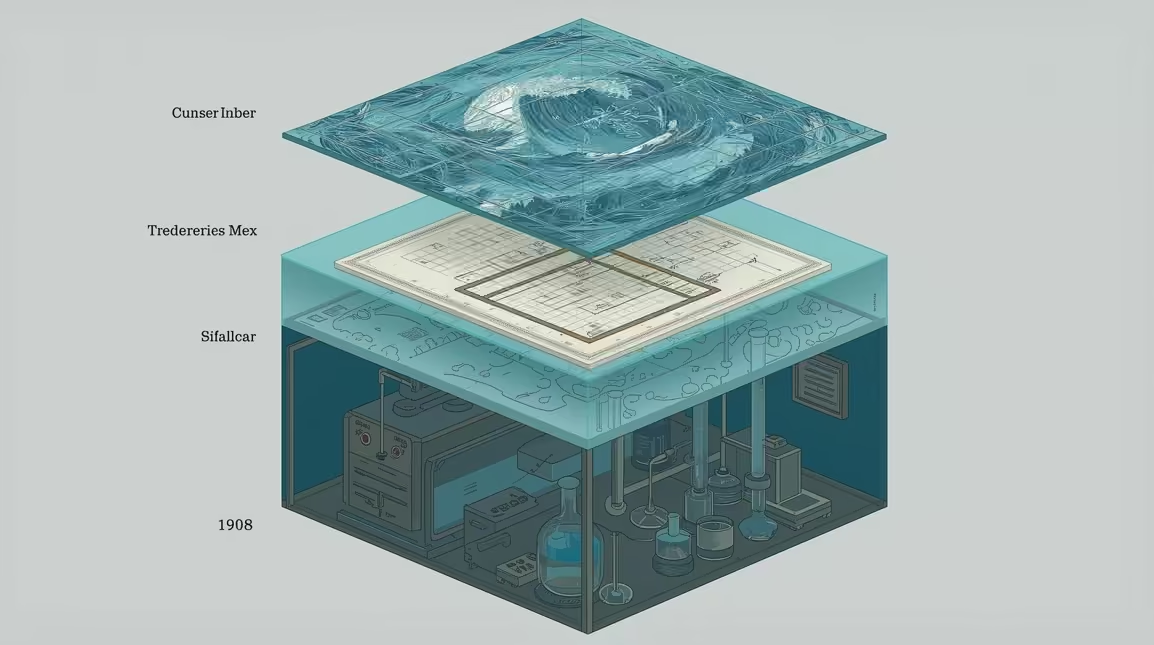
◎ Key Pioneers: Henry Stommel and Arnold Arons in 1960 formalized the two-limbed model (Atlantic and Southern overturning), building on Johan Sandström’s 1908 experiments. |
◎ Measurement Advances: Tools like current meters, tracers (e.g., isotopes), and programs such as RAPID have quantified flow rates and variations. |
◎ Modeling Progress: Computer simulations incorporate density gradients, wind, and tides to predict behaviors, with paleoclimate data from ice cores validating past changes. |
The journey to understanding began with explorers like Benjamin Franklin mapping the Gulf Stream in the 18th century, but deeper mysteries unfolded with 19th-century voyages measuring bottom temperatures, suggesting cold abyssal waters originated from polar sinking. Sandström’s lab work demonstrated that thermal convection requires specific conditions, like heating from below, which in oceans is mimicked by salinity effects and mixing. In the 1920s, salinity’s density role was integrated, leading to the term “thermohaline.” Stommel’s box models simplified the system into compartments, showing how freshwater and heat fluxes drive overturning. Wallace Broecker popularized the “conveyor belt” metaphor in the 1980s, linking it to abrupt climate shifts like the Younger Dryas.
Today, observations from Argo buoys and satellite altimetry track sea surface height anomalies indicative of circulation strength. Chemical tracers, such as chlorofluorocarbons or radiocarbon, age water masses, confirming long transit times. Paleoceanography uses sediment cores to reconstruct past states, revealing weaker circulation during warm interglacials or stronger during ice ages. This knowledge informs climate models, emphasizing the conveyor’s sensitivity to external forcings like greenhouse gases.
Potential Threats and Disruptions
Climate change poses significant risks to the thermohaline circulation, potentially slowing or altering its flow with far-reaching consequences.
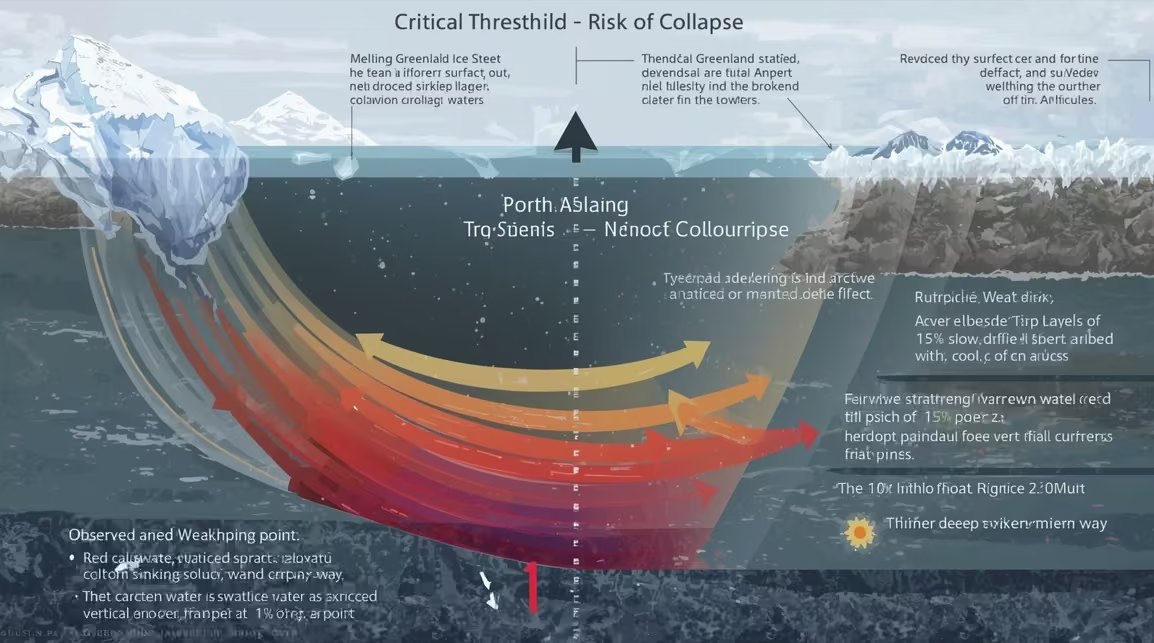
◎ Freshwater Influx: Melting ice sheets and increased precipitation dilute surface salinity, reducing density and hindering sinking. |
◎ Warming Effects: Higher temperatures stratify the ocean, impeding vertical mixing and weakening overturning. |
◎ Observed Changes: The Atlantic Meridional Overturning Circulation has declined by about 15% since the mid-20th century, with similar trends in the Southern cell. |
◎ Tipping Points: Abrupt collapse could occur if thresholds are crossed, leading to irreversible shifts in ocean states. |
Rising global temperatures accelerate polar ice melt, injecting freshwater into key sinking regions like the North Atlantic, where Greenland’s glaciers contribute billions of tons annually. This freshening creates a buoyant cap that prevents dense water formation, as seen in models projecting a 20-50% AMOC slowdown by 2100 under high-emission scenarios. In the Southern Ocean, ozone depletion and shifting winds alter upwelling, potentially freshening surface layers and diminishing Antarctic Bottom Water production. Paleoclimate evidence from events like the 8.2 kiloyear event shows how meltwater pulses from ancient lakes disrupted circulation, causing rapid cooling.
Modern monitoring via the RAPID array detects variability, but debates persist on whether current slowdowns are natural or anthropogenic. If weakened, Europe might face cooler winters, while the U.S. East Coast sees accelerated sea level rise from redistributed water mass. Ecosystems could suffer from reduced nutrient upwelling, leading to fishery collapses and ocean deoxygenation as mixing falters. Recovery might take centuries even if emissions cease, highlighting the need for emission reductions to avert tipping points.
Future Implications and Research Directions
Looking ahead, the thermohaline circulation’s fate will shape humanity’s adaptation to climate change, necessitating advanced research and policy responses.
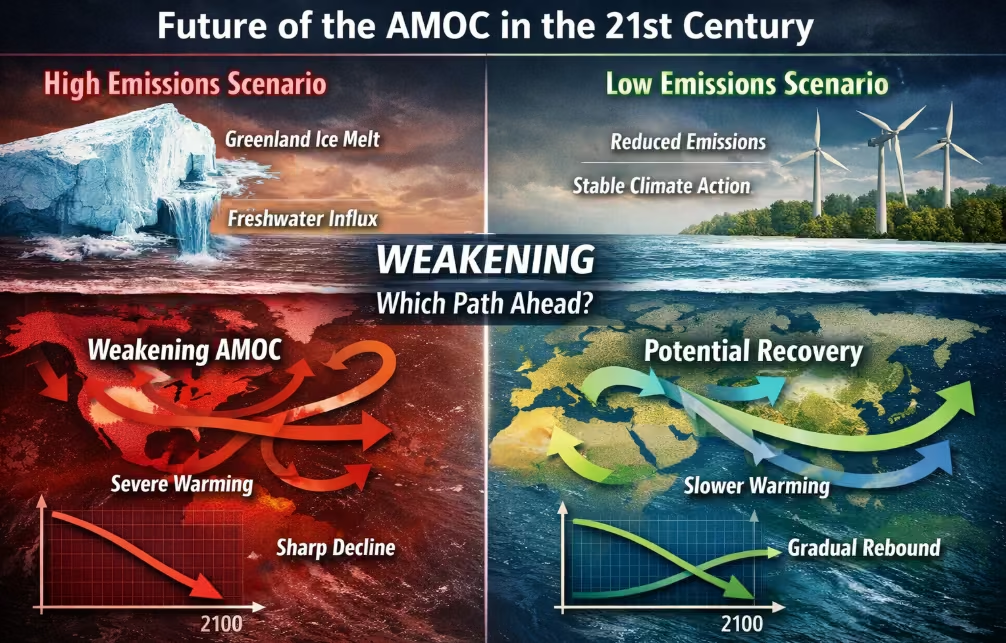
◎ Projection Scenarios: Projection scenarios consistently indicate that the thermohaline circulation—particularly the Atlantic Meridional Overturning Circulation (AMOC)—is likely to weaken throughout the 21st century under most emissions pathways. Climate models assessed by the Intergovernmental Panel on Climate Change show that increasing greenhouse gas concentrations intensify surface warming and accelerate ice melt from Greenland and the Arctic. This influx of freshwater reduces surface water density in the North Atlantic, inhibiting deep-water formation—the engine that drives overturning circulation. Under high-emission scenarios, continued warming enhances ocean stratification, further suppressing vertical mixing and leading to a substantial decline in overturning strength by 2100. However, under low-emission pathways aligned with global mitigation targets, warming stabilizes earlier, freshwater input slows, and ocean density gradients partially recover. In these scenarios, models suggest that while a full return to pre-industrial strength is unlikely within this century, the rate of weakening could slow considerably, and elements of the circulation may gradually rebound over longer timescales. Importantly, most projections indicate a weakening rather than an abrupt collapse before 2100, though uncertainty remains due to model limitations and incomplete understanding of tipping thresholds. Overall, the divergence between high- and low-emission scenarios underscores the strong sensitivity of the AMOC to human-driven climate forcing and highlights mitigation efforts as a critical determinant of its long-term stability. |
◎ Research Priorities: Strengthening research efforts is therefore essential. Expanding high-resolution monitoring systems—such as the Overturning in the Subpolar North Atlantic Program—will enhance our understanding of circulation variability and tipping thresholds. Advancements in coupled ocean–atmosphere models, improved representation of stratification processes, and integration of artificial intelligence with real-time oceanographic data will further refine projections. In parallel, paleoclimate studies provide valuable analogs, helping scientists interpret past abrupt changes and better constrain future risks. |
◎ Mitigation Strategies: Mitigation remains the most powerful tool available. Limiting global warming in alignment with the temperature goals of the Paris Agreement could significantly reduce the likelihood of destabilizing feedbacks, preserving the ocean’s capacity to regulate heat, carbon, and regional weather systems. Stabilizing the overturning circulation would help moderate extreme events, sustain marine ecosystems and fisheries, and protect vulnerable coastal communities from compounded sea-level rise and storm intensification. |
◎ Broader Impacts: Encouragingly, international cooperation is accelerating. Initiatives such as the United Nations Decade of Ocean Science for Sustainable Development are fostering global collaboration in ocean monitoring, conservation, and clean energy transitions. These coordinated efforts reflect growing recognition that the thermohaline circulation is not merely a scientific concern, but a foundational component of planetary resilience. |
While the risks are substantial, the outlook is not predetermined. With decisive emissions reductions, sustained scientific innovation, and coordinated policy action, humanity retains the capacity to safeguard this critical climate regulator. Preserving the thermohaline circulation is ultimately an investment in long-term stability—ensuring that the ocean’s great conveyor continues to sustain life, moderate climate, and support future generations on our blue planet.