
The Journey of Hazrat Musa (AS): A Story of Courage, Trust, Gaining Inner Power, and Divine Mercy
The Journey of Hazrat Musa (A.S.): A Story of Courage, Trust, Gaining Inner Power, and Divine Mercy is a remarkable tale of faith and transformation.

The Journey of Hazrat Musa (A.S.): A Story of Courage, Trust, Gaining Inner Power, and Divine Mercy
Introduction: The Life Journey of Prophet Musa (A.S.)
In the vast tapestry of human history and divine guidance, few stories shine as brightly as the remarkable journey of Hazrat Musa (A.S.). In the mighty kingdom of Egypt, where tall palaces cast long shadows over the poor, there lived a ruler whose heart had turned to stone — Pharaoh. He feared losing power so deeply that he ordered every newborn boy among the Israelites to be killed. It was during this dark time that Hazrat Musa (A.S.) was born and raised in the palace of his greatest enemy. Later chosen as a Messenger of Allah, his life stands as one of the most powerful and inspiring narratives of faith, resilience, and transformation ever revealed.
🌸 A Baby Protected by Allah: Hazrat Musa (A.S.) Safely Guarded by Divine Will
Musa’s mother was heartbroken and terrified. How could she save her precious newborn when Pharaoh’s soldiers were hunting every Israelite boy?
Yet Allah, in His infinite mercy, inspired her heart with these words: “Nurse him for a while, then place him in a basket and cast him into the river. Do not fear nor grieve; We shall surely return him to you.”
With trembling hands yet complete trust in Allah, she gently placed baby Musa (A.S.) into the woven basket and set it afloat on the Nile. The current carried him safely until it drifted right to the steps of Pharaoh’s grand palace.
There, Pharaoh’s wife, the righteous Asiya (R.A.), discovered the child. Her heart softened instantly with love. “This boy will bring us joy,” she declared. By Allah’s perfect plan, Musa’s own mother was later chosen as his wet nurse. Thus, the child whom Pharaoh sought to destroy grew up safely in the very palace of his greatest enemy.
🏜️ A Turning Point: Hazrat Musa (A.S.) Flees to Madyan
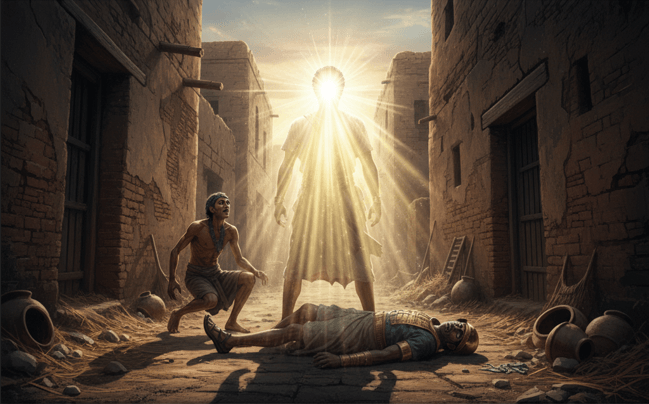
Hazrat Musa (A.S.) – The Divine Light and the Slaying of the Egyptian
As Hazrat Musa (A.S.) grew older, his heart ached deeply for the oppression and suffering of his people, the Israelites. One day, he witnessed an Egyptian mercilessly beating one of his fellow Israelites. Driven by a sense of justice, Musa (A.S.) intervened to stop the injustice. In the heat of the moment, he struck the Egyptian with a single blow — but the man died instantly.
Overwhelmed with shock and regret, Musa (A.S.) cried out to Allah for forgiveness, for the act had been unintentional. When news spread and Pharaoh’s men plotted to kill him, he fled Egypt in fear, journeying alone through the vast, scorching desert.
Exhausted and weary, he finally reached the land of Madyan. There, at a watering well, he saw two modest young women struggling to hold back their flock while the shepherds watered theirs first. Moved by compassion, Musa (A.S.) helped them by drawing water for their animals.
Their father — a righteous and wise man (Prophet Shu‘ayb A.S.) — invited him home, hosted him with kindness, and later offered one of his daughters in marriage in exchange for eight to ten years of service. Musa (A.S.) accepted and began a new chapter of peaceful life as a shepherd, far from the palaces and perils of Egypt. Yet, his divine destiny was still unfolding.
🌟 The Divine Call on Mount Sinai: The Beginning of Prophethood

Years later, while traveling with his family through the desert at night, Hazrat Musa (A.S.) spotted a glowing fire on the side of Mount Sinai (also known as Mount Tur). Hoping to bring back a burning brand for warmth or to find guidance, he asked his family to wait and climbed toward the light.
As he drew near, a profound miracle unfolded: a green tree was engulfed in flames, yet it burned brightly without being consumed. Then, from the right side of the blessed valley, in the sacred spot called Tuwa, a majestic voice called out:
“O Musa! Indeed, I am Allah, the Lord of the worlds. So take off your shoes — you are in the sacred valley of Tuwa.”
Musa (A.S.) stood in awe and trembled. Allah then granted him two great signs as clear proofs of his prophethood:
- His staff, when thrown, would transform into a swift-moving serpent.
- His hand, when placed in his cloak and withdrawn, would shine brilliantly white without any disease.
Allah commanded him: “Go to Pharaoh, for he has indeed transgressed and become arrogant. Invite him to the straight path and free the Children of Israel from his oppression.”
Musa (A.S.) felt fear in his heart, remembering Pharaoh’s past cruelty and his own earlier incident. He prayed, “My Lord, I killed one of them and fear they will kill me.” But Allah reassured him with divine mercy:
“Do not fear, for I am with you. I hear and I see all things.”
🏛️ Standing Before Pharaoh
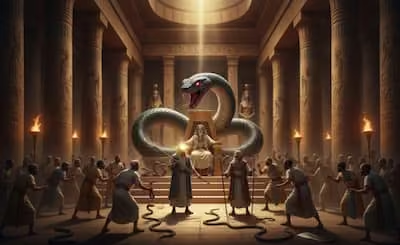
Hazrat Musa (A.S.) stands fearless before the mighty serpent in the court of Pharaoh, demonstrating the divine power and truth of Allah.
With firm faith and divine command, Hazrat Musa (A.S.) returned to Egypt accompanied by his brother Harun (A.S.). Together they stood boldly before the arrogant Pharaoh and delivered Allah’s message: “Release the Children of Israel and cease your oppression.”
Pharaoh mocked them, rejected the truth, and accused Musa (A.S.) of being a sorcerer and liar. To disprove the divine signs, he summoned the kingdom’s most skilled magicians. They cast their ropes and staffs, which appeared as twisting, writhing snakes through illusion and magic.
But when Musa (A.S.) threw down his staff at Allah’s command, it transformed into a real, swift-moving serpent that swallowed all their false illusions. The magicians, recognizing the clear truth from their Lord, immediately fell into prostration, declaring, “We believe in the Lord of Musa and Harun!”
Pharaoh erupted in rage and threatened them, yet the light of faith had already entered the magicians’ hearts. Truth had triumphed over deception in Pharaoh’s own court.
🌊 The Escape and the Miracle of the Sea

Hazrat Musa (A.S.) raises his staff as Allah parts the Red Sea, creating a miraculous path of safety for the believers while Pharaoh’s army approaches.
Despite the clear signs, Pharaoh’s heart grew even harder. Allah sent successive punishments upon Egypt — devastating floods, swarms of locusts, infestations of lice, hordes of frogs, and water turning into blood — as distinct warnings. Yet Pharaoh and his people remained arrogant and refused to let the Israelites go.
Finally, Allah commanded Hazrat Musa (A.S.) to lead his people out of Egypt by night. As they departed, Pharaoh pursued them with a massive army, filled with fury. The Israelites soon found themselves trapped: the enemy behind them and the vast Red Sea ahead. Fear and panic spread among them.
In that moment of despair, Musa (A.S.) declared with complete trust: “My Lord is with me; He will guide me.” Allah inspired him, “Strike the sea with your staff.” Musa (A.S.) obeyed, and the waters miraculously parted, rising like towering mountains on either side, revealing a dry path through the sea.
The believers crossed safely. When Pharaoh’s army charged in pursuit, the waters suddenly collapsed, drowning Pharaoh and his soldiers in the very sea they had ruled. Thus, Allah saved the righteous and destroyed the oppressor.
📜 The Divine Revelation: The Sacred Tablets from Allah
After the miraculous escape from Pharaoh and the crossing of the sea, Hazrat Musa (A.S.) ascended Mount Sinai once again at the appointed time, as commanded by Allah. There, in profound spiritual communion lasting forty days and nights, the Lord of the worlds revealed the Torah (Tawrat) — a complete scripture of guidance, mercy, law, and enlightenment for the Children of Israel.

Hazrat Musa (A.S.) ascends Mount Sinai and receives the divine Tablets of the Torah from Allah amid rays of heavenly light.
Allah Himself inscribed the sacred words upon the Tablets (Alwah), containing admonition, detailed instructions, and explanations of all things necessary for righteous living, worship, justice, and moral conduct. These divinely inscribed Tablets served as a shining light and a comprehensive code of life for his people.
Musa (A.S.) received this great honour directly from Allah, who spoke to him in a special manner. Even after this magnificent revelation, trials continued as his people faced tests of faith and patience. Yet Hazrat Musa (A.S.) remained steadfast, always turning to Allah with humility, firmness, and complete trust, setting an enduring example of prophetic dedication and reliance on divine guidance.
🌟 Morals and Lessons from the Story of Hazrat Musa (A.S.)
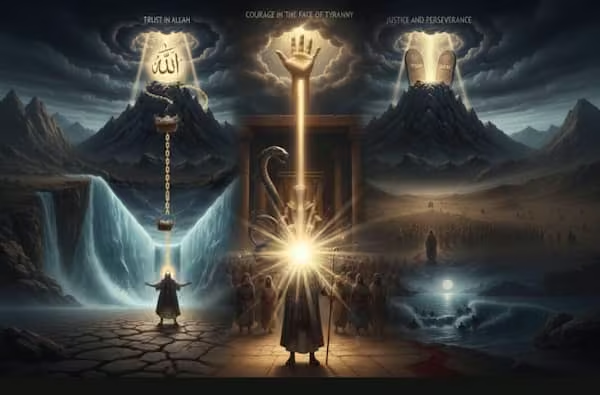
A powerful symbolic representation of the journey of Hazrat Musa (A.S.): Trust in Allah, Courage against tyranny, and Justice through the divine Tablets.
The extraordinary life of Hazrat Musa (A.S.) is filled with timeless wisdom that continues to guide believers through every trial and triumph. Here are seven profound lessons drawn from his blessed journey:
- Trust Allah even when the path is unclear Musa’s mother placed her infant son in the river out of fear, yet Allah returned him safely and raised him in the palace of his enemy. This teaches complete reliance on Allah (tawakkul) — He turns our deepest fears into sources of protection and honor.
- Hardships are part of the journey to greatness From exile in the desert to years of humble shepherding in Madyan, Musa (A.S.) faced fear, loneliness, and uncertainty. Each difficulty refined his character and prepared him for the noble responsibility of prophethood and leadership.
- Stand firmly against injustice Even in the heart of Pharaoh’s oppressive palace, Musa (A.S.) could not remain silent when he witnessed cruelty. His courage reminds us that true faith requires us to defend the weak and speak truth to power, regardless of the consequences.
- True strength lies in faith, not worldly power Pharaoh commanded vast armies, immense wealth, and absolute authority. Yet Musa (A.S.), armed only with unwavering faith and divine signs, prevailed. Real power belongs to those who place their trust in Allah alone.
- Allah helps in ways we cannot imagine From the basket floating safely on the Nile to the miraculous parting of the Red Sea, divine assistance arrived precisely when it was most needed. The story teaches us to remain hopeful — Allah’s mercy often comes from directions we never expect.
- Even miracles require courage and action Allah parted the sea for the Israelites, but Musa (A.S.) had to step forward first with complete trust. Miracles do not replace effort; they reward those who move ahead with sincere faith and determination.
- Guidance is a divine blessing and responsibility The Torah revealed to Musa (A.S.) was far more than a book — it was a profound light, mercy, and guidance for an entire nation. It reminds us that divine revelation is a precious gift we must cherish, follow wholeheartedly, and share with gratitude and sincerity.
These powerful lessons illuminate the path for every believer, showing that with patience, courage, and unwavering trust in Allah, victory and inner peace ultimately belong to the faithful.
✨ A Poetic Reflection on the Journey of Musa (A.S.)
When the tale of longing and divine love was first ordained, When the devotion of the servant met the mercy of the Lord, At the unveiling of the Throne, the heavens must have swayed in awe, |