
What Does ‘Jinn’ Mean?
What does ‘Jinn’ mean? In Arabic, the word “Jinn” refers to hidden or unseen beings created from smokeless fire according to Islamic belief.
| 🔸 Definition |
| 🔸 Created from fire |
| 🔸 Created before humans |
| 🔸 Invisible |
| 🔸 Free will |
Definition of Jinn & Jinn in Islam
In Islamic theology, jinn are a distinct creation of Allah, separate from humans and angels, who exist in an unseen realm parallel to the human world. The term jinn comes from the Arabic root janna, which means “to conceal” or “to hide.” Linguistically, the word reflects their essential nature: they are beings hidden from human sight. The primary source of knowledge about jinn in Islam is the Qur’an, where they are mentioned numerous times as real, accountable creatures created by Allah.
According to the Qur’an, jinn were created from “smokeless fire,” distinguishing their origin from that of humans, who were created from clay, and angels, who were created from light. This difference in creation signifies that jinn possess qualities and abilities unique to their nature. Although they are normally invisible to humans in their original form, Islamic teachings affirm that their invisibility does not negate their existence. Rather, it indicates that they belong to a realm beyond ordinary human perception.
A central aspect of the Islamic definition of jinn is that they possess free will. Unlike angels, who are described as consistently obedient to Allah, jinn have the capacity to choose between belief and disbelief, obedience and disobedience. Because of this moral freedom, they are accountable for their actions. The Qur’an makes clear that among the jinn are believers who submit to Allah and disbelievers who reject guidance. Like humans, they are subject to divine judgment and will be rewarded or punished according to their deeds.
Thus, in Islam, jinn are neither mythical spirits nor symbolic figures. They are conscious, responsible beings created for the purpose of worshiping Allah, living in a dimension that intersects with, yet remains distinct from, the human world.
Created from fire
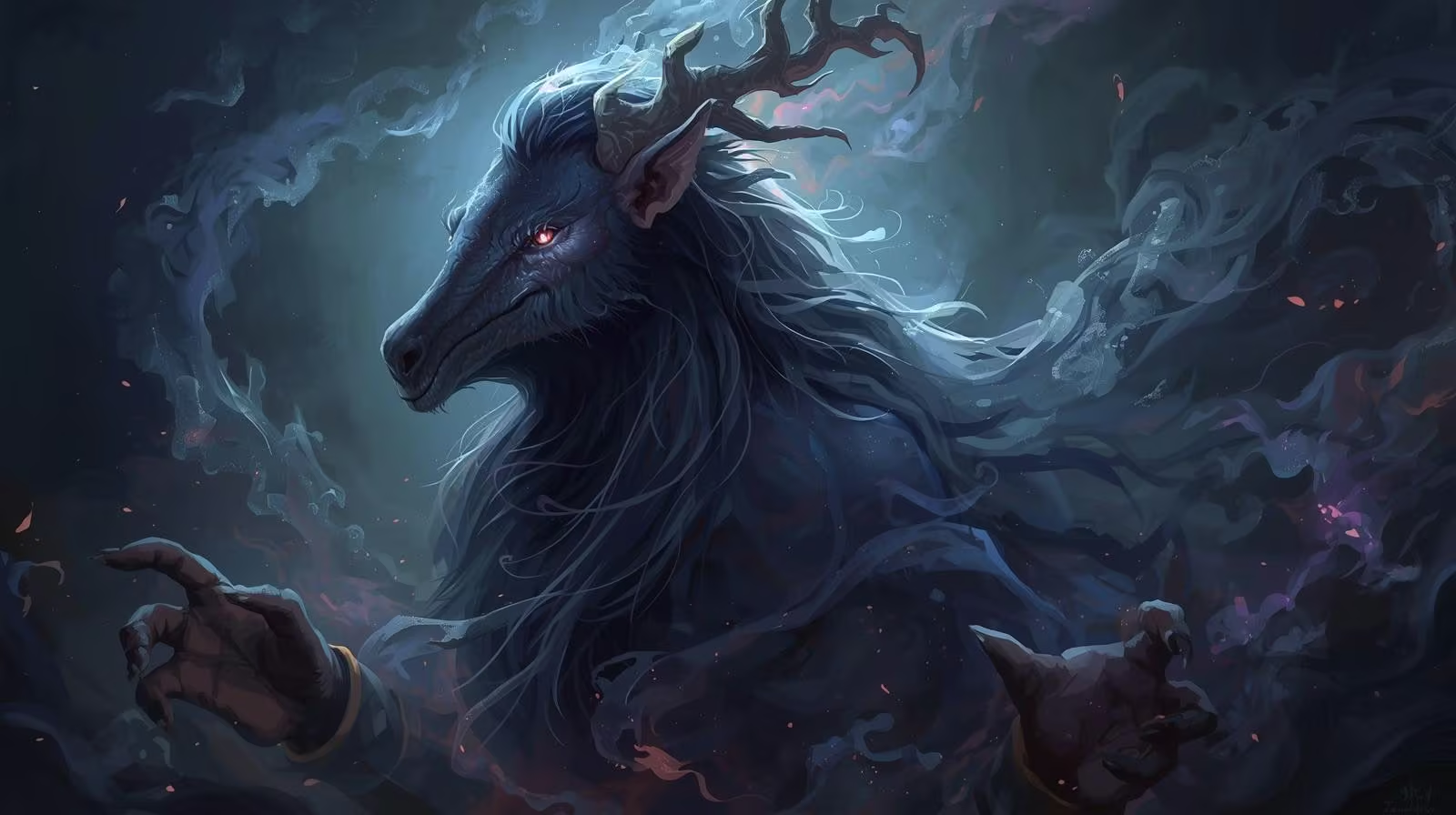
In Islamic belief, one of the most distinctive aspects of jinn is their origin. Unlike humans, who were created from clay, or angels, who were created from light, jinn were created from “smokeless fire” — a subtle, luminous, and intangible form of energy described in the Qur’an. The Qur’an mentions this in Surah Ar-Rahman (55:15):
“And He created the jinn from a smokeless flame of fire.” Qur’an — Surah Ar-Rahman (55:15) |
Tafseer (Explanation of verse):
Classical scholars explain that this verse highlights the distinct origin and nature of jinn compared with other creations. According to commentators such as Ibn Kathir and Al-Tabari, the phrase “smokeless flame of fire” (Arabic: mārij min nār) refers to a pure, subtle flame that has no smoke. It can also mean a mixed, flickering flame or penetrating fire that moves quickly.
This description indicates that jinn were created from a more subtle and energetic substance than humans, which helps explain their unseen nature and their ability—by Allah’s permission—to move swiftly or change form. Unlike humans, who were created from clay and have a dense physical body, jinn possess a lighter and more fluid composition, allowing them to exist beyond normal human perception.
Scholars also note that this verse appears in a passage where Allah reminds both humans and jinn of His power and favors. By mentioning their origins, the verse emphasizes that all creation—whether from clay or fire—is entirely dependent on Allah.
Thus, the verse not only explains the creation of jinn but also serves as a reminder of Allah’s creative power and the diversity of His creation.
Jinn Created from Smokeless Fire: Their Significance and Characteristics
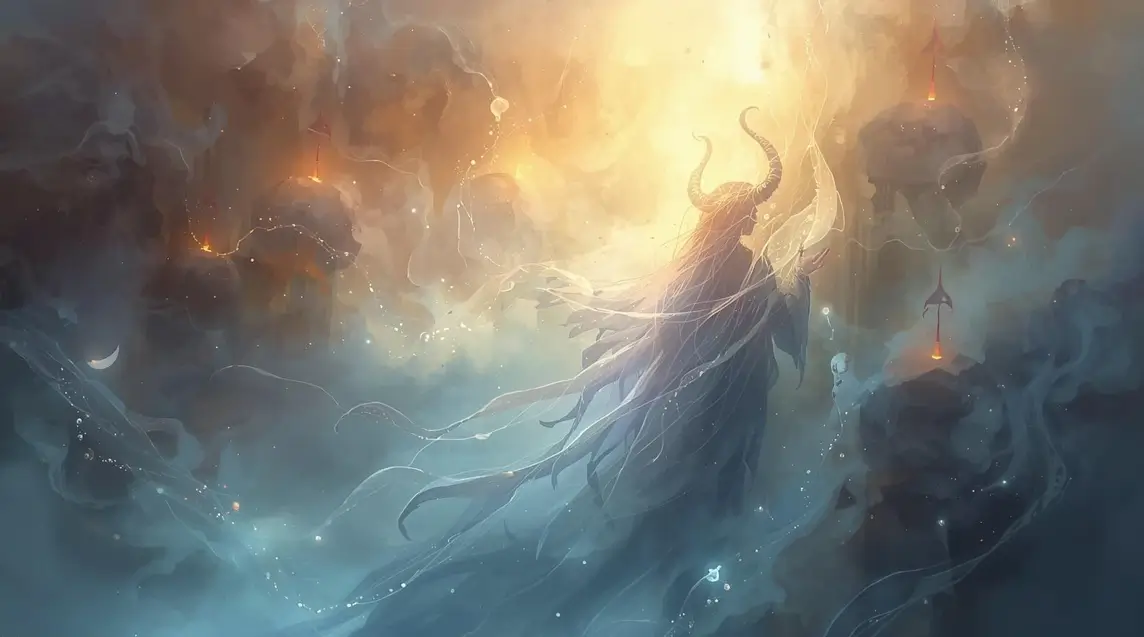
This description emphasizes both the spiritual and physical uniqueness of jinn. The term smokeless fire implies a form of existence that is powerful, invisible, and far more dynamic than ordinary matter known to humans. It also explains why jinn are generally unseen to the human eye, existing in a parallel realm that intersects with, but is distinct from, the human world.
The creation from fire is significant for several reasons. Fire symbolizes energy, speed, and subtlety — qualities that jinn are known to possess. Unlike humans, whose physical bodies are dense and grounded in clay, the fiery nature of jinn allows them abilities that humans cannot achieve naturally, such as extraordinary speed, the capacity to travel long distances in moments, and, in some instances, the ability to shape-shift. Yet, despite this apparent strength, jinn are not omnipotent. Their powers, although impressive, are still bound by the will of Allah and cannot surpass divine limits.
The choice of fire as the element for their creation also carries theological symbolism. Fire is often associated with both energy and potential danger, reflecting the dual nature of jinn. Like humans, jinn have free will and can choose to obey or disobey Allah. Some jinn are righteous and submit to divine guidance, while others rebel, follow Shaytan, and engage in wrongdoing. This duality emphasizes that power and origin do not determine morality; choice and obedience do.
Historical and traditional Islamic sources provide additional insights into their creation. Unlike angels, who are inherently obedient, jinn were created with intelligence and the capacity to reason. This requires that their creation be of a substance capable of autonomy and movement. Fire, in its invisible and subtle form, is ideal for a being meant to interact with the world in complex, unseen ways. It also explains many of the phenomena attributed to jinn in Islamic literature, including their ability to influence thoughts (waswasah), move unseen across vast distances, and manifest in forms that can be perceived under special circumstances.
Finally, the Qur’an mentions that jinn, like humans, were created with a purpose: to worship Allah. Their creation from fire does not make them superior or inferior to humans but highlights the diversity of Allah’s creation. Understanding this origin helps Muslims appreciate the spiritual and moral dimensions of jinn and the wisdom behind Allah’s creation.
Which Was Created First: Jinn or Humans?
According to the Qur’an, jinn were created before humans. This understanding comes directly from Qur’anic verses and the explanations of classical scholars. Allah describes the creation of both beings and clearly indicates that the jinn existed prior to the creation of Prophet Adam and humanity.
One of the clearest references appears in Surah Al-Hijr (15:26–27). Allah says that He created the human being from clay and then states that the jinn had already been created before that moment:
“And We did certainly create man out of clay from an altered black mud. And the jinn We created before from scorching fire.” (Qur’an 15:26–27) |
This verse explicitly confirms the chronological order: jinn were created first, followed by humans. Classical commentators such as Ibn Kathir explain in his tafseer that Allah created the jinn from “naar as-samoom”—a penetrating, intense fire—long before the creation of Adam. According to Ibn Kathir, the jinn inhabited the earth and lived there for a long period before human beings were created. Some narrations mention that the jinn caused corruption and conflict on earth, which led to the sending of angels to restore order.
Another important reference appears in Surah Ar-Rahman (55:15), where Allah says:
“And He created the jinn from a smokeless flame of fire.” Surah Ar-Rahman (55:15) |
This verse explains the nature and substance from which jinn were created. Scholars like Al-Tabari explain that the phrase “smokeless flame” refers to a subtle and intense type of fire that produces no smoke. This fiery origin distinguishes the jinn from humans, who were created from clay, as mentioned in Surah Al-Hijr (15:26) and Surah Sad (38:71).
The story of Iblis further supports the idea that jinn existed before humans. When Allah created Adam and commanded the angels to prostrate before him, Iblis refused out of arrogance. The Qur’an records his reasoning in Surah Al-A’raf (7:12):
“I am better than him. You created me from fire and created him from clay.” Surah Al-A’raf (7:12) |
According to tafseer scholars, Iblis was from the jinn but was among the angels in worship before Adam’s creation. His statement confirms the difference in origin between the two creations and shows that the jinn already existed when Adam was created.
The Qur’anic narrative also emphasizes that both humans and jinn share a similar purpose. Allah states in Surah Adh-Dhariyat (51:56):
“And I did not create the jinn and mankind except to worship Me.”
Surah Adh-Dhariyat (51:56)
This verse highlights that despite their different origins and the fact that jinn were created earlier, both species are morally responsible and accountable to Allah. They possess free will, the ability to choose between obedience and disobedience, and will ultimately be judged for their actions.
Therefore, the Qur’an and classical tafseer make it clear that jinn were created before humans, yet both were created to fulfill the same divine purpose: recognizing, worshipping, and submitting to the will of Allah. Their different materials of creation—fire for jinn and clay for humans—demonstrate the vast diversity and power of Allah’s creative ability.
Key Traits of Jinn Created from Fire
| 🔸 Invisible to Humans: Their fiery, subtle nature allows them to remain unseen in their natural form. |
| 🔸 Made of Smokeless Flame: Unlike humans (clay) or angels (light), jinn are created from energy-like fire. |
| 🔸 Possess Free Will: Despite their powerful origin, they can choose to obey or disobey Allah. |
| 🔸 Capable of Movement and Speed: Their fiery essence allows them to travel great distances quickly. |
| 🔸 Shape-Shifting Ability: Some jinn can change forms, appearing in different shapes to humans. |
| 🔸 Intelligent and Reasoning Beings: Created with the ability to think, plan, and make moral choices. |
| 🔸 Dual Nature: Can be righteous or rebellious, reflecting the moral responsibility endowed to them. |
| 🔸 Limited Power: While strong and swift, their abilities are bound by Allah’s will and divine laws. |
| 🔸 Purpose of Creation: Created to worship Allah, just like humans, fulfilling their spiritual role in creation. |