
The Sun — The External Heart That Never Stops
Without the Sun, Earth would die within minutes. Every photon is a heartbeat of pure energy.
Table of Content
| The Sun: The External Heart of Earth |
| The Sun’s Energy: A Constant Cosmic Pulse |
| The Sun and the Architecture of Life |
| The Sun and Earth’s Climate Engine |
| The Sun, Fossil Fuels, and Humanity’s Crossroads |
| The Sun and the Future of Civilization |
The Sun: The External Heart of Earth
| ☀️ The Sun is the external heart that never stops beating. |
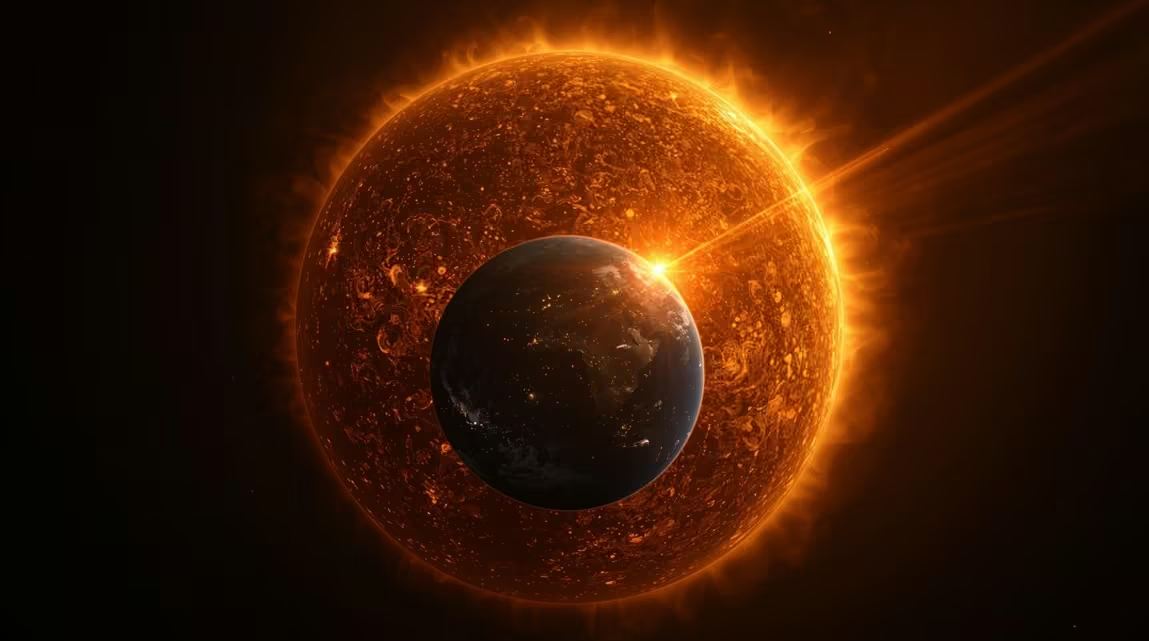
Without The Sun, Earth would freeze into darkness within minutes of its disappearance. Sunlight takes about eight minutes to travel from our star to our planet. If it suddenly vanished, the sky would go black almost instantly, temperatures would plunge, photosynthesis would cease, and life as we know it would begin to collapse.
Every photon that reaches Earth is a heartbeat of pure energy — born from nuclear fusion in the Sun’s core, where hydrogen atoms merge into helium under unimaginable pressure. This fusion releases vast amounts of energy that radiate outward across space, sustaining the fragile biosphere of our planet.
The Sun is not just a star. The Sun is the life-force architect of Earth.
☀️🏗️🌍🌱
The Sun’s Energy: A Constant Cosmic Pulse
The Sun pours approximately 173,000 terawatts of energy onto Earth continuously. To put that into perspective:
| 🌞 One single hour of sunlight striking Earth contains more energy than humanity consumes in an entire year. |
| 🌞 One day of sunshine delivers more power than all fossil fuel reserves combined could ever provide. |
| 🌞 Solar radiation is the primary driver of all atmospheric and oceanic motion. |
Every gust of wind, every rolling wave, every falling drop of rain traces its origin back to The Sun.
Solar radiation creates temperature differences across the globe. These differences generate pressure gradients that drive winds. Winds shape weather systems. Weather patterns guide ocean currents. Ocean currents regulate global climate. The entire planetary circulation system is a grand choreography directed by The Sun.
The water cycle — evaporation, condensation, precipitation — is powered by solar heat. Without The Sun, there would be no clouds, no rivers, no green forests.
| 🌞 The pulse of the living Earth is solar-powered. |
The Sun and the Architecture of Life
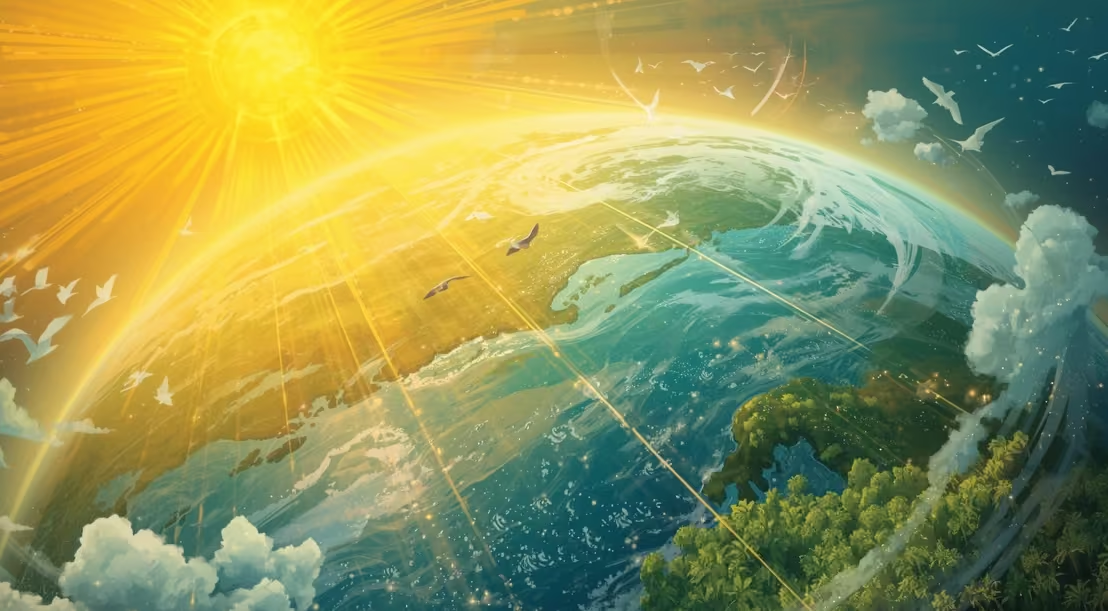
The Sun feeds life directly through photosynthesis — the planet’s ancient and elegant method of “eating light.”
| 🌿 Plants absorb sunlight and convert it into chemical energy. |
| 🌿 This energy forms the base of the entire food chain. |
| 🌿 Oxygen, the very air we breathe, is a byproduct of sunlight-driven chemistry. |
Forests are solar batteries. Crops are fields of stored light. Every bite of food is condensed sunshine.
Even fossil fuels — coal, oil, and natural gas — are nothing more than ancient sunlight trapped in prehistoric plants and organisms millions of years ago. When we burn fossil fuels, we are releasing stored solar energy from a distant past.
The Sun has shaped evolution itself. Circadian rhythms in humans and animals follow solar cycles. Migration patterns, flowering seasons, and reproductive timing all respond to the Sun’s light.
| 🌿 Life does not merely exist under The Sun — it is structured by it. |
The Sun and Earth’s Climate Engine
The Sun maintains Earth’s delicate heat balance.
Our planet absorbs solar radiation and re-radiates energy back into space. This balance determines global temperature. The greenhouse effect — naturally occurring and essential for life — traps part of this outgoing heat, keeping Earth warm enough for oceans and ecosystems.
| However: |
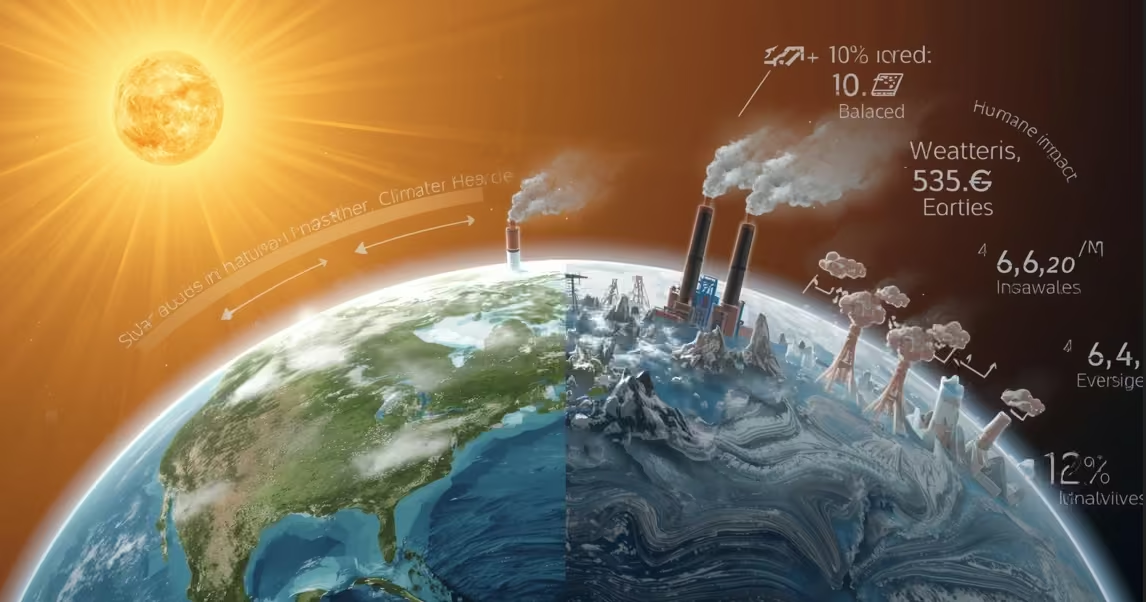
| 💛 By burning fossil fuels, humanity increases greenhouse gases. |
| 💛 This disrupts the equilibrium established by billions of years of solar-climate interaction. |
| 💛 The result is global warming, extreme weather, melting ice, and shifting ecosystems. |
The Sun provides a stable energy input. It is our interference with atmospheric chemistry that destabilizes the system.
For billions of years, The Sun has remained remarkably steady. The crisis we face today is not solar instability — it is human imbalance.
The Sun, Fossil Fuels, and Humanity’s Crossroads
Human civilization is powered by sunlight — either current or ancient.
| ☀️ Solar panels capture present-day sunlight directly. |
| ☀️ Wind turbines harness air currents generated by solar heating. |
| ☀️ Hydropower relies on solar-driven rainfall. |
| ☀️ Fossil fuels are compressed sunlight from prehistoric ecosystems. |
The difference lies in timescale.
Burning fossil fuels releases millions of years of stored solar energy in mere centuries. This rapid release overwhelms Earth’s regulatory systems.
We are not facing an energy shortage. The Sun delivers abundance daily. The challenge is alignment — learning to live within the real-time solar income rather than overdrawing the planetary account of ancient light.
The Sun and the Future of Civilization
The Sun will continue shining for about 5 billion more years. Its energy is not scarce. It is constant, immense, and clean at its source.
Harnessing The Sun effectively could:
| 🔋 Power global infrastructure sustainably |
| 🔋 Reduce geopolitical conflict over fossil resources |
| 🔋 Lower atmospheric carbon concentrations |
| 🔋 Restore climate stability over time |
Solar technology is not merely innovation — it is reconnection.
To align civilization with The Sun is to return to the original energy contract of life on Earth: live on the daily gift, not the buried inheritance.
Final Reflection: The Sun as the Eternal Heartbeat
The Sun is the external heart that never stops.
Every sunrise is a renewal of energy flow. Every beam of light carries the memory of fusion deep within a star. Every green leaf, every ocean current, every breath of oxygen is testimony to solar power.
The Sun does not demand. It gives.
The question is not whether The Sun will continue to shine — it will.
The question is whether humanity will learn to live in harmony with the star that made us possible.
Because in the end, we are not separate from The Sun.
| We are walking sunlight. ☀️ |
The Moon: The Pineal Gland & Biological Clock of Earth
The Moon is far more than a light in the night sky. It is Earth’s great stabilizer and timekeeper.
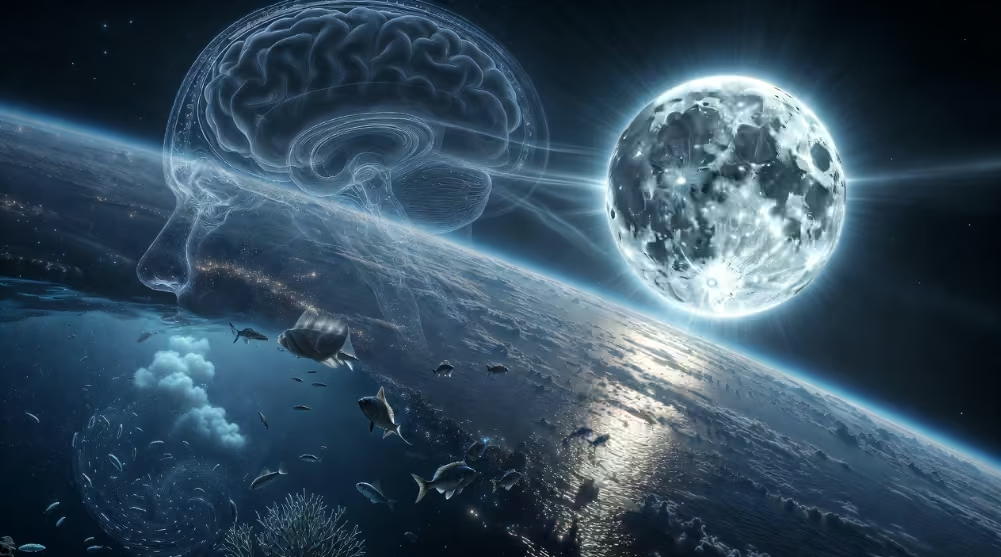
Table of Contents
| 🌙 The Moon as Earth’s Celestial Stabilizer |
| 🌙 The Moon as the Planet’s Biological Clock |
| 🌙 Lunar Rhythms in Nature and Wildlife |
| 🌙 The Moon, Human Biology, and the Pineal Gland |
| 🌙 Artificial Light and the Disruption of Lunar Synchrony |
| 🌙 Reconnecting with the Moon’s Natural Rhythm |
| 🌙 Conclusion |
The Moon as Earth’s Celestial Stabilizer
The Moon is far more than a glowing companion in the night sky. It functions as one of the most critical regulators of Earth’s stability and life systems. Without it, the planet we know today would be drastically different.
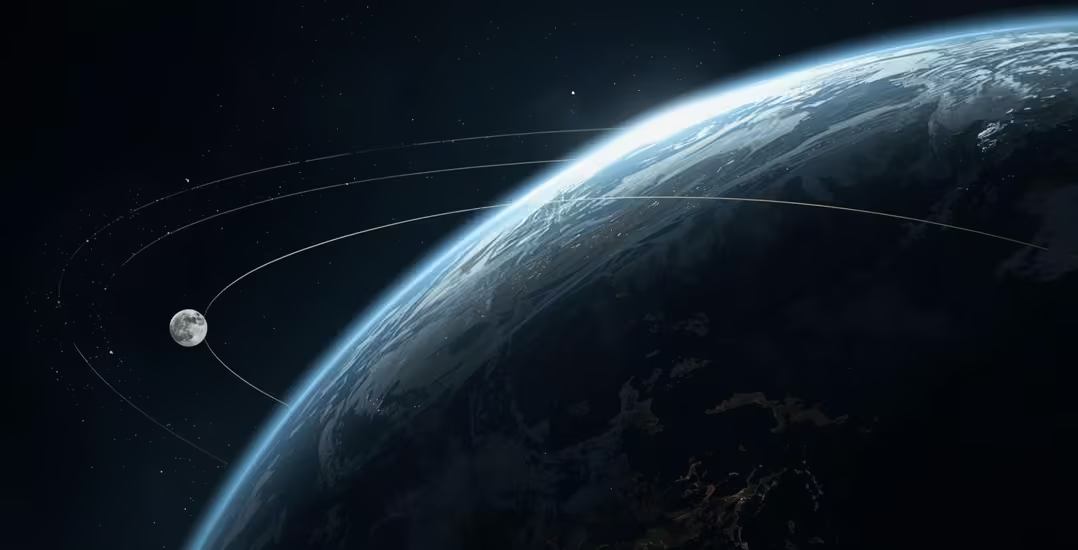
The Moon’s gravitational influence stabilizes Earth’s axial tilt, keeping it at roughly 23.5°. This stable tilt is essential because it regulates the seasons and prevents chaotic climate swings.
Key roles of the Moon in planetary stability include:
| 🌙 Axial Stabilization: Without the Moon, Earth’s tilt could fluctuate wildly between 0° and 60°, creating extreme climate changes that could disrupt ecosystems and possibly prevent complex life from evolving. |
| 🌙 Tidal Regulation: The Moon’s gravitational pull drives the ocean tides, which circulate nutrients through marine ecosystems and support biodiversity. |
| 🌙 Climate Moderation: Stable seasons allow long-term evolutionary adaptation in plants and animals. |
| 🌙 Ocean Mixing: Tides generated by the Moon help oxygenate and mix the oceans, supporting marine food webs. |
| 🌙 Planetary Balance: The Earth–Moon gravitational relationship creates a stabilizing cosmic partnership that maintains long-term planetary equilibrium. |
In essence, the Moon acts like a cosmic gyroscope, keeping Earth steady in the vast mechanics of the solar system.
The Moon as the Planet’s Biological Clock
The Moon also acts as a biological timekeeper for life on Earth. Its predictable phases form a natural cycle that many organisms evolved to follow.
The lunar cycle lasts approximately 29.5 days, and many species have internal rhythms that align with this pattern.
Important biological influences of the Moon include:
| 🌙 Lunar reproductive timing in marine species |
| 🌙 Migration and feeding patterns in animals |
| 🌙 Nocturnal predator-prey dynamics |
| 🌙 Plant growth and moisture movement in soil |
Many scientists refer to these rhythms as circalunar cycles, biological clocks synchronized to the Moon’s phases.
Lunar Rhythms in Nature and Wildlife
Across ecosystems, the Moon orchestrates behaviors that occur with astonishing precision.
Examples of lunar synchronization include:
| 🌙 Mass coral spawning events occurring shortly after full moons. |
| 🌙 Grunion fish timing their beach spawning with lunar tides. |
| 🌙 Marine worms releasing reproductive cells based on the Moon’s phase. |
| 🌙 Predator hunting patterns that shift depending on moonlight brightness. |
| 🌙 Nocturnal navigation in insects and birds that use the Moon as a directional reference. |
Some species even possess lunar-sensitive photoreceptors, allowing them to detect subtle changes in moonlight intensity.
This demonstrates that the Moon is not simply a light source — it is an ecological conductor coordinating life’s rhythms.
The Moon, Human Biology, and the Pineal Gland
In humans, the Moon’s influence may also interact with biological systems related to sleep, hormones, and circadian rhythms.
At the center of this discussion is the pineal gland, a small endocrine gland deep within the brain responsible for producing melatonin, the hormone that regulates sleep cycles.
The pineal gland is extremely sensitive to light. Historically, the Moon was the dominant natural light source at night, gently modulating nocturnal illumination.
Connections between lunar cycles and human biology include:
| 🌙 Melatonin regulation influenced by natural night lighting. |
| 🌙 Sleep pattern variations observed in some studies during full moons. |
| 🌙 Menstrual cycles averaging roughly 28–29 days, similar to the lunar cycle. |
| 🌙 Emotional and psychological associations recorded across cultures. |
| 🌙 Ancient calendars structured around lunar months. |
While modern science continues to debate the extent of lunar influence on humans, historical observation across civilizations consistently linked the Moon with intuition, emotion, and internal rhythms.
Artificial Light and the Disruption of Lunar Synchrony
In the modern world, the Moon’s subtle signals are increasingly drowned out by artificial illumination.
Urban environments produce massive amounts of blue-rich LED light, which can interfere with biological timing systems.
Major impacts of artificial nighttime lighting include:
| 🌙 Suppression of melatonin production in humans. |
| 🌙 Disruption of animal migration and breeding cycles. |
| 🌙 Disorientation of nocturnal insects and birds. |
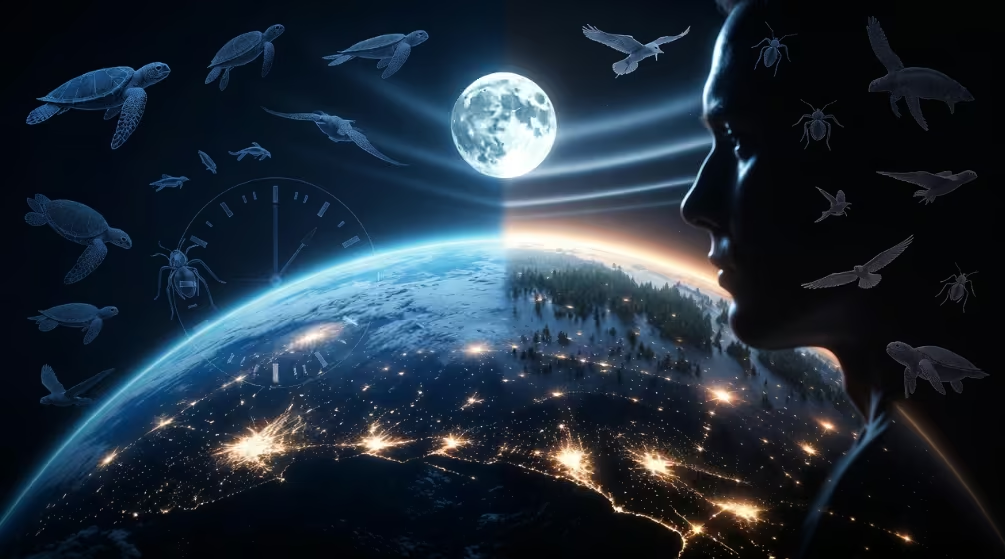
| 🌙 Sea turtle hatchlings navigating toward city lights instead of the ocean. |
| 🌙 Loss of natural darkness necessary for circadian recovery. |
This phenomenon is often called light pollution, and it has grown dramatically over the past century.
In a sense, modern civilization has created a condition of perpetual twilight, preventing both ecosystems and humans from experiencing true night.
Reconnecting with the Moon’s Natural Rhythm
Restoring our connection with lunar cycles does not require abandoning technology, but it does require awareness of natural rhythms.
Practical ways to reconnect with the Moon include:
| 🌙 Reducing unnecessary artificial lighting at night |
| 🌙 Spending time outdoors under natural moonlight |
| 🌙 Observing lunar phases and their progression |
| 🌙 Maintaining healthy circadian sleep habits |
| 🌙 Using warmer, low-intensity lighting after sunset |
These small steps can help realign human biology with the ancient cycles that shaped life for billions of years.
Conclusion
The Moon is not merely a silent satellite orbiting Earth. It is a planetary stabilizer, ecological conductor, and biological timekeeper.
From stabilizing Earth’s tilt to guiding the reproductive cycles of marine life, the Moon’s gravitational and luminous presence shapes life in profound ways. Its rhythms echo through ocean tides, animal behavior, and possibly even human biology.
Yet in the modern world, artificial light increasingly obscures the Moon’s subtle influence. By rediscovering the natural rhythm of darkness and lunar light, we may reconnect with one of the oldest relationships in Earth’s history — the partnership between our planet and its Moon. 🌙