
Space-Based Observatories: Escaping Light Pollution
Part 2
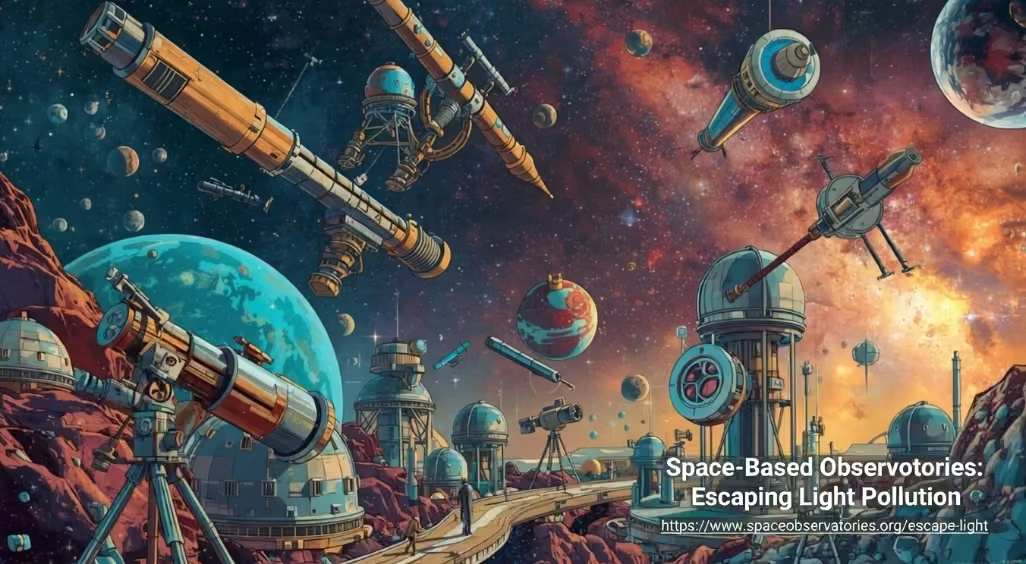
Artificial light from cities creates light pollution, washing out faint celestial objects and severely limiting the capabilities of ground-based telescopes—even those in remote, dark-sky sites. Atmospheric scattering, absorption (especially in ultraviolet, infrared, and certain other wavelengths), weather disruptions, and the day-night cycle further constrain observations from Earth.
Space-based observatories, orbiting above the atmosphere, enjoy pristine darkness, uninterrupted views, and continuous operation without these earthly hindrances. They access multi-wavelength data blocked by our atmosphere, enabling breakthroughs in understanding stellar temperatures, magnetic activity, radiation bursts, and long-term variability.
Iconic examples include the European Space Agency's Gaia mission, which has precisely mapped positions, distances, and motions for over a billion stars, revolutionizing our knowledge of the Milky Way's structure and stellar populations. NASA's Transiting Exoplanet Survey Satellite (TESS) has discovered thousands of exoplanets by detecting periodic dips in starlight, identifying diverse worlds from hot Jupiters to rocky super-Earths and contributing to statistical studies of planetary systems.
These advantages have transformed astronomy, allowing observations impossible from the ground. However, a significant new challenge emerged prominently in 2025: space light pollution from megaconstellations of satellites, led by SpaceX's Starlink (now numbering in the tens of thousands, with projections toward hundreds of thousands across multiple operators). These satellites reflect sunlight, especially during twilight hours, creating bright streaks or trails that contaminate telescope images.
A NASA-led study published in Nature in December 2025 modeled the impact on four key space telescopes using projected satellite populations (around 560,000 by the end of the decade). It found that about 40% of images from the Hubble Space Telescope could be affected, with an average of roughly 2 satellite trails per contaminated exposure. Far worse, future wide-field observatories face near-total disruption: NASA's SPHEREx (launched in 2025 for cosmic history and exoplanet studies), the European Space Agency's planned ARRAKIHS (focused on galaxy remnants and dark matter), and China's Xuntian (a next-generation space telescope) could see up to 96% of their exposures contaminated, with dozens to over 90 streaks per image on average, at surface brightness levels that obscure faint astronomical signals.
These trails—often irreversible in data—threaten to erase or mimic genuine cosmic features, complicating or preventing key science goals like all-sky surveys, deep imaging, and precise photometry.
The issue stems from low-Earth orbit placements (typically 400–800 km), where satellites remain sunlit long after ground twilight. Mitigation efforts, such as SpaceX's use of dark materials, dielectric mirrors, and orbit adjustments, have reduced brightness somewhat, but not enough to eliminate the problem for sensitive instruments, especially as constellations scale.
This emerging "space light pollution" highlights the urgent need for sustainable orbital practices. Astronomers, satellite operators, regulators, and international bodies must collaborate on solutions: stricter brightness limits, lower orbits for faster deorbiting, predictive avoidance scheduling, data-processing algorithms to mask trails, and environmental impact assessments for new constellations. Without coordinated action, the very advantages that drove astronomy to space could be undermined, dimming humanity's window on the universe just as we push deeper into cosmic exploration.
AI in Astronomy: Machines Uncovering Hidden Treasures
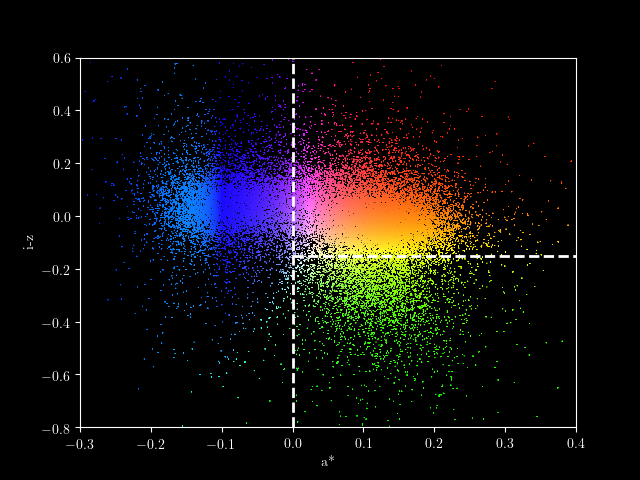
Modern astronomical surveys, from telescopes like the Vera C. Rubin Observatory to space missions such as JWST, now generate petabytes of data nightly—volumes far beyond what humans can process manually. AI and machine learning have become indispensable, rapidly sifting through this deluge to detect patterns, classify objects, flag anomalies, and minimize human bias with unprecedented speed and scale.
In 2025, several key breakthroughs highlighted AI's transformative role. A standout was the collaboration between the University of Oxford, Google Cloud, and Radboud University, where Google's Gemini large language model was adapted for astronomy. Using just 15 annotated examples and simple instructions, Gemini classified transient cosmic events—such as exploding stars (supernovae), black holes shredding passing stars (tidal disruption events), fast-moving asteroids, or stellar flares—from imaging artifacts with ~93% accuracy across datasets from surveys like Pan-STARRS, MeerLICHT, and ATLAS. Published in Nature Astronomy, the model not only matched specialized convolutional neural networks but also provided plain-English explanations for each decision, boosting transparency and enabling iterative human-AI collaboration. This few-shot learning approach promises to handle the flood of alerts from upcoming surveys producing terabytes daily.
Another major advance was the release of The Multimodal Universe, a massive ~100 TB open dataset compiling hundreds of millions of observations from telescopes including JWST, Gaia, SDSS, DESI, and HSC. It integrates diverse modalities—multi-channel/hyperspectral images, spectra, time-series light curves, and rich metadata—specifically to fuel large-scale machine learning. This resource has accelerated tasks like exoplanet detection, galaxy morphology studies, and cosmic structure analysis, with early applications yielding foundation models like AION-1 (a billion-parameter multimodal model trained on over 200 million observations).
AI also refined JWST data directly. University of Sydney researchers developed AMIGO, an AI-driven software tool that corrected electronic distortions (brighter-fatter effect) in the telescope's Aperture Masking Interferometer (AMI) images. By modeling detector physics and applying neural networks, AMIGO eliminated blurring from charge leakage, restoring ultra-sharp resolution for faint exoplanets, brown dwarfs, and volcanic activity on moons like Io—achievements previously out of reach without hardware fixes.
Beyond classification, AI has unearthed rare phenomena. Enhanced processing of massive datasets has aided discoveries of unusual systems, including merging galaxies hosting hyperactive supermassive black holes. For instance, observations revealed a rare triple active galactic nucleus (AGN) in system J1218+1035, where three radio-bright black holes feed simultaneously during a galaxy merger—only the third such triple confirmed and the first with all radio-emitting, offering insights into black hole co-evolution.
By automating routine tasks like transient vetting and reducing false positives, AI frees astronomers to tackle profound questions: the assembly of galaxies over cosmic time, the prevalence of habitable exoplanets, dark matter's role in structure formation, or even signs of exotic physics in gravitational-wave signals (with AI achieving 600-fold speedups in fast radio burst detection via Breakthrough Listen and NVIDIA collaborations).
As data volumes explode—with Rubin alone projected to amass 60 million billion bytes over a decade—AI's integration ensures astronomy remains discovery-driven rather than data-overwhelmed. This synergy of human insight and machine efficiency is ushering in a golden era of cosmic understanding.
Predicting Supernova Explosions: Closing in on Cosmic Forecasts
Supernovae represent some of the universe's most dramatic events: cataclysmic explosions that mark the end of massive stars' lives through core collapse or trigger thermonuclear runaway in white dwarfs accreting material in binary systems. These blasts synthesize and eject heavy elements—iron, gold, uranium—essential for rocky planets and, ultimately, life as we know it. Without supernovae, the cosmos would lack the chemical building blocks for complex worlds.
Predicting the precise timing of a supernova remains extraordinarily challenging. Stars conceal their internal dynamics behind dense envelopes, and evolutionary models span vast timescales with inherent uncertainties. For core-collapse supernovae (Type II, Ib/c), the final stages involve rapid core contraction once fuel exhaustion leads to iron-core formation, but the exact moment of instability is hidden. Type Ia events, from white dwarf detonations, depend on accretion rates and companion interactions, adding further unpredictability.
Yet 2025 brought meaningful advances toward better forecasting and early detection. Artificial intelligence now plays a pivotal role in analyzing vast datasets for precursor signals. Tools like the Virtual Research Assistant (VRA), developed at Oxford University, filter thousands of transient alerts from surveys, reducing manual workload by 85% and identifying genuine supernova candidates in real time. AI algorithms, including those from UC Santa Cruz collaborations, have spotted rare events—such as black hole-triggered explosions (e.g., SN 2023zkd)—within hours of onset, enabling rapid follow-up. Machine learning models trained on light curves and spectra predict explosion likelihood by recognizing subtle pre-supernova variability, like pulsations or mass-loss episodes.
Multi-messenger astronomy provides the most promising early warnings. Neutrino bursts escape the collapsing core almost instantly, carrying away ~99% of the explosion's energy. Detectors like Super-Kamiokande, IceCube (with ongoing expansions), and the upcoming Hyper-Kamiokande could capture tens of thousands of neutrinos from a galactic event, issuing alerts via the SuperNova Early Warning System (SNEWS) minutes to days before optical light emerges—time enough to point telescopes worldwide. Gravitational waves from asymmetric core bounces or instabilities could offer complementary signals, though detections remain elusive; upgraded LIGO/Virgo networks and future observatories like Einstein Telescope aim to catch these faint ripples.
Advanced simulations, incorporating neutrino transport, 3D hydrodynamics, and flavor oscillations, refine models of shock-wave propagation and explosion mechanisms. These help interpret potential precursors and predict observable signatures.
Nearby candidates like Betelgeuse, a red supergiant ~640 light-years away, remain under intense scrutiny. Despite past dimming events (e.g., 2019–2020 "Great Dimming" from dust ejection) and brightness fluctuations, 2025–2026 discoveries—including a confirmed companion star ("Siwarha" or "Betelbuddy") influencing its variability—pushed explosion timelines far out, likely beyond 100,000 years rather than imminent. No credible evidence supports a 2025–2026 supernova, debunking social media hype. Ongoing monitoring via Hubble, ALMA, and ground telescopes tracks mass loss and pulsations, but no definitive pre-explosion neutrino or GW signal has appeared.
While years- or decades-ahead precision eludes us, these integrated tools—AI-driven anomaly detection, neutrino/gravitational-wave alerts, and high-fidelity simulations—edge astronomy closer to forecasting these brilliant cosmic beacons. A galactic supernova could arrive with hours-to-days advance notice, transforming observation from serendipity to preparedness and deepening our grasp of stellar death, element creation, and the universe's violent evolution.
Conclusion
Modern technology has utterly transformed astronomy, turning once-distant dreams into daily discoveries. Space telescopes, soaring above Earth's obscuring atmosphere, deliver views unmarred by weather, light pollution, or atmospheric absorption. The James Webb Space Telescope (JWST) has peered back to the universe's infancy, revealing unexpectedly bright and numerous early galaxies, possible "direct collapse" black holes seeding the cosmos, evidence supporting new origins for supermassive black holes, and glimpses of Population III stars—the universe's first generation. In 2025 alone, JWST continued rewriting cosmology with record-breaking distant objects and detailed studies of protoplanetary disks, star-forming regions, and exotic phenomena like the "Little Red Dots."
Ground-based observatories, despite persistent challenges, provide pristine stellar views through adaptive optics and dark-sky sites. Yet megaconstellations like Starlink pose growing "space light pollution," with satellite streaks contaminating images—up to 96% in some future missions. Encouragingly, SpaceX announced in early 2026 plans to lower thousands of satellites to safer, lower orbits (from ~550 km to ~480 km) throughout the year, reducing collision risks, debris persistence, and potentially mitigating brightness impacts via condensed orbits and faster decay.
Artificial intelligence now masters the petabyte-scale data flood from surveys like the Vera C. Rubin Observatory's Legacy Survey of Space and Time (ramping up in 2026 after 2025 first light). AI classifies transients with few-shot learning—Google's Gemini achieved ~93% accuracy on exploding stars, tidal disruptions, and asteroids using just 15 examples, complete with transparent explanations. Breakthrough Listen's NVIDIA-collaborated system detected fast radio bursts 600 times faster than prior methods, slashing false positives tenfold and enabling real-time analysis. AI uncovers rare events, corrects JWST distortions, and accelerates exoplanet hunts via massive multimodal datasets.
Even supernova science edges toward prediction. While exact timing defies full foresight, advances include AI-flagged precursors (e.g., black hole-triggered explosions), multi-messenger alerts from neutrinos and gravitational waves, and detailed shock-wave simulations. Rare lensed superluminous supernovae like SN 2025wny offer new tools for cosmic expansion measurements. Nearby candidates like Betelgeuse remain monitored, but no imminent blasts are forecast—yet hours-to-days warnings grow feasible for galactic events.
Amid orbital congestion and data overload, these tools—space platforms, AI, and collaborative mitigation—deepen our grasp of a vast, dynamic universe. From rogue planets to galaxy superstructures, interstellar comets to weakening dark energy hints, 2025–2026 breakthroughs inspire awe. As challenges evolve and innovations accelerate, the stars' stories become ever more accessible, fueling wonder and discovery for generations ahead.
🚀
Share Your Thoughts!
What excites you most about these cosmic breakthroughs? Drop a comment below!