Portals in the Sky
Sky Portals and Celestial Gates: From Atmospheric Phenomena to Mythical Gateways and Modern Speculation
Introduction
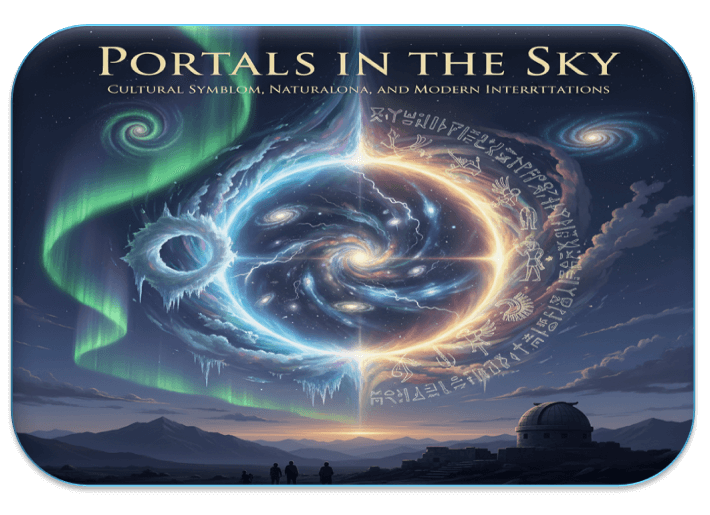
Consequently, the sky holds a paramount position in the human worldview, representing a nexus of both immense might and profound, irreducible mystery. For societies across the globe, it has served a dual purpose: a reliable tool for practical navigation and a metaphorical gateway to elevated realities. A recurring motif across global mythologies, spiritual traditions, and contemporary discourse is the notion of “sky portals” or “celestial gates.” These are imagined as openings in the heavens, linking the terrestrial world with higher realities.
This article will examine the concept of sky portals through three key dimensions:
1. Naturally occurring atmospheric phenomena
2. Religious and cultural symbolism
3. Scientific and speculative perspectives in modern thought
Naturally occurring atmospheric Phenomena: Real Sky Portals in the Atmosphere
Many sky portals appear as stunning optical illusions, luminous displays, or transient events created by light interacting with ice crystals, clouds, atmospheric particles, or electrical activity. These atmospheric optical phenomena and rare upper-atmosphere events often resemble tears, openings, gateways, veils, or luminous curtains in the sky, leading observers to describe them as heavenly openings or portal-like effects.
⦿ Fallstreak holes (hole-punch clouds): Large, almost perfectly circular gaps in mid-level clouds where supercooled water droplets freeze and fall, often surrounded by glowing sunlight. They create dramatic “holes” that expand outward—frequently called a “portal to another dimension” in viral photos due to their clean, gateway-like appearance.
⦿ Light pillars (sun pillars): Tall vertical beams of light extending above or below the sun, moon, or bright ground sources, caused by reflection off flat ice crystals in thin clouds or diamond dust. They form striking columns that look like beams shining from another realm.
⦿ Halos, glories, subsuns, and circumhorizontal arcs: Rings, arcs, or bright mirrored spots from refraction and reflection in ice crystals, framing the sun like a celestial window or glowing portal with vivid colors (sometimes called “fire rainbows”).
⦿ Auroras (Northern and Southern Lights): Shifting curtains and arcs of colorful light in the upper atmosphere, caused by charged solar particles colliding with Earth’s magnetic field. To ancient peoples, these moving, glowing displays appeared as heavenly veils, moving gates, or portals to other worlds.
⦿ Sprites, blue jets, and elves: Rare, high-altitude lightning phenomena above thunderstorms, flashing in red, blue, or ring shapes for just milliseconds. Their sudden, otherworldly luminosity gives them the visual quality of briefly activated celestial apertures or gateways.
These phenomena are fully explainable by physics, meteorology, and atmospheric science, yet their breathtaking visuals continue to evoke sky portals and inspire wonder, speculation, and even ancient mythological interpretations.
| Here are some illustrative examples to help visualize these “portals”: |
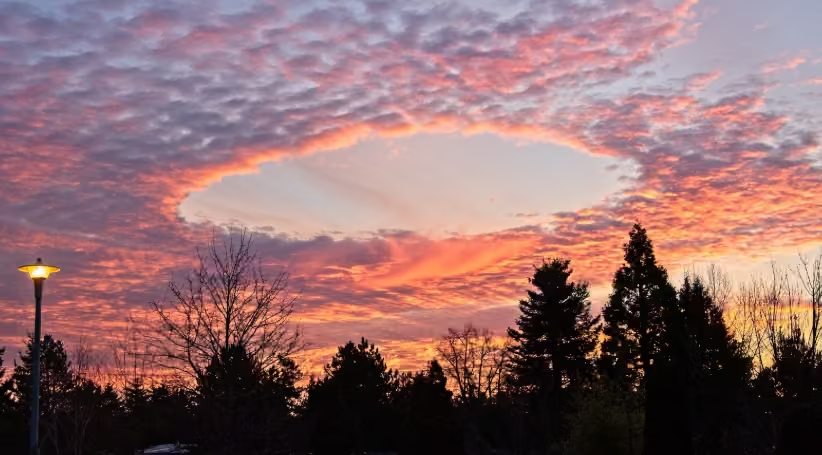
Dramatic fallstreak hole forming a near-perfect circular “portal” in the clouds, glowing with sunlight edges.
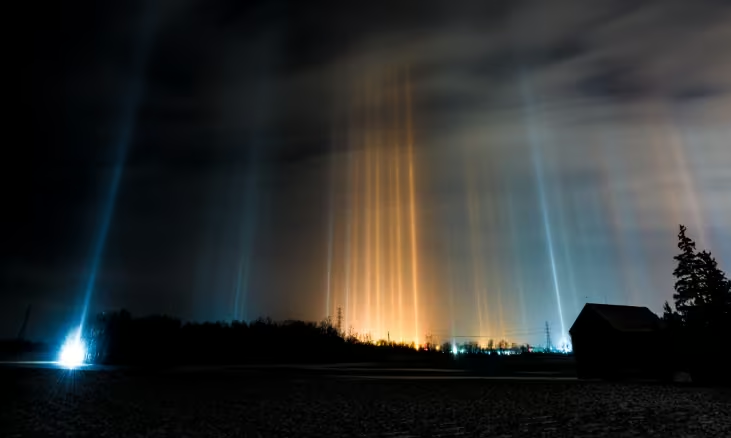
Multiple light pillars rising like ethereal beams from ground sources into the night sky.
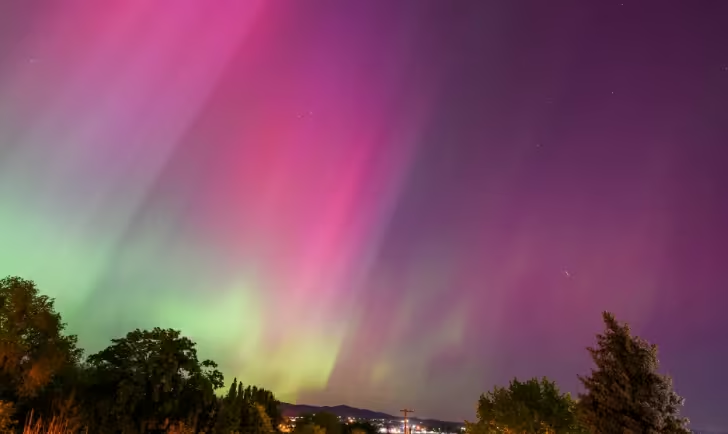
Vibrant aurora display with pink and green rays piercing the night sky.
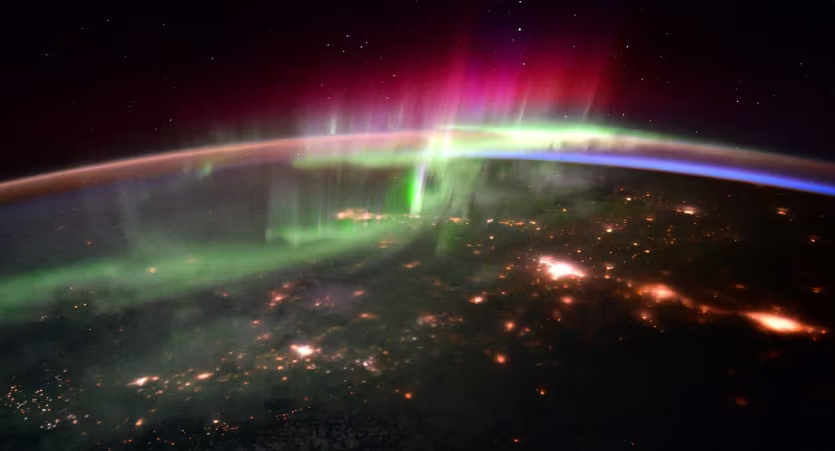
Northern Lights aurora forming shifting green and purple curtains, evoking heavenly veils or moving gates.
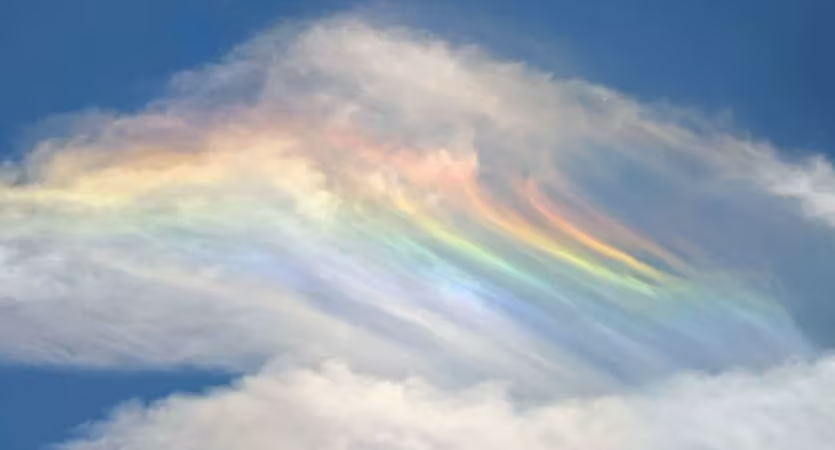
Colorful circumhorizontal arc (fire rainbow) stretching across the sky like a vivid celestial window.
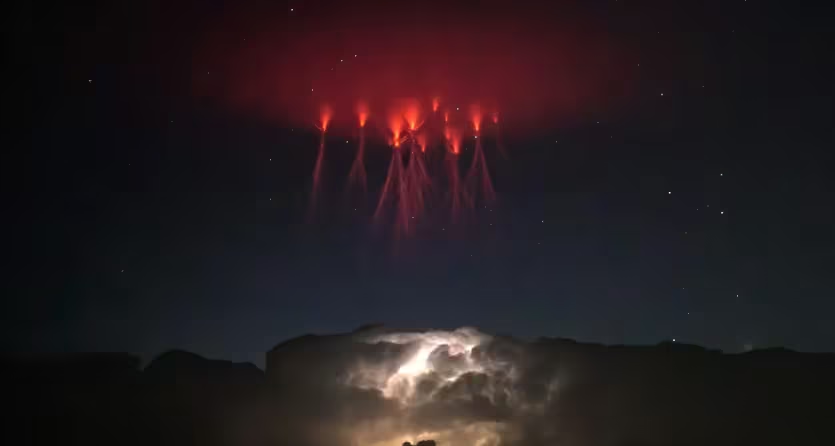
Red sprites flashing above a thunderstorm cloud, resembling sudden red tendrils of a celestial aperture.
Religious and Cultural Symbolism: Celestial Gates in Myth and Tradition
2.1 Ancient Civilisations
- Mesopotamian Beliefs: The Babylonians and Sumerians described the heavens as layered realms, with gates guarded by deities. These gates served as entry points to divine worlds.
- Egyptian Mythology: In the Book of the Dead, the soul of the deceased was believed to pass through gates in the sky to reach the afterlife. The pyramids themselves were often aligned with stars like as Orion, reflecting the idea of stellar gateways.
- Greek and Roman Traditions: Mount Olympus was often described as a threshold between the earth and the heavens, guarded by clouds and divine doors.
2.2 Abrahamic Traditions
- Across Judaism, Christianity, and Islam, religious texts consistently describe the heavens as featuring “gates” or “doors.”
- The Hebrew Bible explicitly mentions the “windows of heaven” (Genesis 7:11) in its discussion of rainfall.
Christianity refers to the “pearly gates” of Heaven, representing the boundary between earthly life and eternal reward.
- The concept of celestial access appears across Islamic texts. In the Qur’an (7:40) refers to the “gates of heaven” remaining shut to disbelievers. Accept Quran, Hadith collections frequently recount the opening and closing of heavenly portals for various divine purposes.
2.3 Indigenous and Shamanic Traditions
Many indigenous cultures describe sky portals as spiritual openings. For instance:
- Native American traditions actively regarded certain mountains and celestial events as doorways to higher worlds.
- In Andean cosmology, the Pachamama (Mother Earth) connects with the sky through sacred sites; communities believe these sites function as gateways to divine energy.
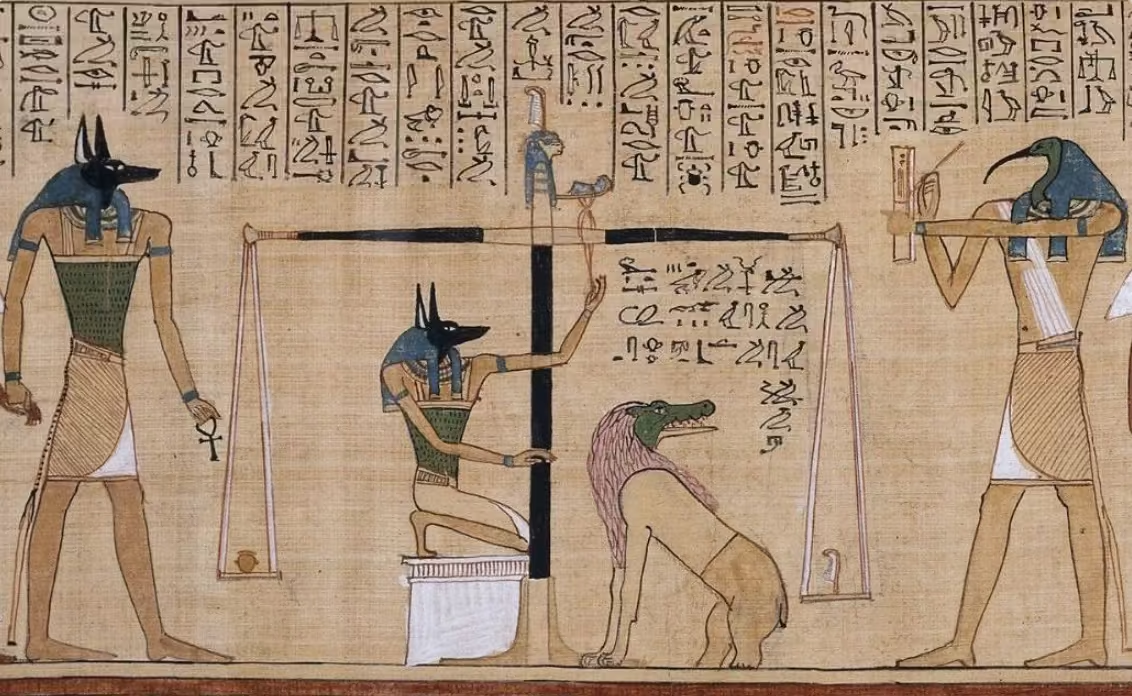
Scene from the Egyptian Book of the Dead (Papyrus of Hunefer): The deceased’s soul faces judgment and gates/guardians on the path to the afterlife, symbolizing celestial passages.

Heimdall standing watch on the Bifrost, the shimmering bridge serving as a guarded sky portal between worlds.

Artistic depiction of the Pearly Gates of Heaven, representing the celestial threshold and divine entry in Christian tradition.
Scientific and Speculative Perspectives in Modern Thought
Today, the concept of “sky portals” seamlessly blends rigorous science with open-ended speculation. Many dramatic atmospheric phenomena once interpreted as gateways are now routinely explained through optics and meteorology (fallstreak holes, light pillars, sun dogs, etc.). Yet persistent reports of unexplained aerial phenomena (UAP/UFOs) continue to fuel theories of genuine interdimensional rifts or temporary openings in the fabric of reality.
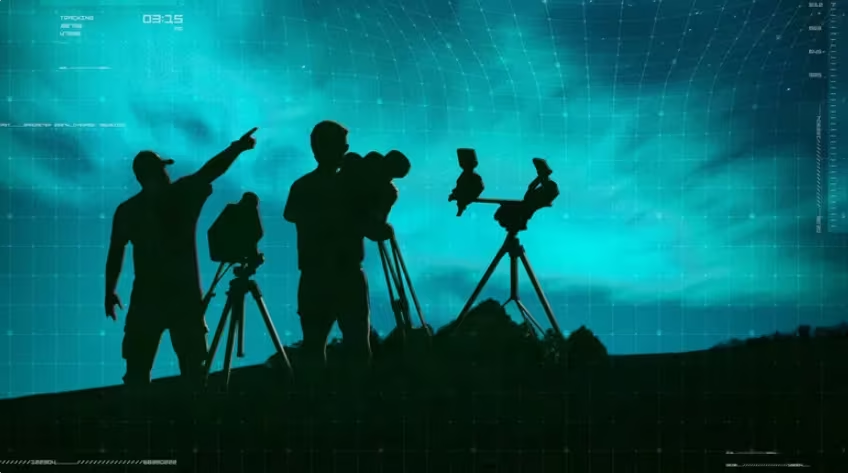
Skywatchers on the hunt: Silhouetted against a digital night sky, investigators scan for tears, portals, or unexplained lights — where science meets the unknown.
⦿ The interdimensional hypothesis (popularized by researchers such as Jacques Vallée) proposes that certain UAP sightings may represent brief glimpses through transient sky portals or dimensional leaks rather than conventional spacecraft.
⦿ Recent documentaries such as A Tear in the Sky (2022) investigate alleged “tears” or openings in the atmosphere as possible bridges to other dimensions, altered states of consciousness, or non-human intelligences.
⦿ In speculative physics, theorists continue to explore traversable wormholes (Einstein-Rosen bridges), quantum entanglement effects, and transient spacetime events that could — under extreme conditions — manifest as visible portals. Meanwhile, some parapsychological and consciousness-research circles link such phenomena to intense energy surges, collective focus, or shifts in perceptual reality.
⦿ While the majority of viral “portal opening” videos shared online are eventually identified as natural atmospheric effects, lens flares, drones, or digital artifacts, a small residue of high-quality, multi-sensor cases remains unexplained — keeping the archetype alive in fringe, military, and civilian discussion circles.
This modern chapter therefore forms a living bridge: it connects the archetypal sky portal imagery found in ancient myth, religious visions, and shamanic traditions with today’s cutting-edge questions about the nature of reality, consciousness, and the limits of spacetime.
Interpretive Significance
Why has the image of a sky portal remained so magnetically powerful across thousands of years?
At its core, the glowing gateway suspended in the heavens symbolizes humanity’s oldest and deepest desire: transcendence — the urge to step beyond the known, to cross from the familiar material world into whatever lies beyond visible perception.
Whether the portal appears as:
| A natural halo in ancient skies |
| The ladder to heaven in religious visions |
| A tear in modern UAP footage |
| A mathematically permissible wormhole in theoretical physics |
the recurring motif forcefully suggests one persistent human intuition:
there exists something more — another layer, another dimension, another state of being — waiting just beyond the boundary we can currently perceive.
The sky portal endures because it is not merely a story we tell ourselves; it is an enduring symbolic expression of our innate longing to know what lies on the other side.
Conclusion
The concept of “sky portals” weaves together threads of natural wonder, spiritual symbolism, and cutting-edge speculation into a single, enduring motif. At its foundation, it captures real atmospheric phenomena—such as shimmering light pillars, enigmatic fallstreak holes, and the ethereal dance of auroras—that visually evoke gateways in the heavens. These extend into profound mythological and spiritual metaphors, from the radiant Bifrost as a bridge to the divine realms to the Lion’s Gate Portal as a celestial doorway for higher energies. In modern discourse, the idea finds echoes in speculative science and UFO/UAP discussions, where wormholes, interdimensional gateways, and unexplained aerial phenomena suggest the possibility of actual cosmic connections.
Far from a fleeting fancy, sky portals embody humanity’s deepest curiosity: the persistent drive to look upward and seek meaning in the vastness above. They stand at the vital intersection of grounded science, timeless spirituality, and boundless imagination—reminding us that the sky is no empty expanse, but a perpetual source of awe, aspiration, and the profound sense that something extraordinary may lie just beyond the visible horizon.
For the meta description (optimized for search engines, ~150-160 characters):
“Discover sky portals: natural phenomena like auroras, light pillars & fallstreak holes; mythic gates like Bifrost & Lion’s Gate; plus modern UFO/UAP & wormhole speculation.