
Rivers and Lakes — Veins, Arteries, and Lymphatic System
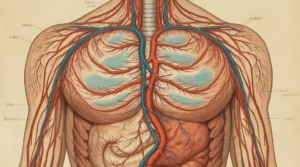
Table of Contents
1. Analogy Foundations: Mapping Waterways to Bodily Flows |
2. Arterial Rivers: Pulsing Energy and Nutrient Distribution |
3. Venous Lakes: Gathering Resources and Waste Management |
4. Lymphatic Wetlands: Immune Defense and Fluid Regulation |
5. Systemic Interlinks: Circulation Harmony in Nature |
6. Environmental Threats: Disruptions to Vital Pathways |
7. Restorative Strategies: Healing Earth’s Circulatory Network |
8. Global Insights: Parallels in Planetary Health |
Analogy Foundations: Mapping Waterways to Bodily Flows
Imagine the Earth as a colossal living organism, where rivers carve through landscapes like arteries surging with oxygenated blood, lakes pool like veins collecting deoxygenated returns, and wetlands function as the lymphatic system filtering impurities. This metaphor isn’t mere poetry; it’s a profound lens to understand ecological dynamics. Rivers, with their relentless downstream rush, mirror arteries that propel life-sustaining elements from heart-like mountain sources to distant cellular extremities. Lakes, serene and expansive, echo veins that gather spent resources, preventing overflow and ensuring recirculation. Meanwhile, the lymphatic parallels in marshes and bogs act as silent guardians, absorbing excesses and defending against invasions.
This conceptual bridge reveals how hydrological features sustain biodiversity much like circulatory systems maintain human vitality. Focus keywords here—hydrological analogy, circulatory mapping, ecosystem vitality—underscore the interconnectedness. By exploring this, we uncover why preserving these natural conduits is akin to safeguarding our own health, emphasizing resilience against disruptions. The power lies in recognizing that just as blockages in arteries lead to crises, dams or pollution in rivers trigger environmental catastrophes. This foundation sets the stage for deeper dives into each component, highlighting their roles in a unified planetary pulse.
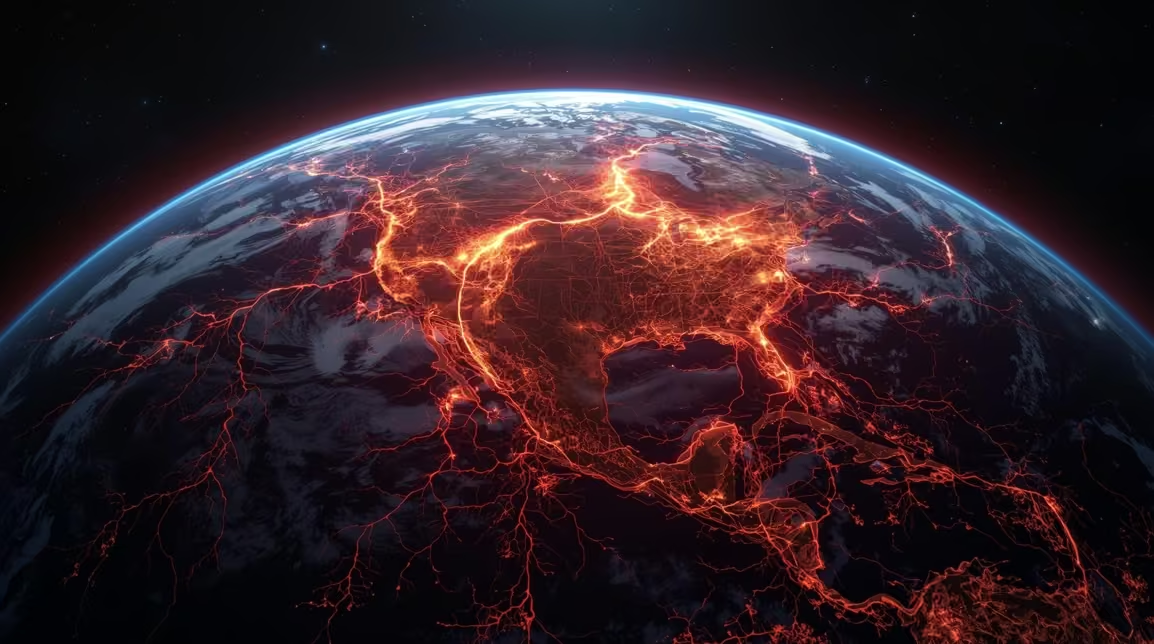
Diving deeper, consider the scale: Earth’s rivers span over 3.5 million miles, akin to the 60,000 miles of blood vessels in a human body. Lakes cover about 1.5 million square miles, storing freshwater vital for 90% of terrestrial life. Lymphatic-like wetlands, though only 6% of land surface, regulate 40% of renewable water supplies. These statistics amplify the analogy’s strength, showing how minor alterations ripple into major imbalances. Powerful indeed, this perspective urges us to view geography not as static, but as a throbbing network demanding vigilant care.
Arterial Rivers: Pulsing Energy and Nutrient Distribution
Rivers embody the arterial force, channeling vibrant energy from highlands to lowlands, distributing sediments, minerals, and water that fuel ecosystems. Like arteries branching from the aorta, major rivers such as the Amazon or Nile splinter into tributaries, delivering oxygen-rich waters that invigorate floodplains and deltas. Focus keywords—arterial pulsing, nutrient transport, ecosystem fueling—capture this dynamic essence. The river’s current, driven by gravity and precipitation, mimics the heart’s pump, ensuring no corner of the landscape starves.
In this role, rivers transport dissolved oxygen, fostering aquatic life from algae to apex predators. Sediments carried along enrich soils, turning barren lands into fertile havens for agriculture and forests. Think of the Mississippi River, hauling 500 million tons of sediment annually, building deltas that support millions of species. This distribution isn’t random; it’s a calculated flow, regulated by natural meanders that prevent erosion and maintain balance. Disruptions, like straightened channels for navigation, weaken this arterial strength, leading to habitat loss akin to arterial plaque buildup causing strokes.
The power of rivers as arteries shines in their adaptability. During monsoons, they swell to distribute excess, preventing stagnation. In dry spells, they sustain through groundwater feeds, much like arteries dilating or constricting. This resilience highlights evolutionary genius, where rivers have sculpted canyons over millennia, proving their unyielding force. Human societies thrive on this: ancient civilizations rose along the Tigris and Euphrates, drawing from these arterial lifelines for irrigation and trade. Today, hydropower from rivers generates 16% of global electricity, underscoring their energetic pulse.
Yet, this section’s vigor lies in urging action. As arteries, rivers demand unobstructed paths; pollution from industrial runoff clogs them, suffocating life. Focus on restoration: rewilding riverbanks enhances flow, mirroring bypass surgeries in medicine. By embracing this analogy, we empower conservation, recognizing rivers as the beating heart of continental vitality.
Venous Lakes: Gathering Resources and Waste Management
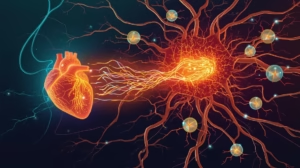
Shifting to lakes, these vast reservoirs parallel veins, collecting inflows from surrounding terrains and managing the return of vital fluids to the cycle. Unlike the swift arterial rush, lakes offer stillness, allowing sedimentation and purification. Focus keywords—venous collection, resource gathering, waste filtration—illuminate their stabilizing role. Lakes accumulate rainwater, snowmelt, and river outflows, storing them as buffers against drought, much like veins return blood to the heart for reoxygenation.
Consider Lake Baikal, holding 20% of the world’s unfrozen freshwater, a venous giant that filters and recycles through evaporation and outflows. This gathering prevents flooding downstream while replenishing aquifers. Nutrients settle here, fostering plankton blooms that form food chain bases, supporting fish populations and migratory birds. Waste management is key: lakes trap pollutants, with microbial communities breaking down organics, akin to venous valves preventing backflow.
The power in this venous analogy is their quiet endurance. Lakes endure seasonal changes, freezing in winter to protect depths, thawing to release stored energy. This cyclical management ensures ecosystem continuity, where evaporation contributes to cloud formation, restarting the hydrological loop. Human reliance is immense: lakes provide drinking water for billions, irrigation for crops, and recreation that boosts economies.

However, threats loom large. Eutrophication from agricultural runoff turns lakes toxic, mirroring venous thrombosis. Invasive species disrupt balance, like zebra mussels in the Great Lakes altering food webs. Restoration demands powerful interventions: aeration systems mimic natural circulation, while buffer zones around shores prevent contaminant influx. Embracing lakes as veins empowers us to prioritize their health, ensuring the smooth return of life’s essentials in an ever-turning cycle.
Lymphatic Wetlands: Immune Defense and Fluid Regulation
Wetlands, including marshes, swamps, and bogs, serve as the lymphatic system, subtly regulating fluids and mounting defenses against environmental stressors. Unlike prominent rivers or lakes, these areas operate in the background, absorbing overflows and filtering toxins. Focus keywords—lymphatic regulation, immune filtration, fluid defense—highlight their protective prowess. Wetlands soak up excess water during storms, preventing floods, much like lymph nodes swell to trap pathogens.

The Everglades in Florida exemplify this, processing billions of gallons daily, purifying water through peat soils and vegetation. They harbor biodiversity hotspots, where plants like mangroves act as barriers against saline intrusions, akin to lymphatic immunity warding off infections. Nutrient cycling here is masterful: decomposed matter enriches soils, supporting rare species and carbon sequestration that combats climate change.
Powerfully, wetlands’ resilience shines in adversity. They adapt to salinity shifts and droughts, their root systems stabilizing sediments against erosion. Globally, they store more carbon than forests per unit area, making them climate warriors. Yet, their subtlety belies importance: draining for development has led to 50% loss since 1900, exacerbating disasters like Hurricane Katrina’s impacts.
Restoration efforts, such as rewetting drained peatlands, revive this lymphatic function, enhancing water quality and habitat. By viewing wetlands as immune sentinels, we galvanize protection, recognizing their role in maintaining ecological equilibrium against invasive threats and pollution overloads.
Systemic Interlinks: Circulation Harmony in Nature
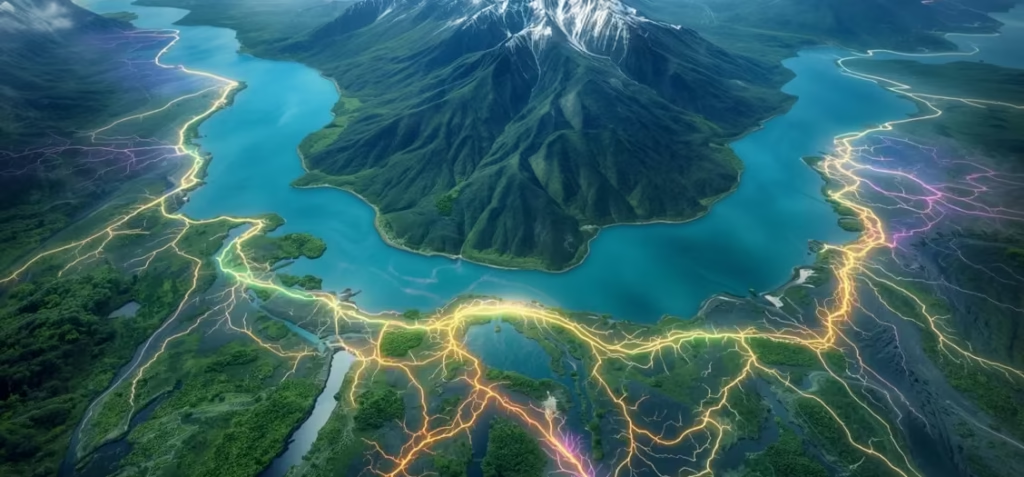
No component operates in isolation; rivers, lakes, and wetlands interlink in a harmonious circulation, mirroring the body’s integrated systems. Focus keywords—systemic harmony, interlinked flows, ecological balance—emphasize this unity. Rivers feed lakes, which in turn recharge groundwater that sustains wetlands, creating a feedback loop essential for sustainability.
In the Amazon basin, rivers distribute monsoon waters to oxbow lakes, where sediments nourish floodplains, and adjacent wetlands filter return flows. This synergy supports unparalleled biodiversity, with over 3,000 fish species thriving in the interplay. Disruptions in one affect all: damming a river starves downstream lakes of nutrients, weakening wetland buffers.
The power of this interlinkage is its amplification of resilience. Natural floods from rivers rejuvenate lakes and wetlands, depositing fertile silt that boosts productivity. Climate patterns, like El Niño, test this harmony, yet adaptive species evolve to cope. Human interventions must respect this: integrated basin management plans coordinate across features, preventing siloed errors.
Ultimately, this section underscores that true power emerges from connectivity, urging holistic approaches to conservation that mimic the body’s seamless coordination.
Environmental Threats: Disruptions to Vital Pathways
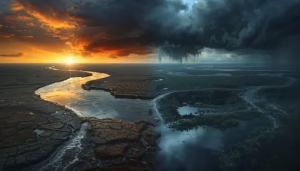
Modern pressures disrupt these natural systems, akin to diseases ravaging bodily circulation. Focus keywords—environmental disruptions, pathway threats, systemic vulnerabilities—pinpoint the dangers. Climate change intensifies droughts, shrinking lakes and weakening river flows, while rising seas inundate wetlands.
Pollution from plastics and chemicals clogs waterways, mirroring arterial blockages. Deforestation accelerates erosion, silting lakes and smothering wetlands. Invasive species, transported via global trade, outcompete natives, destabilizing the balance.
The power in acknowledging threats lies in mobilization. Case studies like the Aral Sea’s shrinkage from irrigation diversions illustrate cascading failures: fisheries collapsed, dust storms spread toxins, affecting millions. Similarly, wetland loss in the Mississippi Delta heightens hurricane risks.
Countering these requires vigilance: monitoring via satellite tech detects changes early, while policy reforms curb emissions. This awareness empowers communities to advocate for safeguards, transforming vulnerabilities into opportunities for fortified resilience.
Restorative Strategies: Healing Earth's Circulatory Network
Healing demands innovative strategies, restoring the circulatory integrity of rivers, lakes, and wetlands. Focus keywords—restorative healing, network strategies, ecological recovery—guide this proactive stance. River re-meandering revives natural flows, enhancing habitat diversity.
For lakes, invasive removal and nutrient controls combat eutrophication, as seen in Lake Erie’s recovery efforts. Wetland reconstruction, using native plants, rebuilds filtration capacity, sequestering carbon effectively.
Powerful technologies amplify restoration: drones map degraded areas, AI predicts flood risks, and bioengineering stabilizes banks. Community involvement is key: indigenous knowledge informs sustainable practices, fostering ownership.
Globally, initiatives like the Ramsar Convention protect wetlands, while river basin commissions coordinate transboundary efforts. Success stories, such as the Rhine River’s cleanup, prove restoration’s viability, turning polluted veins into thriving arteries.
This section ignites hope, showing that with determination, we can mend Earth’s vital pathways, ensuring enduring health.
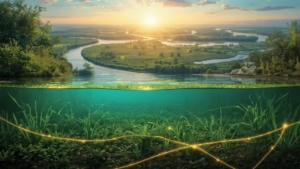
Global Insights: Parallels in Planetary Health
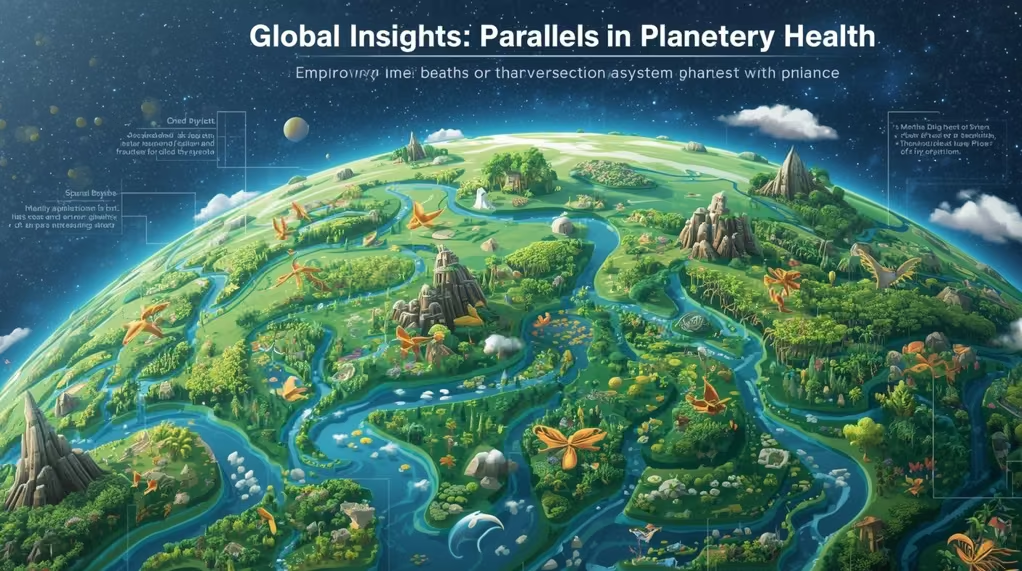
Building on the powerful metaphor of rivers as the arterial system of the Earth—pulsing with energy, distributing nutrients, sediments, and water to sustain life—we can extend this analogy to broader planetary health. Just as healthy arteries ensure the vitality of a living body, healthy rivers and interconnected natural systems are essential for the health of the planet and all its inhabitants, including humanity. Planetary health recognizes that human well-being is inseparable from the stability of Earth’s natural systems, and disruptions to these “arteries” threaten global ecosystems, biodiversity, and human societies alike.
Rivers as Planetary Arteries: Transporting Life's Essentials
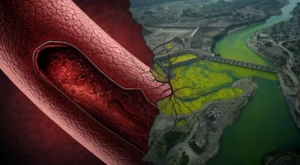
Rivers serve as the arteries of Earth’s continents and the planet itself, conveying water, sediments, nutrients, and dissolved minerals from mountain headwaters to oceans and floodplains. They regulate the hydrological cycle, support nutrient cycling, and connect terrestrial and marine ecosystems. This flow nourishes biodiversity—from riparian forests and wetlands to deltas teeming with species—and sequesters carbon while influencing weather patterns. As one insight describes, free-flowing rivers act as vital connectors linking mountains to coasts, aiding climate regulation and providing food, clean water, and cultural value to billions of people. When these arteries function naturally, they foster resilience; when obstructed, the entire system suffers.
Parallels to Human Physiology and Planetary Vulnerabilities
The arterial metaphor extends to planetary health: just as plaque buildup, inflammation, or blockages in human arteries lead to disease, strokes, or organ failure, human activities—dams, pollution, deforestation, over-extraction, and climate change—clog or damage Earth’s “circulatory” systems. Rivers transport not only nutrients but also pollutants, excess nitrogen and phosphorus from agriculture causing eutrophication and algal blooms that deplete oxygen and kill aquatic life. Damming alters sediment transport, disrupts nutrient flows to deltas, and fragments habitats, mirroring circulatory restrictions. These changes contribute to the triple planetary crisis: climate change, biodiversity loss, and pollution, pushing Earth beyond safe boundaries in nutrient cycles, freshwater use, and biosphere integrity.
Global Interconnections: From Local Rivers to Planetary Boundaries
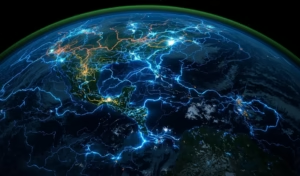
Planetary health frameworks, such as the Planetary Boundaries and Earth-system boundaries, highlight how breaching limits in one area (e.g., nitrogen/phosphorus cycles or freshwater changes) cascades globally. Rivers play a central role here—transporting and transforming nutrients, purifying water through natural filtration, and supporting biodiversity that underpins food security, disease regulation, and mental well-being. Disruptions amplify risks: altered river flows exacerbate floods and droughts, spread water-borne diseases, reduce fish stocks vital for nutrition, and undermine the resilience of ecosystems that buffer climate impacts. Insights from global reports emphasize that protecting rivers and freshwater systems is key to averting tipping points and ensuring a safe, just planet for humanity.
Restoration and Hope: Reviving the Planetary Pulse
The good news lies in restoration parallels—much like medical interventions to clear arteries or promote vascular health, rewilding rivers, removing obsolete dams, reducing pollution, and adopting circular approaches (e.g., advanced wastewater treatment turning “waste” into resources) can revive flows and connectivity. Examples worldwide show rivers regaining vitality when given space to meander, reconnect with floodplains, and receive cleaner inflows, benefiting biodiversity, human health, and climate adaptation. Embracing this holistic view inspires action: from local stewardship on World Rivers Day to global policies aligning economic systems with Earth’s limits. Rivers remind us that planetary health is not abstract—it’s the beating, flowing heart sustaining life across scales.
This perspective urges us to treat Earth’s systems with the same care we give our own bodies: unobstructed, nourished, and resilient. By protecting these arterial lifelines, we safeguard not just ecosystems, but the future of human civilization itself.
To visually enhance this concept, here are relevant images illustrating rivers as planetary arteries and their ecological roles.