
Select Page

Discover the "Universe of Stars"

Explore the Mysteries of the Cosmos

Embark on a journey through the celestial wonders that light up our night sky. From their fiery births to their brilliant deaths, stars are the key to understanding the universe.
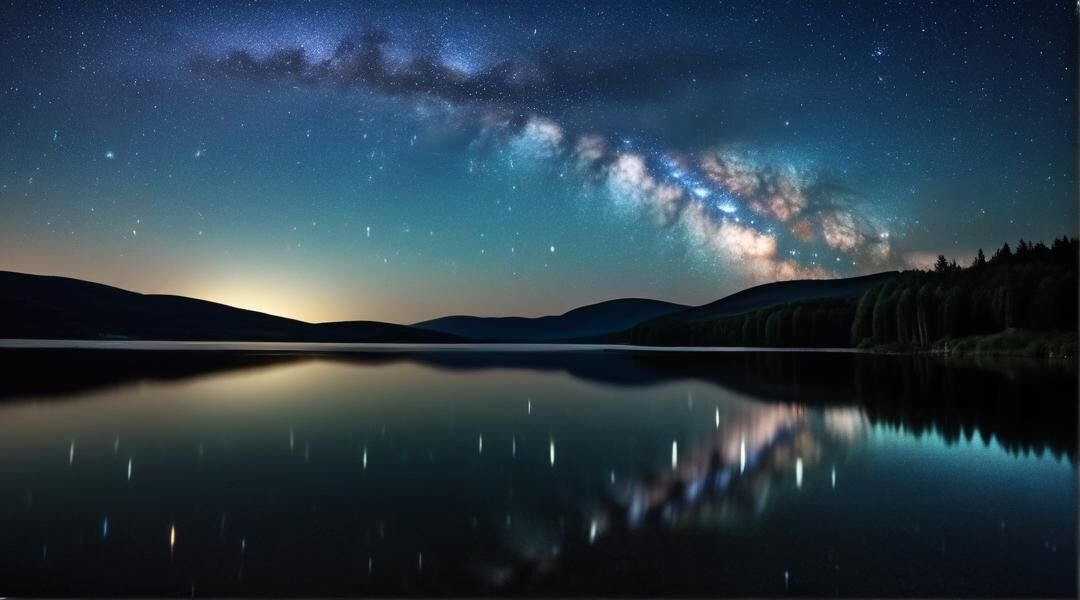
Let Us Understand Stars

innocent What are Stars?
Stars are massive, luminous spheres of plasma held together by their own gravity. They are born within the dense regions of molecular clouds—vast areas of space containing gas and dust. These clouds collapse under their own gravity, forming dense cores that eventually ignite nuclear fusion in their centre, giving birth to a star.
The energy produced by stars comes from nuclear fusion, primarily the fusion of hydrogen atoms into helium. This process releases immense amounts of energy in the form of light and heat, which radiate outward into space. Our Sun is a typical star, providing the Earth with the energy needed to sustain life.

The Stellar Journey

The Life Cycle of a Star

Stars are born from vast clouds of gas and dust known as nebulae. Over millions of years, gravity pulls these materials together, forming a dense core that ignites nuclear fusion—the process that makes a star shine. As stars evolve, they pass through several stages depending on their mass. Smaller stars, like our Sun, eventually expand into red giants and then shrink into white dwarfs. More massive stars end their lives in spectacular supernova explosions, leaving behind either neutron stars or black holes.

Fascinating Star Facts

  • The closest star to Earth, after the Sun, is Proxima Centauri, located 4.24 light-years away.
  • Stars twinkle due to the Earth’s atmosphere distorting their light as it reaches us.
  • UY Scuti is the largest known star, with a radius approximately 1,700 times that of the Sun.
  • Star colors vary with temperature: blue stars are the hottest, while red stars are the coolest.
  • Constellations are star patterns named after mythological figures, with 88 officially recognized today.
  • Neutron stars are incredibly dense; a teaspoon of their material would weigh billions of tons on Earth.
  • Black holes are regions in space with gravity so strong that nothing, not even light, can escape.
  • Stars recycle matter through supernova explosions, enriching the interstellar medium with heavy elements.
  • Our Sun, a typical star, provides the energy necessary for life on Earth through nuclear fusion.
  • Stars are born in nebulae, where gas and dust collapse under gravity to ignite nuclear fusion.
  • Massive stars end their lives as supernovae, leaving behind neutron stars or black holes.
  • Stars play a crucial role in the universe’s lifecycle, creating and dispersing elements.
  • Stars have been used for navigation, timekeeping, and storytelling across different cultures.
  • Ancient Egyptians believed stars represented the souls of the dead and were associated with gods.
  • Stars inspire scientific exploration and artistic expression, connecting us to the universe.
  • Greek mythology features constellations depicting heroes and mythical creatures.
  • Indigenous cultures have unique interpretations of stars, using them for guidance and cultural narratives.
  • Stars continue to fascinate us, driving our quest to understand the cosmos.

Stars in Culture and History

Throughout human history, stars have held deep cultural, spiritual, and practical significance. Long before modern astronomy, ancient civilizations looked to the night sky for guidance, inspiration, and meaning.

The Ancient Egyptians associated stars with their gods and believed they represented the souls of the departed, guiding them in the afterlife. In Greek mythology, constellations were seen as celestial depictions of heroes, gods, and mythical creatures, immortalized among the stars. Across the world, Indigenous cultures developed their own rich traditions of star lore—using the heavens for navigation, marking the changing seasons, and preserving stories that connected communities to the natural world.

Even today, stars continue to capture human imagination. They inspire scientific discovery, artistic expression, and philosophical reflection. Whether through the study of astronomy, the symbolism of astrology, or simply the quiet act of stargazing, the stars remind us of our connection to the vast universe and our enduring curiosity about the mysteries beyond our world.

The Impact of Stars

Understanding the Universe Through Stars

Unlock the Mysteries of the Universe

Dive deeper into the universe and expand your understanding of the stars. Join us at Read & Riser as we explore the wonders of the universe together. Whether you’re curious about the life cycle of stars or fascinated by their cultural and historical significance, there’s always something new to discover. Countless worlds lie beyond the stars. Humanity must hold its thinking high and continue its quest for knowledge. Click below to continue your journey of discovery.