
Biblical Perspective: Similarities and Differences
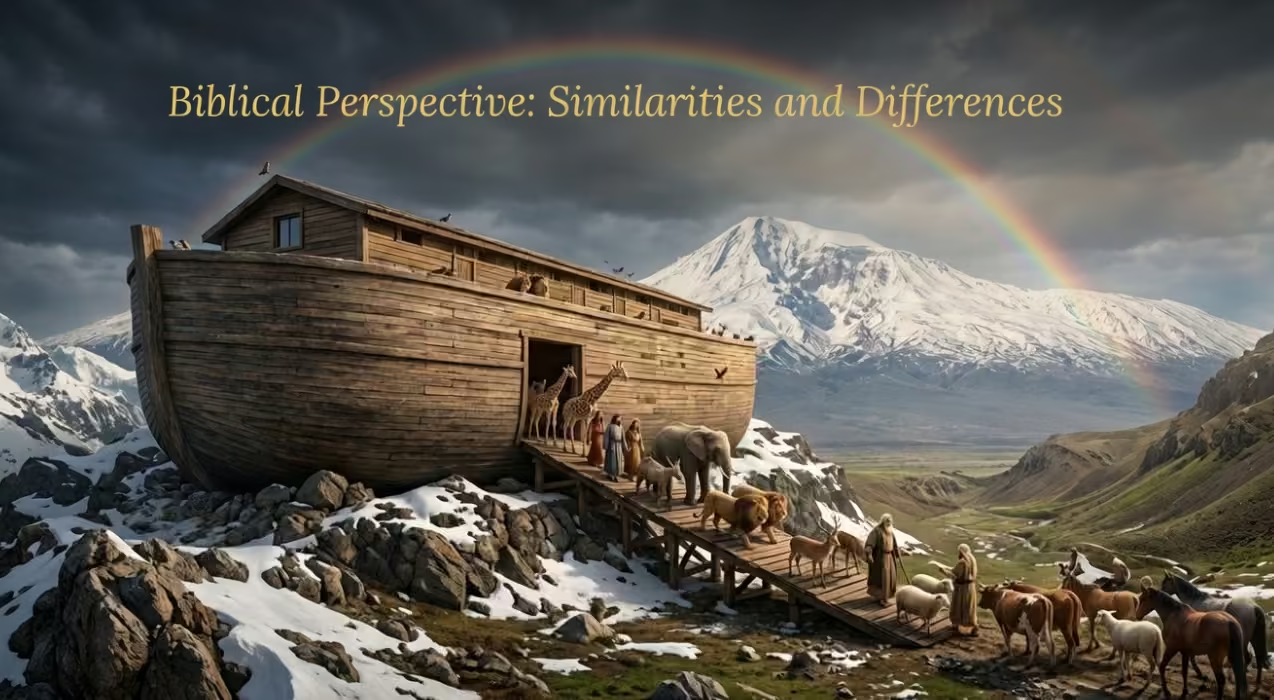
Noah’s Ark and the Covenant Rainbow – A Biblical View
.
Shared Hope After the Flood: Noah and Nuh (peace be upon him)
3.1 Shared Core Elements
The Biblical narrative in Genesis 6–9 and the Islamic account of Prophet Nuh (peace be upon him) in the Quran share profound parallels, reflecting a shared Abrahamic heritage. In both traditions, humanity descends into deep moral corruption—violence, idolatry, and widespread wickedness—grieving the Creator. God selects the righteous Noah/Nuh as a beacon of faith amid the decay. He receives divine warning of an impending cataclysmic Flood and is commanded to construct an ark to precise divine specifications, a vessel of salvation amid the coming judgment.
Noah (Nuh) gathers animals in pairs (with seven pairs of clean ones in the Biblical detail) and boards with his faithful family and a small band of believers. As torrential rains and surging waters engulf the earth for forty days and nights (Bible) or until the divine command ceases (Quran), the flood eradicates all life outside the ark. The vessel endures the tempest, eventually resting as waters gradually subside—revealing mountains and dry land once more.
Life renews through Noah’s (Nuh’s) descendants, who repopulate the earth. Both stories frame the event as divine justice against sin and a testament to obedience and piety. They culminate in hope: a covenant (the rainbow in Genesis) promising never again to destroy all life by flood, underscoring God’s mercy, renewal, and the enduring call to righteousness.
3.2 Key Differences
However, notable differences exist:
| Aspect | Islamic Account | Biblical Account |
| Resting place of Ark | Mount Judi | Mountains of Ararat |
| Duration details | Not specified precisely in Qur’an | Detailed timeline in Genesis |
| Emphasis | Moral warning and divine justice | Covenant and genealogy |
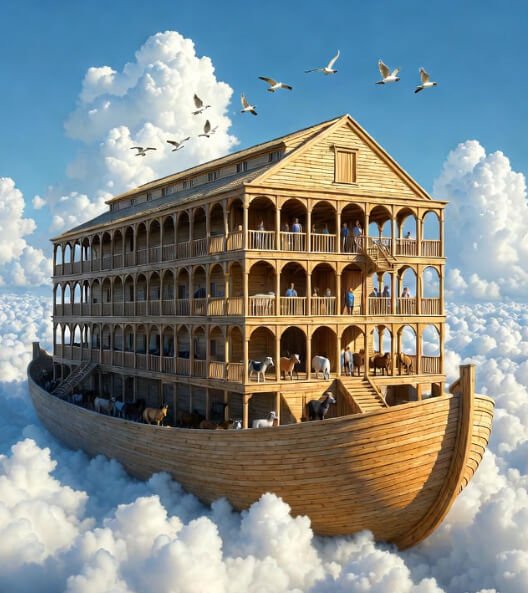
In the Bible, post-flood survival was not an easy restart. After the waters receded, Noah (Nuh A.S.) built an altar and offered sacrifices to God. In return, the Lord made a solemn promise never to destroy the earth again with a global flood, sealing it with the beautiful sign of the rainbow (Genesis 9:1–17). God also gave humanity a clear mandate to “be fruitful and multiply, and fill the earth,” signaling a fresh beginning.
Yet life after the flood was far from simple. Noah planted a vineyard, showing the renewal of agriculture and human labor. However, he soon faced the reality of human weakness when he became intoxicated and lay uncovered in his tent. This moment reminds us that even the most righteous people are still human and imperfect.
For non-Muslims familiar with the Bible, these details make the Islamic account of Nuh (A.S.) feel approachable — not as a completely different story, but as a beautiful variant within the shared Abrahamic tradition. Both versions highlight the same core message: obedience to God, patience through trials, and hope after destruction.
Above all, the story teaches that nothing restarts easily. Rebuilding life after a great trial requires effort, struggle, and consistency. But Allah loves those who were hardworking, who are hardworking, and who will keep working hard with sincerity and patience. Success comes not from ease, but from steadfastness and trust in divine mercy.
Archaeological and Ancient Near Eastern Evidence
4.1 Mesopotamian Flood Traditions
Archaeological discoveries reveal flood myths predating both Qur’anic and Biblical texts. The Epic of Gilgamesh (c. 2100–1200 BCE), unearthed in Nineveh, features Utnapishtim—a Noah (Nuh A.S.)-like figure—warned by the god Ea to build a boat, save life, and survive a deluge. Similarly, the Atrahasis Epic (c. 1800 BCE) describes divine frustration with humanity leading to a flood, with a survivor preserving seeds and animals. These clay tablets, excavated in the 19th century by Austen Henry Layard and others, suggest a shared Mesopotamian origin, possibly influencing later religious narratives.
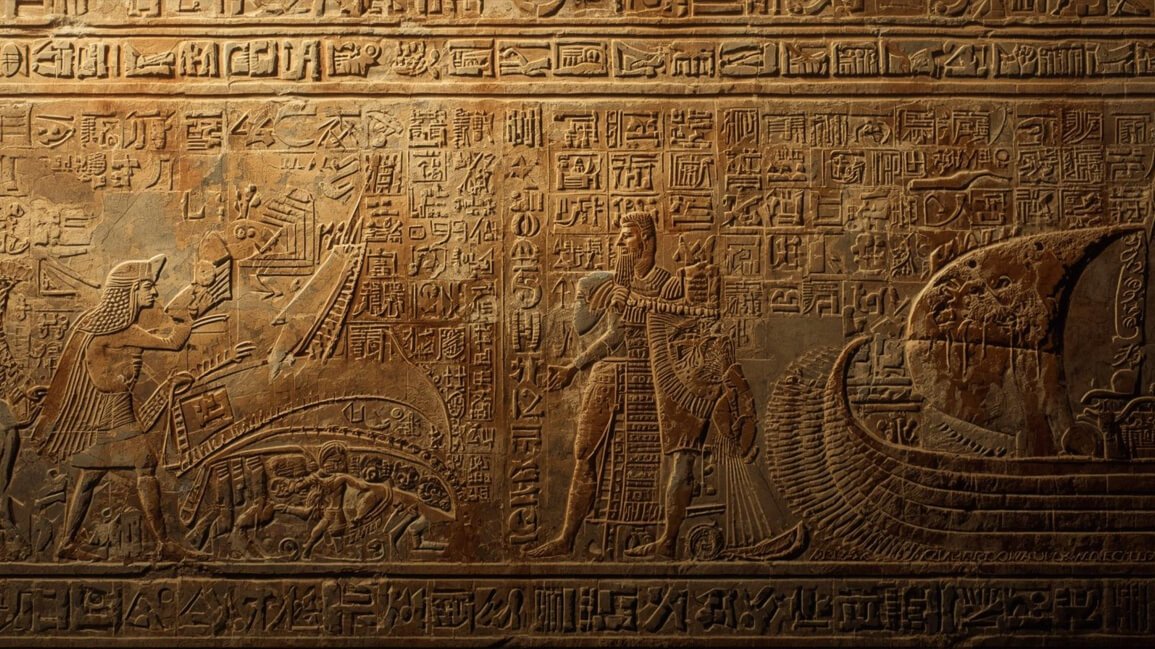
The Flood Tablet detail
4.2 Geological Findings
Evidence from sites like Ur (excavated by Leonard Woolley in the 1920s) includes thick silt layers (up to 3 meters) dated to c. 2900 BCE, indicating massive flooding in the Euphrates-Tigris basin. Similar deposits at Kish and Shuruppak point to regional catastrophes disrupting Sumerian civilizations. Geologists link these to melting glaciers or monsoon shifts post-Ice Age.
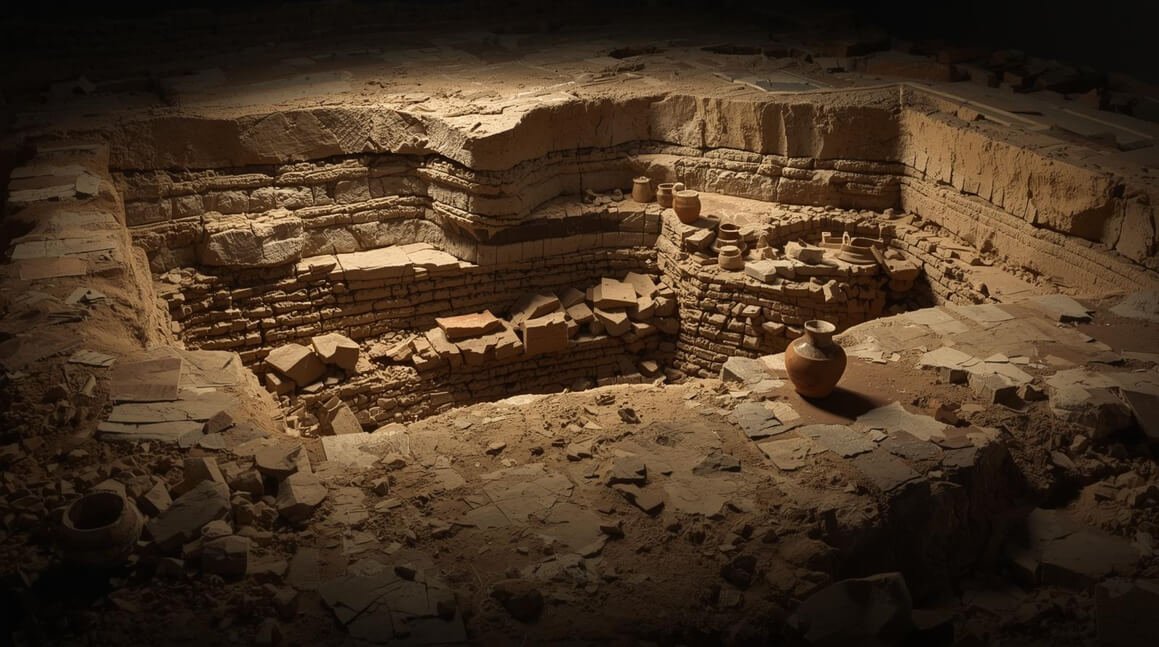
Flood layer at Ur excavation
Modern theories, such as the Black Sea deluge hypothesis (proposed by William Ryan and Walter Pitman in 1997), suggest a catastrophic inundation around 5600 BCE, flooding the Black Sea basin and displacing populations. While not proving a global flood and remaining debated, these findings lend plausibility to a localized event amplified in oral traditions, explaining Nuḥ/Noah’s (A.S.) survival as effective leadership amid disaster.
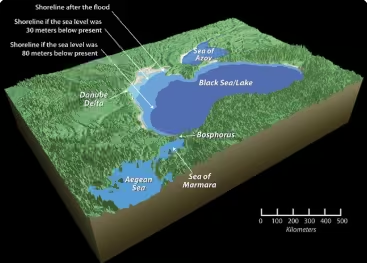
Black Sea inundation visualization
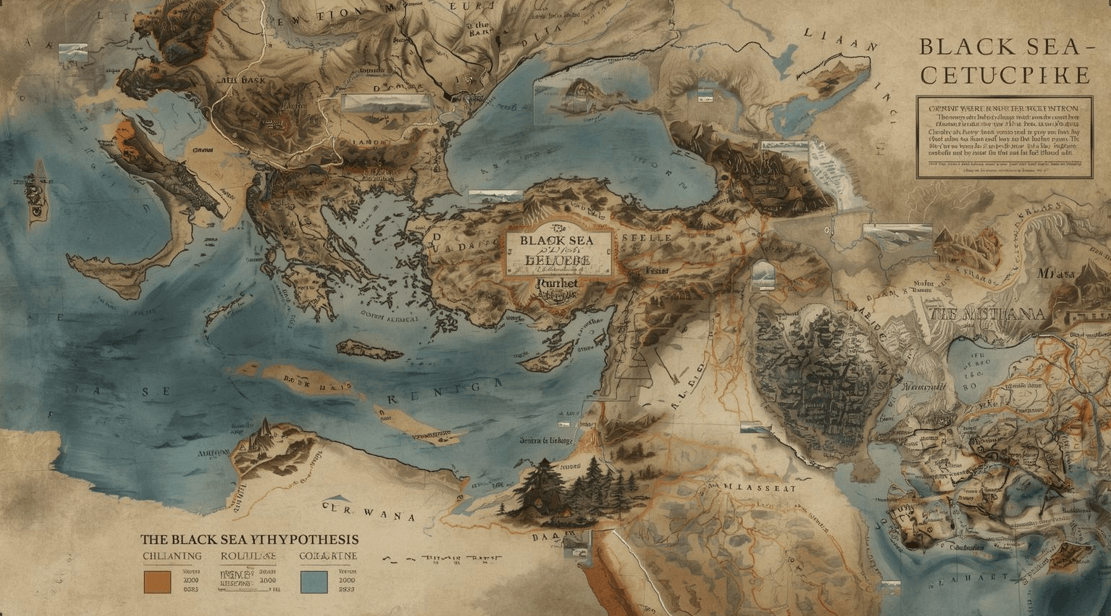
Black Sea deluge hypothesis map
Non-Muslim Interpretative Frameworks
Non-Muslims often view Nuh’s survival through secular lenses:
5.1 Historical Interpretation
As a real regional flood survivor, Noah embodies adaptive strategies like boat-building and resource management, supported by Mesopotamian artifacts.
5.2 Symbolic Interpretation
The Ark represents human ingenuity; survival signifies rebirth after societal collapse, akin to modern climate disaster metaphors.
5.3 Comparative Religious Interpretation
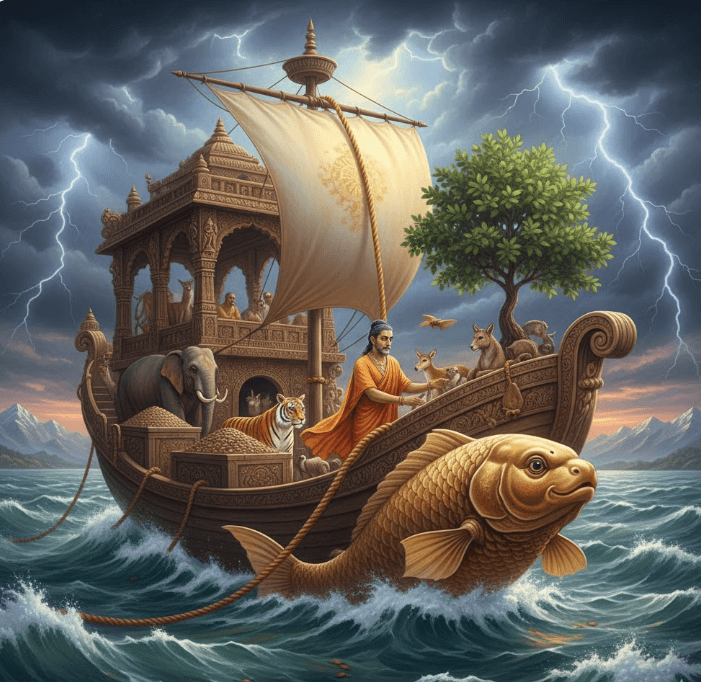
Parallels with Hindu (Manu) or Greek (Deucalion) floods highlight universal themes of justice and renewal. Islamic theology invites such reflections without mandating faith.
Why the Islamic Explanation Remains Relevant to Non-Muslims
The Biblical narrative in Genesis 6–9 and the Islamic account of Prophet Nuh (peace be upon him) in the Quran share profound parallels, reflecting a shared Abrahamic heritage. In both traditions, humanity descends into deep moral corruption—violence, idolatry, and widespread wickedness—grieving the Creator. God chooses the righteous Noah/Nuh as a beacon of faith amid the decay. He receives divine warning of an impending cataclysmic Flood and is commanded to construct an ark to precise divine specifications, a vessel of salvation amid the coming judgment.
Noah (Nuh) gathers animals in pairs (with seven pairs of clean ones in the Biblical detail) and boards with his faithful family and a small band of believers. As torrential rains and surging waters engulf the earth—for forty days and nights in the Bible, or until the divine command ceases in the Quran—the flood eradicates all life outside the ark. The vessel endures the tempest, eventually resting as waters gradually subside, revealing mountains and dry land once more.
Life renews through Noah’s (Nuh’s) descendants, who repopulate the earth. Both stories frame the event as divine justice against sin and a testament to obedience and piety. They culminate in hope: a covenant symbolized by the rainbow in Genesis, promising that God will never again destroy all life by flood.
In the Bible, the restart is not effortless. Noah builds an altar and offers sacrifices; God blesses him with the command to “be fruitful and multiply” and seals the covenant with the rainbow. Yet human frailty quickly appears— Noah plants a vineyard, becomes intoxicated, and lies uncovered in his tent—reminding us that even the righteous remain imperfect.
Beyond theology, the Islamic account offers rich practical insights: it emphasizes preparedness by heeding divine warnings, upholds moral accountability, and models sustainable recovery after catastrophe. These elements align with archaeological and historical evidence of ancient Near Eastern flood traditions, while highlighting qualities of visionary leadership during crises. Today, the story resonates powerfully in environmental discussions, reminding us of humanity’s responsibility toward the earth and the consequences of moral and ecological imbalance.
Non-Muslims can engage with the narrative without any expectation of conversion, drawing timeless wisdom on resilience, patience through trials, and hope after destruction. Above all, the story teaches that nothing restarts easily. Rebuilding after a great trial demands effort, struggle, and consistency. Yet Allah loves those who work hard with sincerity and patience. True success comes not from ease, but from steadfastness and trust in divine mercy.
Conclusion
The story of Noah (Nuh, peace be upon him) stands as one of the most powerful shared narratives in the Abrahamic tradition. The Biblical account in Genesis 6–9 and the Qur’anic depiction both portray a world engulfed by moral corruption, a righteous servant chosen by God, the construction of an ark as an act of obedient faith, and a cataclysmic flood that wipes away wickedness while preserving a remnant of life. Despite notable differences—such as the scope of the flood, the role of preaching and warning, the fate of Noah’s son, and the emphasis on covenant versus ongoing prophetic mission—the core message remains strikingly consistent: divine justice tempered by mercy, the triumph of patience and piety over corruption, and the possibility of renewal after total devastation.
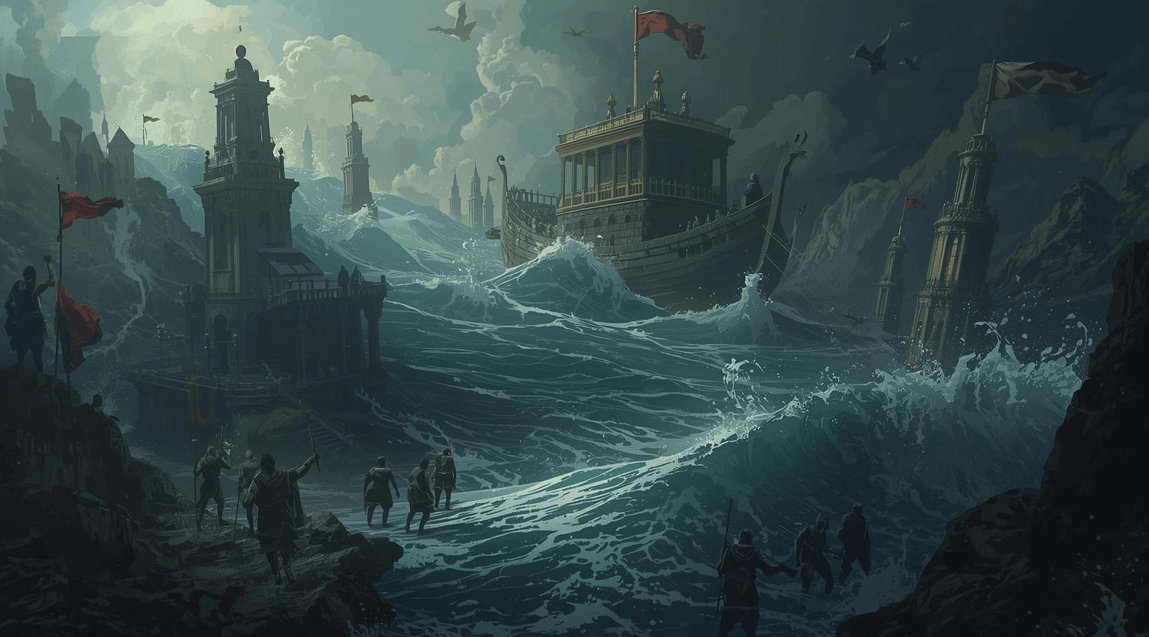
Archaeological and literary evidence from ancient Mesopotamia (the Epic of Gilgamesh and Atrahasis) reveals that this motif circulated long before the Biblical or Qur’anic texts, while geological findings of major regional floods in the ancient Near East lend historical plausibility to a catastrophic event preserved and theologized in sacred memory. Non-Muslims may interpret the story historically as adaptive survival, symbolically as rebirth after societal collapse, or comparatively as a universal archetype of justice and renewal found across cultures.
Ultimately, whether approached through faith or cultural curiosity, the narrative of Noah/Nuh offers profound wisdom for our time. It reminds us that great trials—moral, ecological, or civilizational—do not end with mere survival; true rebuilding demands sustained effort, moral consistency, and trust in higher mercy. For Muslims, it affirms divine providence and prophetic obedience. For non-Muslims, it provides a resonant story of resilience, ethical responsibility, and hope. In an age of global challenges, this ancient tale continues to inspire cross-cultural dialogue and the steadfast human commitment to renewal after destruction.
Page 8