
Abraham in Islam, Judaism, and Christianity
Keywords: “Abraham’s Covenant in Judaism”, “Ibrahim as a Prophet in Islam”, “Abraham’s Faith in Christianity”.
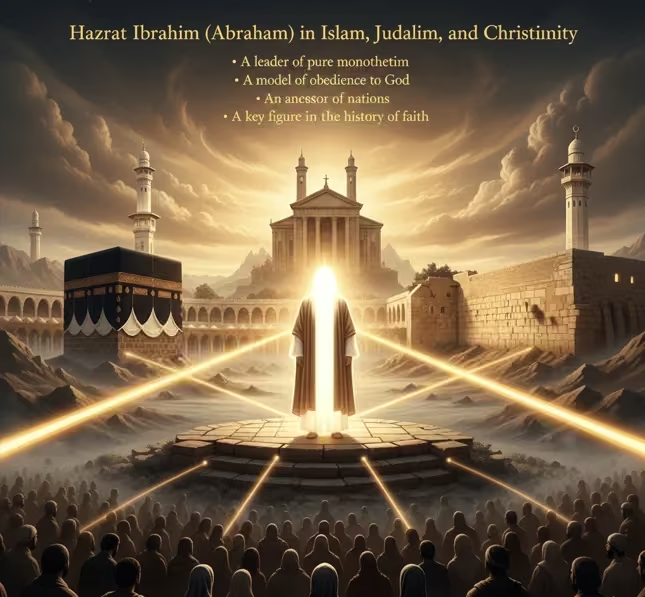
Abraham stands as the foundational figure of pure monotheism, obedience to God, and ancestor of nations across Judaism, Christianity, and Islam.
| Hazrat Ibrahim (A.S.) is one of the few figures deeply respected in all three Abrahamic religions. |
| He is seen as: |
|
|
|
|
| But each religion highlights different aspects of his life. |
Hazrat Ibrahim (A.S.), known as Abraham in Judaism and Christianity, stands as a pivotal figure revered across the three Abrahamic religions for his unwavering commitment to pure monotheism, total obedience to God, and role as an ancestor of nations.
In Judaism, Abraham is the foundational patriarch who received God’s eternal covenant. Through his son Isaac and grandson Jacob, he became the literal father of the Jewish people and the twelve tribes of Israel. His story emphasizes faithfulness, the promise of land and descendants, and his role as the model of a Torah-observant believer who walked with God.
In Christianity, Abraham exemplifies salvation by faith rather than works or law. The New Testament, especially through Paul (e.g., Romans 4), portrays him as justified by believing God’s promise despite impossible circumstances—his faith “credited as righteousness.” He serves as the spiritual father of all believers, Jew and Gentile alike, with the covenant extending blessings to all nations through Christ.
In Islam, Prophet Ibrahim (A.S.) is a supreme prophet, titled “Khalilullah” (Friend of Allah), and a perfect exemplar of submission (Islam). The Qur’an describes him as a hanif—pure monotheist, neither Jew nor Christian—rebuilt the Kaaba with his son Ismail (Ishmael), faced trials like the near-sacrifice (commemorated in Eid al-Adha), and preached tawhid against idolatry. His legacy links to the final prophet Muhammad through Ismail’s line.
Though emphases differ—lineage through Isaac in Judaism/Christianity versus Ismail in Islam, faith versus law, or covenant specifics—Abraham/Ibrahim unites these faiths as a timeless model of devotion, obedience, and trust in the One God.
1. Islam: Hazrat Ibrahim (A.S.)
In Islam, Hazrat Ibrahim (A.S.) is one of the five greatest prophets (Ulul-Azm), a supreme exemplar of pure monotheism (Hanif—one who turns away from idolatry toward the One God). He is honored as Khalilullah (the intimate Friend of Allah), reflecting his unparalleled closeness and devotion.
Key events define his legacy: He boldly challenged and destroyed his people’s idols, proving their helplessness and calling them to tawhid (monotheism). Thrown into a massive fire by Nimrod for his defiance, Allah miraculously cooled it, saving him (“O fire, be cool and safe for Ibrahim” – Qur’an 21:69). His greatest trial was the divine command to sacrifice his son Ismail (A.S.), whom he and Hagar bore; both father and son submitted willingly, but Allah intervened with a ram, commemorated annually in Eid al-Adha through Qurbani (sacrifice) and sharing meat with the needy.
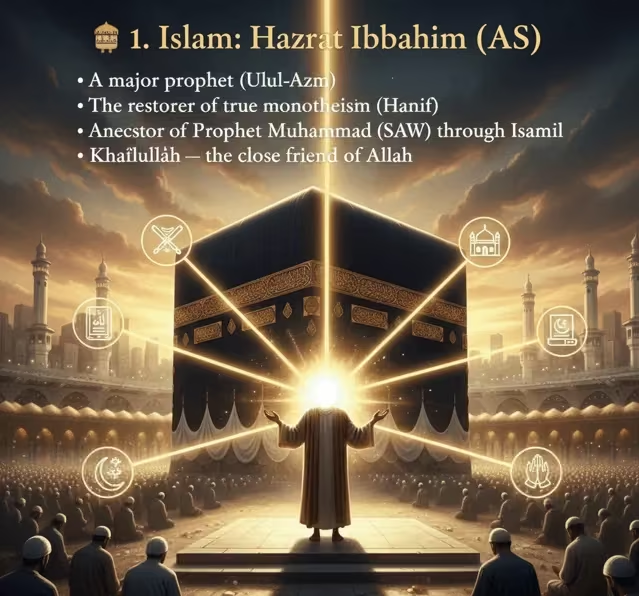
Together with Ismail (A.S.), he raised the foundations of the Kaaba in Makkah—the first house of worship for humanity—and prayed for righteous descendants, including a messenger from their line (fulfilled in Prophet Muhammad SAW). His dua also sought a secure land and provision for future generations.
Importance in Islam: Ibrahim (A.S.) is the spiritual father of the Muslim Ummah, embodying perfect submission (Islam) and unwavering trust in Allah. Many core rituals—Hajj pilgrimages (Sa’i between Safa and Marwah echoing Hagar’s search, Tawaf around the Kaaba), Qurbani, and rejection of shirk—trace directly to his life. He stands as the ideal model of tawhid, obedience, and sacrifice for all Muslims.
2. Judaism: Abraham
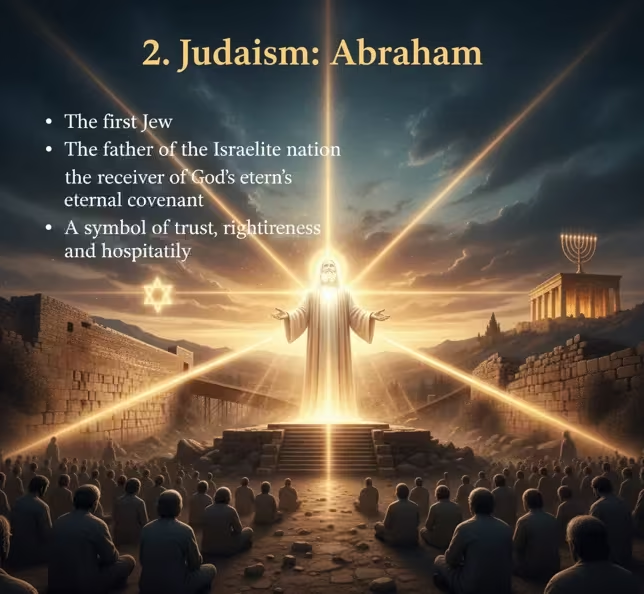
In Judaism, Abraham is the foundational patriarch (Avraham Avinu – “our father Abraham”), the first Jew, and the progenitor of the Israelite nation through Isaac and Jacob. Chosen by God, he rejected idolatry (midrashic traditions describe him smashing idols in his father’s shop and discovering monotheism through reason).
Key themes include his call to leave Ur and Haran for Canaan (Genesis 12), where God promised him land, numerous descendants, and blessings for all nations. The covenant (brit) is central—God pledges an everlasting relationship, marked by circumcision (brit milah) as its sign (Genesis 17). Despite old age and Sarah’s barrenness, Isaac is miraculously born as the heir of promise, while Ishmael (from Hagar) is sent away.
The Akedah (Binding of Isaac, Genesis 22) is the ultimate test: God commands Abraham to sacrifice Isaac on Mount Moriah; Abraham obeys unquestioningly, but an angel stops him, providing a ram instead. This affirms his absolute faithfulness, often seen as meriting mercy for future generations (linked to Rosh Hashanah shofar blowing).
Importance in Judaism: Abraham establishes the eternal covenant between God and the Jewish people, making him the source of Jewish identity, chosenness, and the Promised Land. He models trust, righteousness, hospitality (welcoming angels), and obedience, serving as the archetype of faith and the founder whose descendants became the twelve tribes of Israel.
3. Christianity: Abraham
In Christianity, Abraham is revered as the spiritual father of all believers—Jews and Gentiles alike—rather than solely the physical ancestor of one nation. The New Testament, particularly through the Apostle Paul in Romans 4 and Galatians 3, presents him as the prime example of justification by faith alone: “Abraham believed God, and it was credited to him as righteousness” (Romans 4:3, quoting Genesis 15:6). This occurred before circumcision or the Mosaic Law, proving that righteousness comes through trusting God’s promise, not works or rituals.
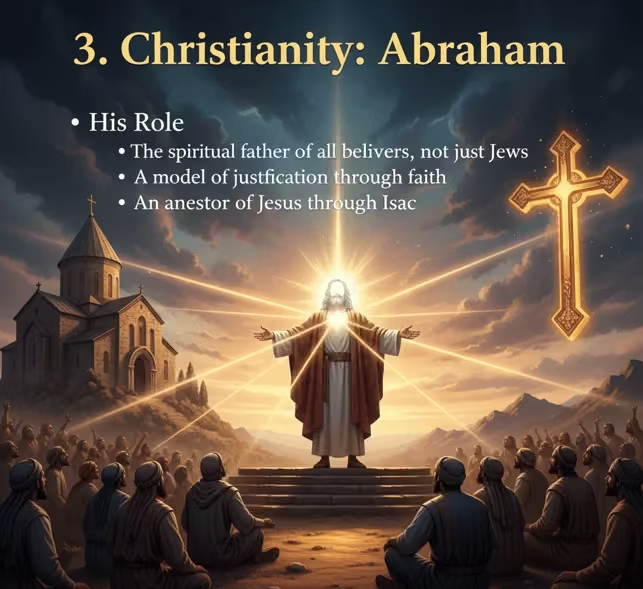
Key themes include his unwavering faith amid impossible circumstances—he believed God could fulfill the promise of descendants despite his and Sarah’s old age (Romans 4:18-21). The promise to Abraham that “all nations will be blessed through your offspring” (Genesis 12:3; Galatians 3:8) is seen as fulfilled in Jesus Christ, Abraham’s descendant through Isaac, making salvation available to everyone by faith in Him. The Akedah (Binding of Isaac) foreshadows God’s ultimate sacrifice of His Son Jesus as the substitute for humanity’s sins.
Abraham’s obedience in leaving his homeland (Hebrews 11:8), his hospitality, and his trust exemplify living faith that produces works (James 2:21-23 calls him “God’s friend”).
Importance in Christianity: Abraham symbolizes that salvation is by grace through faith, not law or merit. He is the archetype of the believer, with Christians as his true heirs via Christ (Galatians 3:29). His story underpins core doctrines like justification by faith, the universality of the gospel, and God’s faithfulness to promises, making him central to understanding redemption for all nations.
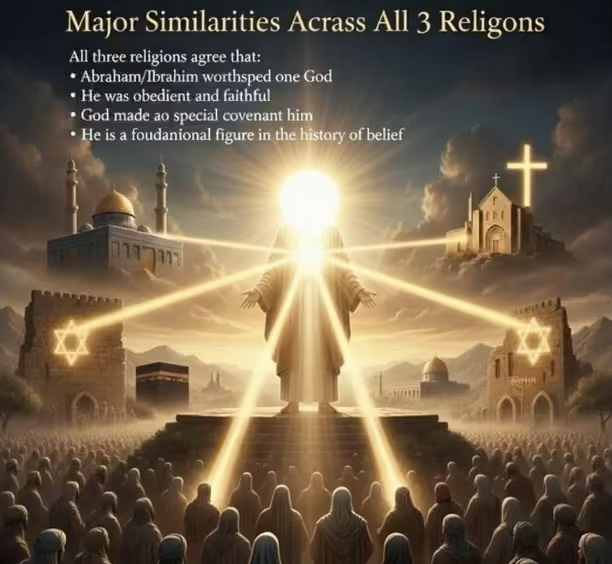
Major Similarities Across All 3 Religions
Abraham/Ibrahim worshipped one God (strict monotheism), rejecting idolatry and polytheism. |
He demonstrated profound obedience and faithfulness to God’s commands, even in extreme trials like the near-sacrifice of his son. |
God established a special covenant with him, promising blessings, descendants, and a lasting relationship. |
He remains a foundational figure in the history of monotheistic belief, serving as a model of trust, righteousness, and devotion to the divine. |
Major Differences
Topic | Islam | Judaism | Christianity |
His status | Major prophet (Ulul-Azm), Khalilullah (Friend of Allah), supreme exemplar of submission | Patriarch and first Jew, foundational ancestor | Patriarch and spiritual father of all believers (by faith) |
Which son was to be sacrificed | Ismail (A.S.) | Isaac (A.S.) | Isaac (A.S.) |
Connection to Mecca | Built the Kaaba with Ismail (A.S.); origin of Hajj rituals | Not mentioned | Not mentioned |
Lineage importance | Through Ismail (A.S.) → leading to Prophet Muhammad (SAW) | Through Isaac (A.S.) → Jacob (A.S.) → 12 tribes of Israel | Through Isaac (A.S.) → lineage leading to Jesus Christ |
Meaning of covenant | Universal message of tawhid (pure monotheism) for all humanity | National covenant with the people of Israel (land, descendants, Torah) | Spiritual covenant fulfilled in Jesus, extending salvation by faith to all nations |
These shared roots highlight unity in monotheism and faith, while differences reflect each faith’s unique theological emphasis and historical development.
Summary: Hazrat Ibrahim (A.S.) / Abraham – A Shared Revered Figure
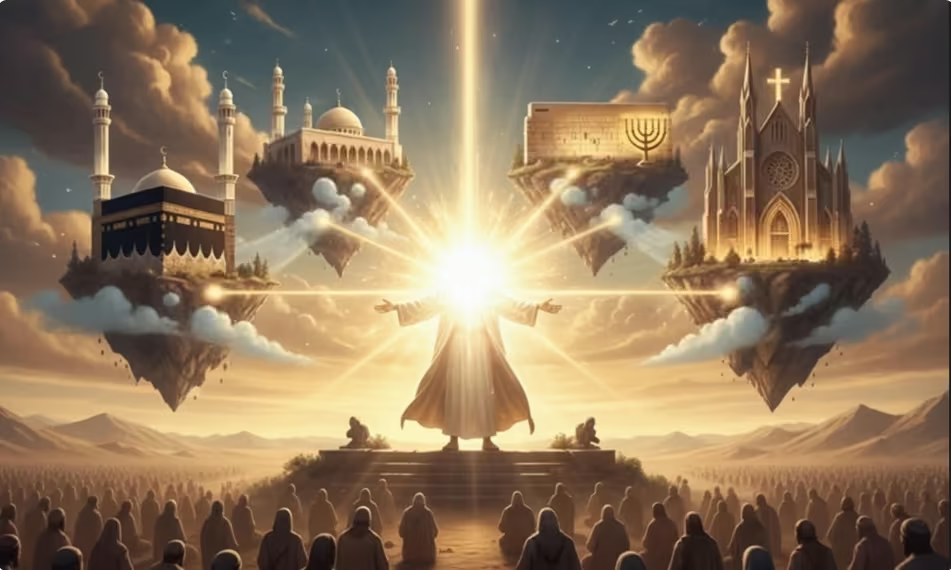
Abraham (Ibrahim), revered across the three Abrahamic faiths as the faithful monotheist, obedient servant, bearer of God’s covenant, and foundational figure of belief.
Hazrat Ibrahim (A.S.), known as Abraham in Judaism and Christianity, is one of the most universally respected figures in the Abrahamic faiths. Each religion honors him as a model of unwavering faith in the One God, yet highlights distinct aspects of his life and legacy.
In Islam, he is a great prophet—one of the Ulul-Azm (messengers of strong resolve)—and Khalilullah (Friend of Allah). He is celebrated as the restorer of pure monotheism (Hanif), destroyer of idols, builder of the Kaaba alongside his son Ismail (A.S.), and establisher of Hajj rituals. Through Ismail (A.S.), he is the spiritual father of the Muslim Ummah and ancestor of Prophet Muhammad (SAW). His supreme submission is commemorated in Eid al-Adha, symbolizing total obedience to Allah.
In Judaism, Abraham is the first patriarch and founder of the Jewish nation. Chosen by God, he received the eternal covenant promising land (Canaan), countless descendants, and blessings for all families of the earth. Through his son Isaac (A.S.) and grandson Jacob, he became the ancestor of the twelve tribes of Israel. The Akedah (Binding of Isaac) underscores his absolute faithfulness, forming the basis of Jewish identity, chosenness, and the covenantal relationship with God.
In Christianity, Abraham is the archetype of justification by faith. His belief in God’s promise—despite human impossibility—was “credited to him as righteousness” (Romans 4:3). He is the spiritual father of all believers, Jew and Gentile, with the promise to bless all nations fulfilled in Jesus Christ, his descendant through Isaac. The sacrifice of Isameel (A.S.) foreshadows God’s offering of His Son for humanity’s redemption.
Though emphases differ—lineage through Ismail covenant as national or universal, prophet or patriarch—Abraham unites Islam, Judaism, and Christianity as the exemplar of trust, obedience, and devotion to the One True God.