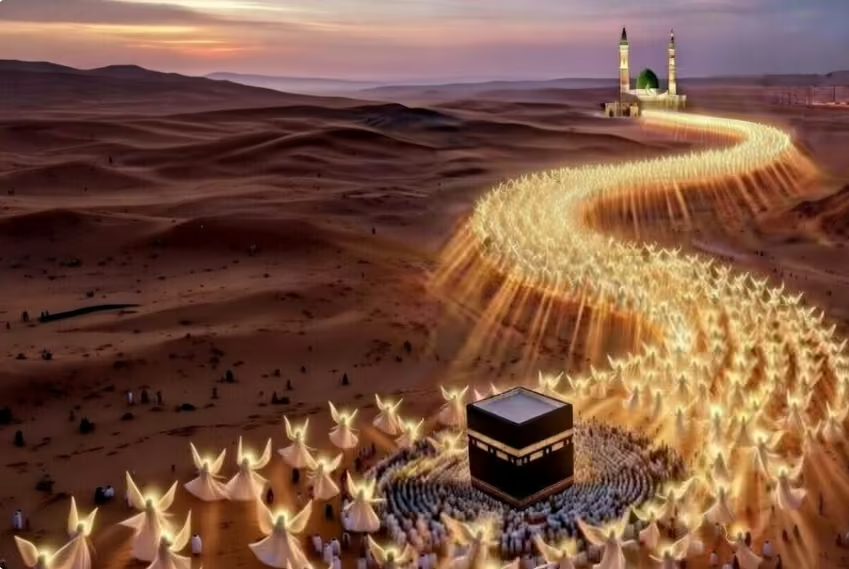
Key Elements of the Sacred Structure: Symbols of Heavenly Grace 🕋
Integral to the Kaaba‘s construction are elements that carry profound symbolic weight, each a testament to divine intervention and prophetic legacy.
The Black Stone ("Hajar al-Aswad"): History, Significance, and Its Role in Hajj and Umrah
Delivered from paradise by Angel Jibreel عليه السلام, the Hajar al-Aswad was placed by Ibrahim عليه السلام in the eastern corner of the Kaaba. This celestial stone serves as the starting and ending point for tawaf, the ritual circumambulation during Hajj and Umrah. Its presence reminds pilgrims of the heavenly origins of true worship, purifying intentions and fostering a direct connection to the divine. In Islamic tradition, it is said that the stone was originally white but darkened due to the sins of humanity, a poignant metaphor for redemption through faith.
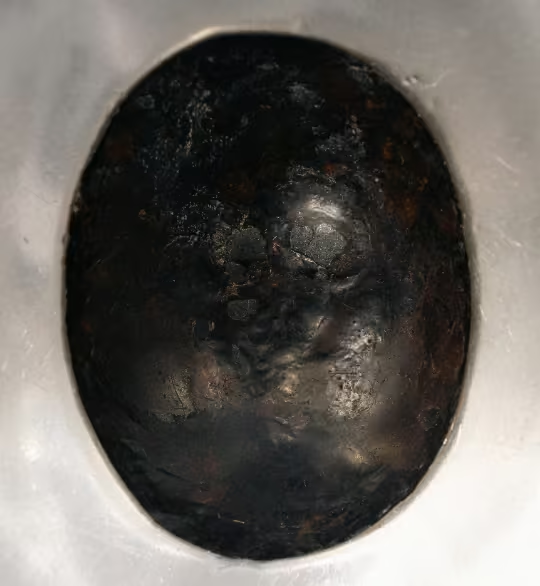
The sacred Hajar al-Aaswd embedded in the Kaaba, a heavenly gift placed by Prophet Ibrahim عليه السلام.
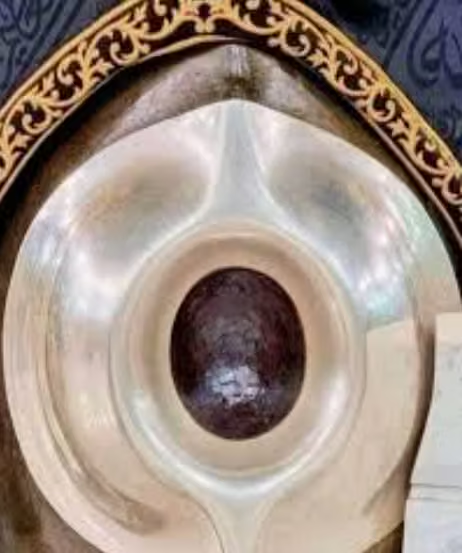
Detailed view of the Black Stone, symbolizing purity and divine connection.
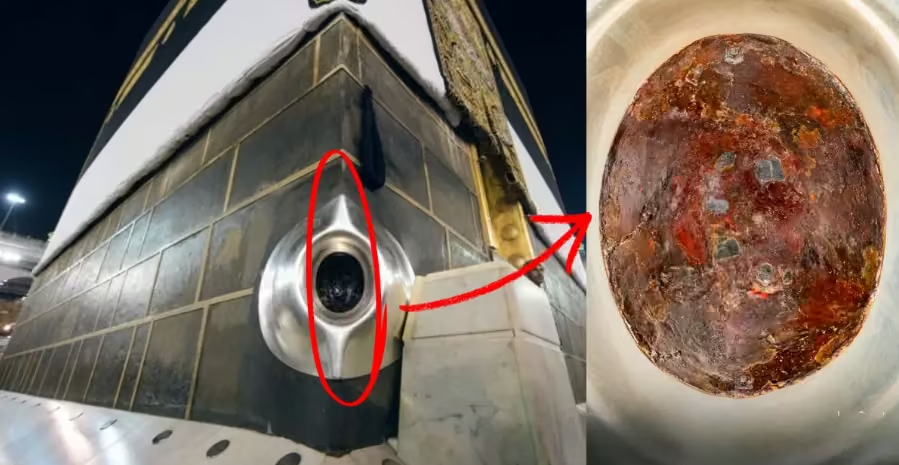
High-resolution capture of the celestial Black Stone, evoking awe and reverence.
This element motivates us to seek purity in our actions, as touching or kissing the stone during pilgrimage symbolizes renewal and divine forgiveness.
Maqam Ibrahim: History, Significance, and Its Role in Hajj and Umrah
The Maqam Ibrahim is the stone upon which Ibrahim عليه السلام stood to reach higher parts of the Kaaba during construction. Miraculously, it softened to preserve his footprints, standing today as a site for prayer near the Kaaba. Mentioned in the Quran: “And take, [O believers], from the standing place of Abraham عليه السلام a place of prayer.” (Surah Al-Baqarah, 2:125). It embodies steadfastness and elevation through devotion, inspiring pilgrims to stand firm in faith amidst life’s heights and lows.
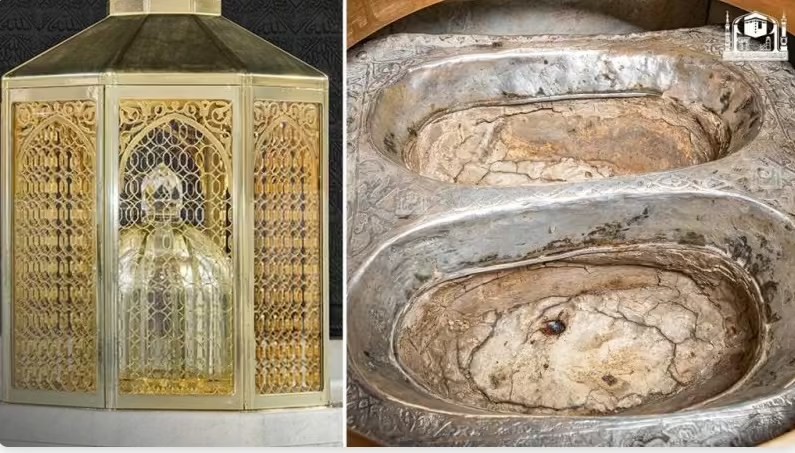
The miraculous Maqam Ibrahim preserving the footprints of Prophet Ibrahim عليه السلام.
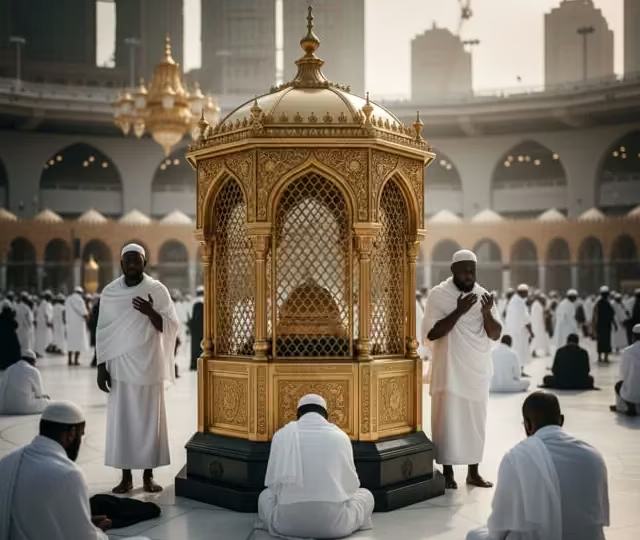
The Station of Ibrahim عليه السلام, a site of prayer and reflection.
These elements collectively illuminate divine wisdom, urging us to imprint our lives with acts of obedience that endure beyond time.
Historical and Artistic Depictions: Echoes Through the Ages 🕋
Over millennia, the Kaaba has inspired countless artists, scholars, and pilgrims, capturing its sanctity in paintings, manuscripts, and modern illustrations. From Ottoman-era miniatures to contemporary digital art, these depictions portray the Kaaba surrounded by throngs of worshippers, emphasizing its role as a unifying force.
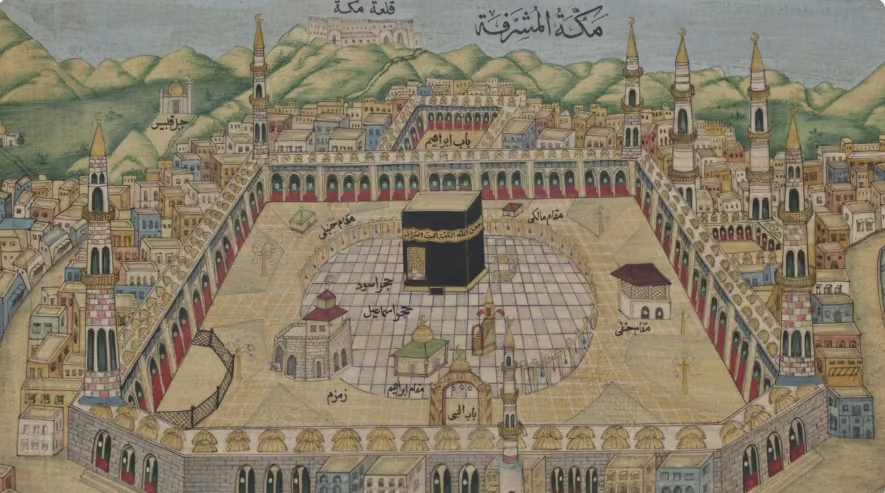
Exquisite historical depiction of the Kaaba from Islamic art traditions.
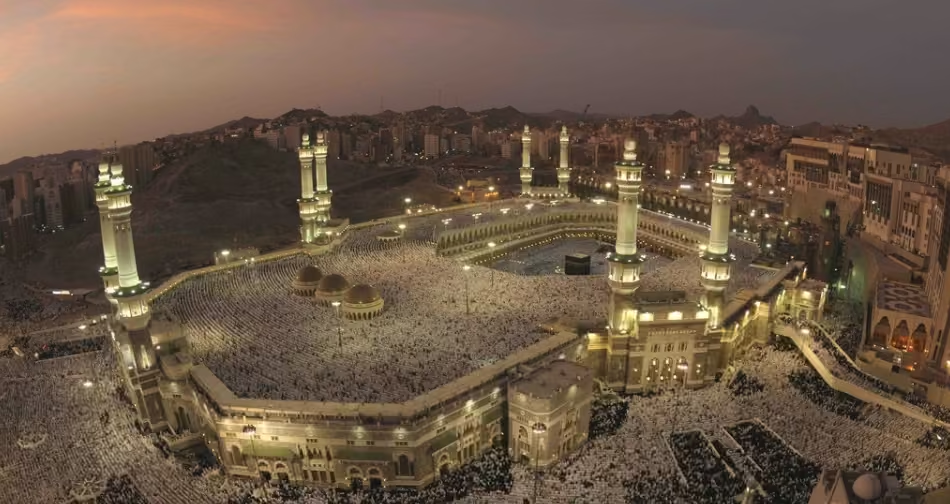
Timeless view of the Kaaba drawing hearts in worship and submission.
These artistic renditions not only preserve history but also motivate viewers to appreciate the Kaaba‘s enduring beauty and spiritual depth. They evoke emotions of wonder, drawing us closer to the divine narrative.
Historically, the Kaaba has undergone reconstructions due to natural disasters like floods and human conflicts, yet its core foundations—laid by Ibrahim عليه السلام—remain intact. Each rebuild honors the original design, a testament to resilience and divine protection.