
The Emergence of the Hanif: Prophet Ibrahim عليه السلام in the City of Idols 🧒
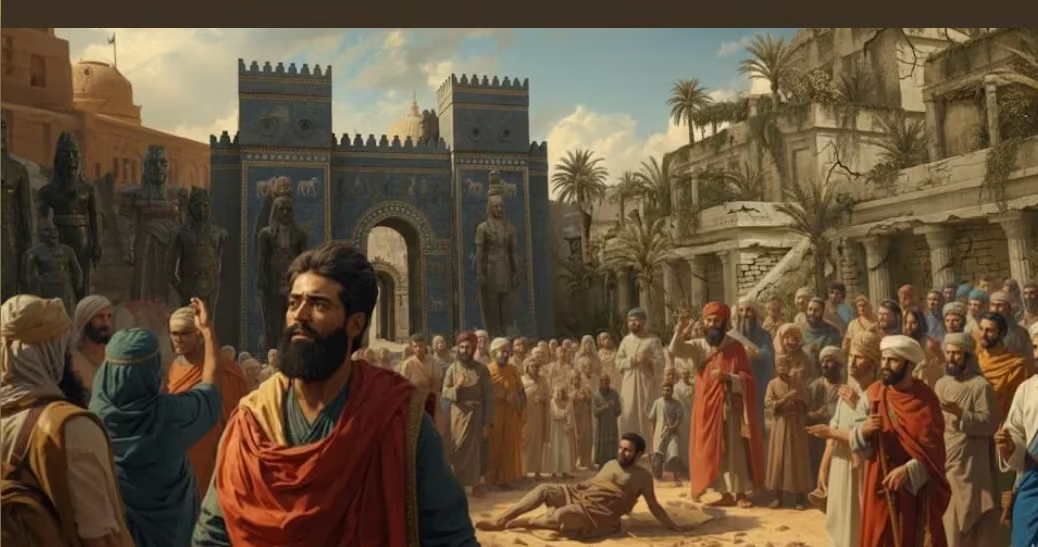
Ancient Babylon was characterized by entrenched idolatry, political corruption, and widespread spiritual disorientation.
Introduction 🕋
The story of Prophet Ibrahim (peace be upon him) occupies a foundational place in the religious and intellectual history of monotheism. His life embodies the transition from inherited ritualism to conscious faith grounded in observation, reason, and divine guidance. This chapter examines the early phase of Ibrahim’s عليه السلام mission, set against the backdrop of ancient Babylon—an environment characterised by entrenched idolatry, political absolutism, and widespread spiritual disorientation. Through this narrative, the chapter highlights the development of Ibrahim’s عليه السلام monotheistic consciousness and the formative moments that shaped his role as a prophet عليه السلام and reformer. 🕋
Babylon: A Landscape of Idolatry and Power ⚔️
In ancient Babylon, religious life was dominated by a vast pantheon of deities, represented in monumental temples and in the daily ritual practices of its people. The city’s ziggurats stood as visible symbols of a complex, polytheistic religious order, while the royal palace reinforced the authority of a ruler who demanded both political and divine allegiance. Nimrod, the autocratic king, publicly claimed godhood, further blurring the lines between governance and theological control.
Idols of stone and wood populated the city’s streets and sanctuaries. These objects, devoid of consciousness or agency, were nonetheless treated as intermediaries of power. In this environment of spiritual confusion and symbolic excess, the emergence of a figure committed to pure monotheism represented not only a religious challenge but a direct confrontation with the ideological foundation of the state.
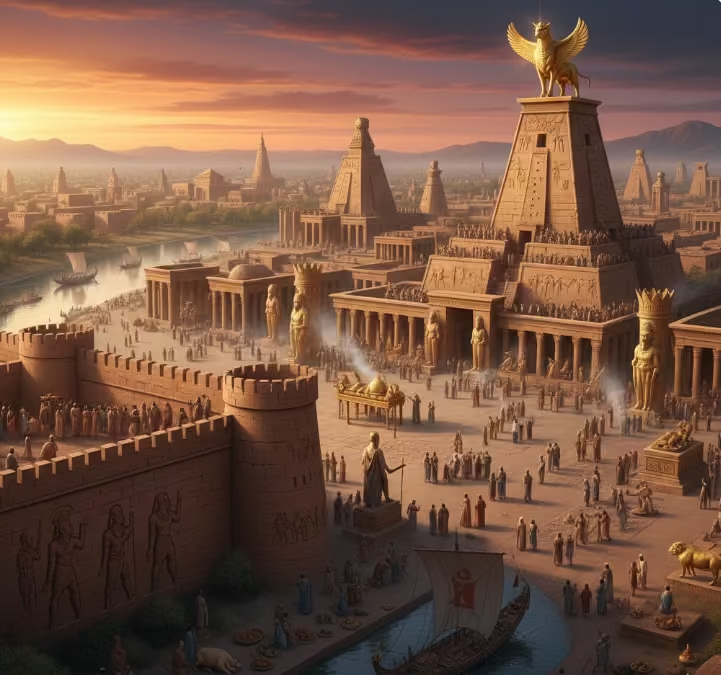
Ancient Babylon: a world of entrenched idolatry and spiritual disorientation.
The Disposition of the Young Ibrahim عليه السلام: the character, nature, mindset, inner qualities, and spiritual inclination 🤲
From his earliest years, Prophet Ibrahim (peace be upon him) exhibited a natural inclination toward truth. His moral and intellectual clarity set him apart from his surroundings. His father, Azar, was a craftsman of idols—an occupation that brought Ibrahim face-to-face with the contradictions of his society. The sight of his father shaping a figure with his own hands prompted fundamental questions: How could an object created by humans be worthy of worship? What power could such an artefact possess?
Such reflections marked the beginning of Ibrahim’s عليه السلام lifelong commitment to reasoned inquiry. Unlike his contemporaries, he refused to suspend his critical faculties in matters of faith. His search for truth unfolded not through inherited custom but through a process of observation, reflection, and ultimately, divine revelation.
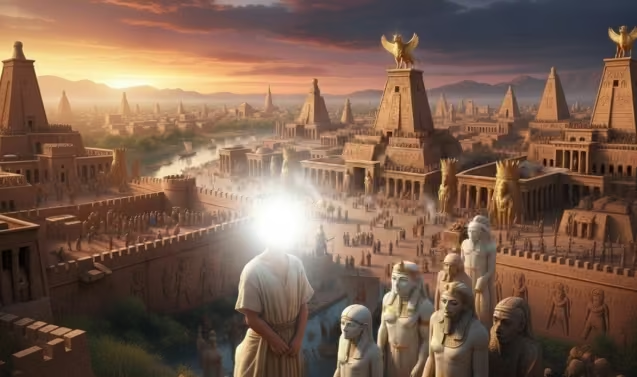
Teenage Ibrahim عليه السلام questioning idols in Babylonian temple!
Page 1