
Search of the Heavens: A Journey to Certainty 🕋
A defining episode in Ibrahim’s عليه السلام early quest is recorded in the Qur’an (6:76–78), where he turns his attention to the celestial bodies. This contemplation served as both a theological investigation and a philosophical exercise.
💚 When the bight fell over him, he saw a planet. He said, "This is my lord." But when it set, he said, " I do not love those that set." (Surah 6: 76)
💚 Then, when he saw the moon rising, he said, "This is my lord," but when it set, he said, "If my Lord does not guide me, I will be one of the erring people." (Surah 6: 77)
💚 Then, when he saw the sun rising, he said, "This is my lord, this is bigger." But when it set, he said, "o my people, I am innocent of your idolatry." (Surah 6: 78)
Observing a star, he momentarily considered it as a possible lord. When the star disappeared, he dismissed the notion. The moon, with its greater luminosity, similarly failed the test of permanence. Even the sun—magnificent and overwhelming—was ultimately subject to decline. These successive rejections illustrate a principle central to Islamic theology: the Divine cannot be characterised by change, limitation, or dependency.
Through this sequence, Ibrahim’s عليه السلام reasoning reached a decisive conclusion: transient entities cannot embody divinity. His proclamation—that he rejected all that his people worshipped—marked the crystallisation of his monotheistic identity. It was a declaration rooted not in mere dissent but in a coherent synthesis of rational reflection and innate spiritual insight.
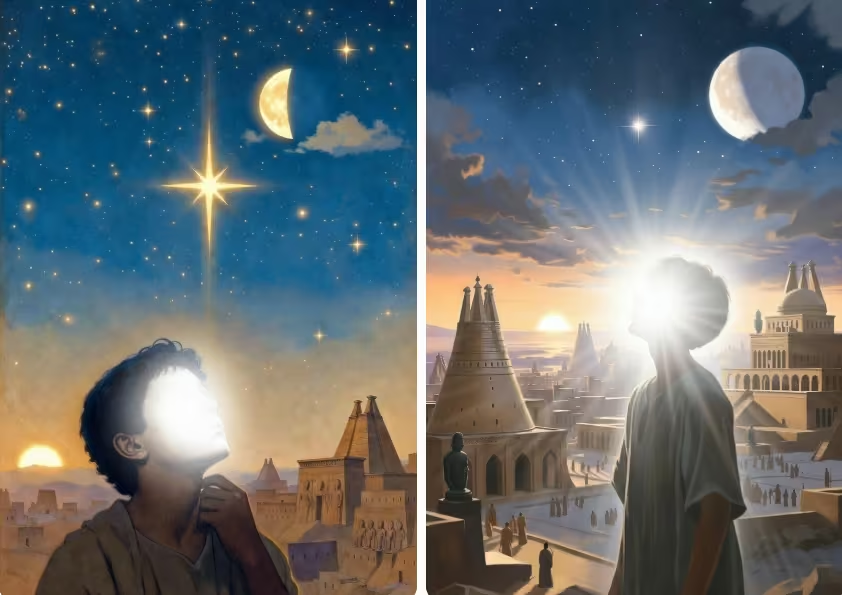
young Prophet Abraham (peace be upon him) contemplating celestial bodies of moon and sun
The Calling of the Hanif عليه السلام: From Family to Nation 🔔
Having achieved clarity regarding the oneness of Allah, Ibrahim عليه السلام turned first to his father, addressing him with a tone of gentleness and respect. His appeal represented both familial concern and prophetic responsibility. When his message was rejected, Ibrahim عليه السلام broadened his invitation to the wider community, urging them to abandon their devotion to powerless idols and embrace the worship of the one Creator.
His arguments were systematic and incisive. He challenged the ritual practices of the priests and the symbolic authority of the idols. His confrontations with the religious elite, and ultimately with King Nimrod himself, represented a challenge to the ideological framework that legitimised the kingdom’s authority. Ibrahim’s عليه السلام monotheism was uncompromising, and his logic destabilised the foundations of a society built upon theological error.
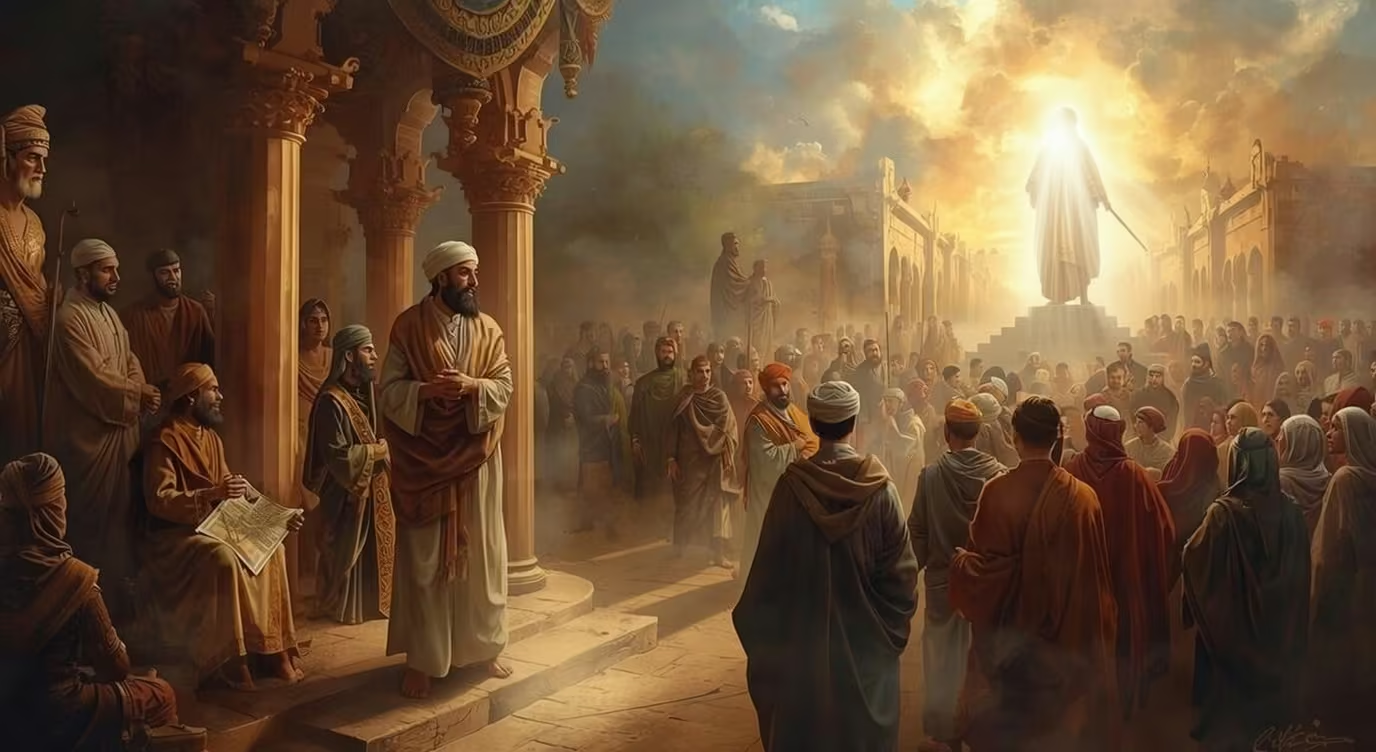
The friend of Allah proclaiming monotheism to the people of the city of Babylon
Truth, Certainty, and the Illumination of Consciousness: The narrative of Prophet "Ibrahim’s عليه السلام" early mission illustrates a perennial truth:
The narrative of Prophet Ibrahim’s عليه السلام early mission illustrates a perennial truth: When conviction is grounded in certainty (yaqin), it possesses an inherent transformative power. Certainty, within the Islamic tradition, is not merely intellectual assent; it is a state strengthened through observation, experience, and spiritual insight. Ibrahim’s عليه السلام journey reflects the merging of reason with divine guidance—a synthesis that produces an inner illumination often described in Islamic literature as the “light of wisdom.”
This illumination enabled Ibrahim عليه السلام to discern the oneness of Allah with clarity that transcended cultural convention and inherited belief. His monotheistic awakening was not an isolated experience but the foundation for a prophetic mission that would reshape the religious landscape of humanity.

Early mission illustrates a perennial truth: The Divine is eternal and unchanging.
Page 2