
The Construction of the Kaaba by Hazrat Ibrahim عليه السلام and Ismail عليه السلام: Illuminating the Spark of Divine Wisdom
In the vast tapestry of human history, few narratives resonate with the profound essence of faith, obedience, and divine purpose as vividly as the story of Hazrat Ibrahim عليه السلام and his son Ismail عليه السلام constructing the Kaaba. This sacred edifice, nestled in the heart of Mecca, stands not merely as a physical structure but as an eternal symbol of monotheism (tawhid), unity, and unwavering submission to Allah. As the Qibla—the direction Muslims face during prayer—and the epicenter of the Hajj pilgrimage, the Kaaba embodies the first illumination of that divine spark, igniting wisdom in the souls of believers across generations. It motivates us to reflect on our own journeys of faith, reminding us that true devotion transforms barren deserts into wellsprings of spiritual abundance.
This chapter delves deeply into the miraculous construction, exploring its historical, spiritual, and interfaith dimensions. Through graceful imagery and evocative prose, we aim to inspire every reader, evoking emotions of awe, gratitude, and renewed commitment to divine principles. Let this narrative be a beacon, guiding us toward deeper understanding and motivation in our daily lives.
The Divine Command: A Call to Eternal Worship
The story of the Kaaba's construction is rooted in divine revelation and prophetic obedience. After Hazrat Ibrahim عليه السلام left his beloved wife Hajra (A.S.) and infant son Ismail عليه السلام in the desolate valley of Mecca—a place devoid of vegetation, water, or human habitation—by Allah's command, the miracle of Zamzam unfolded, providing sustenance and marking the site as one of divine favor. Years later, Ibrahim عليه السلام returned, guided by Allah's directive to establish a house of worship that would serve as a sanctuary for humanity.
As recounted in the Holy Quran: "And [mention] when Ibrahim عليه السلام was raising the foundations of the House and [with him] Ismail عليه السلام, [saying], 'Our Lord, accept [this] from us. Indeed, You are the Hearing, the Knowing.'" (Surah Al-Baqarah, 2:127). This verse captures the essence of their labor—a harmonious father-son collaboration infused with prayer and humility. Ismail عليه السلام, now a young man, gathered stones from the surrounding hills, while Ibrahim عليه السلام meticulously placed them, building a simple rectangular structure without a roof. The site was divinely chosen, elevated to signify its sanctity, and it became the first edifice dedicated exclusively to the worship of the One True God.
This act was not merely architectural; it was a profound spiritual endeavor. Amidst their toil, they supplicated for the Kaaba to become a center of peace, security, and guidance for all mankind. Allah further instructed Ibrahim عليه السلام to proclaim the Hajj, inviting people from far and wide to partake in rituals that echo through time, fostering a sense of global unity among believers. In this, we find a motivational lesson: even in isolation and hardship, obedience to divine will sparks transformations that benefit humanity eternally.

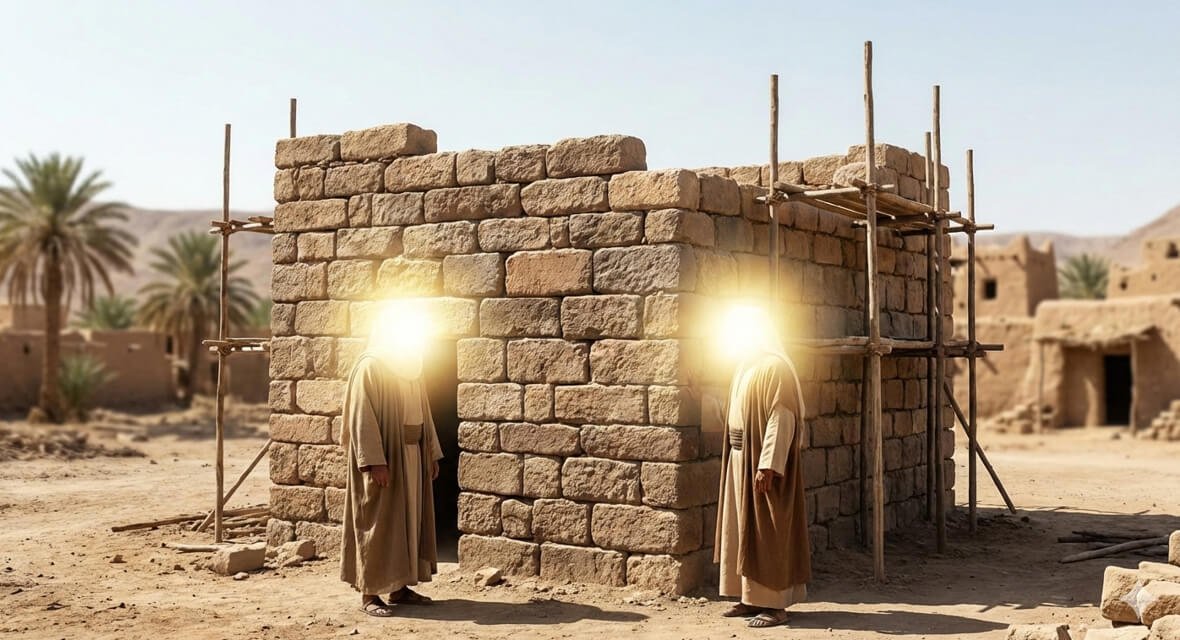
The barren valley, once a symbol of abandonment, evolved into a thriving spiritual hub. This narrative illuminates the spark of divine wisdom: faith turns trials into triumphs, motivating us to embrace challenges with trust in Allah's plan. As we contemplate this, let it stir emotions of resilience and hope, encouraging us to build our own 'Kaabas'—personal sanctuaries of worship in our hearts.
Significance in Abrahamic Traditions: One Father, Eternal Legacy
In Islam, the Kaaba is viewed as a reconstruction on ancient foundations, possibly tracing back to Adam عليه السلام, purified by Ibrahim عليه السلام for monotheistic worship. This aligns with his title as Khalīlullāh—the Friend of Allah—and his role as the "Father of Nations," whose progeny includes prophets like Ismail عليه السلام and Ishaq عليه السلام.
While Judaism and Christianity revere Abraham (Ibrahim عليه السلام) as a patriarch of faith, their scriptures emphasize his covenants in the Levant regions, such as Canaan and Hebron, without direct reference to the Kaaba. The Islamic narrative, drawn from the Quran and authentic Hadith, uniquely highlights his universal mission, extending monotheism to Mecca and beyond.
This interfaith connection motivates dialogue and mutual respect, reminding us that divine wisdom unites rather than divides. Today, the Kaaba draws millions during Hajj, where pilgrims reenact Ibrahim's عليه السلام acts of submission, fostering global harmony and personal transformation.
"In the construction of the Kaaba, we witness the spark of divine wisdom igniting human potential—may it motivate us to build lives of purpose, faith, and unity."
As a chapter in our series, this narrative—Chapter Four: The Raising of the House: Ibrahim عليه السلام and the Eternal Kaaba—bridges earlier trials with later events, such as the sacrifice of Ismail عليه السلام and the Prophet Muhammad's ﷺ restoration of the Kaaba to pure tawhid. It builds upon the miracle of Zamzam, illustrating how divine provision follows obedience.
Reflecting on this story, let it evoke profound emotions: awe at Allah's mercy, gratitude for prophetic guidance, and motivation to emulate Ibrahim's (AS) unwavering faith. In a world often divided, the Kaaba stands as a reminder that true wisdom lies in submission, unity, and eternal devotion. May this illumination spark divine light in every reader's heart, inspiring actions that echo through eternity.
Reader Reflections