
Burj and Stars : Signs of Protection and Divine Order
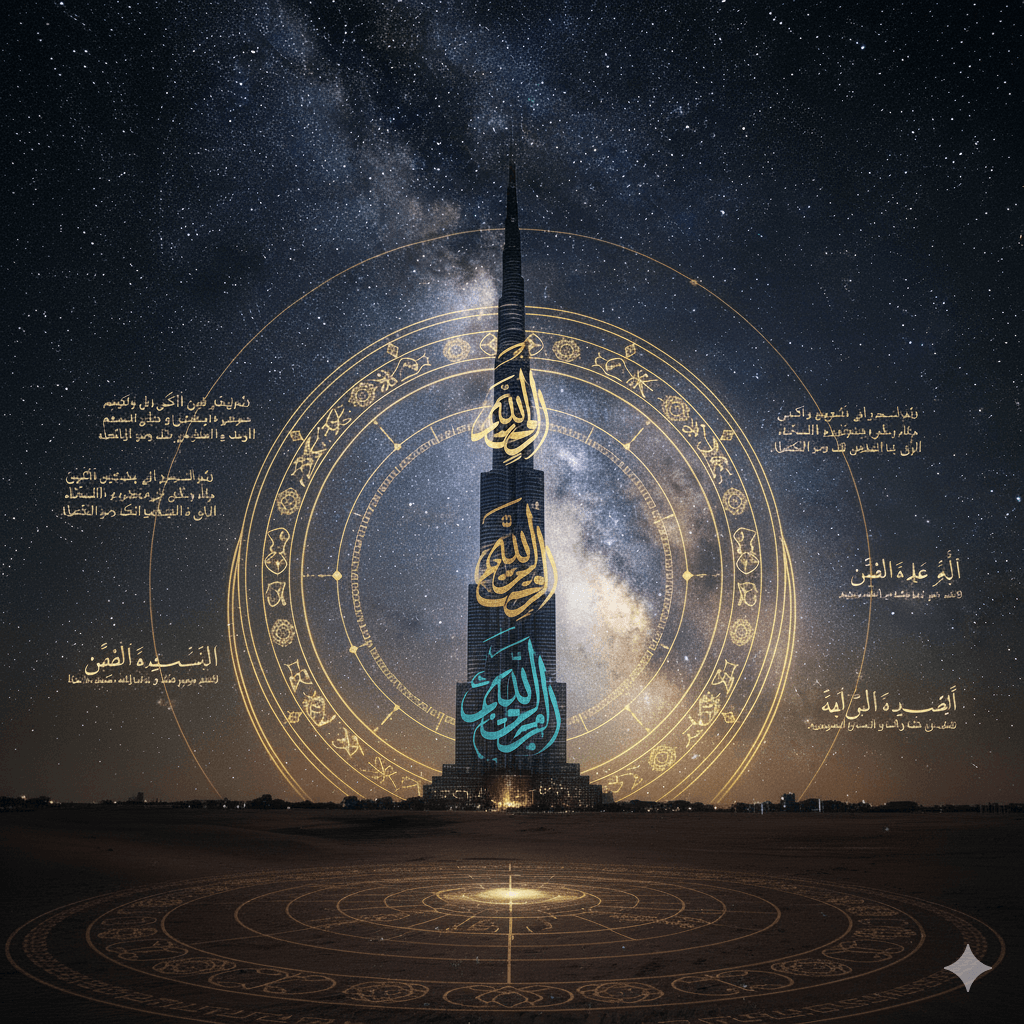
When I look at how early Muslim scholars explained the verses about the stars, I find their insights both deep and poetic. The Qur’an often mentions that the heavens are adorned with stars, not only as decoration but also as a form of protection. This idea — that the same stars which beautify the sky also serve a defensive purpose — has always fascinated me.
Ibn Kathīr, Al-Ṭabarī, and Al-Qurṭubī, among others, discussed this at length. They explained that the stars have three main purposes: to adorn the sky, to guide travelers, and to act as missiles against devils who try to steal from the unseen. For them, this wasn’t just a symbolic statement — it was part of the unseen world’s reality, showing that Allah’s creation operates with both visible and invisible layers of meaning.
I find something comforting in that interpretation. It suggests that the world we see is not disconnected from the unseen — that even the stars play a role in maintaining spiritual order. The heavens aren’t just silent or lifeless; they are active participants in a divine system that protects revelation and truth from distortion.
What strikes me most is how this interpretation reflects a sense of balance — beauty paired with purpose, majesty paired with protection. The stars are not random decorations scattered across the sky; they are deliberate, meaningful creations. When the Qur’an calls the heavens “adorned with Burj,” it’s almost as if we are being invited to see the stars as guardians — magnificent signs watching over both the physical and spiritual worlds.
For the classical scholars, this was also a reminder of humility. The sky’s vastness and order point to a Creator who controls everything, down to the smallest detail. And that same sense of divine care extends to humanity — the same way the heavens are guarded, revelation and guidance are also protected from corruption.
In the end, what I take from their words is not only knowledge but reassurance. The universe is not chaotic; it is protected, watched over, and filled with meaning. The stars we gaze at are not just distant fires — they are reflections of divine order, working silently yet powerfully to remind us of our Creator’s constant protection.
Modern Scientific Reflection: The Cosmic Order as a Sign of Divine Protection
When I gaze at the heavens, I am struck not just by their beauty, but by the intricate harmony that modern science continues to reveal. The Qur’an encourages us to look up and reflect, reminding us that the skies are not merely decoration, but signs of wisdom and order:
- “Do they not look at the sky above them – how We have made it and adorned it, and there are no gaps in it?” (Qur’an 50:6)
Stars, which once seemed like distant points of light, are actually immense furnaces, forging the very elements that make up our bodies — carbon, oxygen, iron. In this sense, we are literally made of stardust, a truth that mirrors the Qur’anic message that the universe was created with purpose and design, not chaos:
- “Indeed, your Lord is Allah, who created the heavens and the earth in six days and then established Himself above the Throne, arranging the matter [of creation].” (Qur’an 10:3)
The Sun plays a crucial role in sustaining life. Its light and warmth nurture every living thing, while its magnetic field shields our planet from dangerous cosmic radiation. Even the Earth’s position in its orbit is perfectly balanced to allow life to thrive — an elegant example of cosmic order reflecting divine wisdom:
- “And We have made the night and the day two signs, and We erased the sign of the night and made the sign of the day visible, that you may seek bounty from your Lord and may know the number of years and the account [of time]. And everything We have set out in detail.” (Qur’an 17:12)
The Qur’an describes stars as adornments of the sky, guides for travelers, and even protectors:
- “And We have adorned the nearest heaven with stars, and We have made them missiles for devils.” (Qur’an 67:5)
From a modern perspective, we can see that the entire cosmic system works together to sustain life. Galaxies, stars, and planets operate in a delicate balance — a harmony that safeguards existence itself. The Qur’an refers to the heavens as being well-guarded, a notion that resonates both spiritually and scientifically:
- “Indeed, We have built above you seven strong [heavens], and We are not unaware of the creation.” (Qur’an 23:17)
The stars protect not just the divine revelation from unseen forces, as scholars have explained, but life itself, maintaining the energy and balance necessary for our survival. Each part of the universe, from the smallest particle to the grandest constellation, participates in this divine system of care and protection.
The Qur’anic term Buruj — often understood as lofty towers or constellations — symbolizes this dual role of stars: beauty and protection. Observing the skies today, I see how science deepens the spiritual insight the Qur’an offers. Every orbit, every burst of light, every cosmic rhythm points toward an intricate, purposeful design:
- “It is Allah who created the heavens and the earth and whatever is between them in six days; then He established Himself above the Throne. You have not besides Him any protector or any intercessor; so will you not be reminded?” (Qur’an 32:4)
In this way, contemplating the heavens becomes more than awe at their splendor — it is a reminder of mercy, wisdom, and protection woven into the very fabric of the cosmos.
The Cosmic Order as a Sign of Divine Protection more Evidence from Quran
When I reflect on the vastness of the heavens, I am reminded of how the Qur’an invites us to look upward, not just with our eyes but with our hearts. The more science uncovers about the universe, the more it affirms the Qur’anic call to see meaning, purpose, and divine order within creation.
- “And indeed, We have placed within the heaven great stars and have beautified it for the observers. And We have protected it from every accursed devil, except one who steals a hearing and is pursued by a clear burning flame.”
(Surah Al-Hijr 15:16–18)
Long before telescopes and satellites, these verses described the heavens as both beautifully adorned and divinely guarded. Today, as we learn more about radiation belts, magnetic shields, and the protective layers surrounding our planet, we see a physical manifestation of this spiritual truth — the cosmos itself acts as a veil of protection.
The stars, once seen as distant ornaments, are now understood to be life-giving engines of creation. Every atom in our bodies — carbon, iron, oxygen — was born in the heart of a star. Science confirms that our existence is literally connected to the heavens. The Qur’an reflects this divine order, declaring that the stars serve both beauty and guidance:
- “And He has set up landmarks, and by the stars they are guided.”
(Surah An-Nahl 16:16)
This ancient revelation perfectly mirrors modern knowledge. The same stars that guide travelers across deserts and oceans also guide astronomers in mapping galaxies and understanding cosmic origins. Their light bridges both the physical and the spiritual realms — pointing us toward direction, purpose, and ultimately, the Creator.
Every aspect of the universe is finely tuned for life. The Sun’s warmth sustains our planet, while Earth’s precise orbit ensures a perfect balance between heat and cold. The Qur’an describes this harmony as a divine arrangement filled with beauty and wisdom:
- “Blessed is He who has placed in the sky great stars and placed therein a [burning] lamp and a luminous moon.”
(Surah Al-Furqan 25:61)
Here, the “burning lamp” (the Sun) and the “luminous moon” are not only poetic symbols but profound truths — constant reminders of divine artistry and mercy. Together they regulate light, time, tides, and even the rhythms of life itself.
And at the opening of Surah Al-Buruj, the heavens are again invoked as a witness to majesty and order:
- “By the sky containing great constellations (Al-Buruj).”
(Surah Al-Buruj 85:1)
The term Buruj — meaning towers or constellations — evokes both the beauty and the grandeur of the heavens. It reminds us that the stars are not scattered by chance but arranged with purpose, like celestial fortresses in a well-guarded kingdom.
Modern science, in its own way, continues to uncover the protective systems woven throughout the cosmos — from the Earth’s magnetic field shielding us from solar winds, to the delicate balance of gravitational forces that hold galaxies together. Each discovery deepens our awareness of the Qur’an’s timeless message: creation is neither random nor chaotic, but sustained by divine wisdom and care.
When the Qur’an speaks of the heavens as “well-guarded,” it describes both a spiritual truth — protection from unseen harm — and a physical reality — the preservation of life itself through cosmic balance.
In every verse and every star, we find signs of a Creator who not only fashioned the universe with precision but also protects it with mercy. The cosmic order, seen through both revelation and reason, becomes a living reflection of divine protection — a reminder that we exist within a universe perfectly tuned to nurture, guide, and guard us.
Conclusion
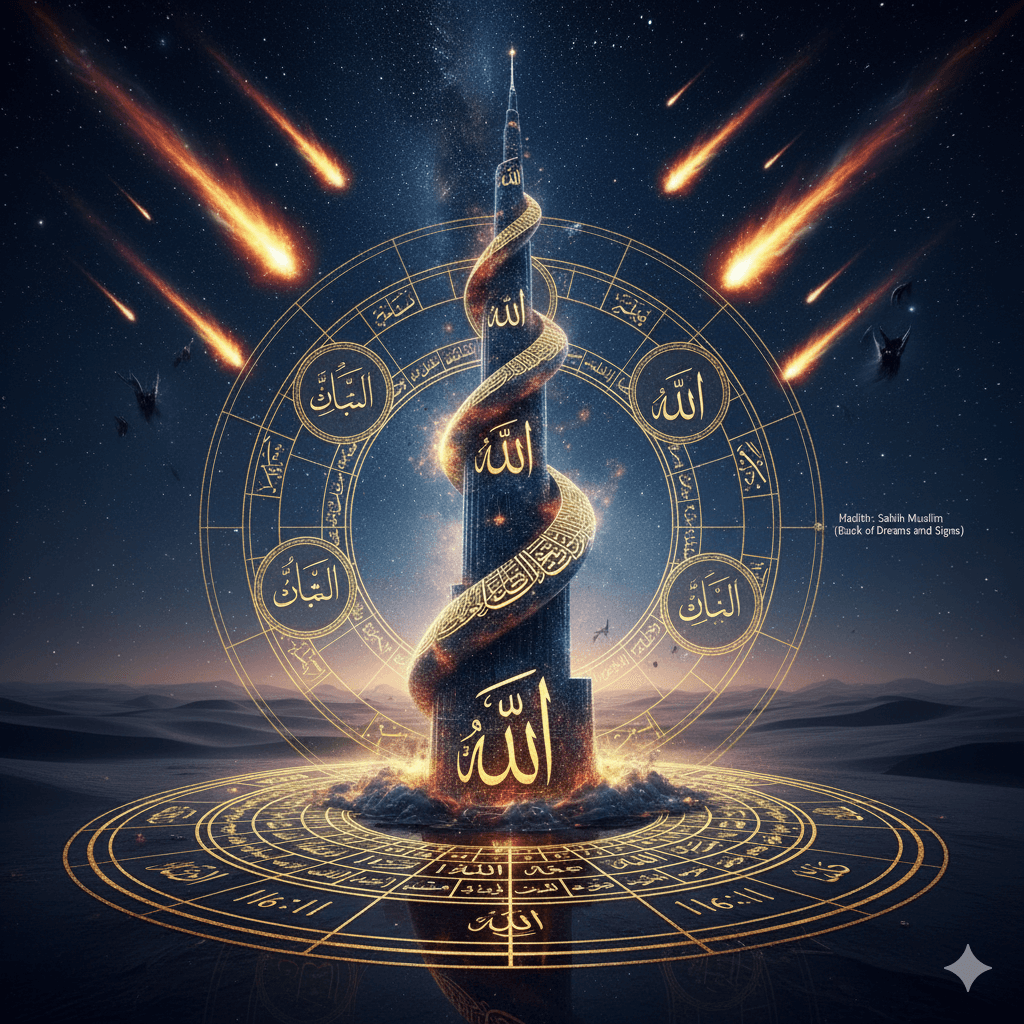
The Qur’an portrays the Buruj and the stars as far more than mere decorations scattered across the night sky. They are purposeful creations — signs of divine order, instruments of guidance, and symbols of protection. Spiritually, they guard revelation from distortion; physically, they sustain and shield life on Earth; and practically, they serve as beacons that guide travelers across land and sea.
The harmony of the heavens reflects Allah’s boundless power, mercy, and wisdom. Every star, every orbit, and every layer of protection woven into the cosmos points to a Creator who not only designed the universe with precision but also preserves it with care.
For the believer, gazing at the stars is not a simple act of observation — it is an act of remembrance. It reminds us that divine protection surrounds us at every level of existence, and that the order written into the fabric of the universe is itself a testament to the mercy of the One who created it.