
Article One: Part Two
Mount Judi and the Duration of the Flood According to Islamic Sources
Abstract
The Qur’an offers a profound yet succinct narrative of the Flood experienced by Prophet Nuh (peace be upon him). This article explores two central elements from Islamic teachings: the site where the Ark settled and the timeframe of the deluge. Rooted in the Qur’an and authoritative classical interpretations, it seeks to convey a harmonious view that prioritises guidance, devotion, and ethical insight over conjecture.
1. Introduction
The story of Prophet Nuh’s Flood (peace be upon him) illustrates Allah’s perfect justice balanced with boundless mercy. Though the Qur’an centres on timeless spiritual truths, it also imparts key factual details, including the Ark’s final resting place and broad indications of the event’s chronology.
2. Mount Judi in the Qur’an
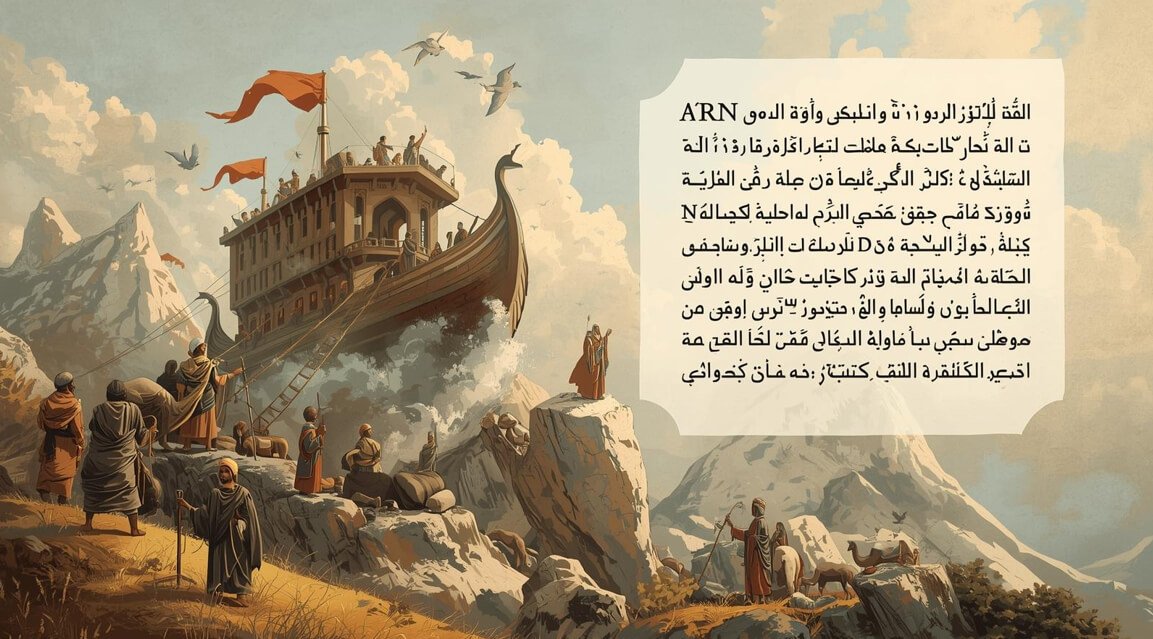
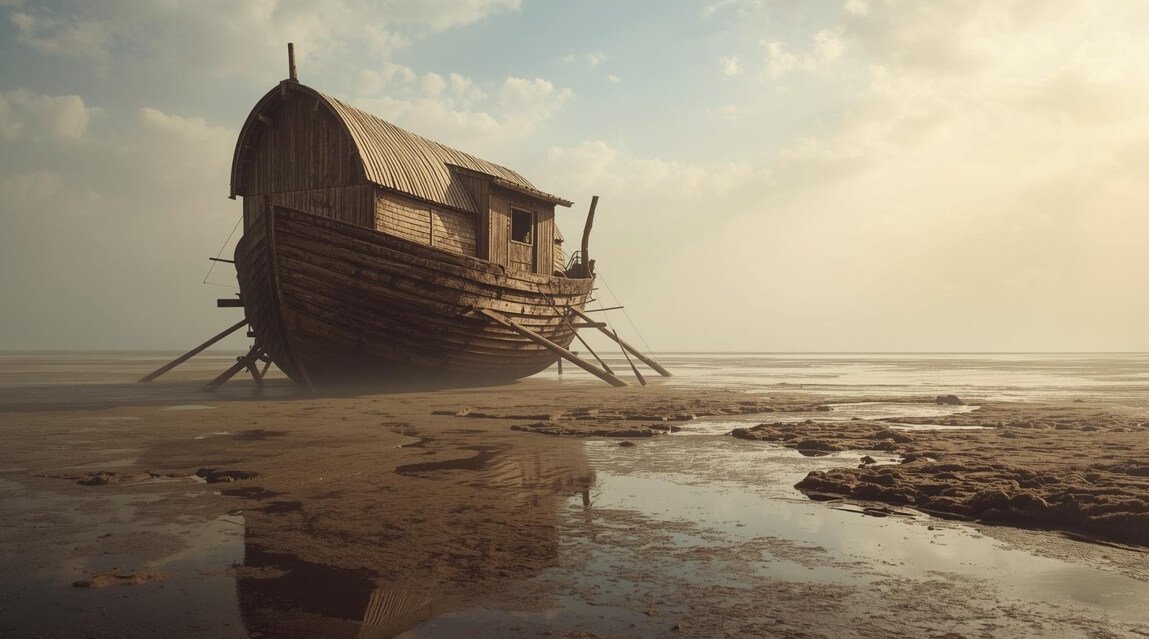
The Qur’an names the Ark’s landing site with unmistakable clarity:
“And it was said: ‘O earth, swallow your water! O sky, withhold your rain!’ The waters receded, the decree was fulfilled, and the Ark came to rest upon Judi. And it was said: ‘Away with the oppressive people!’” (Surah Hud 11:44)3
This explicit reference sets the Islamic tradition apart from others and affirms the Qur’an’s precise revelation.

3. The Location of Mount Judi Today
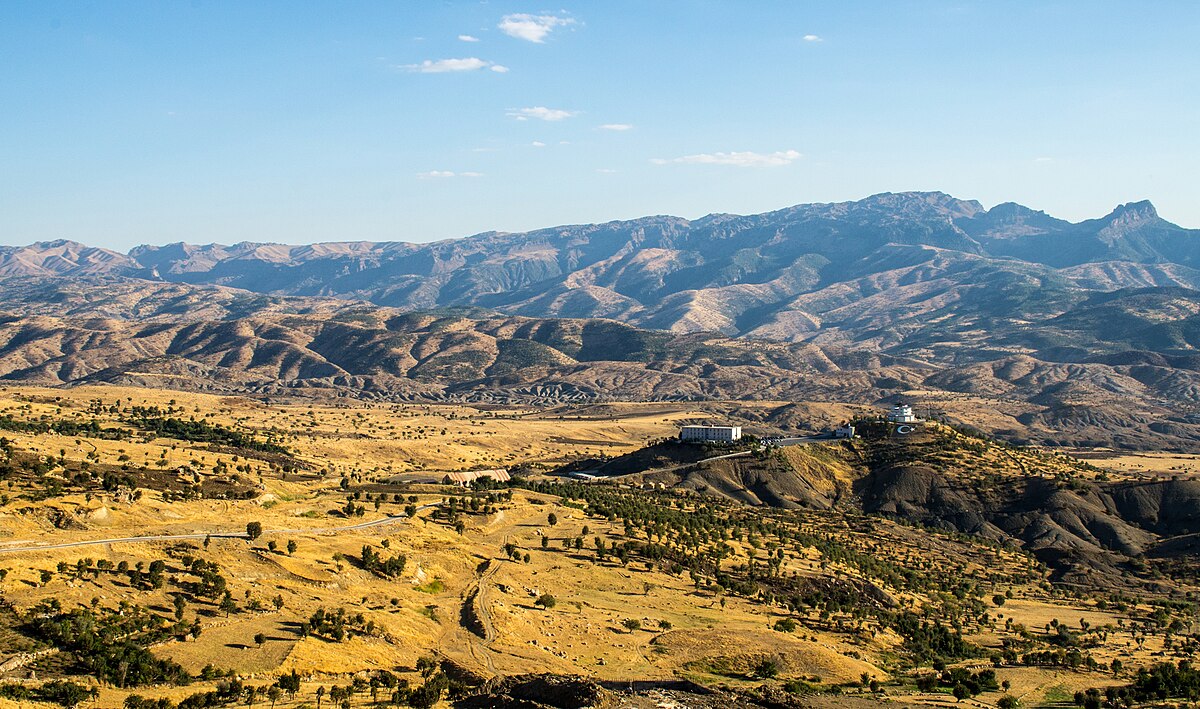
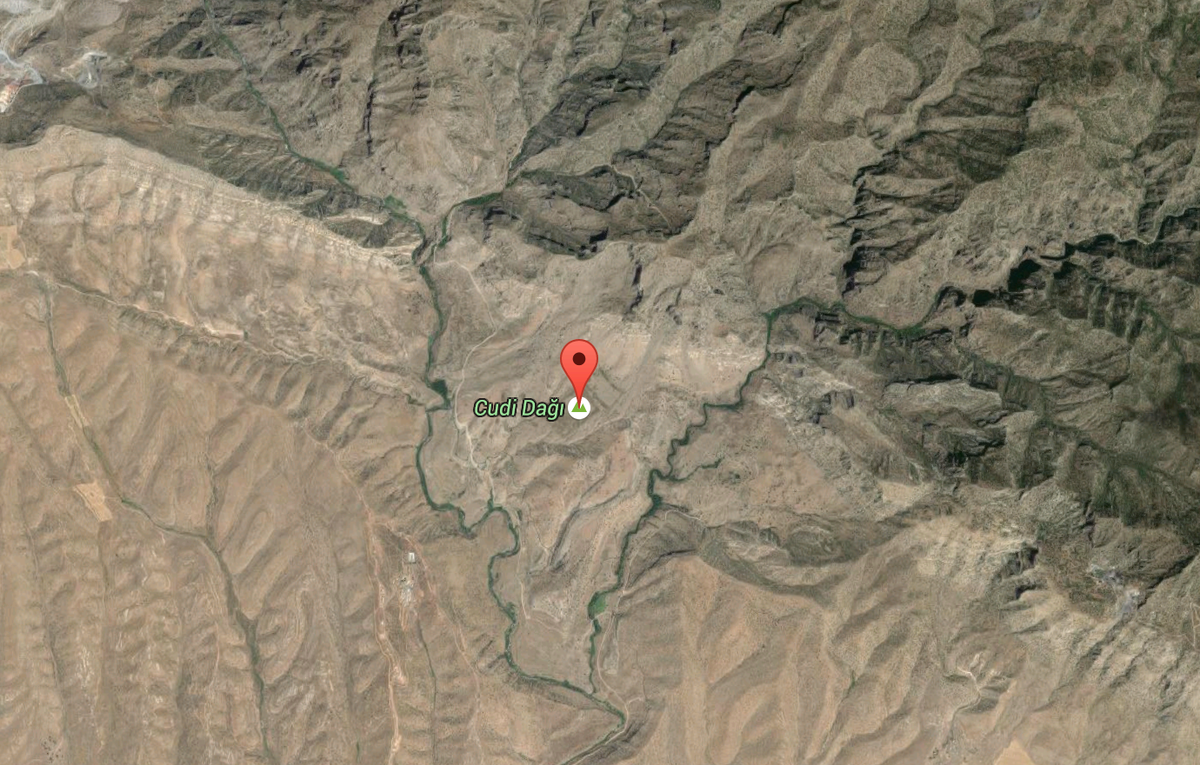
Classical scholars overwhelmingly identify Mount Judi as Cudi Dagı, a prominent peak in south-eastern Turkey’s Şırnak Province, near the town of Cizre and bordering Syria and Iraq. This area lies in the historic cradle of Upper Mesopotamia.
Esteemed commentators such as Al-Ṭabarī and Ibn Kathīr endorse this view, supported by enduring local traditions. While Islam places no reliance on material relics for validation—faith rests solely on divine revelation—the longstanding agreement on this site bolsters appreciation for the Qur’an’s accuracy.
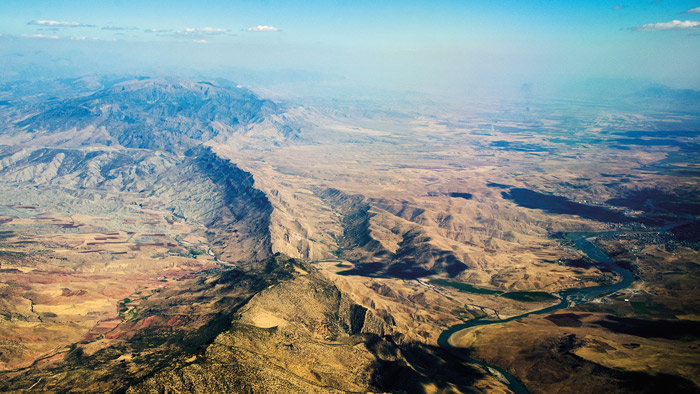

4. The Significance of Mount Judi
Mount Judi represents deliverance amid devastation and divine compassion after righteous judgement. Situated among fertile plains and vital water sources, it provided an ideal foundation for humanity’s renewal. The Qur’an invites reflection on its deeper symbolic value rather than purely physical attributes.
5. The Duration of the Flood in the Qur’an
The Qur’an does not specify exact days for the Flood’s active phase. It does, however, highlight the extraordinary length of Prophet Nuh’s mission:
“We sent Nūḥ to his people, and he dwelt among them a thousand years save fifty...” (Surah Al-ʿAnkabut 29:14)4
This refers to his era of prophetic calling, underscoring the event’s immense historical weight.
6. The Duration According to Islamic Tradition
Drawing from reliable narrations, scholars often describe:
- Torrential rain continuing for forty days and nights
- Elevated waters persisting for several months (reports vary, commonly around six months)
- The Ark remaining afloat for roughly six months to a year
Additional accounts suggest the deluge began in Rajab, the Ark settled in Muharram, and disembarkation coincided with the 10th of Muharram (ʿAshuraʾ)—a day later observed with gratitude in certain traditions. These elements appear frequently in exegetical works yet remain non-essential to creed.
7. The Gradual Receding of the Waters
Islamic narratives portray the Flood’s conclusion as deliberate and measured: waters withdrew steadily, enabling the earth to regain stability and sustain life anew. This phased restoration embodies Allah’s infinite mercy and foresight.
8. Prioritising Moral Lessons Over Precise Chronology
The essence of Islam’s teaching lies in the Flood’s ethical imperatives—submission to Allah, endurance through trial, and complete trust in His plan—rather than meticulous dates or coordinates. Historical and temporal aspects enrich the account without eclipsing its profound spiritual core.
9. Conclusion
Islamic scholarship locates Mount Judi at Cudi Dagı in south-eastern Turkey, a place imbued with symbolism of hope and rebirth. The Flood spanned several months, marked by forty days of intense rainfall and a thoughtful return to equilibrium. Above all, this narrative affirms divine authority, compassion, and the enduring victory of steadfast belief.
Share Your Reflections
What trials have you faced that felt like a flood? Reflect on how reliance on Allah brought renewal—share in the comments to inspire others.
Comments will appear here after moderation.