
Improving Our Environment
Awareness • Responsibility • Action

Community of all ages planting flowers and caring for nature — awareness and action in motion.
Improving Our Environment: What Should We Aim For?
Improving Our Environment is not just a goal but an urgent call to action. Improving Our Environment begins with recognizing that we are exactly on time to drive meaningful change. The window for transformation stands wide open right now.
Improving Our Environment means our daily choices will directly shape the world we leave for future generations. Far from being too late, this moment offers a powerful opportunity. Through Improving Our Environment, we can shift from awareness to responsibility, and from responsibility to decisive action.
Improving Our Environment starts when we see the deep connections between our habits and the planet’s health. The food we eat, the way we travel, the energy we consume, and the waste we create all leave a lasting impact. This is why Improving Our Environment must become a daily priority.
Improving Our Environment grows stronger as we embrace this awareness. We move beyond guilt into empowerment. Each of us holds the power to protect the natural systems that sustain life through consistent efforts in Improving Our Environment.
Improving Our Environment is achieved through small, consistent steps. Choose sustainable transport, adopt more plant-based meals, refuse single-use plastics, conserve household energy, and properly recycle and compost. These actions in Improving Our Environment create massive positive results together.
Improving Our Environment brings multiple benefits at once. These steps reduce emissions and preserve resources. They also improve our health, lower expenses, and restore balance to ecosystems. Truly, Improving Our Environment is one of the most meaningful contributions we can make today.
Improving Our Environment: Every small act of love today rebuilds the tomorrow our children deserve
Improving Our Environment has become one of the most urgent priorities of our time. Our planet is sending clear and increasingly severe warnings through a series of interconnected environmental crises that threaten the foundations of life on Earth. Record-breaking heatwaves, catastrophic floods, intense wildfires, powerful hurricanes, and prolonged droughts are no longer rare events — they have become the new normal.
With recent years ranking among the warmest ever recorded, global temperatures continue to rise. Melting glaciers and ice sheets are causing sea levels to climb at an accelerating rate, placing coastal communities and low-lying nations at serious risk. Improving Our Environment requires immediate attention to these climate-driven changes before more irreversible damage occurs.
Disrupted rainfall patterns and shifting climate conditions are worsening water scarcity across the globe. Nearly half of the world’s population already faces water stress, while up to 2.7 billion people experience shortages for at least one month every year. These pressures demand practical and collective action focused on Improving Our Environment.
Air pollution claims approximately 7 million lives prematurely each year. Toxic contaminants continue to poison rivers and oceans, while plastic waste chokes marine ecosystems. At the same time, deforestation is destroying vital carbon sinks at an alarming pace. Addressing these issues is essential for Improving Our Environment and protecting both human health and natural systems.
Biodiversity is collapsing at a dramatic rate. Wildlife populations have declined by an average of 73% since 1970, with freshwater species suffering an even steeper drop of 85%. More than 48,000 species are currently listed as threatened on the IUCN Red List. Protecting nature is a core part of Improving Our Environment for future generations.
These escalating threats undermine human health through heat stress and the spread of disease. They also jeopardize global food security by disrupting agriculture and pollinators, cause trillions of dollars in economic damage, and deepen social inequalities by hitting vulnerable communities hardest.
Although international agreements, governments, and scientific institutions provide important frameworks, lasting change depends on the active participation of ordinary people. Sustainable daily choices, strong advocacy, and collective pressure are necessary to achieve meaningful progress in Improving Our Environment before critical tipping points are crossed.
Improving Our Environment: Why We Must Act Now
➤ Environmental improvement begins with awareness.
Improving Our Environment: True environmental progress starts with awareness. It is not enough to know that problems exist; we must understand how our everyday decisions directly influence the health of the Earth.
➤ Simple choices — how we travel, what we eat, how much energy we consume, and what we throw away — add up over time. When billions of people make small, unsustainable decisions daily, the cumulative impact becomes massive.
➤ The reverse is also true: when individuals embrace more thoughtful habits, the collective effect can be powerfully positive. This article is not about overwhelming readers with complex scientific data or distant policy debates.
➤ Instead, it seeks to awaken a sense of personal connection and responsibility. Environmental care is not just for experts or activists; it belongs to everyone.
➤ Each person has the power to contribute through conscious, practical steps taken in daily life. By making informed choices, we become part of the solution rather than the problem.
➤ When billions of people make small unsustainable choices every single day, the cumulative impact becomes catastrophic. The good news? When millions begin making more conscious choices, the opposite effect happens. Small positive actions, when multiplied across society, create powerful, meaningful change.
Earth is One Living, Interconnected System
➤ We are not separate from nature: What we do to the Earth, we do to ourselves.
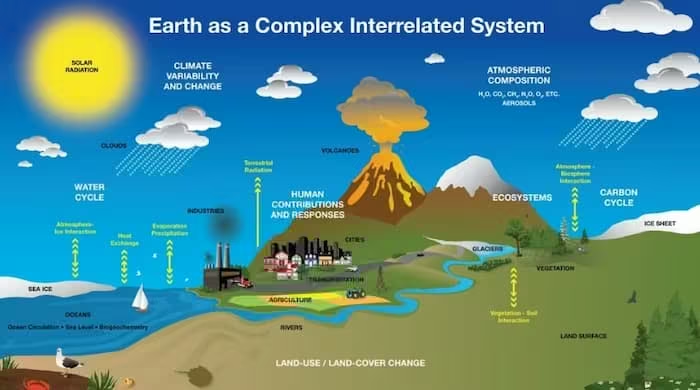
Earth as a unified living system where climate, water, carbon, ecosystems, and human activities are deeply interconnected.
Improving Our Environment The Earth functions as a finely tuned, deeply interconnected system. Forests, oceans, atmosphere, soil and living creatures all depend on one another in delicate balance.
➤ When we cut down trees on a large scale, the planet loses its natural ability to capture carbon dioxide, accelerating global warming.
➤ When we pollute waterways and air, entire food chains suffer, affecting wildlife and human communities alike.
➤ When we overuse resources without allowing nature time to recover, we weaken the very foundations that support life.
➤ Every action ripples outward, influencing systems far beyond our immediate surroundings. Recognising this interconnectedness changes how we view our role.
➤ Protecting the environment cannot be selective or temporary. Nature operates as one finely tuned system where forests, oceans, atmosphere, soil, and living creatures all depend on each other.
➤ When we disrupt one part — through deforestation, pollution or overconsumption — the effects ripple across the entire planet.
➤ We cannot save forests while ignoring plastic waste in the oceans, or reduce carbon emissions while wasting enormous amounts of food.
➤ Effective care requires a holistic approach — one that addresses root causes across multiple areas simultaneously. Real care means we cannot protect forests while ignoring ocean plastic, cut emissions while wasting 40% of food, or save biodiversity while continuing overconsumption.
Improving Our Environment: Practical Steps You Can Start Today
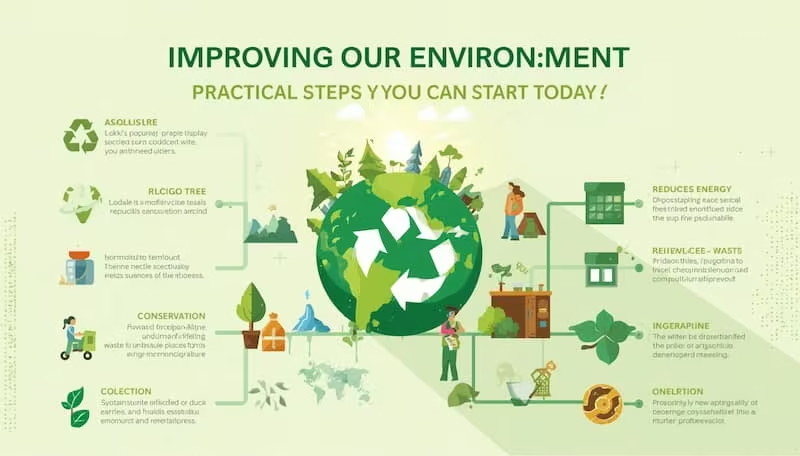
Improving Our Environment We’re not too late — we’re exactly on time to change everything. The window for transformation is open right now. Our choices today determine tomorrow. Act with purpose.
➤ Here are visuals of thriving Earth and sustainable living to inspire true change. It begins with seeing the connection between our daily choices and the planet’s health. Motivation ignites when we recognize this link.
➤ Awareness is the first and most powerful step toward responsibility. It evolves into duty as we understand our role. Each person holds personal responsibility to protect what sustains us all.
➤ This mindset shift turns guilt into empowerment and inaction into commitment. Responsibility demands real steps forward. Start small but start decisively today.
➤ Choose public transport, walk, or cycle instead of driving alone. Every journey without a car reduces emissions. It reclaims your power and helps the planet.
➤ Rethink your plate by cutting back on meat. Prioritize plant-based, local, and seasonal foods instead. This high-impact action benefits health, wallet, and environment together.
➤ Eliminate single-use waste by refusing plastics. Switch to reusables like bags, bottles, and cups. Small refusals create massive protection for oceans and landfills.
➤ Practice energy efficiency at home every day. Switch off lights, unplug devices, and optimize heating or cooling. These habits slash emissions while saving money on bills.
➤ Master waste and resources through proper recycling and composting organics. Divert waste from landfills and enrich soil. These actions close the loop for a better future.
Improving Our Environment: The Collective Momentum
🙏These steps may seem modest individually — but widespread adoption creates unstoppable momentum.
🌻 Environmental progress isn’t about perfection; it’s about consistent, collective effort. Raise awareness, embrace shared responsibility, and act today. Together, we restore balance and secure a thriving future for generations ahead.
🌍 Every positive choice, no matter how small, contributes to a healthier planet and inspires others to follow. By protecting natural resources, reducing waste, and supporting sustainable practices, we build stronger communities and create a cleaner, greener world where both people and nature can flourish together.
“Together, We Can Restore Balance”
🌏 Environmental improvement is not about perfection — it’s about consistent, collective effort. By raising awareness, embracing responsibility, and taking action today, we help build a healthier, more balancedplanet for tomorrow.
🌿 Every thoughtful action, no matter how small, creates a ripple of positive change. Choosing sustainable habits, protecting forests and wildlife, conserving water and energy, and reducing pollution all contribute to a stronger, healthier environment.
🌿When individuals, communities, and nations unite with a shared purpose, hope becomes action, and action becomes lasting impact. Together, we can restore nature’s balance and leave a cleaner, greener, and more resilient Earth for future generations.
This beautiful planet still believes in humanity.
🌱Let’s prove her right.