
Renewal After the Storm – How Prophet Nuh (A.S.) and the Believers
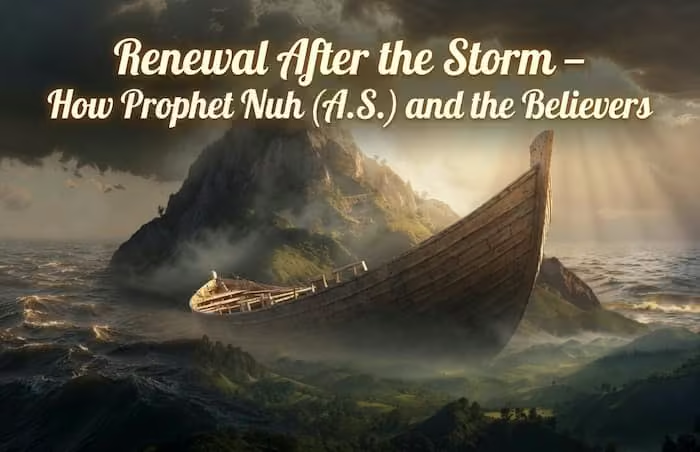
Renewal After the Storm – How Prophet Nuh (A.S.) and the Believers. The Ark finds peace on the mountain after the great flood.
Renewal after the storm stands as one of the most powerful themes in the Qur’an. The story of Prophet Nuh (A.S.) and the believers does not end with destruction; it blossoms into a profound narrative of hope, rebuilding, and divine mercy. After the Great Flood, the survivors stepped into a reshaped world. This article explores the timeless lessons of renewal after the storm, drawn directly from the Qur’an and the wisdom of classical scholars.
Introduction: The Enduring Message of Renewal After the Storm
The Qur’anic account of Prophet Nuh (A.S.) is far more than a tale of flood and survival. It is a complete blueprint for renewal after the storm. While many focus on the devastation, the aftermath reveals Allah’s perfect wisdom in restoring life and granting humanity a second chance. When the Ark settled on Mount Judi, the earth was cleansed yet empty. How did a small group of believers transform barren land into thriving communities?
The answer lies in a beautiful harmony between divine guidance and human effort. Renewal after the storm requires both Allah’s command and our responsible action. This story offers practical and spiritual guidance for anyone facing personal trials today—whether loss, failure, grief, or crisis. Just as the believers rebuilt after the Flood, we too can experience meaningful renewal after the storm through faith, preparation, patience, and trust in Allah’s blessings.
Introduction: The Enduring Message of Renewal After the Storm. Fertile green fields and peaceful mountains after the flood.
Renewal After the Storm Through Divine Command and Precise Control
The Flood did not end by chance. Allah Himself issued the precise command that initiated renewal after the storm. The Qur’an beautifully describes this moment:
“And it was said, ‘O earth, swallow your water, and O sky, withhold [your rain].’ And the water subsided, and the matter was accomplished, and it [the Ark] settled on [the mountain of] Judi. And it was said, ‘Away with the wrongdoing people!’”
(Surah Hud 11:44)
Classical scholars such as Ibn Kathir explain that the water receded gradually (ghīḍa al-mā’). This controlled process prevented chaos and allowed the survivors to disembark safely. The earth obeyed its Creator instantly, and the sky stopped its rain. Such precision demonstrates that renewal after the storm is never random—it is divinely orchestrated.
This lesson teaches us profound trust. In our own lives, when personal “storms” finally begin to subside, we must recognize Allah’s hand guiding the process. Whether recovering from illness, financial difficulty, or emotional pain, renewal after the storm happens according to divine timing. Rushing the process can cause harm, while patient acceptance brings safety and growth. The same Allah who controlled the Flood controls the end of every trial we face.
Renewal After the Storm via Foresight, Preparation, and Provisions
Long before the rains began, Prophet Nuh (A.S.) received divine instructions to prepare thoroughly. The Ark carried believers, pairs of every animal, and sufficient provisions. Although the Qur’an does not list every item, classical commentators note that grains, dried foods, and essentials sustained the passengers during the Flood and the critical early months of renewal after the storm.
In a waterlogged, infertile landscape, these stored resources bridged the gap until cultivation became possible. This foresight was not merely practical—it was an act of worship and obedience. Renewal after the storm does not happen automatically; it requires prior preparation under divine guidance.
Today, this lesson remains urgently relevant. Spiritual preparation through regular prayer, Qur’an recitation, and building strong family bonds equips us for future trials. Material preparation—saving wisely, learning skills, and maintaining health—also supports renewal after the storm. Those who plan ahead with tawakkul (trust in Allah) find themselves far better positioned when crises strike. The believers on the Ark did not wait passively; they acted responsibly, and Allah blessed their efforts with survival and new beginnings.
Renewal After the Storm Sustained by Animals and Natural Resources
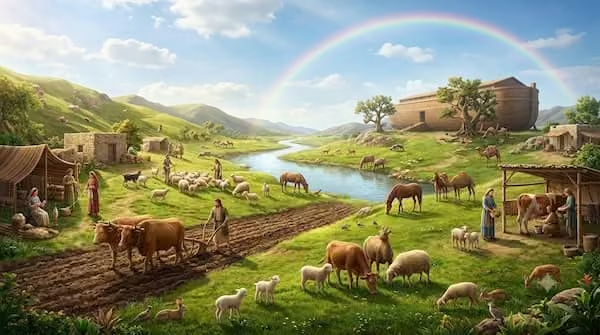
Renewal After the Storm Sustained by Animals and Natural Resources
The animals preserved on the Ark were not simply cargo—they became pillars of renewal after the storm. Livestock provided fresh milk for nutrition, meat when needed, wool and hides for clothing and shelter, and labor for plowing and transport. By Allah’s will, these creatures multiplied rapidly, restoring herds and enabling trade and agriculture.
This preservation highlights Allah’s care for the entire ecosystem. Renewal after the storm includes restoring balance in creation. The animals represented biodiversity and sustainable resources that the survivors could nurture rather than exploit. Their presence reminded the believers that every creature has a role in rebuilding life.
For us, this lesson encourages gratitude and responsible stewardship. After personal storms—such as job loss or family difficulties—we often discover hidden resources: supportive friends, inner resilience, or previously overlooked skills. Like the animals on the Ark, these “resources” multiply when used wisely and gratefully. Renewal after the storm flourishes when we recognize and care for the blessings already placed in our path by Allah.
Renewal After the Storm in the Patient Revival of Agriculture and Fertile Lands
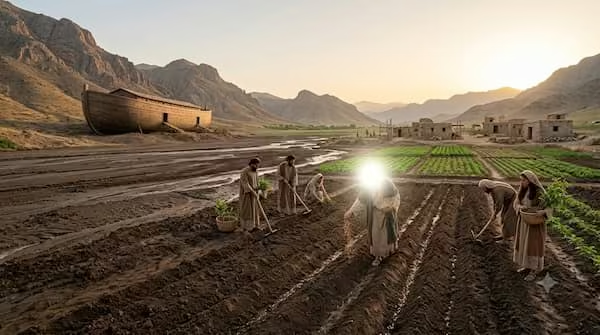
Renewal After the Storm in the Patient Revival of Agriculture and Fertile Lands
As waters fully retreated, the land revealed rich silt deposits—natural fertilizer ideal for new growth. Some scholars suggest that seeds survived in the soil or were carefully brought aboard the Ark. Prophet Nuh (A.S.) and his followers soon planted crops, marking the beautiful transition from survival to settled, productive life.
This patient cultivation embodies a core principle of renewal after the storm: meaningful rebuilding takes time. Seeds planted today may not yield harvest for months, yet consistent effort produces abundance. The enriched soil after the Flood symbolizes how trials can ultimately prepare our hearts and circumstances for greater productivity.
In modern terms, renewal after the storm often requires us to “plant” again—whether restarting a career, rebuilding relationships, or renewing spiritual habits. The process demands patience, consistent watering through dua and effort, and trust that Allah will bring growth in due season. Just as the believers transformed barren earth into fertile fields, we can turn the aftermath of our trials into grounds for new success and barakah.
Renewal After the Storm Amplified by Divine Barakah and Widespread Settlement
Beyond material means, the true engine of renewal after the storm was divine barakah. Allah declared to Prophet Nuh (A.S.):
“O Nuh, disembark with peace from Us and blessings upon you and upon nations [descending] from those with you…”
(Surah Hud 11:48)
Barakah is far more than simple increase—it is divine blessing that multiplies resources, protects from harm, and brings benefit in ways beyond human calculation. The small group of survivors carried this barakah, which extended to future generations and entire nations.
Mount Judi served as temporary high ground for safety and recovery. Once valleys dried and paths cleared, the believers descended and spread across the land, repopulating regions and laying foundations for new civilizations. All of humanity today traces its lineage back to these faithful survivors—making Nuh (A.S.) the second father of humankind.
This aspect of renewal after the storm reminds us that personal recovery is never the final goal. True renewal spreads outward, benefiting families, communities, and future generations. When we experience barakah after our own storms, we are called to share it—through kindness, knowledge, charity, and good example. The blessings that sustained the believers were meant to multiply across the earth.
Conclusion: Embracing Renewal After the Storm in Your Life Today
The post-Flood era of Prophet Nuh (A.S.) beautifully illustrates how divine planning and human responsibility work together. Through controlled restoration, stored provisions, animal resources, renewed agriculture, and overflowing barakah, the survivors received not just survival, but a thriving new chapter.
These five irresistible lessons on renewal after the storm remain powerfully relevant. In your personal “floods”—moments of loss, despair, or overwhelming challenge—remember to combine sincere preparation with unwavering trust in Allah. Recognize that trials end according to divine wisdom, that resources multiply through gratitude, and that barakah turns scarcity into abundance.
After every storm comes renewal. The same Allah who commanded the earth to swallow the waters and granted peace and blessings to Nuh (A.S.) is with you. Step forward with faith, plant new seeds of good deeds, care for the resources around you, and watch barakah transform your life and the lives of those who follow.
As we reflect on these timeless lessons, let us commit to applying them with sincere action and consistency. True renewal is not only about surviving the storm but about intentionally rebuilding with purpose, strengthening our connection with Allah through worship and reflection, and extending support to others who may still be navigating their own difficulties. In doing so, we become vessels of barakah for our families, communities, and future generations.
May Allah grant us all a beautiful and lasting renewal after every storm that passes through our lives, accept our sincere efforts, purify our intentions, and make us among those who rebuild with patience, deep gratitude, and complete trust in Him alone.
O Allah, strengthen our hearts with unshakable faith, fill our chests with light, and grant us true sabr in every difficulty, every delay, and every test You have written for us. Multiply our barakah in our time, our health, our families, our provisions, and our deeds far beyond what we can imagine or deserve.
Allow us to be among the righteous who leave behind a legacy of goodness, kindness, and light that continues to benefit others long after we are gone. Guide our tongues to speak only what is pure, our hands to give freely, and our hearts to uplift the broken just as You guided Nuh (A.S.) and those with him to a new beginning filled with peace, safety, and abundant blessings.
O Allah, make our renewal after the storm a source of strength for the weak, hope for the hopeless, and a reminder of Your endless mercy. Keep us firm upon the straight path, protect us from arrogance after ease, and let every hardship we face draw us closer to You. Grant us the wisdom to see Your wisdom in every trial and the courage to begin again with pure hearts.
🤲 Ameen, Ya Rabb al-Alameen.🤲
Page 4