
The Breaking of the Idols: Prophet Ibrahim’s (عليه السلام) Trial by Fire 🔥
The Breaking of the Idols and Prophet Ibrahim’s trial by fire — faith triumphing over idolatry.
📖 They said, "Burn him and support your gods, if you are going to act." (Surah Al-Anbiyya, 21: 68)
📖 We said, "O fire, be coolness and safety upon Abraham." (Surah Al-Anbiyya, 21: 69)
📖 They planned to harm him, but we made them the worst losers. (Surah Al-Anbiyya, 21: 60)
Introduction: The Breaking of the Idols - Prophet Ibrahim’s (عليه السلام) Trial by Fire
The Breaking of the Idols: Prophet Ibrahim’s (عليه السلام) Trial by Fire: Having attained unshakeable certainty in the oneness of Allah through deep contemplation of the heavens and the earth, Prophet Ibrahim (peace be upon him) could no longer silently tolerate the idolatry engulfing his people in ancient Babylonian society. His awakening to tawhīd—the pure monotheism—compelled him to act decisively against falsehood.
The Breaking of the Idols: Prophet Ibrahim’s (عليه السلام) Trial by Fire: One fateful day, while the people were away at a festival, Ibrahim entered the grand temple housing rows of elaborately carved idols. With reasoned conviction, he shattered all but the largest one, then hung the axe on its shoulder.
When the people returned and discovered the devastation, they cried out in shock and summoned Ibrahim. Calmly, he pointed to the remaining idol and asked, “Why do you not ask the great one who remains? Perhaps he knows what happened.” Stunned by their own logic, they admitted the idols could neither speak nor act.
The Breaking of the Idols: Prophet Ibrahim’s (عليه السلام) Trial by Fire: Enraged, the king and priests condemned Ibrahim to death. They built an enormous furnace, heated it until flames raged uncontrollably, and cast him into its heart.
Yet Allah, the Protector of the truthful, commanded: “O fire! Be cool and a means of safety for Ibrahim” (Qur’an 21:69). Miraculously, the blaze became a refreshing garden; Ibrahim emerged unharmed, a living testament to divine power.
The Breaking of the Idols: Prophet Ibrahim’s (عليه السلام) Trial by Fire: This episode showcases Ibrahim’s extraordinary courage in upholding tawhid against overwhelming opposition, and Allah’s limitless ability to safeguard those who stand firm in truth, turning certain destruction into undeniable proof of His oneness.
The Festival and the Silent Temple: The Breaking of the Idols - Prophet Ibrahim’s (عليه السلام) Trial by Fire
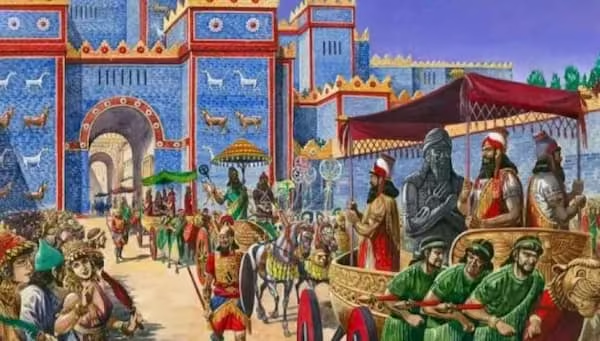
The grand festival that left the temple silent — the perfect moment for Prophet Ibrahim’s stand against idolatry.
The Breaking of the Idols: Prophet Ibrahim’s (عليه السلام) Trial by Fire: In the heart of ancient Babylon, religious life pulsed with grand festivals dedicated to a pantheon of deities. These celebrations were spectacles of devotion: the entire city—king, priests, nobles, merchants, and common folk—would process out beyond the towering walls to honor their gods with music, feasts, and sacrifices. On one such day, the streets fell eerily silent as the population departed, leaving the great temple unguarded.
The Breaking of the Idols: Prophet Ibrahim’s (عليه السلام) Trial by Fire: Before rows of elaborately adorned idols, lavish offerings had been placed: baskets of ripe fruit, loaves of bread, vessels of wine, roasted meats, and fragrant incense still smoldering in golden censers.
The statues themselves—crafted with exquisite skill from cedar, alabaster, lapis lazuli, gold, and silver—stood in solemn ranks. Some towered massive and imposing, others modest in size, yet all were revered as embodiments of cosmic powers believed to govern fertility, war, storms, wisdom, and fate itself.
The Breaking of the Idols: Prophet Ibrahim’s (عليه السلام) Trial by Fire: Prophet Ibrahim (peace be upon him), already renowned among his people for his outspoken rejection of idolatry, recognized this rare solitude as a divinely appointed moment. His heart, fortified by unshakeable certainty in the oneness of Allah, could no longer abide the pervasive falsehood. Armed with nothing but a simple axe and the fire of conviction, he entered the deserted sanctuary alone.
Moving methodically through the shadowed hall, Ibrahim raised the axe and brought it down upon the idols one by one. Stone heads cracked and tumbled; wooden limbs splintered; gilded surfaces shattered into glittering fragments that scattered across the marble floor like broken promises.
The air filled with the sharp echoes of destruction as each false god—once feared and fed—was reduced to lifeless rubble. No resistance came; no voice protested; no miracle defended them. The silence of the broken statues spoke louder than any sermon.
Yet Ibrahim did not act in blind rage. With deliberate wisdom, he left the largest idol untouched. He placed the bloodied axe across its broad shoulders, as though the colossal figure itself had wielded the tool to demolish its companions.
This single, calculated gesture transformed destruction into a profound challenge: if these gods possessed any power, why had they not protected themselves or one another? Let the people ask the “great one” who remained what had transpired.
The Breaking of the Idols: Prophet Ibrahim’s (عليه السلام) Trial by Fire: When the festival ended and the crowds returned, shock rippled through the temple. Amid the wreckage, accusations flew toward Ibrahim. Summoned before the furious assembly, he stood calm and composed.
Pointing to the surviving idol, he asked with piercing logic: “Why do you not question your mighty lord who stands unharmed? Perhaps he knows who did this.” The people, caught in their own contradiction, fell silent. Their idols could neither speak, hear, nor defend themselves—proof enough of their impotence.
This bold act was no mere vandalism; it was a masterful call to reason, exposing the absurdity of worshipping creations of human hands while ignoring the Creator of all. In that moment, Prophet Ibrahim (peace be upon him) laid bare the fragility of polytheism and invited his people toward the truth of tawhīd, planting seeds that would soon provoke both wrath and wonder.
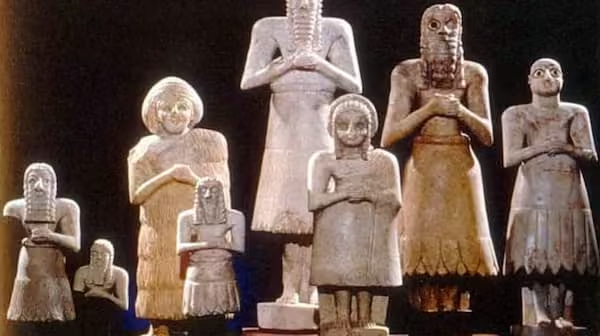
The silent temple idols: ancient statues left alone during the great festival.
The Return: Shock, Accusation, and Logical Defiance
The Breaking of the Idols: Prophet Ibrahim’s (عليه السلام) Trial by Fire: When the revellers returned from their festival, the sight that greeted them shattered the festive mood like fragile pottery.
The great temple lay in ruins: sacred statues toppled, heads severed, limbs broken, gilded fragments strewn across the marble floor amid scattered offerings now trampled underfoot. A stunned hush fell, then erupted into cries of horror and rage. “Who has done this to our gods?” the people shouted, voices thick with outrage, fear, and wounded pride.
Whispers quickly coalesced into accusation: only one man had dared to challenge their traditions openly—Prophet Ibrahim (peace be upon him), the young iconoclast who refused to bow before carved stone.
The Breaking of the Idols: Prophet Ibrahim’s (عليه السلام) Trial by Fire: Summoned before the assembled crowd—kings, priests, nobles, and common folk alike—Ibrahim stood calm and resolute. The air crackled with tension as the chief priest demanded, “Did you do this to our gods?”
Without hesitation or apology, Ibrahim pointed to the single idol left standing, the largest and most imposing of them all, with the axe still draped across its shoulders. In a voice steady and clear, he replied: “Nay, this biggest of them has done it. Ask them, if they can speak!” (cf. Qur’an 21:63).
The Breaking of the Idols: Prophet Ibrahim’s (عليه السلام) Trial by Fire: A profound silence descended. The people exchanged uneasy glances. In their hearts, they knew the truth: these idols, though lavishly adorned and fervently worshipped, had never spoken, never moved, never defended themselves.
The logic was inescapable—if the smaller gods could not protect themselves from destruction, how could the greatest among them have done it? Yet the admission never came. Pride, long habit, fear of social upheaval, and the vested authority of the priesthood overpowered reason. Instead of reflection, they doubled down in denial, their faces hardening with anger. “Burn him!” they cried. “Avenge our gods!”
The Breaking of the Idols: Prophet Ibrahim’s (عليه السلام) Trial by Fire: This moment reveals a timeless pattern in prophetic narratives: when rational evidence threatens entrenched power and inherited custom, the elite often choose arrogance over acknowledgment. The people’s silence was not ignorance but willful blindness; their fury was not piety but self-preservation.
Ibrahim’s response was neither sarcasm nor provocation—it was an act of profound mercy. By turning their own beliefs against them, he offered a gentle yet piercing invitation: step back from blind tradition, examine the signs with open minds, and return to the worship of the One True Creator who needs no temple, no statue, no intermediary.
The Breaking of the Idols: Prophet Ibrahim’s (عليه السلام) Trial by Fire: In that confrontation, Prophet Ibrahim (peace be upon him) did more than expose the impotence of idols—he demonstrated the liberating power of tawḥīd and the courage required to speak truth amid collective delusion.
His words, though rejected that day, planted seeds of doubt that would eventually bear fruit in hearts willing to listen.
📖 So he reduced them into pieces, except for their biggest, that they may return to it. (Surah Al-Anbiyya, 21: 58)
📖 They said, "Who did this to our gods? He is certainly one of the wrongdoers." (Surah Al-Anbiyya, 21: 59)
📖 They said, "We heard a youth mentioning them. He is called Abraham." (Surah Al-Anbiyya, 21: 60)
📖 They said, "Bring him before the eyes of the people, so that they may witness." (Surah Al-Anbiyya, 21: 61)
📖 They said, "Are you the one who did this to our gods, O Abraham?" (Surah Al-Anbiyya, 21: 62)
📖 He said, "But it was this biggest of them that did it. Ask them, if they can speak."(Surah Al-Anbiyya, 21: 63)
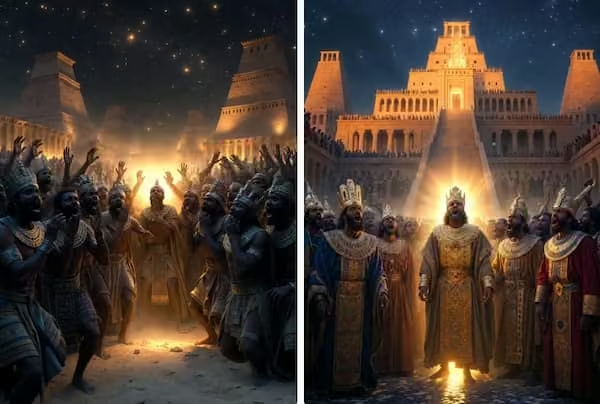
The dramatic return: shock, accusation, and Prophet Ibrahim’s powerful logical defiance.
Tafseer of Surah Al-Anbiya (21:58–63): Ibrahim’s Destruction of the Idols – A Masterstroke of Tawhid
Verse 58: “So he reduced them into pieces, except for their biggest, that they may return to it.” This verse captures the decisive action of Prophet Ibrahim (peace be upon him). While his people were away at a festival, he entered the temple alone and shattered every idol into fragments—stone heads cracked, wooden bodies splintered, gilded pieces scattered like broken illusions.
He left only the largest idol standing, deliberately placing the axe on its shoulder. This was not impulsive vandalism; it was a profound, symbolic act designed to awaken reason. By sparing the “chief” idol and attributing the destruction to it, Ibrahim forced his people to confront a glaring contradiction: if these gods had any real power, why could the greatest among them not protect the others or even defend itself?
The phrase “that they may return to it” drips with divine irony—hoping the people would question their own chief deity, only to discover its complete helplessness. As Ibn Kathir notes, this act was Ibrahim’s way of turning their own false beliefs into evidence against shirk.
Verse 59: “They said, ‘Who did this to our gods? He is certainly one of the wrongdoers.’” Upon returning, the people found their sacred images in ruins and reacted with visceral outrage. Their cry—“Who did this to our gods?”—treats the idols almost as living beings capable of being wronged.
Labeling the perpetrator a “wrongdoer” (ẓālim) reveals deep irony: the true wrongdoers were those who worshipped creations while denying the Creator. Their emotional attachment to lifeless statues outweighed any rational reflection.
Verse 60: “They said, ‘We heard a youth mentioning them. He is called Abraham.’” Suspicion immediately fell on Ibrahim, the young man who had long criticized their idolatry in public. The term “youth” (ghulām) underscores his courage—he was young yet fearless, challenging an entire society’s religious order.
“Mentioning them” means he had openly condemned and exposed the idols’ futility, making him the obvious suspect.
Verse 61: “They said, ‘Bring him before the eyes of the people, so that they may witness.’” Rather than seek private clarification, the leaders demanded a public spectacle.
They wanted Ibrahim paraded before the masses—not for justice, but to reaffirm their authority, intimidate dissenters, and rally collective anger. This reflects how corrupt systems often turn truth-seekers into public enemies.
Verse 62: “They said, ‘Are you the one who did this to our gods, O Abraham?’” The direct accusation came in the presence of the crowd, expecting confession or denial under pressure.
Verse 63: “He said, ‘But it was this biggest of them that did it. Ask them, if they can speak.’” Ibrahim’s response is one of the most powerful lines in the Qur’an. Calmly pointing to the surviving idol with the axe on its shoulder, he declared it responsible—then issued the devastating challenge: “Ask them, if they can speak.” In a single sentence, he demolished polytheism.
If the idols were divine, they should speak, explain, or retaliate. Their total silence proved they were mere creations—powerless, mute, and worthless. This was not sarcasm; it was mercy—an invitation to use reason, abandon inherited delusion, and turn to the Living, Speaking Allah.
Overall Message These verses showcase Ibrahim’s extraordinary wisdom, courage, and mercy. He destroyed physical idols with an axe and intellectual idols with logic, exposing shirk’s absurdity while gently calling people to tawhid.
The people’s refusal to accept the obvious truth—despite their inner recognition—highlights a timeless tragedy: pride, custom, and power often blind hearts to clear signs. Yet Ibrahim’s stand remains an eternal model: truth spoken fearlessly, even alone, can shake empires of falsehood and plant seeds of guidance for generations.
Page 3