
The Balance Between Knowledge & Wisdom
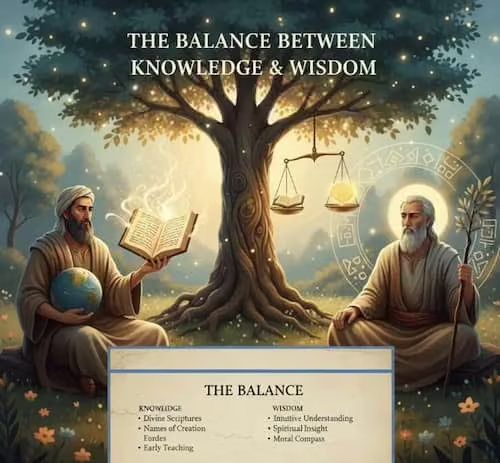
The Balance Between Knowledge & Wisdom — harmonizing intellect and spiritual insight.
“Allah grants wisdom to whom He wills, and whoever is granted wisdom has certainly been given much good.” — Qur’an 2:269
Introduction: The Balance Between Knowledge Wisdom
Since the creation of Adam (peace be upon him), humanity received the sacred gift of learning. The ability to know, reflect, and act defines human existence. Knowledge (ʿilm) illuminates the mind with understanding. Wisdom (hikmah) guides the heart with ethical direction and sound judgment.
In today’s world overflowing with information, we must ask: Do we truly understand, or have we only learned to know? This question lies at the heart of true wisdom. This article explores the journey from knowledge to wisdom. It traces human development from earliest times to the modern era. We weave insights from the Qur’an, Hadith, Muslim scholars, and global thinkers.
The Balance Between Knowledge & Wisdom leads to true greatness and closeness to Allah. ʿIlm joined with hikmah is a divine command and practical path. When we embrace it, we honor the trust given by our Creator. Knowledge guided by hikmah transforms information into meaningful action and spiritual growth.
The Divine Order: From ʿIlm to Hikmah – Foundation of the Balance Between Knowledge and Wisdom in Islam
In Islam, knowledge often comes before wisdom. True understanding requires first learning the foundations. Allah says: “He teaches them the Book and wisdom.” (Qur’an 62:2) This verse shows that this balance begins with divine teaching. The Balance Between Knowledge & Wisdom
Allah also says: “Allah grants wisdom to whom He wills, and whoever is granted wisdom has indeed been given much good.” (Qur’an 2:269) These words highlight the value of true wisdom. Knowledge provides the light. Wisdom provides the direction for that light to lead to good. The Balance Between Knowledge & Wisdom
Prophets received both knowledge from Allah and the wisdom to live it. They taught truth and demonstrated its application through justice and mercy. Prophet Muhammad ﷺ perfectly exemplified ʿilm joined with hikmah. He taught knowledge and showed its use in compassion and fairness. The Balance Between Knowledge & Wisdom
Imam Al-Ghazali said: “Knowledge without action is madness, and action without knowledge is useless.” This reminds us that knowledge guided by hikmah requires both learning and righteous action. Ibn Qayyim explained wisdom as placing knowledge in its proper time and context. The Balance Between Knowledge & Wisdom
Philosophers like Socrates and Einstein noted that wisdom grows from sincere learning and reflection. The pull quote captures it: “Knowledge is the lamp; wisdom is the flame. Together, they illuminate the path to Allah and to human greatness.” This divine order sets the stage for humanity’s journey from knowledge to wisdom, starting with Adam (peace be upon him). The Balance Between Knowledge & Wisdom
The Sacred Balance Between Knowledge and Wisdom in Islam — Divine light of the Quran.

From ʿIlm to Hikmah: The Divine Light on the Path to Wisdom in Islam.
Knowledge from Adam to Early Civilisations: Foundations for Wisdom and the Balance Between Knowledge and Wisdom
The Qur’an states: “He taught Adam the names of all things.” (Qur’an 2:31) This marks the birth of human consciousness and the trust to choose rightly. Adam’s knowledge came from Allah. Yet knowledge without humility leads to arrogance, as with Iblis. Repentance restores The Balance Between Knowledge & Wisdom.
Early civilisations advanced knowledge while seeking moral guidance. Ancient Egypt’s Book of the Dead paired ethics with learning. Mesopotamia’s Epic of Gilgamesh showed the limits of power without compassion. These stories warn that strength alone fails without The Balance Between Knowledge & Wisdom.
In India, the Upanishads taught self-understanding as the path to wisdom. In China, Confucius and Laozi stressed virtue, harmony, and self-knowledge. Across cultures, people saw that knowledge alone cannot sustain civilisation. It needs The Balance Between Knowledge & Wisdom and morality to create lasting good.
These early lessons reinforce true wisdom. Societies that neglect The Balance Between Knowledge & Wisdom face chaos. Those that embrace it flourish in both material and spiritual ways.
Prophets: Perfect Models of the Balance Between Knowledge and Wisdom in Islam
Prophets were the ultimate models of combining knowledge with wisdom. They received divine knowledge and lived it with profound hikmah. Their stories teach us how to maintain The Balance Between Knowledge & Wisdom in every circumstance.
Nuh (peace be upon him) showed perseverance amid ignorance. He called his people for centuries with patience and wisdom. He knew of the flood yet built the ark with mercy. His life shows The Balance Between Knowledge & Wisdom through steadfast faith and compassionate action.
Ibrahim (peace be upon him) reflected deeply to recognise the One Creator. He reasoned about the stars, moon, and sun. His wisdom led him to reject idols and uphold tawhid. This journey shows how The Balance Between Knowledge & Wisdom reaches truth.
Sulayman (peace be upon him) ruled with knowledge and perfect justice. He used his gifts of language and authority with fairness and mercy. His wise judgments exemplified hikmah in action. He maintained The Balance Between Knowledge & Wisdom through compassionate leadership.
Musa (peace be upon him) implemented divine law with firmness and mercy. He led his people from oppression and handled their complaints with patience. His story teaches The Balance Between Knowledge & Wisdom through principled guidance…
Prophet Muhammad ﷺ exemplified knowledge in action best. He turned revelation into ethical guidance for humanity. The Treaty of Hudaybiyyah and his farewell sermon showed mercy and foresight. He said: “The seeking of knowledge is an obligation upon every Muslim.” (Ibn Majah) And: “When Allah wishes good for someone, He grants them understanding in religion.” (Bukhari & Muslim) These Hadith stress pursuing The Balance Between Knowledge & Wisdom.
Knowledge from Adam to Early Civilisations – Foundations of Wisdom and Divine Balance.
Prophets: Perfect Models of Knowledge and Wisdom – Illuminated by the Quran.
The Golden Age: Muslim Scholars Uniting Knowledge and Wisdom in Islam
From the 8th to 13th centuries, Muslim scholars preserved and expanded knowledge with wisdom. The Islamic Golden Age produced advances in science, medicine, and philosophy that benefited the world. These scholars embodied knowledge guided by hikmah.
Imam Al-Ghazali focused on purifying the heart alongside learning. In Ihya Ulum al-Din, he showed knowledge must lead to spiritual growth and good deeds. His teachings on true wisdom guide seekers today.
Ibn Rushd (Averroes) harmonised reason with revelation. He defended philosophy within Islamic bounds. His works influenced Europe. He proved that this balance allows faith and reason to support each other.
Ibn Sina (Avicenna) explored the intellect as reflection of divine wisdom. His Canon of Medicine was used worldwide for centuries. He combined philosophy with practical healing. His work shows that ʿilm joined with hikmah creates lasting benefit.
Imam Ash-Shafi’i said: “Knowledge is not what is memorised; it is what benefits.” Al-Kindi called wisdom the light guiding knowledge for humanity’s good. Scholars like Al-Khwarizmi and Ibn al-Haytham advanced civilisation while rooted in Islamic ethics. Their legacy proves that knowledge guided by hikmah drives progress with moral direction.
Knowledge in the Modern Era: Challenges to the Balance Between Knowledge and Wisdom
Today we have instant access to vast information through AI, digital media, and global education. Yet challenges threaten The Balance Between Knowledge & Wisdom. Knowledge can breed arrogance or exploitation when separated from ethics and moral values.
The Qur’an warns: “They know the outward of this world’s life, but of the Hereafter they are heedless.” (Qur’an 30:7) This cautions against knowledge without wisdom about the eternal. Dr Muhammad Iqbal said: “Knowledge without love is destruction, and love without knowledge is weakness.” His words remind us of the dangers when The Balance Between Knowledge & Wisdom is ignored.
In the age of social media and AI, information spreads without verification or context. People gain knowledge quickly but often lack The Balance Between Knowledge & Wisdom to discern truth or consider consequences. Technology without The Balance Between Knowledge & Wisdom risks bias, division, and harm to society and the environment.
To meet these challenges, humanity must return to the divine ʿilm joined with hikmah. We must learn first with sincerity, then apply knowledge with reflection, ethics, and compassion. Only this approach ensures progress serves humanity rather than controlling or misleading it.
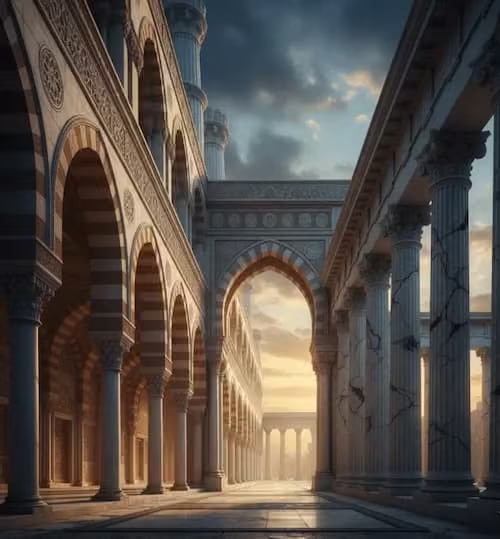
The Golden Age: Muslim Scholars Uniting Knowledge and Wisdom in Islam.

Knowledge in the Modern Era: Challenges to the Balance Between Knowledge and Wisdom.
The Path Forward: Integrating Knowledge and Wisdom in Daily Life
To honour “Read in the name of your Lord who created” (Qur’an 96:1), we follow practical steps. These help achieve the balance between knowledge and wisdom in Islam every day.
Acquire knowledge (ilm) diligently from authentic sources in religious and worldly fields. Understand it deeply (fahm) by reflecting on meaning and consequences. Apply it wisely (hikmah) by acting justly, serving others, and staying humble before Allah.
Great figures showed this integration. Einstein used scientific knowledge with wisdom for peace. Gandhi applied knowledge of truth with non-violent wisdom to free a nation. Al-Ghazali and Ibn Sina united learning with spiritual and practical wisdom. Their examples inspire us to pursue the balance between knowledge and wisdom in Islam.
Today we can integrate by setting clear daily intentions for learning. Spend time in prayer, reflection, and Quranic tadabbur. Use skills and knowledge to help family, community, and those in need. This balanced path brings personal growth, positive impact, and success in this life and the Hereafter. The balance between knowledge and wisdom in Islam unlocks full human potential while keeping us connected to our Creator.
Conclusion: The Timeless Balance Between Knowledge and Wisdom in Islam
From Adam (peace be upon him) to the digital age, humanity’s journey is from knowledge to wisdom. Knowledge illuminates the path. Wisdom guides each step with purpose and virtue. Knowledge empowers individuals and societies. Wisdom perfects that power and directs it toward justice and good.
The Qur’an and history teach that learning alone is not enough. True greatness comes when intellect, morality, and heart unite in harmony. The balance between knowledge and wisdom in Islam provides the complete framework for this essential unity.
Let us seek beneficial knowledge and apply it with hikmah and humility in all affairs. May Allah grant us the understanding and wisdom to live by His guidance. “Knowledge is the lamp; wisdom is the flame. Together, they illuminate the path to Allah and to human excellence.”
This article explored the balance between knowledge and wisdom in Islam across history, prophets, scholars, and modern life. By living these lessons, we transform information into faith-filled action that benefits ourselves and others. The balance between knowledge and wisdom in Islam is not only for scholars. It is a living path for every Muslim and every person seeking meaning, purpose, and closeness to the Divine.
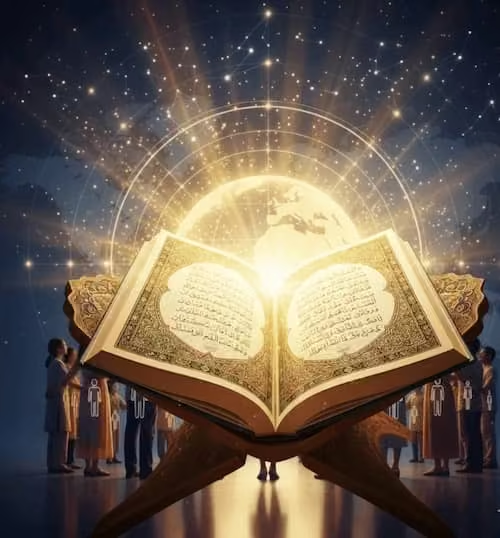
The Path Forward: Integrating Knowledge and Wisdom in Daily Life.
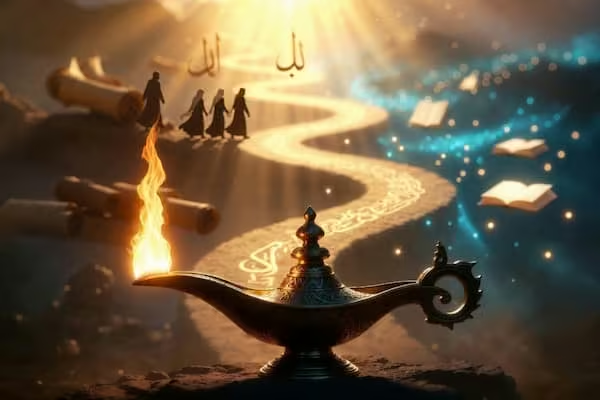
The Timeless Balance Between Knowledge and Wisdom in Islam.