
Satellites Deep Dive: The Time-Centric Drawbacks
Exploring the Dual Nature of Satellite Technology
Satellites Deep Dive: The Time-Centric Drawbacks — precision and speed in satellite timing analysis, symbolized by a high-performance falcon in flight.
The Time-Centric Drawbacks – From guiding our journeys to connecting global markets and forecasting the weather, satellite technology has woven itself indispensably into the fabric of modern life. These orbital marvels have ushered in an era of unprecedented connectivity, precision, and global awareness. Yet, beneath the gleaming promise of space-based systems lie significant vulnerabilities and overlooked drawbacks that demand our attention. As our reliance on satellites deepens, understanding these inherent risks is crucial for fostering resilience and ensuring the continued stability of our interconnected world.
Satellites Deep Dive - The Time-Centric Drawbacks: The Peril of Vulnerability - Attack, Disruption, and Cascading Failure
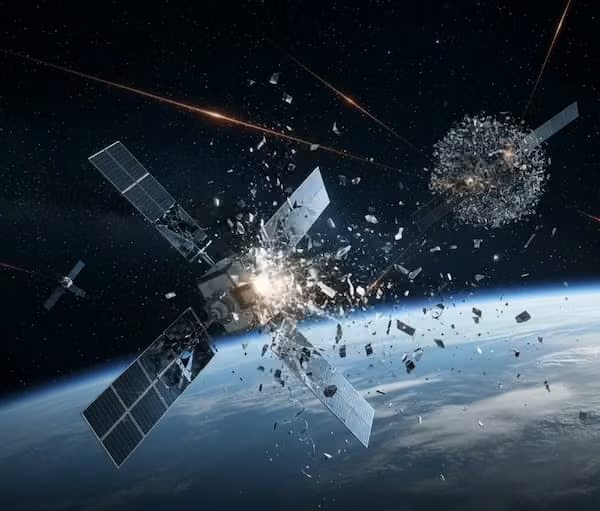
The Peril of Vulnerability: Attack, Disruption, and Cascading Failure — catastrophic satellite collision and cascading orbital debris in Earth orbit.
The Time-Centric Drawbacks – Satellites, while seemingly invulnerable in the vastness of space, are susceptible to a growing array of threats. These include deliberate acts of aggression, such as anti-satellite (ASAT) weapons designed to destroy or disable spacecraft, and electronic warfare techniques like jamming and spoofing, which can disrupt signals. Beyond hostile actions, natural phenomena like solar flares and the ever-present danger of space debris also pose significant risks.
The Fragility of Precision: When Perfect Timing Fails
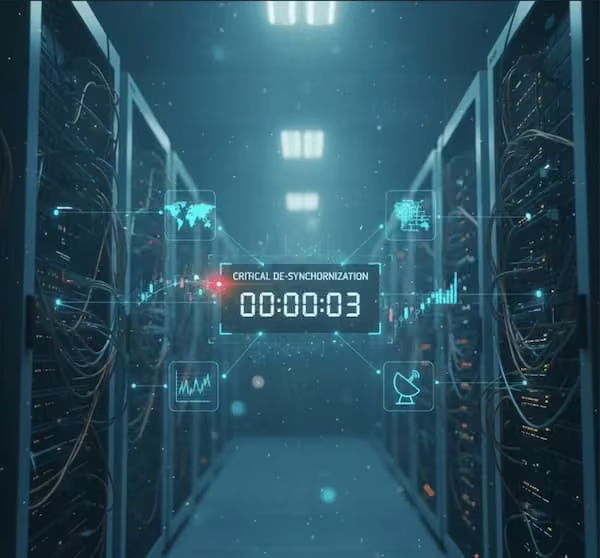
The Fragility of Precision: When Perfect Timing Fails — critical de-synchronization in a modern data center.
The Time-Centric Drawbacks: Our digital age thrives on atomic-clock accuracy, a capability largely delivered by satellite constellations. These orbital guardians provide the indispensable timing signals that synchronize global financial markets to the millisecond, regulate the intricate flow of power through national grids, orchestrate the precise movements of air traffic, and underpin the reliability of emergency communication networks. This ubiquitous precision, however, begets a profound dependence.
The Time-Centric Drawbacks: The very systems that grant us such exacting accuracy are susceptible to a spectrum of threats: solar weather events, sophisticated cyber-attacks, targeted signal jamming, or even internal technical malfunctions. Any disruption to these delicate satellite signals can cause systems reliant on perfect timing to falter or cease operation entirely. In a world increasingly calibrated for split-second performance, such outages can have cascading, disproportionate effects: delaying international flights, derailing high-volume financial trades, throwing complex supply chains into disarray, and critically compromising essential public services. The ripple effect of even a seemingly minor satellite timing disruption can resonate throughout society, inflicting a scale of chaos far exceeding the initial fault.

Solar weather events, sophisticated cyber-attacks, and targeted signal jamming threatening satellite data pathways.
The Protracted Lifecycle: The Hidden Cost of Orbital Longevity
The Time-Centric Drawbacks: While satellite technology undeniably offers immense efficiency for end-users, facilitating instant communication and navigation, its operational lifespan reveals a different dimension of “time-centric” risk. The average operational life of a satellite typically spans a mere 10 to 15 years, after which replacement becomes imperative. However, the journey from concept to orbit is anything but swift.
The Time-Centric Drawbacks: The comprehensive process of designing, manufacturing, rigorously testing, and ultimately launching a new satellite can often consume several years, frequently extending to nearly a full decade. This extensive timeline is susceptible to numerous delays: fluctuating funding allocations, unforeseen technical complexities during development, regulatory hurdles, or even terrestrial weather conditions impacting launch schedules.
The Time-Centric Drawbacks: Such interruptions can create critical service gaps, jeopardizing the continuity of vital satellite-dependent functions. What appears as seamless, real-time service to the public is, in reality, underpinned by decades of meticulous planning, cutting-edge engineering, and persistent problem-solving—a hidden layer of systemic fragility that remains largely invisible, yet profoundly impactful.
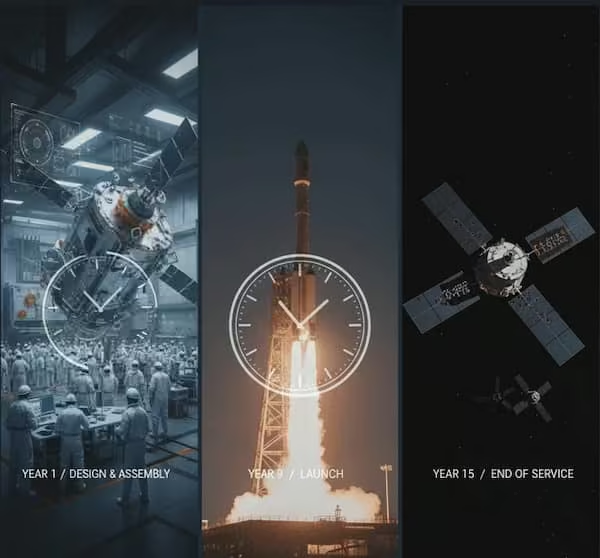
The Protracted Lifecycle: The Hidden Cost of Orbital Longevity — from design to launch to 15-year end of service.
Over-Reliance and Systemic Risk: The Fragility of Modern Dependence
The Time-Centric Drawbacks: Perhaps the most pervasive and insidious “un-benefit” of satellite technology is the profound societal dependence it has engendered. Entire industries and critical infrastructure sectors now operate with an almost exclusive reliance on satellite-derived timing, navigation, and communication signals. Power grids, which demand precise synchronization; expansive telecommunications networks; complex global transport systems for air, land, and sea; and the very emergency services designed to protect us—all become acutely vulnerable in the event of signal disruption or loss.
The Time-Centric Drawbacks: The consequences of even a singular, sustained satellite outage are far-reaching: grounded flights, disrupted logistical supply chains, severely delayed deliveries, and profoundly compromised critical safety and rescue operations. This pervasive over-reliance has, in essence, engineered a system that is incredibly efficient when fully operational but alarmingly fragile and exposed when even a minor component fails. Our widespread integration of satellite technology, while enabling unprecedented advancements, simultaneously constructs a dangerously brittle foundation for contemporary society.
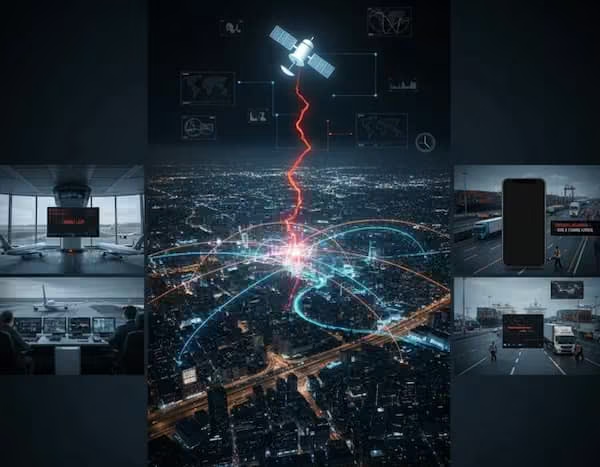
Over-Reliance and Systemic Risk: The Fragility of Modern Dependence — cascading failures from satellite disruption.
Time Lost in the Bigger Picture: The Unseen Costs Beyond Operations
The Time-Centric Drawbacks: Beyond the immediate operational disruptions, satellite technology incurs a less visible “time debt” that extends across various domains. The burgeoning problem of space debris, for instance, necessitates continuous, decades-long tracking by global observatories to prevent catastrophic collisions with active satellites. Similarly, the establishment and evolution of international regulations and safety protocols for space — crucial for mitigating risks like orbital congestion and frequency interference — are often the result of painstaking negotiations spanning years.
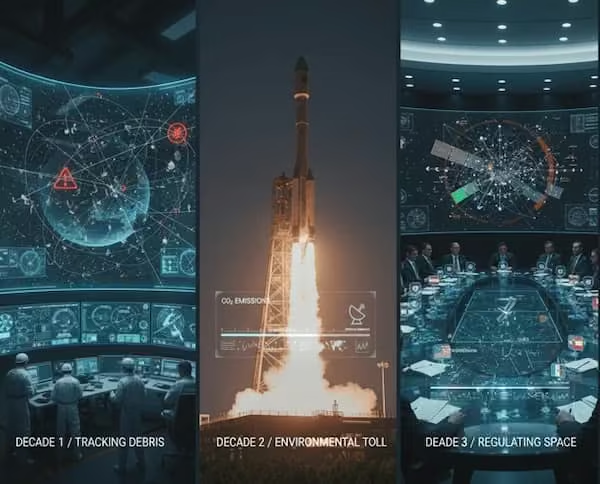
Time Lost in the Bigger Picture: The Unseen Costs Beyond Operations — debris tracking, environmental toll, and space regulation.
The Time-Centric Drawbacks: Furthermore, the environmental impact of the entire satellite lifecycle, from the energy-intensive production of rocket fuel and the manufacturing of complex spacecraft components to the high-energy demands of launch operations, requires significant long-term planning, monitoring, and mitigation efforts. What appears to be seconds saved in daily life through satellite-enabled services may, in fact, be shifting a substantial time burden, along with its associated resources and risks, elsewhere in the global ecosystem. These are some of the wider, often unnoticed, disadvantages of our accelerating push into space.
Time Lost in the Bigger Picture: The Unseen Costs Beyond Operations
Q1: What is Time-Centric Drawbacks of Satellites?
A: The Time-Centric Drawbacks – Satellites are highly precise; however, they remain vulnerable to disruptions from space weather, cyber-attacks, or technical faults. For example, interruptions in timing can affect banking systems, air traffic, power grids, and emergency services. As a result, our increasing over-reliance on satellites creates serious systemic vulnerabilities.
Q2: How do satellite signal errors affect everyday life?
A: The Time-Centric Drawbacks – Even minor timing errors can cause GPS navigation inaccuracies, delayed financial transactions, and disruptions in logistics or critical infrastructure. These small errors can accumulate into major inefficiencies.
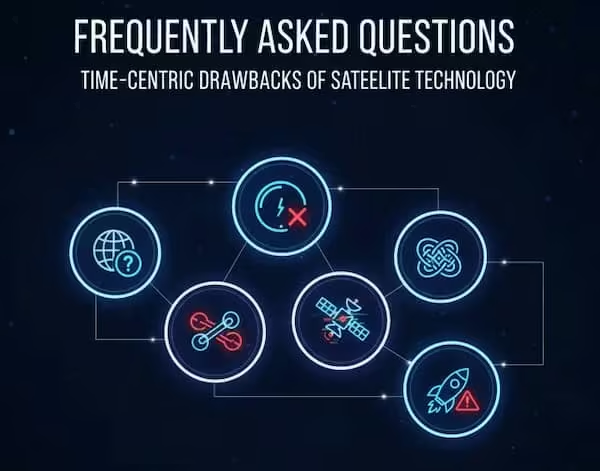
FAQ: Time-Centric Drawbacks of Satellites — timing failures, synchronization, and operational risks in satellite technology.
Q3: Why is satellite maintenance time-consuming?
A:The Time-Centric Drawbacks – Designing, building, testing, and launching a satellite often takes years. Satellites typically last only 10–15 years. Therefore, continuous replacement and monitoring become necessary, and as a result, they demand decades of planning and resources.
Q4: How can societies reduce risks associated with satellite dependence?
A: The Time-Centric Drawbacks – Implementing backup systems, alternative timing technologies, and longer-lasting satellite designs, along with robust resilience planning, can mitigate the impact of outages and failures.
Q5: Can satellite outages impact everyday technology such as smartphones?
A: Yes. Navigation apps, ride-hailing services, and even time-stamping on mobile networks all rely on satellite timing. Outages can lead to inaccurate directions, delayed services, or poor connectivity.
Q6: What role does space weather play in disrupting satellites?
A: The Time-Centric Drawbacks – Solar flares and geomagnetic storms can interfere with satellite signals and cause temporary loss of service. In severe cases, they can damage satellite hardware, leading to costly downtime or replacement.
Q7: Are alternatives to satellites available for timekeeping?
A: Yes. Terrestrial systems such as fibre-optic networks and radio-based time signals provide backup timing. Expanding these alternatives could reduce the risks of over-reliance on satellites.
Q8: How do satellite failures affect global economies?
A: The Time-Centric Drawbacks – Disruptions can delay international trade, halt stock market transactions, and cause logistical bottlenecks. Since global supply chains depend heavily on timing and navigation, failures can quickly have multi-billion-pound consequences.
Q9: What future risks should we be aware of?
A: The rapid growth of satellite “mega-constellations” increases the chance of collisions, signal interference, and light pollution. These add new layers of risk while making societies even more dependent on satellite systems.
Q10: How does satellite dependence affect national security?
A: Defence and security operations rely heavily on satellite timing for navigation, surveillance, and communication. If satellites fail or are targeted by cyber-attacks or jamming, it can weaken national security and compromise critical missions.
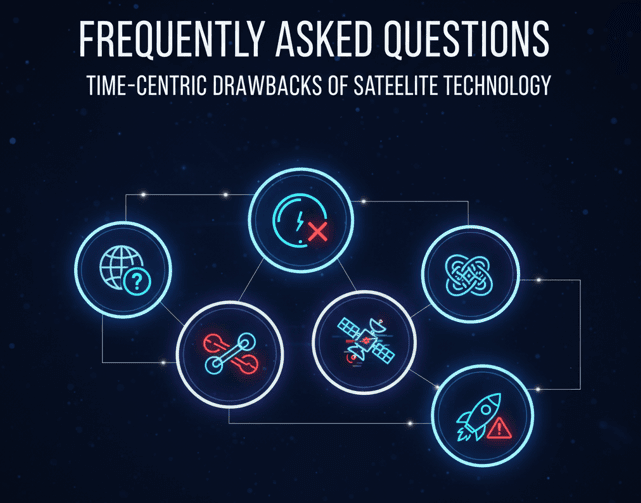
FAQ: Time-Centric Drawbacks of Satellites:
Q1: What is Time-Centric Drawbacks of Satellites?
A: Satellites are highly precise; however, they remain vulnerable to disruptions from space weather, cyber-attacks, or technical faults. For example, interruptions in timing can affect banking systems, air traffic, power grids, and emergency services. As a result, our increasing over-reliance on satellites creates serious systemic vulnerabilities.
Q2: How do satellite signal errors affect everyday life?
A: Even minor timing errors can cause GPS navigation inaccuracies, delayed financial transactions, and disruptions in logistics or critical infrastructure. These small errors can accumulate into major inefficiencies.
Q3: Why is satellite maintenance time-consuming?
A: Designing, building, testing, and launching a satellite often takes years. Satellites typically last only 10–15 years. Therefore, continuous replacement and monitoring become necessary, and as a result, they demand decades of planning and resources.
Q4: How can societies reduce risks associated with satellite dependence?
A: Implementing backup systems, alternative timing technologies, and longer-lasting satellite designs, along with robust resilience planning, can mitigate the impact of outages and failures.
Q5: Can satellite outages impact everyday technology such as smartphones?
A: Yes. Navigation apps, ride-hailing services, and even time-stamping on mobile networks all rely on satellite timing. Outages can lead to inaccurate directions, delayed services, or poor connectivity.
Q6: What role does space weather play in disrupting satellites?
A: Solar flares and geomagnetic storms can interfere with satellite signals and cause temporary loss of service. In severe cases, they can damage satellite hardware, leading to costly downtime or replacement.
Q7: Are alternatives to satellites available for timekeeping?
A: Yes. Terrestrial systems such as fibre-optic networks and radio-based time signals provide backup timing. Expanding these alternatives could reduce the risks of over-reliance on satellites.
Q8: How do satellite failures affect global economies?
A: Disruptions can delay international trade, halt stock market transactions, and cause logistical bottlenecks. Since global supply chains depend heavily on timing and navigation, failures can quickly have multi-billion-pound consequences.
Q9: What future risks should we be aware of?
A: The rapid growth of satellite “mega-constellations” increases the chance of collisions, signal interference, and light pollution. These add new layers of risk while making societies even more dependent on satellite systems.
Q10: How does satellite dependence affect national security?
A: Defence and security operations rely heavily on satellite timing for navigation, surveillance, and communication. If satellites fail or are targeted by cyber-attacks or jamming, it can weaken national security and compromise critical missions.